
Recruiting Intelligence

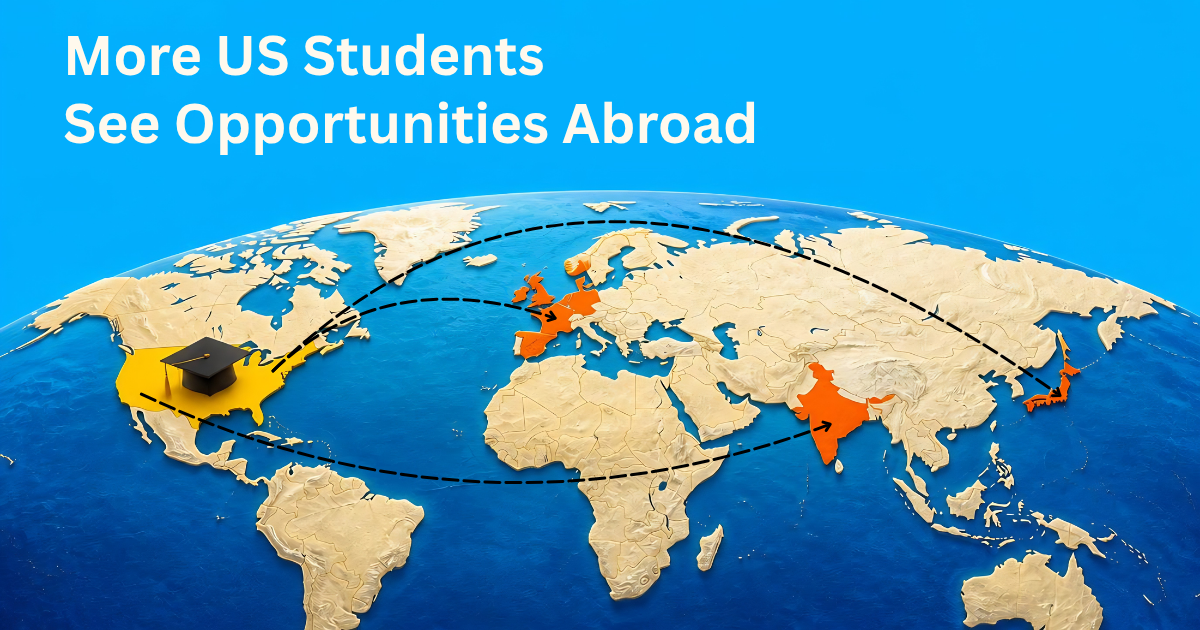
More US Students See Opportunities Abroad

Next week the British are coming, albeit to the opposite US  coast. 

As part of a broader effort celebrating collaboration between the US and the UK, the British Council’s Study UK team is hosting a large pop-up experience in Los Angeles designed to give area students, families, and educators an up-close look at what UK higher education is and can be. Sixteen UK universities, along with an array of niche experts and exhibits, are crossing the pond to put their best foot forward for students contemplating their academic futures. 

Full disclosure, the Intead team is proudly part of the effort to develop the cross-border collaboration.  

Though the event has been in the works for quite some time, as May 22 draws near, the timing seems particularly relevant as increasing numbers of US students are evaluating and taking advantage of study abroad opportunities. 

The UK, of course, is already a top study abroad destination for American students. 


Meet Intead!

  • Find us at at NAFSA in Orlando in May. We're presenting at NACUBO in July.  Be in touch to share a cup of coffee in person.

Fight for your Internationalization Program Funding with Data


Outbound with room to grow

In 2023-24, nearly 300,000 Americans studied abroad for academic credit, a 6% increase from the year prior, according to the latest data from IIE, marking a strong rebound toward pre-pandemic levels (~347,000 in 2018-19).

That said, only about 9% of US undergraduates study abroad for credit in any given year, and most for a short stint.

So, while the trend line is moving upward, participation remains modest relative to the opportunities available.

Most (64%) US study-abroad students go to Europe, with Italy, Spain, the UK, and France hosting nearly half of all participants. Japan became the fifth-largest destination for the first time in 2023-24, with 16% growth.

More interesting than the short-term numbers is what’s happening at the full-degree level.

IIE’s Project Atlas reports that more than 95,000 Americans are enrolled in full-degree programs at institutions abroad. Fifteen years ago, that number was much lower at 41,000 (with some caveats due to expanded reporting countries). Still, IIE confirms the trend is clear: more US students are opting to earn their full credentials abroad.

An increasing number of countries are taking note. 18 countries, including the UK, now have institutions accepting the Common App, meeting US students in a system they already know and trust. Our recent discussions with the Chinese Consulate in DC also point to increased efforts to attract international students to degree programs in China.

Those of us committed to the ideal of international education and the global ties these programs create have always understood the appeal. And while the number of American students doing so remains modest, the outbound trend is real, the drivers are tangible, and the institutions paying attention now will be better positioned for what’s coming.

Read on for our tips on how institutions can leverage this trend to enhance their connection to their current students and attract new applicants.

Read More

KYN 2024: What Matters Most to Prospective International Students


Students as consumers and the consumer insights that matter.  

Getting to the mindset of international and domestic students is central to what we do. Last week we unveiled a new study on career pathways for international students seeking US work experience. If you haven’t had a chance to review the report, it’s worth your time. The report provides fresh insights into what a US degree actually produces for international students, offering a new way to quantify the value of your degree for all of those ROI-minded student prospects (and their families).  

This week we shift our focus to other factors that influence international student decisions to study abroad, including how the US presidential election factors into their choices. We did this research back in 2016 (the Trump/Clinton match up). Now we have new student data to compare and, YES! it is fascinating. 

In partnership with global study choice platform Studyportals, we distributed a 13-question survey via email to Studyportals account holders and placed banner ads visible to their website visitors. All told, 2,492 respondents from 106 countries across the globe participated. A significant percentage of responses came from students in African nations.  

There were some real surprises. Spoiler Alert: 2024 is NOT 2016. 


Our next opportunities to meet! 

GMAC Annual Conference, New Orleans, June 19 – 21, 2024. Ben will be presenting TODAY on how global elections are influencing student mobility. More than just the US presidential election has the power to upend what students will choose to do next.  

EducationUSA, Washington, D.C., July 30-August 1. Ben and Virginia Commonwealth University SIO Jill Blondin will share insights on Navigating Budget Challenges in International Recruitment: Practical Strategies for Every Phase.  

Be in touch! We’ll buy the coffee. 


Today, we share the Know Your Neighborhood (KYN) 2024 Survey Summary Report with you – our first post-pandemic addition to the KYN series. Previous KYN full reports are available to Intead Plus members. The 2019 report on emerging markets (Africa and Latin America) still has legs. The others have some still valid nuggets on cultural differences even though they are now 5 to 7 years old. Helpful stuff considering that 50,000+ international students completed our surveys. 

In our latest KYN report, we unlock current insights into the preferences and motivations of prospective international students, including the impact of political fatigue, observations on a possible rise in cynicism, and more. We share observations that suggest these feelings have opened some students to studying in previously avoided countries. And, of course, we get into the influence of families on prospective student decision-making. 

If you’ve been following along these past few weeks, you already know there has been a shift in priorities among international education seekers since our last KYN study done in the midst of and after the wild and surprising 2016 election year. Other than perhaps Karl Rove, no one really thought Mr. Trump would win in 2016. 

At the time, very few (14%) international student respondents said they would be more likely to study in the US should Donald Trump win the election. This go ‘round that number jumps to 30% who say more likely 

Asked another way, in 2016 the majority (54%) said they would beless likely to study in the US should Mr. Trump win. That number dropped considerably in 2024 to 28%. What’s more, 42% this year say it won’t make a difference who wins. It’s just not as important to today’s cohort.  

We connected with so many of you over these stats at NAFSA a few weeks ago (what a week that was!). But, if we didn’t get that chance to chat in person, not to worry. Today’s summary report will give you what you need to know about the current international student mindset. It offers the core quantitative facts from our research as well as our recommendations on how your team may want to react to this news.   

Do, however, stay tuned as our data analysts are still wading through the quite telling qualitative responses. We are getting more insights organized for publication later this summer. (Hey, if you are reading this based on a share from a colleague, be sure to subscribe to our blog!) 

Read on to download our KYN 2024 Survey Summary Report and for 4 key takeaways from the study… 

Read More