
How is your LinkedIn feed treating you lately? The algorithm has so finely curated mine at this point that I have a seemingly endless stream of academic news from a wide variety of “mostly” insightful posts. All good food for thought.
Mostly, I scroll and learn. Other times, I marvel at the patterns of folks trying (perhaps too hard) to get noticed. Sometimes I’m frustrated by the all-too-common story arc: take something well known and accepted as truth and call it into question. These posts often prompt reader engagement but act as just a surface-level contrarian view with little insight to truly add to the conversation. And that description is likely generous.
Join Us Today at NAFSA 2026!
- If you get this in time, RSVP to meet us at 7:30 am today for coffee, bagels, and an informal discussion about the groundbreaking research study we are conducting with AIEA. Learn about how participating in this national study can help position you and your institution for long-term success. If you miss the bagel chat, still be in touch and we'll explore the research ideas with you (info@intead.com).
There are many of us in the field seeking insights to help us navigate these troubled times. Academia, the headlines seem to tell us, is under tremendous strain. True enough, and yet, a lot of those headlines end up being a whole lot of noise.
History shows us that troubled times come and go. Some institutions will fail to ride out the storm. Those that do make it to the other side sometimes prevail by what seems to be dumb luck. Others plan and adapt, giving their institution the best shot at future success. With so much noise in the system and so many distractions, planning and adapting require focus – a focus that helps you see the important signals separate from the noise. No easy task.
Two recent trips to DC for conferences (AIEA and WIEC) offered the desirable opportunity to meet with our community, maintain connections, share experiences, and noodle about what really is noise and what the truly important signals are. Really helpful, as so many in our field seem to spend a lot of time wringing their hands and falling into the rut of complaining. It’s easy to do when times are legitimately tough.
But that isn’t leadership.
And that is not planning and adapting.
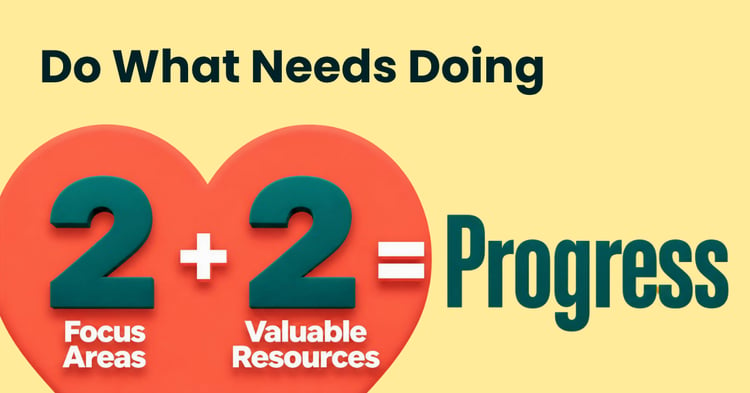
Below we offer two valuable focus areas where we believe academic leaders can move the needle despite the turbulence AND two helpful resources in times like these.
Read on…
Consider the headlines about the rise in US student visa denials (also happening in UK, Canada, and Australia). While Indian student visa applications have seen a 60%+ US denial rate (really not good), Chinese students are experiencing a 20% US denial rate (less not good). These two counties have accounted for the vast majority of students coming to the US for more than a decade.
The new mantra from those in our international education community (which those in the know have been chanting for more than 20 years): diversify your source countries. Sure! Yes! Do that!
And at the same time, don’t turn your back on China and India due to headlines predicting doom. Both of these countries continue to represent opportunities for volume. Both of these countries have families with a strong desire to study abroad with the US at the top of their list.
And yes, as many reports confirm, student sentiment (hesitancy about the US) is changing for the worse due to a variety of factors: immigration policies, rhetoric, cost, and gun violence. None of this is new to the scene. The headlines seem to suggest that the end is nigh. Best to fold up our tents and simply focus on domestic student recruiting (which has its own challenges and doom-focused headlines).
There is nothing rosy about the picture right now. So, we are all leading through difficult times. Let’s get on with it and do what needs to be done.
Two Places to Focus Right Now
If you are in a role that leads or supports international education at your institution, there are two areas where we suggest you focus to move the enrollment needle:
1. Advocate Internally
Put yourself in a strong position to educate your leadership and peers across campus. Develop the talking points about how international student enrollment contributes to the stuff they care about (because they don’t naturally see it themselves. They are busy and are only reading the headlines that profess doom).
Explain with internal data how international students contribute to what they care about:
- Acquiring research funding
- Institutional prestige (of institution and department)
- Enrollment revenue
- Retention rates
- Career readiness and opportunity for all students
For more on this approach, see our blog post from fall 2025: This Moment Was Built for SIOs
2. Prioritize Your Decision Making
Evaluate the decisions in front of you in two ways:
- How much the decision will move the needle (toward enrollment or your other important goals)
- Risk level (as in: no risk, some risk, high risk)
As an example, a decision area that can move the needle with limited, and at times reduced budget, is to outsource tasks. Can you keep your internal team focused on what they are best at and most appropriate for, given their presence on (or proximity to) campus and the skills you need internally? While you are being asked to do more with less, outsource tasks, such as:
- Student segmentation and financial capacity research
- Compelling, culturally resonant messaging
- In-country agent support
- Recruitment campaign execution and tracking
If you can move the needle with no or little risk, there’s a decision worth making. If all your decisions that can be truly effective are high risk, you’ve got some hard decisions to make and risks to take.
Look, when the US Secretary of State tells the world that Victor Orban’s success in Hungary is also success for the US (as he did on February 16, 2026, as the AIEA conference started), we all roll our eyes, to say the least. But those headlines are noise designed to steal our focus from the things we do that can truly affect change for the better.
Two Resources to Help
We’re not here to add to the noise. We’re here to help you cut through it.
- The slides from the presentation I gave at Bill Fish’s WIEC conference walks you through the shifting balance of influence globally and what diversifying enrollment can look like.
- Our research initiative with AIEA to collect and analyze institutions’ internationalization investment and return will give you benchmarking insights to support internal advocacy and more.
The institutions that rise from this moment won’t be the ones that waited for the headlines to get better. They’ll be the ones planning, adapting, and aligning a wide range of internal resources (people and money) right now.
We’re in it with you.