Your chief business officer is navigating rising personnel costs, deferred maintenance, technology investments, enrollment pressure, and limited institutional patience. International enrollment can be part of the answer. Yet many business officers still do not see it that way.
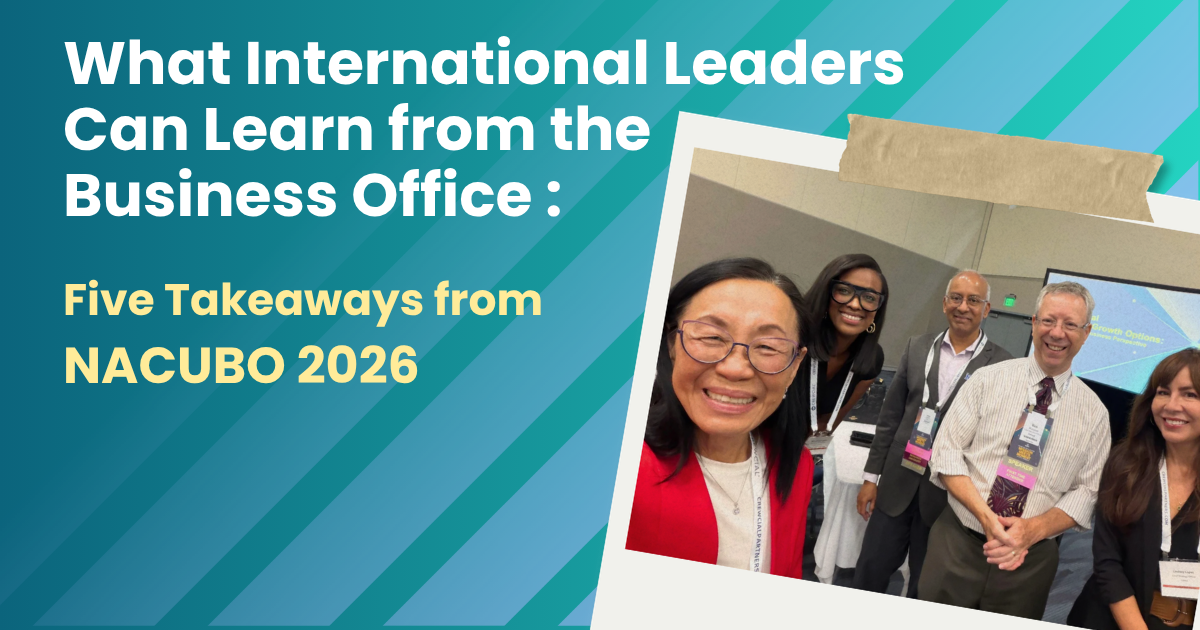
That disconnect was hard to miss at the NACUBO Annual Meeting. Unlike the international student-focused conferences your Intead team typically frequents, introductions at NACUBO often began with budgets, employee counts, bargaining units, and capital obligations. Students entered the conversation later. That observation is not a criticism. It is a reminder that business officers experience the institution through a different set of pressures -- and international leaders gain influence when they understand those pressures and that lens.
Your job: Get your CBO to see international as a revenue center (not a cost center).
Can benchmarking help universities navigate today’s internationalization headwinds?
Yes - but don't take our word for it. Read The PIE News coverage about our new AIEA benchmarking study. 22 institutions have joined, 40 in progress, 100 more evaluating the opportunity. Are you?
Not yet a subscriber?
Get Recruiting Intelligence delivered to your inbox. Smart move.
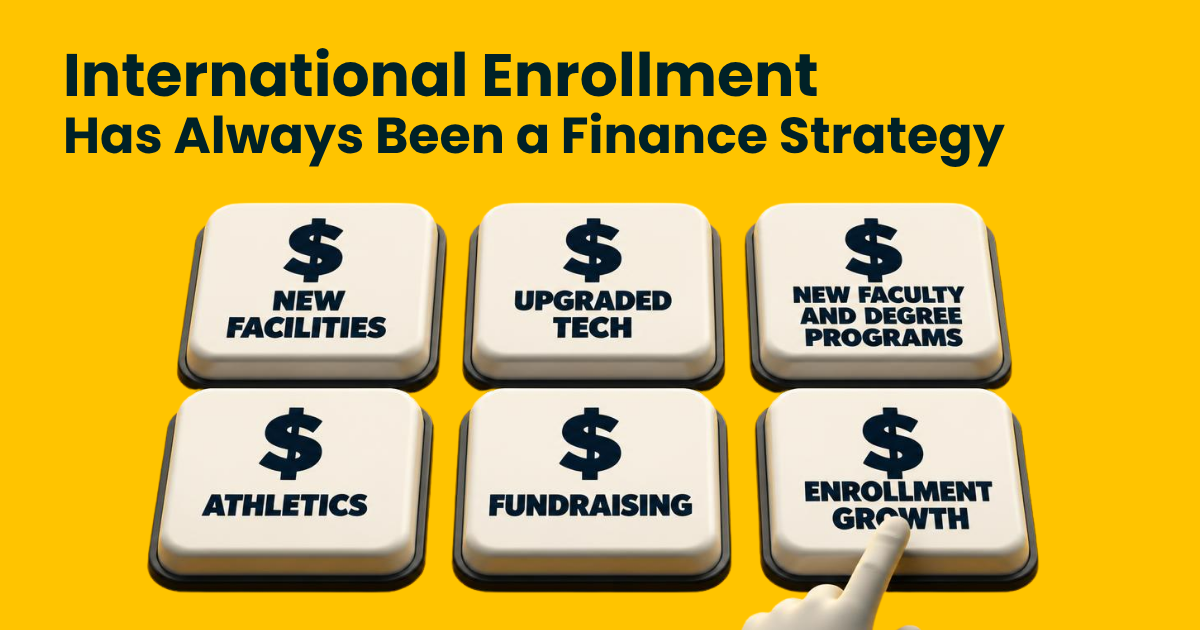
Last week, we explained that international enrollment has always been a finance strategy. NACUBO 2026 reinforced the point. But the international office has more to offer the business office than a budget request. You can bring a disciplined revenue opportunity, a diversification strategy, and a clearer view of global market risk.
The finance conversation is already happening
Business officers are not waiting for international leaders to enter the room. They are already evaluating new programs, AI investments, auxiliary revenue, cost reductions, partnerships, and the return on nearly every institutional commitment. International enrollment belongs in the room where these conversations are happening.
Often, chief business officers lack information about global recruitment. But here’s the thing: when the international office brings CBOs that critical information, leaders often present the information in a form that does not answer the questions finance leaders are asking.
Market potential, brand visibility, student interest, and competitor activity matter. So do investment horizon, net tuition, program capacity, support costs, downside risk, and clarity on the points at which leadership can adjust course.
That distinction shaped the NACUBO session Intead presented with three institutional leaders: Dr. Jia-Yi Cheng-Levine, Dean of International Affairs and Global Engagement at College of the Canyons; Dr. Tamara T. Cunningham, Associate Vice Chancellor for Global Initiatives and Arts & Campus Activation at University of California, San Diego; and Dr. Balaji Krishnan, Vice Provost for International Affairs and Professor of Marketing at the University of Memphis. Our session, “International Enrollment Growth Options: Three Publics Share Business Perspectives,” examined how three very different public institutions evaluate international student-focused investments.
The range of institutions mattered. A community college, a major research university, and an urban public university do not share the same market position, operating model, or organizational culture. Yet each institution faces the same core questions: Where can internationalization create value that aligns with institutional priorities? How will global investments create financial resilience?
Read on…
Read More