
Recruiting Intelligence

Do You Know #Studyspo?

Studying up on the latest digital trends in higher ed? We have one that may surprise you but it is certainly familiar to your student intern.  

We’re talking about Studyspo: the trend turning study time into scroll-worthy content.


Opportunities to Meet the Intead Team 

  • Look for us at NAFSA in May, NACUBO and APLU in June, and NACAC in September. Let us know  if you want to connect at these events.

Bookmark this: Intead’s Resource Center 
Access 800+ articles, slides decks, reports with relevant content on any topic important to enrollment management and student recruiting.  Check it out.


In recent years, every nook of the internet—from Pinterest boards to TikTok stories—has gained noteworthy momentum in helping students build connective digital spaces and communities where students share life hacks and ideas with each other. And now, students are convening on these platforms even more frequently—even to study. 

Studyspo, a blending of “study” and “inspiration,” involves students sharing posts, videos, hashtags, and the like, to show how they’re studying. Generating noteworthy digital engagement, Studyspo is, indeed, trending.  

The hashtag #Studyspo has been used in over 1,011,091 posts on Instagram, with an average of 12 new posts per hour. On average, these posts receive 106 “likes” and 2 comments each, indicating moderate engagement. Other related hashtags frequently used alongside #studyspo include #studygram, which has garnered over 13 million posts, #studying with around 6.7 million posts, and #studymotivation with about 3.5 million posts.  

More of the same can be seen on Tumblr, where hashtags related to studying and similar topics (like #studyblr) also enjoy substantial popularity. For example, #studyblr has over 500,000 posts, showing that the study-related community on Tumblr is incredibly active.  

But, trends they are fleeting. How do you know when to jump on the social media fad train (and hashtag) and when to happily let it pass you by? Let’s get into it. Read on…
Read More

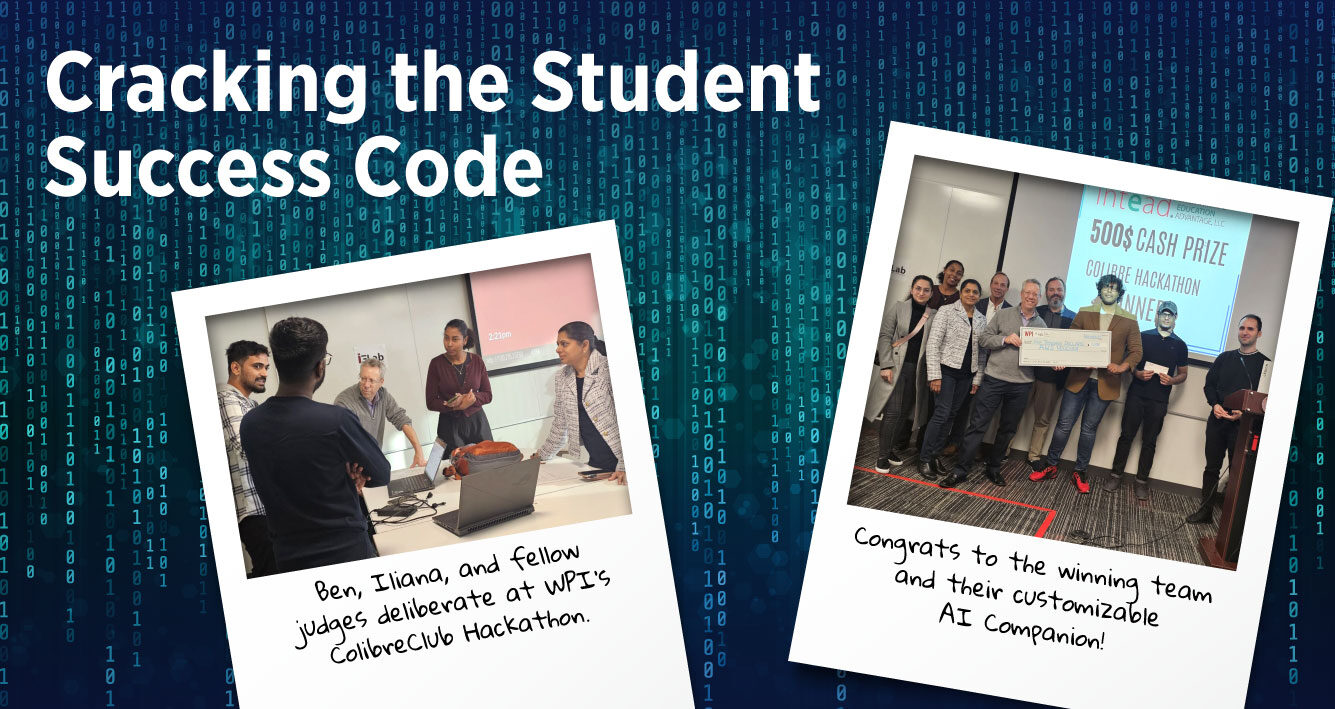
Cracking the Student Success Code

Grad students Poorajith Sasikumar Thenmozhi and Anurag Bansal needed a problem to solve. As founding members of ColibreClub, a student-led organization at Worcester Polytechnic Institute Business School, they were gearing up for their inaugural student hackathon and were in search of a real-world problem statement their competitors could sink their teeth into. 

That’s when the Business School’s Assistant Dean Sandhya Balasubramanian stepped in. Sandhya a friend and colleague of ours reached out to the Intead team to see if we had ideas. Our answer: Always! 

Trend watchers and challenge seekers, we didn’t take long to share one of the many higher ed research topics that interest us in the area of student success. Prior to and through the Covid-19 Pandemic, we watched student mental health concerns grow dramatically. We also noted that issue rising on the list of major worries being carried by university presidents and provosts.   


Opportunities to Meet the Intead Team 

  • Our AIEAstint ends today as we turn our focus to ASU+GSVin April, and NAFSA in May. Let us know  if you want to connect at these events.  

Bookmark this: Intead’s Resource Center 
Access 800+ articles, slides decks, reports with relevant content on any topic important to enrollment management and student recruiting.  Check it out.


Data underlines the urgency. Sallie Mae’s How America Completes College 2024 report on undergraduate barriers to graduation reveals 42% of at-risk students who consider leaving school do so for reasons involving motivation and mental health issues. When asked what resources would have helped them stay, 30% said more mental health resources/support.  

In our work with academic institutions, we’ve seen such a range of responses on campuses that make services available to students in different ways and importantly, help students become aware of and access those services in different ways as well. 

Assurances to help individuals who are struggling academically/mentally/physically are part and parcel of student communications. You know as well as we do that prospective students and their parents care a lot about this topic so including it in your recruitment materials has become routine. For some families, wanting to know about academics and sports top the list as they evaluate an institution. At some point, a growing number of parents worry about whether their kid, as mature as they are, is going to have the support services they need to succeed, including mental health services. 

So, the Intead team has been thinking a lot about actual accessibility, or lack thereof, of these types of programs. Some universities promote the services and access far more than others. Are they living up to their promises to students? Are there innovative ways to improve both student communication and accessibility? The WPI student hackathon tackled these questions with gusto!

Read on...

Read More

The Rise of Student Retention as Key to Recruitment

From your steeped-in-student-recruitment vantage point, you see quite clearly the symbiotic relationship retention has with your recruitment efforts and resulting yield. It has everything to do with your student services, student success, and all the small-batch interactions you do to ensure your students experience both.

As David Hautanen, Vice President for Enrollment Management at St. Mary’s College of Maryland said so well in a recent Recruiting Intelligence post: "Retention is both a moral and economic imperative." We wholeheartedly agree. And it is as true for students as it is for institutions. 

We can dive into all of this with you at #Nafsa2022 in Denver. Let us know if you’ll be there and want to share a cup of coffee.

As campuses across the globe emerge from their pandemic safety bubbles and return to recruitment as usual (more or less), now is a really good time to rethink your institution’s retention efforts—and the student-first mentality it requires.

The bottom line: it’s your team’s soft skills that matter most and their availability to use them. Read on for our take…

Read More

Spotlight on Your Institution’s Student-First Approach

We recently talked with students past and present from Vietnam to Bangladesh and heard encouraging stories.

  • A professor hand-delivered a recommendation during the early phase of the pandemic.
  • A class specifically designed around a student’s pursuits.
  • A helpful phone call to a trusted member of the international student services team when tragedy struck.

Stories that embody the kind of student-first experience we all imagine we provide to our students. It’s the kind of experience we certainly all tell the world of prospective students (and parents) that we will deliver.

The reality, unfortunately, is often quite different. Blame branding or the bottom line (lack of resources), but the undeniable truth is that competing priorities often win out over the well-founded ideal of student-first. 

Today’s post is not a how-to on making your website user-friendly. Today we put a spotlight on the policies and actions that put students first. We’re looking at what is undermining your institutional integrity and how you can address it. And trust us, students are well aware of how well your institution delivers on the promise of student-first. And they tell stories. So, yes, this post is enrollment marketing-focused.

When you delight, they gush with positive word-of-mouth support. And when you fail, they tell that story too.

To offer deep perspective on this topic, in addition to our own experience, we tapped a few colleagues who know more than a thing or two about fostering the student-first mindset:

  • David Hautanen, Vice President for Enrollment Management at St. Mary's College of Maryland
  • Jessica Sandberg, Dean of International Enrollment Management at Duke Kunshan University
  • Jewell Green Winn, Senior International Officer of International Affairs at Tennessee State University (and newly appointed chair of AIEA)
  • Brad Farnsworth, Principal of Fox Hollow Advisory and former Vice President at the American Council for Education (ACE)

They each had great perspective on the subject. We are so appreciative of their time and the insights shared. You, our readers, are the beneficiaries of their wisdom.  

Read on to learn concrete actions you can take now to help ensure your enrollment program is student-first. Is this post a good one to share with your leadership? Uhm, yes.

Read More

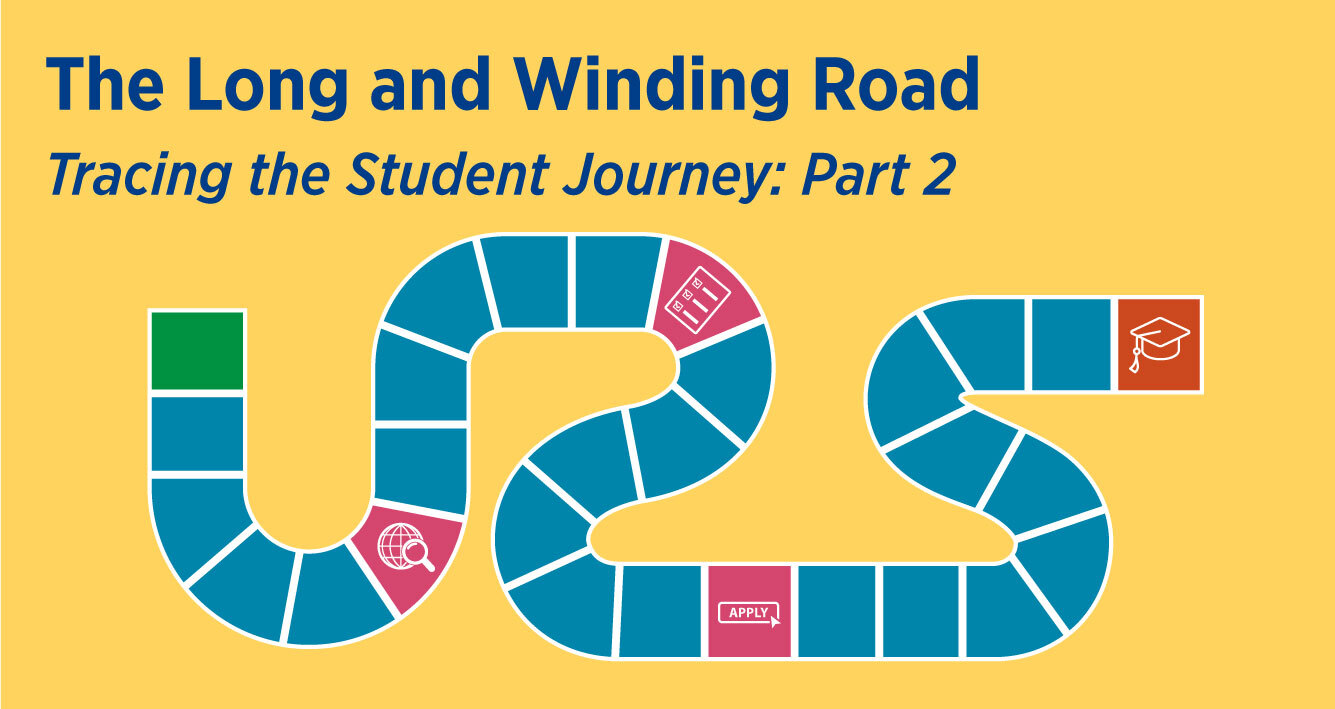
The Long and Winding Road Tracing the Student Journey: Part 2

Last week we began tracing the evolving international student journey, with a look at what might help or hinder your relationship with prospects along the way. In short, it’s all about engaging content and great follow-up. But that’s just part of the story.

When marketing to students, we often focus on the information we want to give them, but it’s equally important to consider what information a prospect needs to give you and what steps you need that prospect to take. So let’s explore a few ways to entice students to click that CTA and follow your channels, register for an event, download that guide… You get the idea.

Read on for our next installment reviewing the student journey elements that are so important to the phase we are in right now as application deadlines approach.

Read More

Small Talk, So Underrated

You are welcome here.

DEI efforts to address inclusion.

These are big concepts that deserve big discussions on campuses everywhere. Discussions with senior leaders setting policies and developing programs to make everyone on campus feel involved and connected.

And to make all that happen, that feeling of being welcome and included, will rely on some of the small things that often are met with eye rolls. Yet, these small things are really important to this whole inclusion effort.

You know that inside joke and the trendy celebrity stuff you are not on top of? The conversation that just kind of left you like roadkill as it blew right by? Maybe silly. Perhaps kind of uncomfortable. Happens to all of us. And it happens to your new students frequently. Domestic, yes. International, all the time.

If you think small talk is meaningless, think again.

In our work for a large, highly ranked Midwestern institution, we were talking with Pham (not his real name). He traveled from Vietnam for his US studies. A natural networker, smart, interested in business, he chose to major in Business Management Information Systems and Finance. With that degree, it is no wonder he was snapped up by Deloitte where he currently works as a Senior Consultant in Tax Management.

To hear Pham tell it, connecting to the US community with small talk was critical to his success. He came to understand this during his studies as he tried to connect with the other international students and with his American peers. He found he was struggling to make friends.

Read on for Pham's perspective and our tips for getting these really important conversations started. It is all about personal and student success. 

Read More