
Recruiting Intelligence

The Non-traditional Student Advantage Part 3: Know Your Competition

If you’ve been following this series on non-traditional students, or paying attention to the shifting student landscape at all, then one thing’s clear: non-traditional students are a valuable growth market. And your competition knows it.

This is part 3 in our 5-part blog series on reaching and enrolling non-traditional students. Links to part 1 and part 2.

Yes, non-traditional students demand more than traditional students. They need flexible schedules, targeted certificates, different student service support, and a strong return on their investment. And institutions are (finally) responding. Is yours?

Five years ago, when we published “Quality. Cost. Convenience. How academic leaders are competing for today’s non-traditional students.” – an e-book available for free to Intead Plus members – there was a lot of speculation about MOOCs (massive open online courses). Would they eat into the non-traditional piece of the pie?

While it’s true that student interest in MOOCs soared during Covid, the actual threat they pose to degree programs is, well, not much.


I love the blend of data, environmental scans, case studies, and basic recommendations that are interwoven in each section. This ebook is excellent for institutions that seek to fine-tune their non-traditional services or begin the process of addressing their needs. It covers the many daunting challenges that universities face when focusing on this student segment. ~ Mary Marquez Bell, retired Vice President for Enrollment Services, SUNY Old Westbury


From what we’ve seen, MOOC students are mostly filling leisure time with these types of programs (rather than pausing other academic pursuits). Typically, MOOC students only engage in the coursework a few hours a week. They really aren’t reaping any financial gains from having taken these courses, either. And, in the end, most are pleasantly surprised they actually learned something. So that’s good – for the student and you!

The more urgent conversation has shifted to involve certificates and credentials, for-profit online colleges and universities, and extension programs. Read on for what you need to know.

Read More
Rinse and Repeat is Not the Answer

Every CFO’s dilemma: how much discounting do we have to do to fill our classes?

But before you get there, it is the Enrollment Management team’s job to answer a few other questions:

  1. To whom do we market? (this takes us from suspect to application)
  2. Whom do we accept? (this takes us from applicant to accepted pool)
  3. And now we turn to the CFO and financial aid team to answer, “How much do we award them?” (this takes us from accepted to tuition-paying)

The Intead team is hyper-focused on question number 1 in ways that others in the student marketing world seem to miss or oversimplify. Zip code and IPEDS analyses will tell you that there are roughly 250K families in the US able to afford tuition bills of $30K or more. And that pool is shrinking as the Chronicle of Higher Ed and industry analysts consistently remind us. The fear of 2025 is growing!

Private institutions have faced, and will continue to face, a world of trouble in the years ahead. If you are not clear about what makes your institution highly valuable to your target audience (and no, the answer is not, “we provide a personalized level of attention to our students”), then your classrooms and dorms are going to look sparser. Those doubles you converted to triples will be double again.

And for other institutions, those with lower price points, there are significant headwinds in terms of how students and parents are evaluating your value as well. Competition will continue to grow.

We'll be talking about all of this at #NAFSA2022 in Denver in just 5 weeks. Please be in touch to set up a meeting or join us for one of our four interactive NAFSA presentations where we are honored to share the dais with our colleagues from Benedict College, San Diego State University, Clark University, Northeastern University, CIEE, ICEF, and GNET.  

With this post we share our concern, and it should be yours as well, that the marketing agencies offering enrollment/recruitment services for so many institutions are taking their marketing plans from their most recent client and applying them to the next one that comes in the door.

Literally, some of them are simply slapping your logo on the marketing plan they delivered to the client that came before you and selling it to you as something unique and fresh. They are that cynical about their own work and what you are doing on your campus.🙄

Read on for tips on how to frame the pertinent questions and approach the answers for your institution. While the framework has common elements for all, the resulting marketing plan must be different based on your specific institution type, location, ranking and academic strengths, tuition, culture, etc.

Your student enrollment marketing must focus on what makes you, you.

We’re here to say very loudly: rinse and repeat is not the answer.

Read More

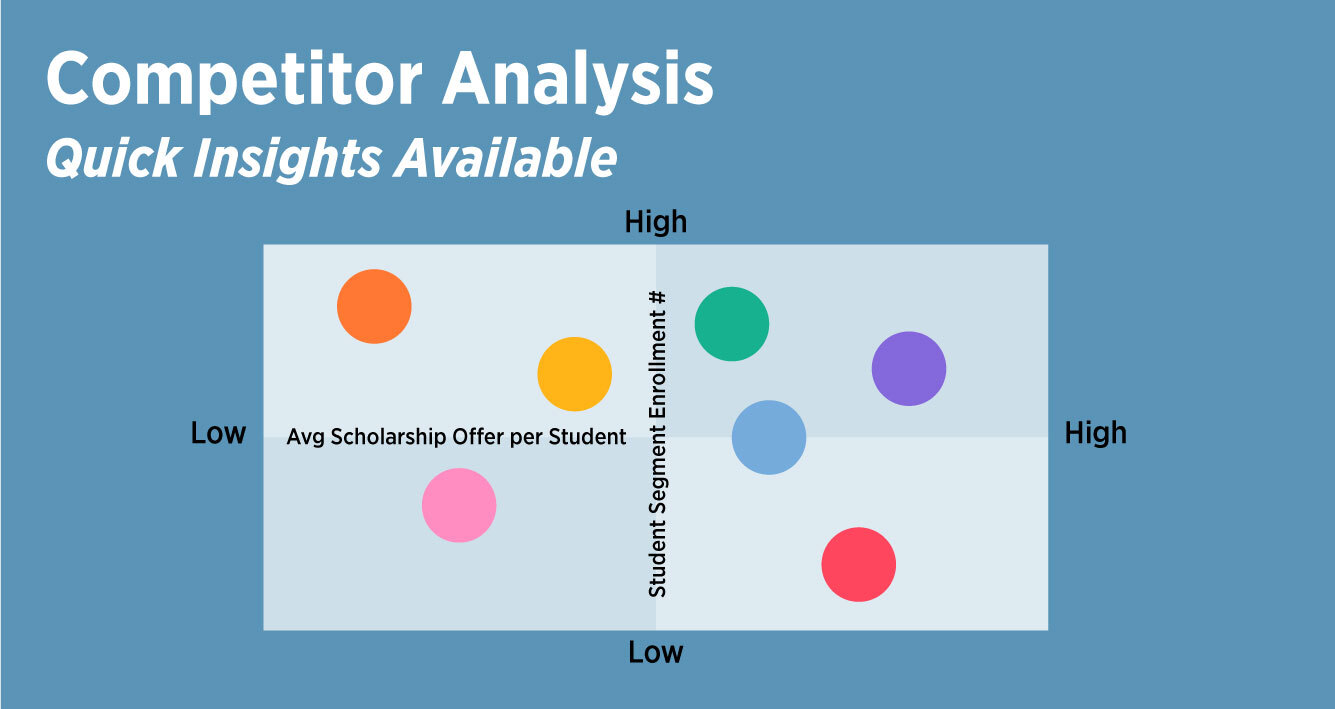
Competitor Analysis: Quick Insights Available

Every enrollment VP is fighting for students who will add value to their institution. Domestic is heading for the 2025 cliff while international is beginning to rebound from the pandemic travel restrictions. 

What better way to win market share than to tell the story that differentiates your institution? This week, for those of you not already familiar, we introduce you to Jon Boeckenstedt and a tool he’s created that can help you see quickly how your institution stacks up to your competition. Jon’s work consistently brings data insights and knowledge of the field to help institutions make better enrollment management decisions.

On the international side of things, be sure to register for the AIRC conference coming up in December where we will be presenting two valuable learning opportunities alongside colleagues from Northeastern University, Fordham Law School, and San Diego State University. Early bird rates are still on the table! See link below. And see you in Miami!

Read on to dive into the amazingly fast competitor insights you can gather and how you might use them to put the best version of your institution’s story out there. 

Read More

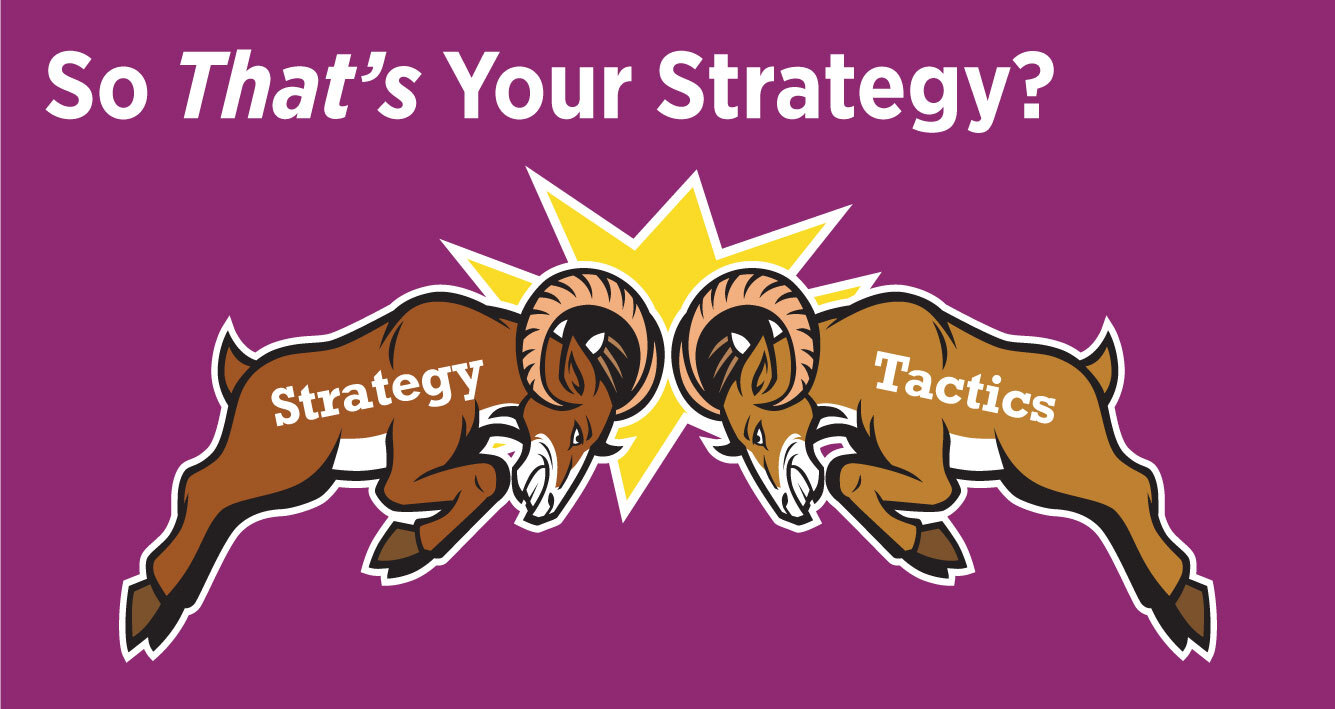
So That’s Your Strategy?

People look smart when they reference strategy. It elevates any discussion to greater importance as soon as the word strategy enters. Often, it gets others in the room thinking, “Right, maybe I’m not thinking about this strategically.” Followed by the thought, “What exactly would a strategic version of this discussion look like?”

The idea of strategy is often misunderstood. I fully admit, it really can be difficult. I can’t tell you how many discussions I’ve been in where people describe their tactical execution plan as the strategy. 

A simple example of why folks get confused, and I’ll use what we know best, the world of marketing: Your marketing strategy to enroll more students requires great marketing content. Content is a tactic you will employ to achieve your strategic goal. Yet, you will need a content strategy to be successful. So, content is not a tactic. It is a strategy, right? No, it is a tactic in this scenario. A tactic that needs its own strategy.

Oy vey.

Our team, of course, lives in the world of marketing strategy, planning, and execution. Today's post shares some insights into how to simplify the discussion and confirm when you are employing a strategy vs. discussing the tactical execution of any given initiative.

Read on and maybe we can shed some light on how to actually be smart in the discussion, not just look smart.

Read More