You are reading an excerpt from our e-book "88 Ways to Recruit International Students" (Click here to read the entire book)

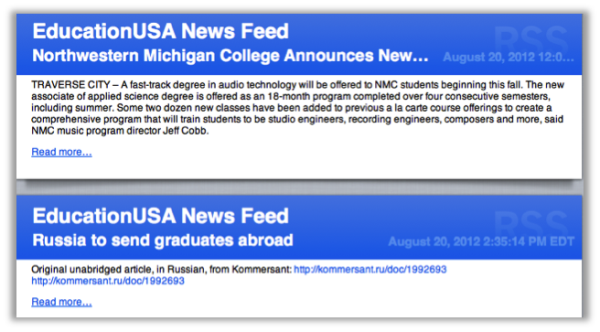
EducationUSA offers a whole range of distribution channels to universities, one of which is this weekly RSS feed with news from universities.
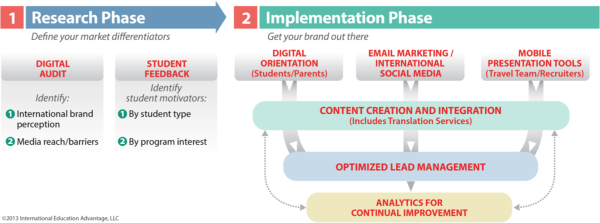
Don’t underestimate what you can accomplish from your office in Dubuque, Syracuse or South Bend. Even if you are chained to your desk, figuratively we hope, you can pursue numerous recruitment strategies with potentially great payoff. If your institution is just beginning to explore international recruitment, many of these methods can help you wet your feet in the international sector. Or if your institution has already made inroads in some markets, these methods can help to cultivate additional regions. Let’s begin.
Creating brand recognition abroad when there are so many higher education institutions can be an ongoing challenge for universities. Franklin University in Columbus, Ohio has instituted an exciting and novel approach to building brand awareness, spreading its educational message and educating international students who otherwise wouldn't have the opportunity to attain an American degree. At the 2012 NAFSA Region VI Conference three Franklin University leaders presented their exciting on-location international degree programs. A special thank you to Suzie Arehart, Bridget Banaszak and Tamer Khadre for presenting this information.

At the recent NAFSA Region VI conference held in Columbus, Ohio I attended a number of interesting and informative sessions. One of the sessions I particularly enjoyed was led by three well-respected and well-versed higher education professionals: Kathy Ice-Wedding (U. of Kentucky), Sandi Lemons (IUPUI) and Daniel Whitmer (Indiana University- Bloomington). Their session titled "Introduction to Working with Sponsored Students" provided a rich array of information that would be helpful to professionals looking to add sponsored students to their international student populations.
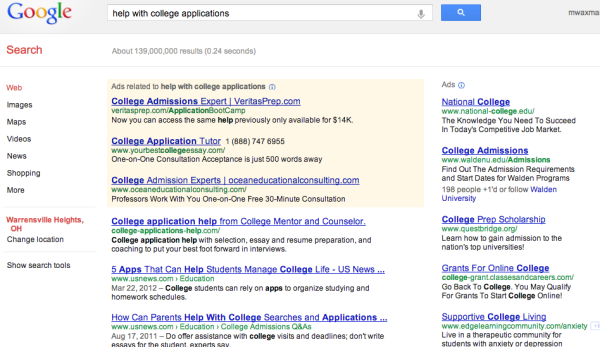
We have developed a unique university and college system as well as a unique admissions process in the United States. This unique enrollment and application process appears arbitrary, opaque and difficult to master. As a result independent admissions counselors have become a critical intermediary in many countries, not to mention the United States. *For full disclosure, Lisa works as an independent admissions counselor.

Many admissions officers will say: I wish that I had this problem. We are hearing more frequently from university officials concerns about having too many Chinese students with the consequence of isolation and limited contact with American students.
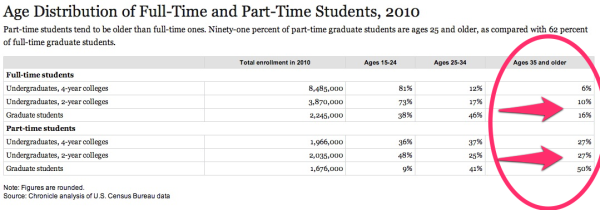
We hear a great deal about endangered programs. Philosophy, history and language programs are shutting down due to the lack of students and financial resources. In contrast, I believe that universities will actually offer more, not fewer, services and programs, in more teaching formats, length and channels in the future. Universities will strive to find additional revenue sources. Executive training programs will be just one of many examples. Colleges will want to build a continued relationship with alumni exceeding current alumni fundraising focused activities.

All content ©2026 International Education Advantage, LLC.
All rights reserved. Privacy Policy | Terms of Service