
Recruiting Intelligence

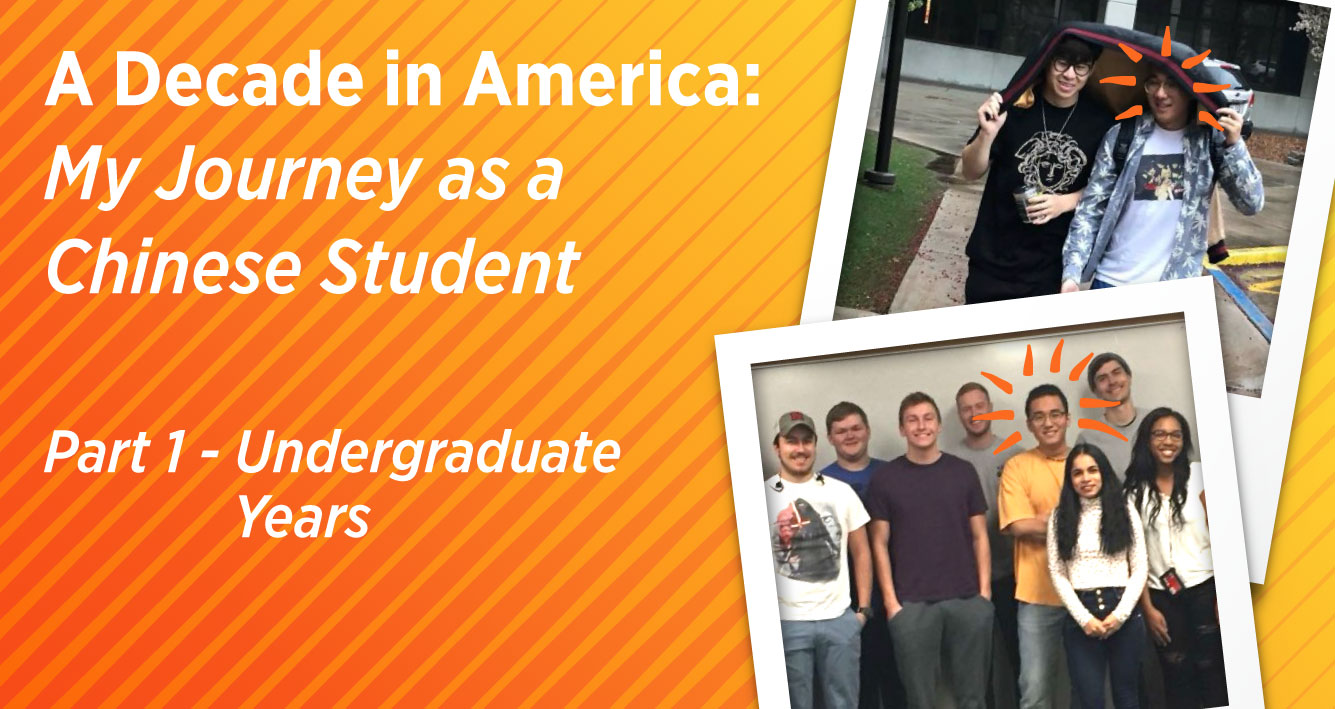
A Decade in America: My Journey as a Chinese Student, Undergrad Years

After a decade of studying, working, and contributing to US higher education, Tianyu Shen has returned to China – a move that mirrors what many Chinese students who studied in America have experienced. As so many countries are revising their policies about who may come and how long they may stay, this recounting of Tianyu’s experience is particularly poignant.

Many of you know Tianyu, the affable, talented Data Analyst who did some amazing work during his time at Intead as a STEM OPT student. Like so many international students, Tianyu’s initial inclination to study abroad was rooted in adventure. His initial thought more than a decade ago: Let’s go to New Zealand! And, like so many others from China, his parents redirected him to the US.

So that was 2015, and at the time, IIE was reporting that US universities were experiencing the highest growth rate in 35 years, with China as the key driver. At the time, the influx of Chinese students in particular helped many US universities launch new academic degree programs that benefited American students as well as international cohorts. Now, in hindsight, analysts point to how the revenue generated by the growth in international students from 2010-2020 gave many institutions the capacity to invest in infrastructure and academic advances that created huge opportunities for the entire campus.

Now, there’s a very different narrative being played out in the US and globally. We wonder where Tianyu’s parents would advise him to go for study abroad if he were starting his journey today.

We think you’ll enjoy his observations about Hollywood movies, and comparisons of Boston, MA to Lincoln, NE.


Meet Intead!

  • Find us at WIEC in DC in March, and ASU+GSV in San Diego in April. Be in touch to share a cup of coffee in person.

eBook Reboot: 88 Ways to Recruit International Studentsupdated for our times. Your tactical toolkit for the year ahead. Covering all the bases in 10 quick-read chapters. Fosters great ideation discussions with your team as you seek to diversify your recruitment efforts.


Because Tianyu’s experience mirrors that of so many students sitting in US classrooms and working OPT jobs right now, we asked him to take you through his student journey. What is it really like to come to the US still needing to learn English while seeking an adventure? When does the mindset turn toward career? And what did the OPT experience really deliver?

Today, Tianyu offers his perspective on the formative time he spent learning English in Boston and as an international undergrad studying in Nebraska, where he says he spent some of the happiest years of his life. An overview of his more career-focused years as a grad student will come in our next post. Be sure to check back for that. Read on now for his unvarnished take as a recent international student. And please, share with those who are shaping the American higher ed system today…
Read More

International Students Seek US Jobs: How You Can Help


The plight of your visa-seeking international grads may best be summed up in this quote, “Given the choice between a prostate exam and sponsoring a work visa, hiring managers will probably choose the former.”  

Zeke Hernandez, a Wharton School professor and author of The Truth About Immigration, gave us a good chuckle with that one when we read it in an August 2024 issue of The Economist. It’s funny because it’s true as the meme goes.   

In an analysis done by ed tech company F1 Hire, only 1.6% of the 1.5 million job postings analyzed had sponsorship-friendly language in the job description. This research was part of Intead’s Connecting Dots report How International Students are Finding US Jobs, published in May. If you haven’t seen it yet, find it here. Our analysis of US Department of Labor data and proprietary data from F1 Hire offers job market insights you won’t find anywhere else. 


Opportunities to Meet the Intead Team 
- NAFSA Region XI, Hartford, Connecticut, Oct. 27-29, 2024
PIE Live North America, Boston, MA, Nov. 19-20, 2024
- AIRC, Seattle-Bellevue, Washington, Dec. 4-7 -- including our pre-conference global marketing workshop. A full day of Intead global intel (lunch included ; -). Details here. 

Bookmark this: Intead’s Resource Center 
Access 800+ articles, slides, reports with relevant content on any topic important to enrollment management and student recruiting.  Check it out.


Understanding career pathways for international students is an increasingly necessary topic for those of us who advocate for and work on behalf of this valuable and important student population. In fact, 84% of international students cite career advancement as their top motivator for studying abroad. And >99% believe it’s why their families want them to study abroad (source: Intead’s Know Your Neighborhood 2024 report).  

But it’s so much more than that. These bright, highly skilled students are a crucial part of the economy. As pointed out in a recent Economist article, immigrants account for 14% of the US population yet are responsible for 36% of the country’s total innovation. It makes sense why. They bring not just knowledge, but new ideas, perspectives, and networks that help shape their work environments. Global perspectives, ideas, and connections benefit everyone.  

At Intead we need only look up from our own desks to see the positive impact of multinational teams (and to our case studies for bottom-line proof of results). We expect many of you are fortunate enough to work in similar environments. We are all better for it as individuals. Our work product is stronger as well.  

The Biden Administration offered a bit of good news for international students earlier this year when they issued guidance making it easier for foreign graduates of American academic institutions to get work authorization. But it’s a small gesture that will likely have minimal impact. Still, we welcome the forward motion. 

Read on for ways your institution can improve career connections for your students... 

Read More

Yikes! Does Your Staff Understand the Value of a Lead?

We're back from that wild ride that is NAFSA! Thank you for all those who met with us and participated in our presentation and the insightful discussion that followed. Our slides will be available to you via this blog soon. Today, we want to talk about the value of your student leads and how easily they might be lost.

Here at Intead we regularly hire international students on OPT and CPT among other internship programs. Over the years, we have had amazing talent in our offices from China, Brazil, Japan, Mexico, Colombia, The Netherlands, Pakistan, Spain, France, and more. They give us incredible insight into the international student experience while producing great work. They help us help you.

Some of them are interested in continuing to work in the U.S. Others are eager to take their skills back home to launch their new career path. We find their vibrancy and growth inspiring.

Today, I’d like to share a brief story that might just push you to re-evaluate your front line recruiting processes.

Bottom line: Every lead you acquire from every source is important. Those students making the effort to reach out to you are about the highest quality leads you can get. Be sure your front line staff understand the value of your leads and are capturing contact information consistently. Seems obvious, right? Well...

Given the effort and money you put into generating leads, losing the high value leads is enough to make you tear your hair out. Our recent experience with 5 universities here in Boston, one of our country’s education Mecca’s, shines a light on the importance of your front line staff and how often they may be slipping. Please read on.

Read More

Find Your Niche Market:Recruiting Outside of the Top 10 Cities

Of all the cities across the globe, more than half of international students studying in the U.S. between 2008 and 2012 on F-1 visas were from 94 different cities. This is a staggering fact. Think about it.

As we studied the SEVIS data, it certainly got us thinking: why do we only ever hear about the top 10 cities in recruiting? Aren’t there student fairs worth going to in other cities?

There are plenty of great cities out there where talented and eager international students are looking for options. And the opportunities to recruit from these second tier cities are clear for lesser known institutions. In this blog, we look at why and how to take advantage of these opportunities.

Bottom Line: Many of our clients are seeking to accomplish two recruiting goals: 1) enter new international markets where they currently have little or no name recognition among international students and 2) increase student recruitment from their current international markets against growing competition.

The only way to achieve these goals is to build local relationships (this takes longer than you think) and look at second and third tier cities as a way to capture markets that are strong but less accessible (meaning less competition).

Meet Us in Denver: We will be at the NAFSA 2016 Annual Conference in May presenting new data about the impacts of current economic and political events around the world on students’ plans to study abroad. Schedule a time to chat with us at NAFSA in Denver. We’d love to learn about your recruiting plans and share our latest research with you in person.

Now, our intrepid blogger, Emily will take us along a few roads less traveled

Read More