Recruiting Intelligence

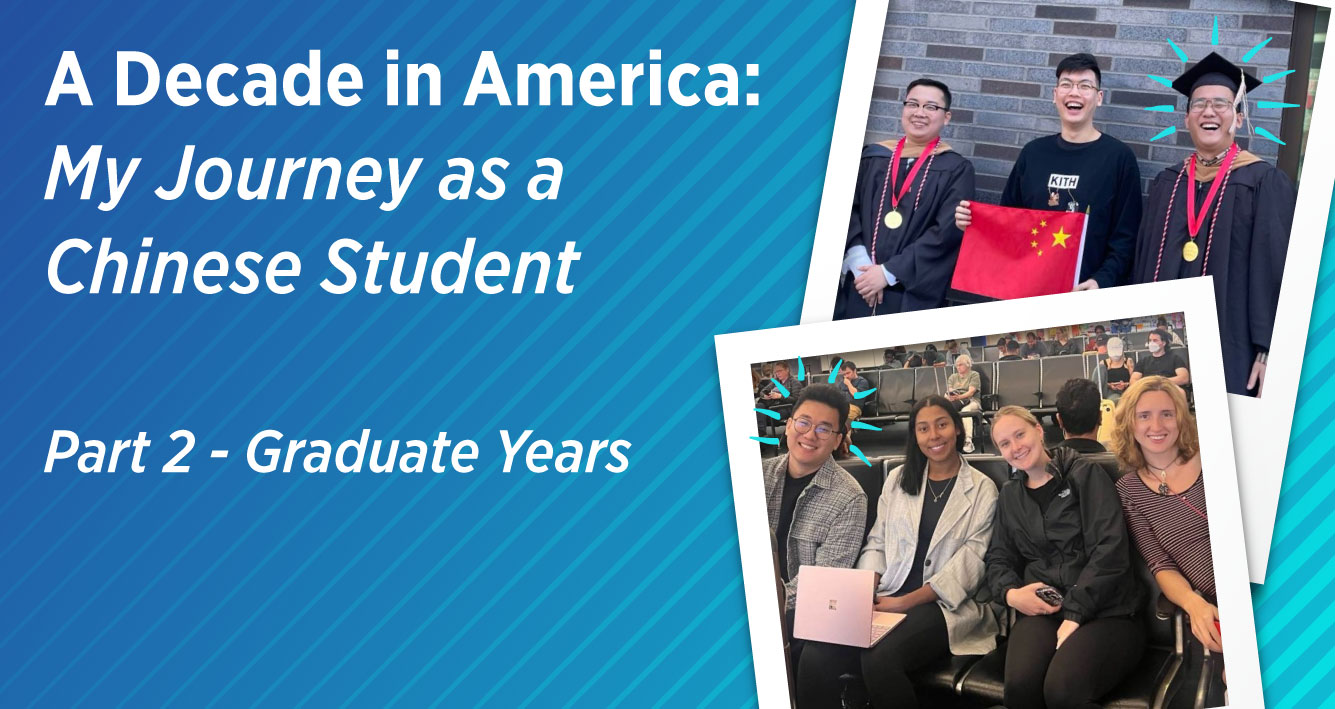
A Decade in America: My Journey as a Chinese Student, Graduate Years

As much as Tianyu Shen’s undergraduate years as a Chinese student in the US were about belonging, his postgraduate experience in Boston revealed the other side of the international student journey: employability, professional development, and deeper cultural immersion.


Meet Intead!

  • Find us at WEIC in DC in March, ASU+GSV in San Diego in April and NAFSA in Orlando in May . Be in touch to share a cup of coffee in person.

eBook Reboot: 88 Ways to Recruit International Studentsupdated for our times. Your tactical toolkit for the year ahead. Covering all the bases in 10 quick-read chapters. Fosters great ideation discussions with your team.


If you missed our last post, Tianyu shared the influencing factors that prompted his decision to study in the US and how he selected his institutions from language program to undergraduate university. Today, he shares what came next. And for those of us in enrollment, we know that all eyes are on what happens next.

Caution: If you have not experienced the job search process as an international student, you might be surprised at what Tianyu has to say.

My Journey as a Chinese Student, Graduate Years

I want to share my story not only as a reflection of what I gained but also as a plea to policymakers: behind every F-1 visa and OPT application is a human being who comes to the US with hope, ambition, and a willingness to contribute. Policies that close doors hurt not just students but also the communities, universities, and employers making up the vast economic and societal ecosystem that is America.

I feel so fortunate for the time spent in the US, though it wasn’t always easy.

Read on…
Read More

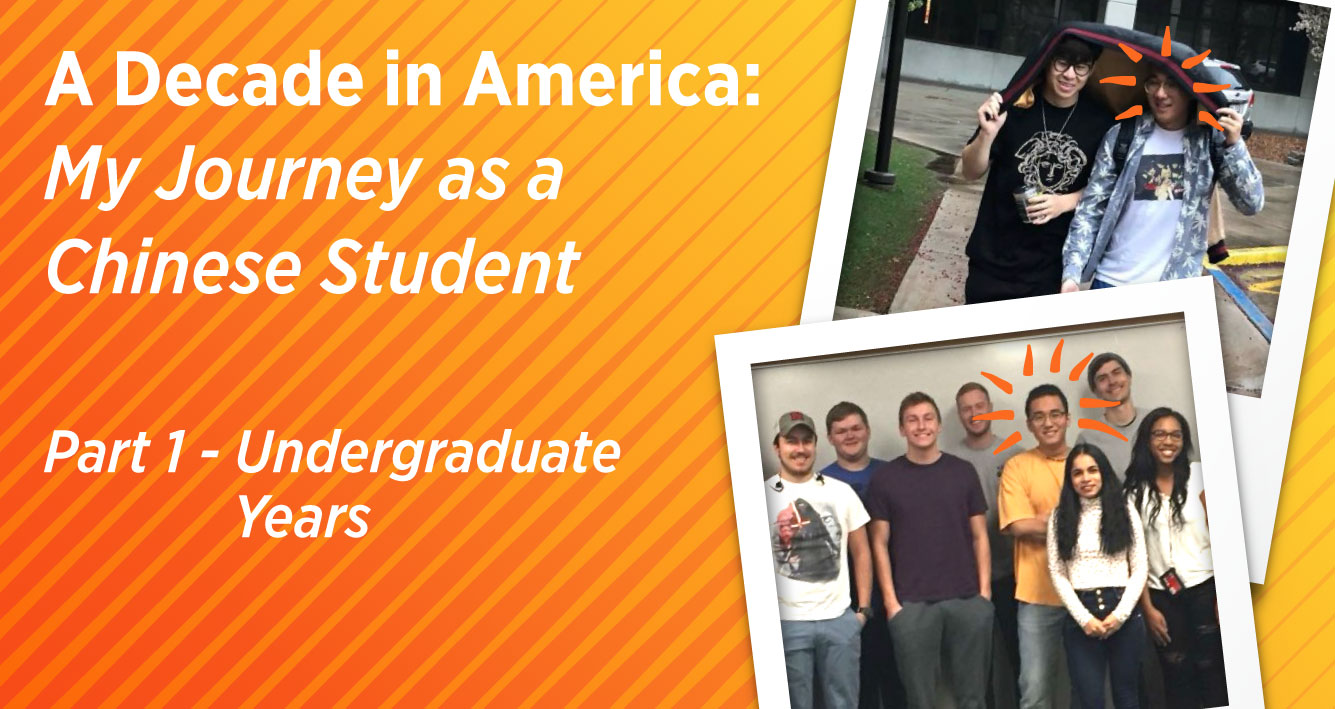
A Decade in America: My Journey as a Chinese Student, Undergrad Years

After a decade of studying, working, and contributing to US higher education, Tianyu Shen has returned to China – a move that mirrors what many Chinese students who studied in America have experienced. As so many countries are revising their policies about who may come and how long they may stay, this recounting of Tianyu’s experience is particularly poignant.

Many of you know Tianyu, the affable, talented Data Analyst who did some amazing work during his time at Intead as a STEM OPT student. Like so many international students, Tianyu’s initial inclination to study abroad was rooted in adventure. His initial thought more than a decade ago: Let’s go to New Zealand! And, like so many others from China, his parents redirected him to the US.

So that was 2015, and at the time, IIE was reporting that US universities were experiencing the highest growth rate in 35 years, with China as the key driver. At the time, the influx of Chinese students in particular helped many US universities launch new academic degree programs that benefited American students as well as international cohorts. Now, in hindsight, analysts point to how the revenue generated by the growth in international students from 2010-2020 gave many institutions the capacity to invest in infrastructure and academic advances that created huge opportunities for the entire campus.

Now, there’s a very different narrative being played out in the US and globally. We wonder where Tianyu’s parents would advise him to go for study abroad if he were starting his journey today.

We think you’ll enjoy his observations about Hollywood movies, and comparisons of Boston, MA to Lincoln, NE.


Meet Intead!

  • Find us at WIEC in DC in March, and ASU+GSV in San Diego in April. Be in touch to share a cup of coffee in person.

eBook Reboot: 88 Ways to Recruit International Studentsupdated for our times. Your tactical toolkit for the year ahead. Covering all the bases in 10 quick-read chapters. Fosters great ideation discussions with your team as you seek to diversify your recruitment efforts.


Because Tianyu’s experience mirrors that of so many students sitting in US classrooms and working OPT jobs right now, we asked him to take you through his student journey. What is it really like to come to the US still needing to learn English while seeking an adventure? When does the mindset turn toward career? And what did the OPT experience really deliver?

Today, Tianyu offers his perspective on the formative time he spent learning English in Boston and as an international undergrad studying in Nebraska, where he says he spent some of the happiest years of his life. An overview of his more career-focused years as a grad student will come in our next post. Be sure to check back for that. Read on now for his unvarnished take as a recent international student. And please, share with those who are shaping the American higher ed system today…

Read More

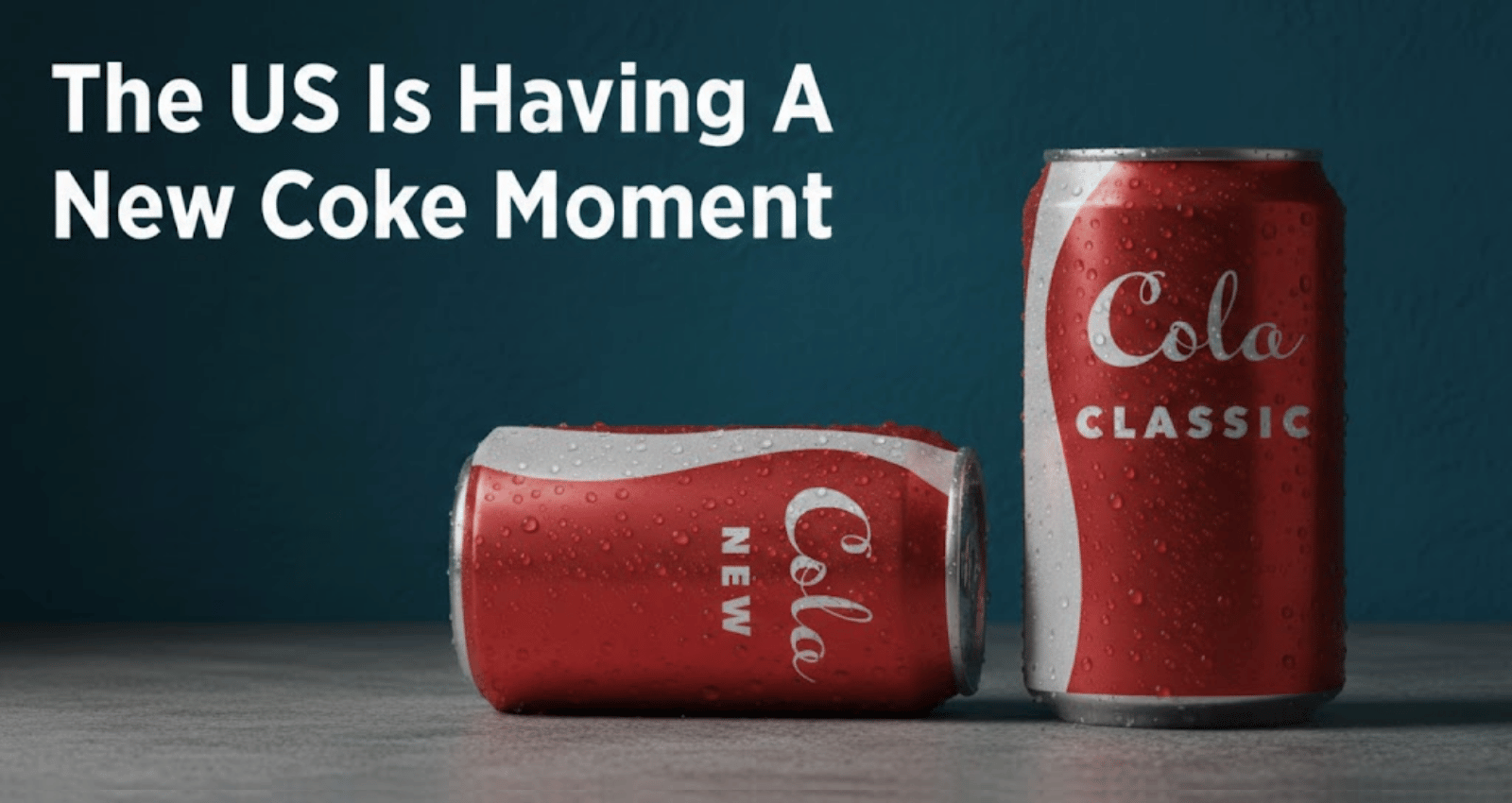
The US is Having A New Coke Moment

In 1985, Coca-Cola’s leadership concluded the soft drink needed to change. Sales of nemesis Pepsi were on the rise and thousands of blind taste tests suggested consumers preferred something sweeter. Their answer: New Coke.

So, on April 23 of that year, they unveiled an “improved” formula, giving consumers a new taste, new logo, and a massive new product rollout. Welcome to New Coke. You can imagine the financial investment made.

Almost immediately, consumers revolted. Recorded consumer sentiment:

“Changing Coke is like breaking the American dream, like not selling hot dogs at a ball game.”

“My dearest Coke: You have betrayed me.”

“Millions of dollars worth of advertising cannot overcome years of conditioning. Or in my case, generations. The old Coke is in the blood.”


MEET US AT AIEA 2026!

We'll be presenting:

  • Resilient IEM: A History Lesson for Managing Current Chaos
  • AI: Your Old SEO Approach No Longer Cuts It

Or, be in touch to grab a cup of coffee. We'd love to connect!


That’s just a taste (so to speak) of the feedback Coke received. The company had wanted to re-energize the brand. They clearly energized something!

The company fielded up to 8,000 calls a day from dissatisfied customers and received over 40,000 complaint letters. Imagine if social media had existed then. Sales volume plummeted sending rival Pepsi sales through the roof. In today's dollars, this was roughly a $100M mistake.

Clearly, Coca-Cola got the message. A quick 79 days after New Coke’s launch, the original formula was back in market, rebranded as Coca-Cola Classic. Sales soared beyond previous highs. Consumers didn’t just return; they came back with enthusiasm and loyalty. Within a year, Coca-Cola was outperforming Pepsi more decisively than before. The Coca-Cola brand had emerged stronger than ever.

Why bring this up now?

Because the US is experiencing a New Coke moment all its own. You feel it, too, right?

Read on… 

Read More

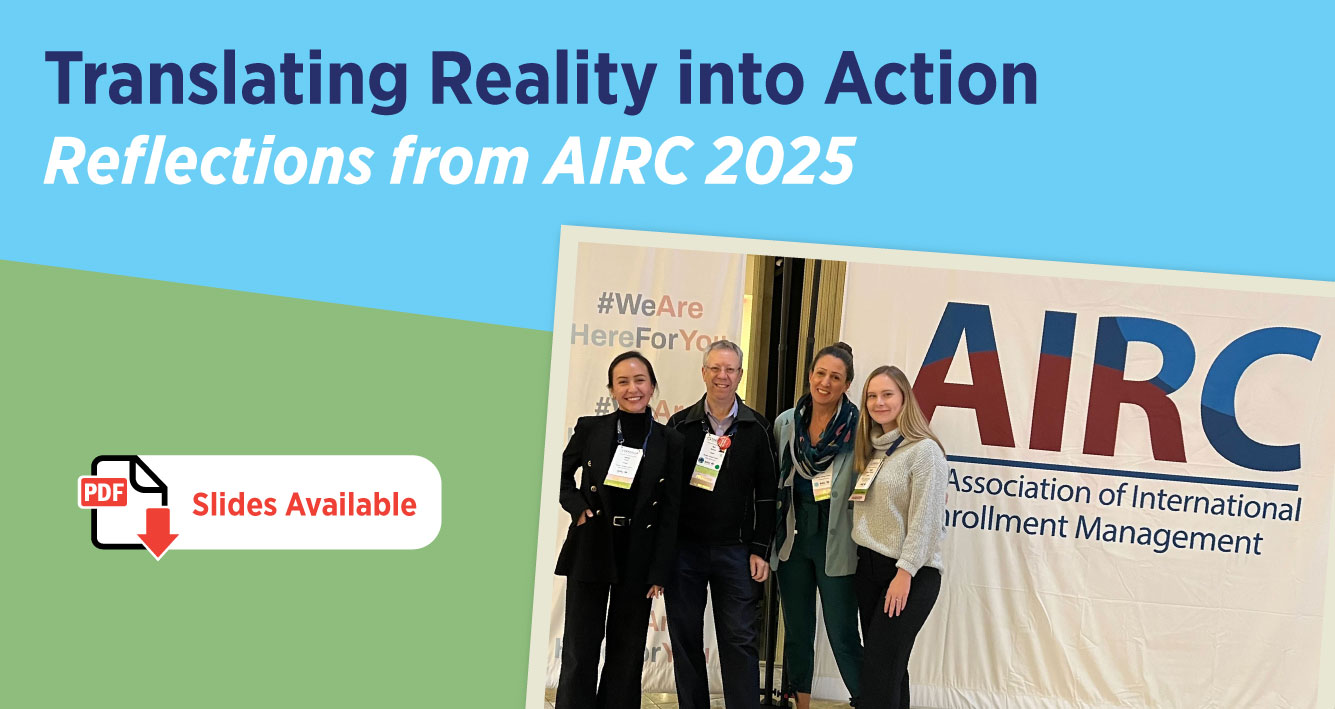
Translating Reality into Action: Reflections from AIRC 2025

Is your leadership happy right now? How about your staff? 

We’re talking to you, enrollment leaders. The conversations we are having consistently are about managing up and managing down. The challenge of leading those around you through significant disruption. 

Your institutional leadership is rightfully worried about the enrollment future (domestic and international). Your staff are rightfully worried that the current climate is a doomsday scenario for academic institutions. There is a lot of job dissatisfaction going around.  

Still, truth is, there have always been times like these. The stressors may be different, the intensity a bit higher, but the anxiety and resulting need for focused work to solve problems are nothing new. 


Meet Intead! 

  • Find us at AIEA in DC in February, WEIC in DC in March, and ASU+GSV in San Diego in AprilBe in touch to share a cup of coffee in person.
eBook Reboot:  88 Ways to Recruit International Students  2025 update. Your tactical toolkit for the year ahead. Covering all the bases in 10 quick-read chapters. Fosters great ideation discussions with your team.


At the AIRC 2025 conference that just recently wrapped in Atlanta, almost all of the presenters and participants ultimately addressed the question of how to talk to institutional leadership and help them to understand the complexities of internationalization –  because most academic leaders are unaware of how the international education community works. 

Helpful slides from one of our sessions are available below. They speak to 6 hesitations leadership leans on when deciding not to invest in international and what you might present to them to modify their perspective. 

But here’s the focus: institutional leaders do not need to know HOW it all works. They simply need to see the value of it and the investment required. To do that, they need to listen to and trust the messenger (that’s you).  

Read on… 

Read More

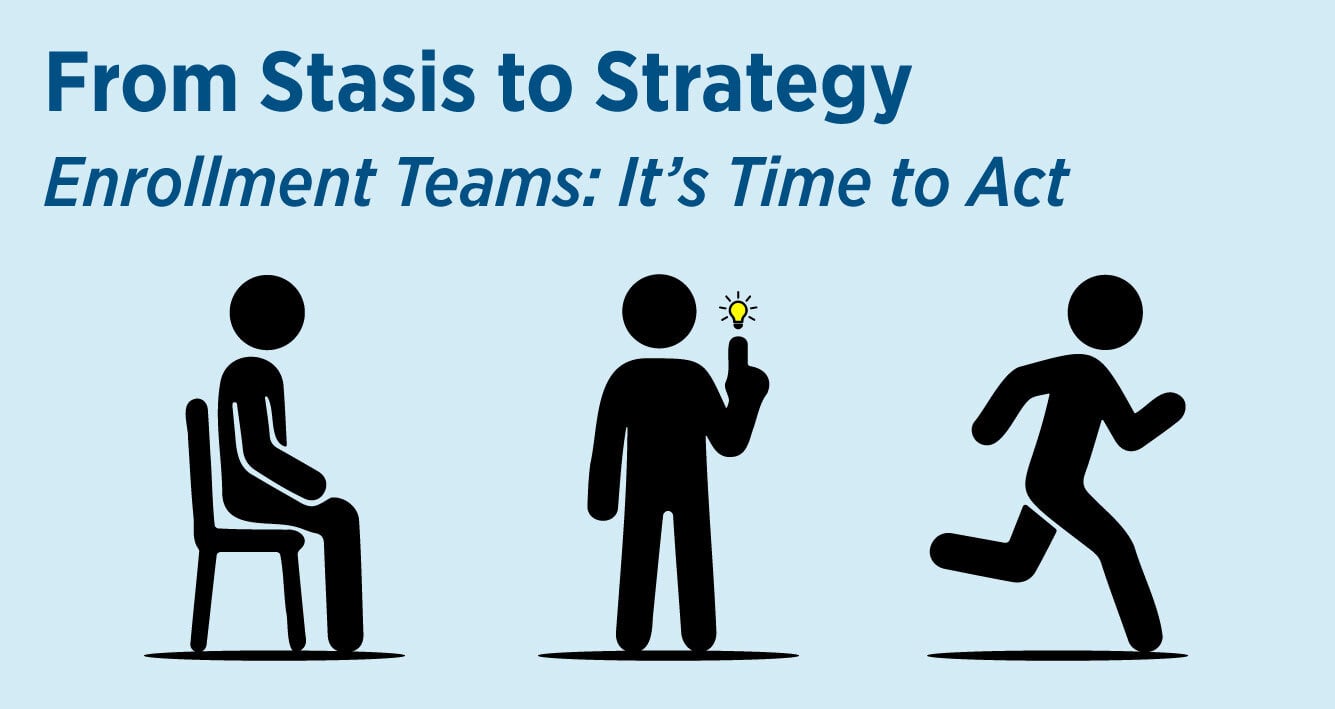
From Stasis to Strategy: Enrollment Teams, It’s Time to Act

Churn happens in every setting. Promotions, departures, budget realignment, team and department consolidation.

Disruptive, yes, but hardly unprecedented – a common cycle typically prompted by fiscal changes and then the disruptions ripple out from there. 

And yet, change rarely feels routine. Especially at the scale we are experiencing right now.

Still, your programs need promotion, your Deans have their own priorities, and everyone knows that your important leadership chair is about to turn over (you know the one, right?).

What is an enrollment team to do? Do you launch a new marketing campaign now, or wait? What if today’s A, B, and C priorities become tomorrow’s D, E, and F because the new leader coming in 4 or 5 months will have their own ideas.

And what happens in the meantime as you try to sort it all out? Stasis.  

So often, teams sit on their hard-won budgets, waiting for stability and clarity. An approach, for sure, but not a good one. Doing nothing isn’t leadership (too blunt?) – and doing nothing will do nothing to advance your yield or deliver your next class.

We all know there are legitimate excuses for not hitting your numbers. Yet we see this stasis mode all the time. And yet...

What your enrollment team needs in times of ambiguity: smart bets and clarity. 


Going to AIRC in Atlanta? Let’s connect! 

Join us Dec. 3, 2025, 1 – 4 p.m., for our workshop, Exploring Third-Party Business Models for International Student Recruitment, or any one of our other conference sessions. You are registered, right? 🙂

Or, meet us at:AIEA in DC in February and ASU+GSV in San Diego in April.


How you get to clarity and forward motion: concrete data to identify the opportunities and cut through uncertainty. And importantly, you need stong presentations to build internal support for your plans. 

In this time of seemingly never-ending uncertainty, institutions need leaders who act. Read on for our views on what proactive enrollment leadership looks like… 

Read More

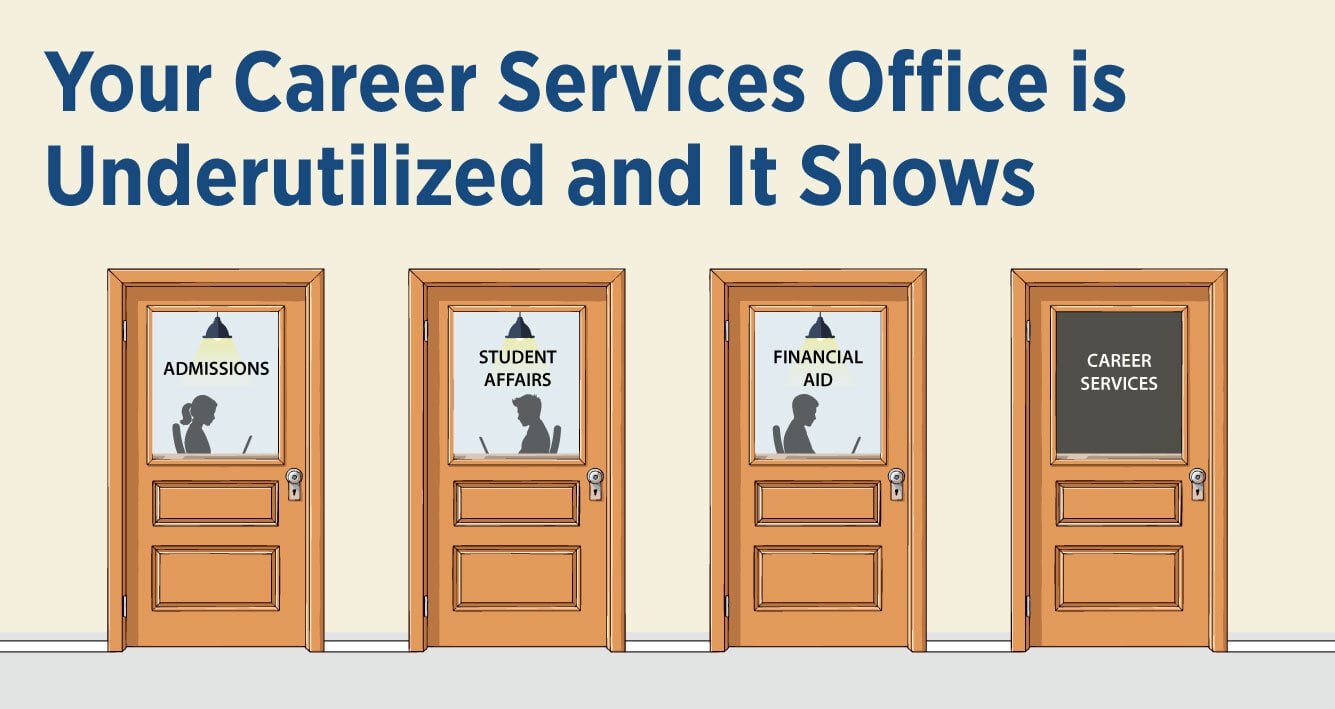
Your Career Services Office is Underutilized and It Shows

It’s well understood that future careers motivate students to pursue higher education. You could ask almost any student – domestic or international – whether career opportunities and outcomes influenced their decision to enroll, and the answer will be yes.   

Take the 2024 State of Higher Education study by Lumina Foundation and Gallup. In it, 84% of respondents cited at least one employment-related reason for pursuing (or potentially pursuing) a degree or credential. Another Gallup study found that students who stopped out were less likely to be motivated by career goals (they were more motivated by general learning) – suggesting that career motivations don’t just drive enrollment – they support retention. 


Meet Intead! 

  • Find us at AIRC in Atlanta in December, AIEA in DC in February, and ASU+GSV in San Diego in AprilBe in touch to share a cup of coffee in person.

eBook Reboot:  88 Ways to Recruit International Students 2025 update. Your tactical toolkit for the year ahead. Covering all the bases in 10 quick-read chapters. Fosters great ideation discussions with your team.


Our own research on the preferences and motivations of international students aligns with this. We suspect your experience does, too. Broader media reports emphasize that domestic families and students are increasingly focused on career outcomes as the justification for the cost of university. International students and families always have been. 

Where we are going with this: the more successful you are at getting students into the careers they want, the more successful you will be at getting students to fill the seats you want.  

And yes, we know you’re already telling prospective students that “95% of your graduates get a job or continue on to an advanced degree after graduation.” That’s no differentiator if everyone is saying it, despite its accuracy. 

This is where Career Services should chime in. Yet, many (read: most) students view Career Services through a lens of “why bother?” Hard to blame them. Help with resume and cover letter writing is too basic and can be provided by ChatGPT. Mock interviews have value, but there’s SO much more these departments could be doing to help students and your institution’s enrollment growth. 

Read on for some interesting data points and our recommendations for improving Career Services with an eye on driving enrollment…  

Read More

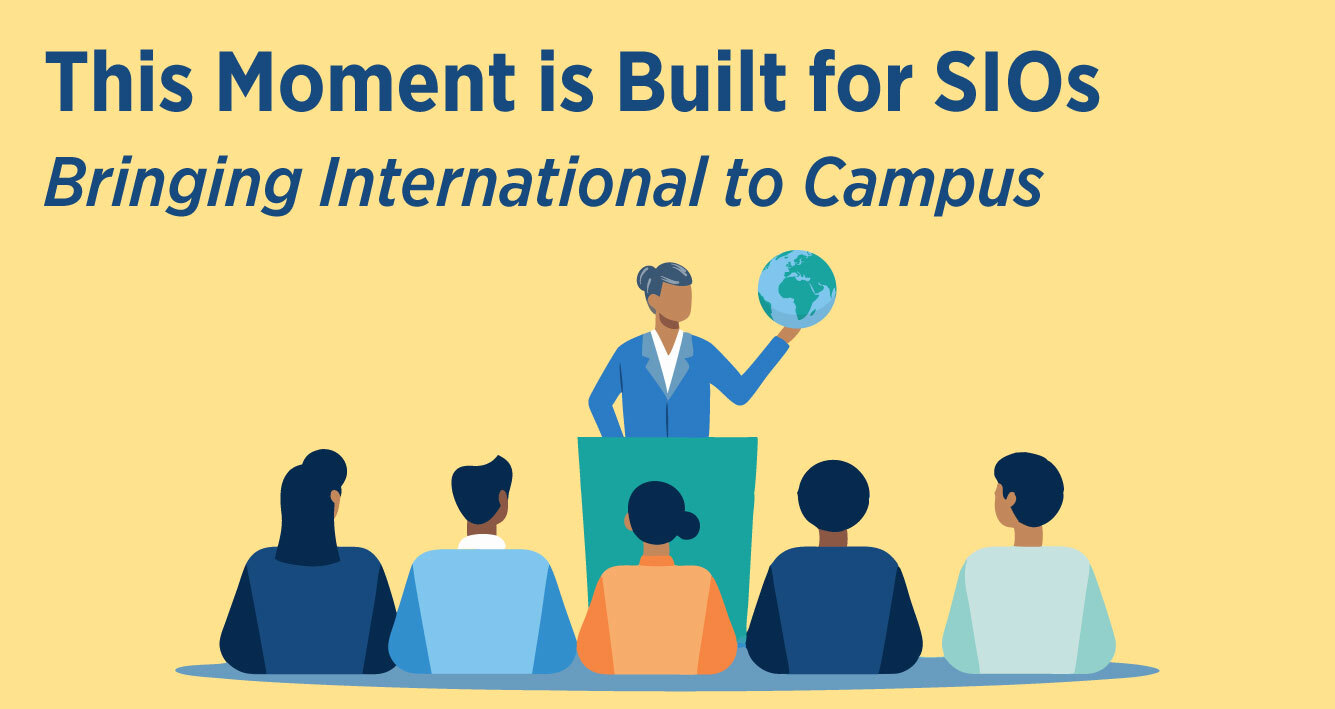
This Moment is Built for SIOs: Bringing International to Campus

SIOs (Senior International Officers) have for years been understaffed and under resourced. As vetting of international students ratchets up and new policies continue to challenge immigration and inclusion, SIOs wonder: what’s next?  

What we know is that our SIO colleagues have been receiving an abundance of well-intended, and often unwanted, emails of concern from their academic peers across the campus. Administrators, deans, and faculty are coming out of the woodwork, asking how the SIO and the institution as a whole are supporting international students. Sidebar comments may also raise concerns about how the institution will meet our future international student enrollment targets.  

SIOs often view the sudden and intense interest in all things international as unnecessary and intrusive. As the questions stream into your inbox your knee jerk reaction may be to push them off.

I can spend all day writing substantiative responses to each of your inquiries. Or I can do my job. Frankly, I’d prefer you simply stayed out of it. Trust me, I know what I’m doing.  


Meet Intead! 

  • Find us at AIRC in Atlanta in December, AIEA in DC in February, and ASU+GSV in San Diego in AprilBe in touch to share a cup of coffee in person.

eBook Reboot:  88 Ways to Recruit International Students 2025 update. Your tactical toolkit for the year ahead. Covering all the bases in 10 quick-read chapters. Fosters great ideation discussions with your team.


Of course, you have been staying informed about all the policy changes. And no, you won't provide a summary of the policy changes that are coming in weekly with your multi-faceted plan to address each one, giving appropriate weight to the student, department, and institutional priorities.

Still, you know your colleagues are coming from a good place as they express their dismay. It can be gratifying to establish that these colleagues actually know your office and your role exist! We jest (but only a little). 

Are you seeing the opportunity? 

The SIO’s job is rarely well understood. The international staff swims in different, more complex currents than the larger domestic team. Storm clouds that the domestic team can ignore look entirely different from the SIO's office.  

Just one example: A downturn in oil prices, for instance, can disrupt the finances of students from oil-dependent economies. An economic shift like this rarely impacts domestic students. Is the domestic enrollment marketing team even aware of stuff like that? Likewise, any sudden shift in international currency exchange rates can alter student retention realities overnight. 

Truth is, you’ve been addressing the new realities each time new policies or statements emerge. And you’ve even informed your internal community about your efforts. Have they been listening? 

This really is a golden moment to get leadership across campus in tune to what is going on with international enrollment, international student experience, and overall campus internationalization efforts. It is a golden opportunity to let your colleagues know what their role could and should be.  

Deep breath. Therein lies the opportunity. Read on… 

Read More

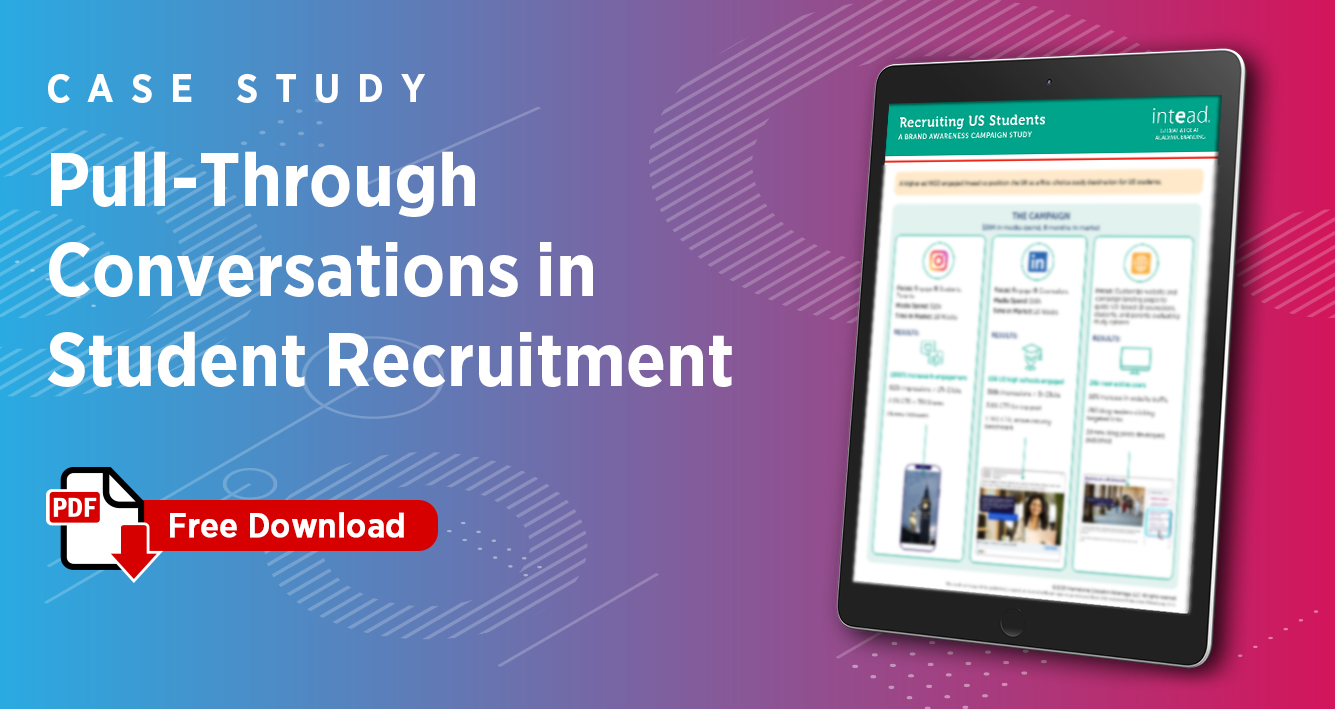
Pull-Through Conversations: A Case Study in “Reel” Student Connections

When we talk about brand building, especially in the edu space, we often focus on the big strategies: multichannel campaigns, search engine marketing, CRM integration, data analytics. All undeniably important. But what really breaks through to students? Content that feels personal – the kind that makes your target audience feel seen and understood. 

Think, an Instagram Reel featuring a current student sharing their journey and pouring a bit of their heart out. A TikTok breaking down the real cost of living on campus and the pride in managing the cost. Stories that help students bring their imagined academic and social experiences to life. Our audience is on the cusp of a new chapter, be it undergrad, grad, or secondary school.

Good content helps them see their future. Great content helps them feel it. Below you can download our case study and use our results as a benchmark as you evaluate your own campaigns.


Meet Intead! 

  • Find us at NACAC in Columbus in September, NAFSA Reg XI in Springfield in November, and AIRC in Atlanta in December. Be in touch to share a cup of coffee in person.

eBook Reboot:  88 Ways to Recruit International Students 2025 update. Your tactical toolkit for the year ahead. Covering all the bases in 10 quick-read chapters. Fosters great ideation discussions with your team.


We recently worked with a higher ed NGO positioning the UK as a first-choice study destination for US students. The campaign was a success (more on the metrics below). Why? We delivered content that spoke directly to our audience. That, and we brought the conversation to them on the right channels. We made the academic options feel within reach.  

The thing about social media is it gives you a chance to kickstart real conversations. What’s campus life like there? What’s the social scene like? What does student support really look like? How hard are the academics, really?  

Well-scripted content doesn’t always need polish (though sometimes it helps). The point is: it should be intentional, relatable, and relevant. All that authenticity stuff. If you’re doing it right, you’re not tossing up a Reel and hoping for the best. You’re showing up in the spaces your audience already trusts, with content they actually want to watch.  

What made our recent campaign especially effective was the pull-through. As the target audience engaged with the content and wanted to learn more, we extended the conversation across platforms.  

In this case, we built connections with students on Instagram and targeted high school counselors via LinkedIn. From there, we directed each audience to tailored pages on the organization’s website, delivering the information we knew they would be looking for -- anticipating their questions.

Understanding your user journey is all about anticipating and responding to the questions they will want answered. 

The campaign we ran lasted 8 months and had a media buy budget of just $28k. Want a closer look? Read on to download our quick-hit case study and our benchmarking data… 

Read More

Keeping Your Education Agent Partnerships Strong

Agents don’t manifest student enrollment. They build on the foundation you create together.  

In our last post, we wrote about how to find and evaluate right-fit student recruitment agents including offering you a handy, downloadable evaluation checklist. (If you missed that one, check it out here.)  

This week we focus on what comes next: maintaining that highly valuable relationship. 


Meet Intead! 

  • Find us at NACUBO in Phili and NACAC in Columbus in September, NAFSA Reg XI in Springfield in November and AIRC in Atlanta in December. Be in touch to share a cup of coffee in person.

Bookmark this: Intead’s Resource Center 
Access 800+ articles, slides decks, reports with relevant content on any topic important to enrollment management and student recruiting.  Check it out.


Sustaining a successful partnership with your agents requires mutual investment, clear and frequent communication, and trust. The most effective agents act as a true extension of your enrollment team. That level of service, however, requires an institutional partner who remains responsive and provides ongoing support all along the way. 

Seems obvious. And yet, too many institutions sign the agent contract, hit autopilot, and expect results to roll in. If it were that easy, you wouldn’t need an agent strategy. But you do. 

If you want long-term, high-yield recruitment outcomes, keep two systems well-oiled:  

  • Metrics to evaluate education agent performance
  • Streamlined internal processes that make your institution easy to represent

An often overlooked and critical element: Who on your university team have you assigned to managing your agent partners? If it is the new, eager staffer in your office with no real international experience (because, how hard can it be?), you are in for lackluster results or worse.  

Today we outline how to get this right. Read on… 

Read More

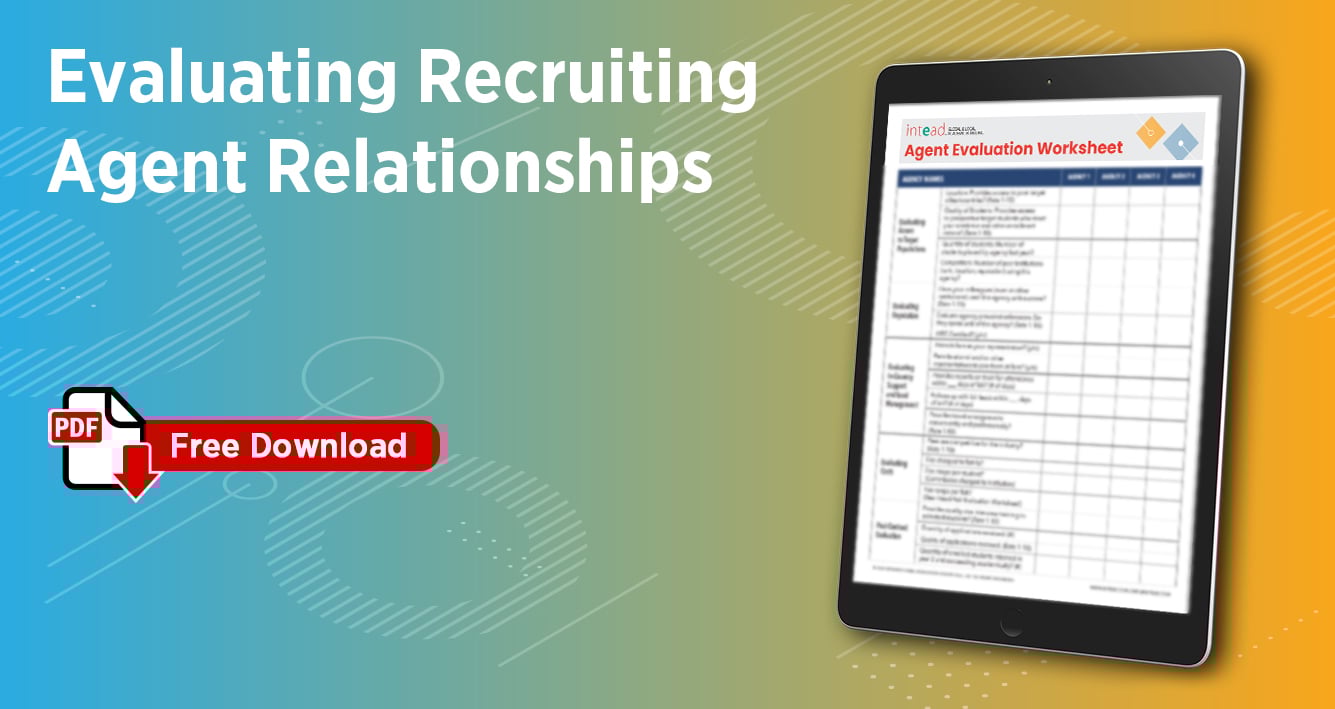
Evaluating Recruitment Agent Relationships

Policies can be complicated. Keeping student success front and center aligns everyone involved. In turbulent times like these, strong, trustworthy agent partnerships are a lifeline for students and student recruitment teams. 

“A US degree is the American dream for a lot of families. It’s a deep-rooted emotion for them. Studying abroad is one thing. Studying in the US is prestige,” said Deepika Phukan, an India-based education agent who works closely with the Intead team.  


Meet Intead! 

  • Find us at NACAC in Columbus in September and AIRC in Atlanta in December. Be in touch to share a cup of coffee in person.

Bookmark this: Intead’s Resource Center 
Access 800+ articles, slides decks, reports with relevant content on any topic important to enrollment management and student recruiting.  Check it out.


This year most of the Indian students Deepika talks to are being patient. “They are checking in with me to determine if now is the right time to apply, or if they should wait.” Similar to the travel disruptions the world experienced during the Covid pandemic, many of the obstacles families encounter won’t change student intention, just the timing. 

We’ve been seeing this measured reaction, particularly at the graduate-level.  

Many undergraduate students who are uncertain about their immediate plans have enrolled in Indian universities or institutions for the time being, according to Deepika. They’re keeping their options open and are considering transferring to the US once conditions improve. Some are also exploring pathway programs through their current institutions as a bridge to US education. 

There is palpable hope among students we’ve spoken with anyway. The political climate is hazy, and the immigration rules have become chaotic and more restrictive; nobody denies that. But the hope is that this, too, shall pass. So, students continue to stay informed and often turn to their education agents to verify what they’re hearing. 

Below we share a valuable agent evaluation tool for your use.

Read on… 

Read More