Recruiting Intelligence

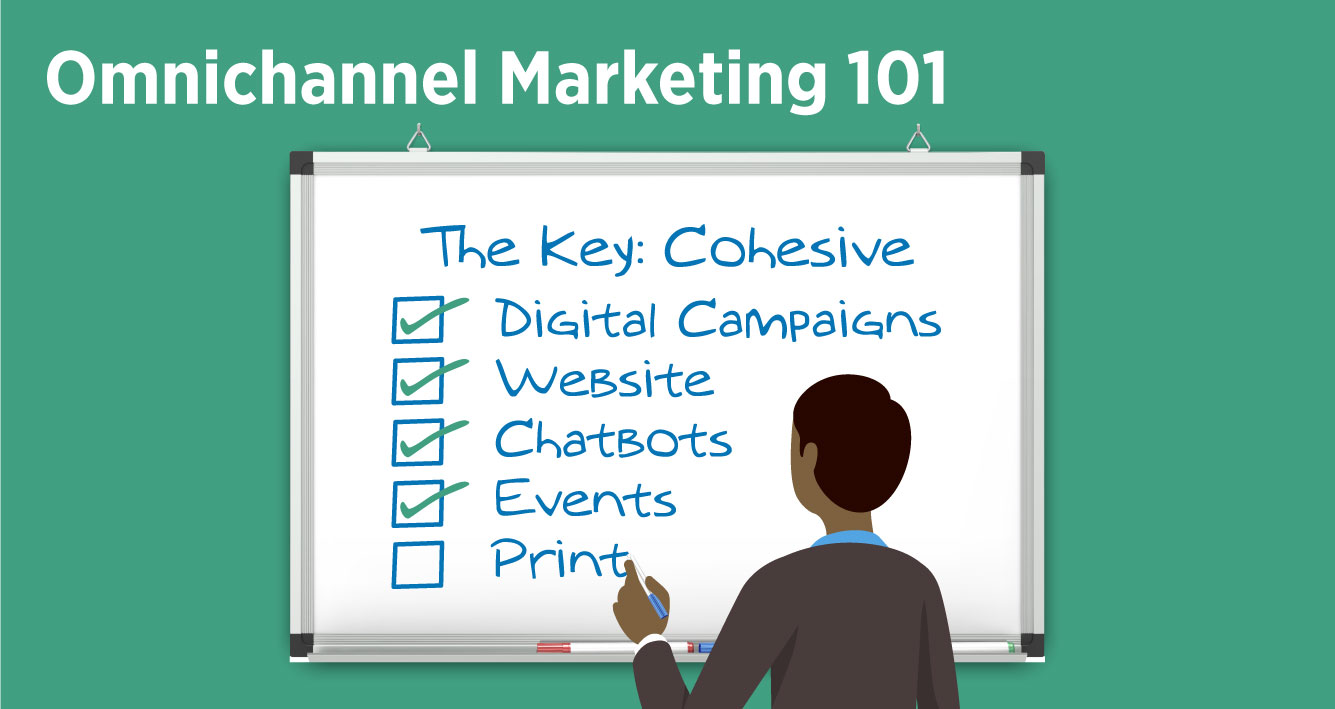
Omnichannel Marketing 101


If something isn’t online, does it even exist? We jest, and yet, without a strong online brand presence, many prospective students and their families really won’t know you exist. Because let's face it, prospective students today are basically born with smartphones in hand and earbuds on. If something isn’t online, it’s next to invisible in their world. 

That’s why institutions across the board have spent the past decade+ ramping up digital marketing budgets, perfecting their Insta image, and all the rest. A recent Washington Post article claims some well-funded universities are spending upwards of $1-2 million per month on digital ad campaigns alone. (Emphasis there on "well-funded!")

While that number is not industry average, most institutions do not have a Barbie budget, that figure is still a clear indication that digital is mission critical to higher ed marketing. No surprise to you or your finance team.  

But here’s the thing. The newest crop of students and their tag-along Gen Alpha siblings are at once more immersed and less smitten with social media. It's certainly no longer novel. Social media is life as they know it and they are adept at downloading ad blockers and avoiding sales pitches. So take note. Authenticity rules, while overproduced and slick messages are generally ignored.  

Our recommendation is to keep honing your digital marketing game, with this caveat in mind: your digital approach works best in tandem with other channels. We are talking out-of-home, print, in-person, and the like. In other words, the best-bet strategy is omnichannel.


We’ll be at AIEA in DC in about 5 weeks and participating in 3 great presentations: 

  • AI for enrollment management  
  • Entrepreneurial leadership in bureaucratic environments 
  • A data analyst's view of the international student recruitment opportunities
  • A discussion around International Student Points of Entry and a new publication to be released later in 2024 

And of course, we will be presenting at NAFSA in New Orleans in late May. If you’d like to schedule time to chat over coffee instead of over Zoom, please be in touch (info@intead.com). 


Read on to better understand the importance of omnichannel marketing and how you can use it to engage your target audience and grow your enrollment numbers.  
Read More

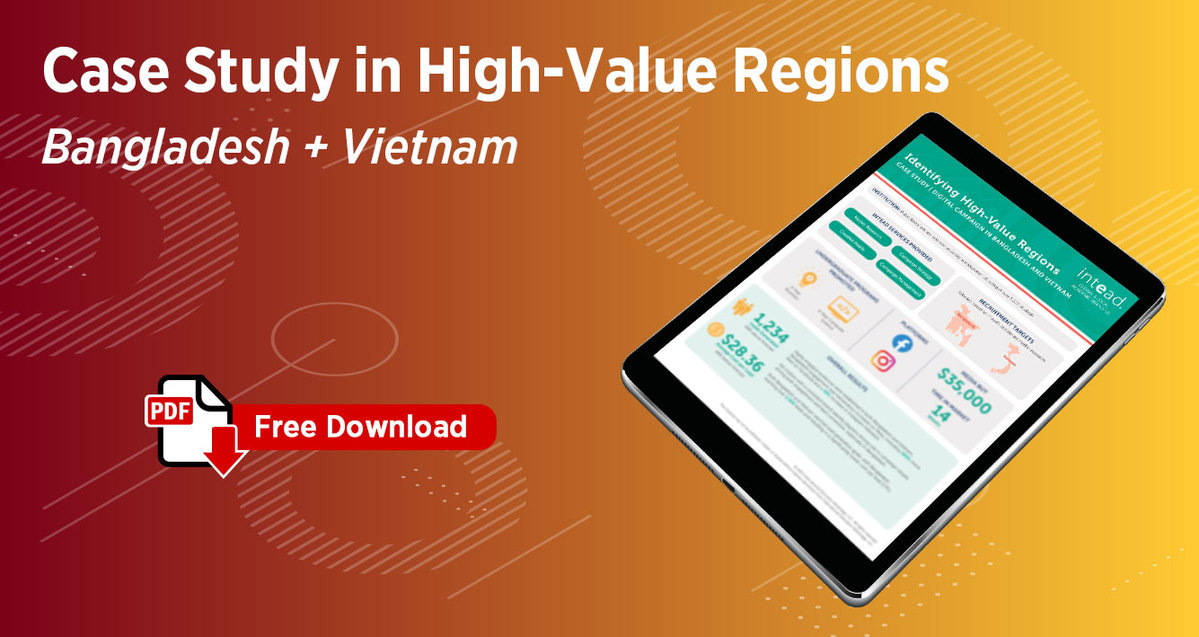
Case Study in High-Value Regions: Bangladesh + Vietnam


Market diversification is one obvious answer to sustaining enrollment numbers. How to successfully go about it, however, is often less obvious. Looking beyond your own campus to see how others are doing it can help. So, we have a story to share. 

If you've seen our other case studies, you know we share more concrete details and data than any other agency out there. We want to make you that much more dangerous and demonstrate the value of investing in customized, creative, and well-tracked paid campaigns.

In 2021, a mid-tier, public, Midwest regional university needed to recruit international students. It’s a student segment they’d had success with in the past, but Covid, as it does, threw a wrench in their recruitment efforts. It became clear they needed new ways to reach prospective students residing overseas. We know you were wrestling with this very issue at the time, too. We all were. 


Find us at AIRC and ICEF. Let’s connect! 

The Intead team is gearing up for some amazing presentations and we hope you can join us. 

  • AIRC Annual Conference – As you read this, our team is in Phoenix offering our full-day digital marketing workshop. If you are at the AIRC conference, please look for us here in Phoenix, Dec 6-9, 2023 
  • ICEF North America Workshop in Miami, Dec 11-13, 2023. We'll be offering a half-day workshop on Dec 11 and meeting with everyone on Dec 12-13.

Let us know if you’ll come share a cup of coffee and a conversation about all things global and digital (info@intead.com) 


Back to the results of our digital campaigns in Bangladesh and Vietnam.

With a media buy budget of $35,000, the institution was admittedly skeptical they’d be able to make any meaningful progress in a new market. We always want more wiggle room with our media buys, but we also felt certain they could succeed, with the right approach. They trusted our experience and the market research we delivered.

Our mission: understand who and where the prospective families are and then reach them in ways that prompt engagement. So our data detectives and creative talents set out to: 

  • Confirm the institution’s high-value student recruitment regions and where there might be room to grow
  • Develop on-brand, targeted, and effective digital marketing assets   
  • Launch and optimize digital campaigns to generate highly qualified leads (and build awareness, but really, we all want the high-value leads) 
  • And of course, report on campaign analytics to inform future marketing investments.

By any measurement, it went really well. One $12,000 media buy generated 40 million impressions, 500,000 clicks, 1,087 leads, 122 applications, 40 admitted students, and 7 enrolled. But who’s counting? (Please say you are!)

It was a fast, 14-week campaign involving two markets, two academic programs, and two social platforms. Want more insight? Download our free case study. Read on… 

Read More

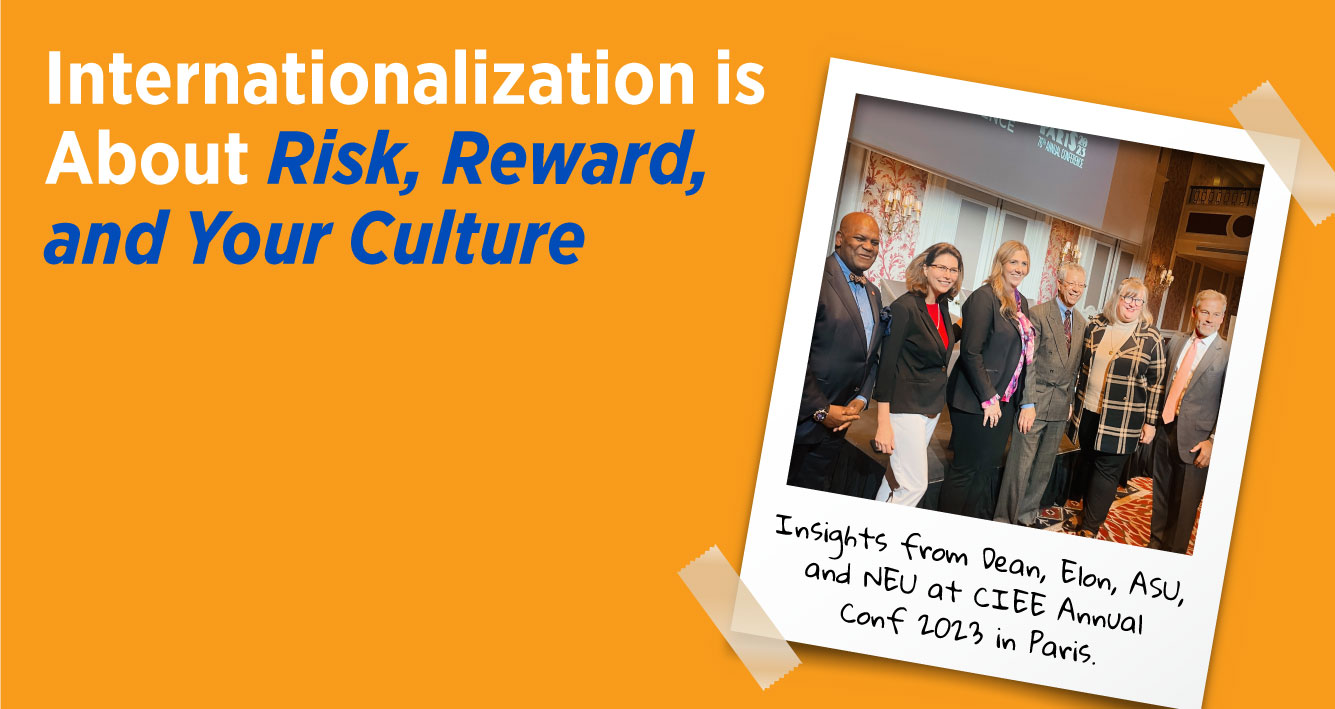
Internationalization is About Risk, Reward, and Your Culture


The opening plenary at the 76th CIEE conference drew a crowd earlier this month in Paris. No wonder. With a jaw-dropping panel representing Elon, Arizona State, Northeastern, and Dean College, the discussion presented some rare gems. 

The goal: set the conference off on the right foot. Get everyone thinking deeply about how international experiences can reach more students. 

The crowd clearly held the belief that a global education holds the promise of a brighter future. The proof was simply in the stories told by leaders in academia, government, and pretty much every institution in attendance. Those with international experience as a student spoke of the indelible mark that it had on their life and career. The global experiences changed their views of the world and shaped their decisions about how they would participate in it. No doubt, many of you can relate. 


Opportunities to Meet In Person 

The Intead team is gearing up for some amazing presentations and we hope you can join us. 

  • AIRC Annual Conference – we’ll be offering our full-day digital marketing workshop here In Phoenix, Dec 6-9, 2023 
  • ICEF North America Workshop in Miami, Dec 11-13, 2023 

Let us know if you’ll come share a cup of coffee and a conversation about all things global and digital (info@intead.com) 


Why we work so hard at this and gather to define the path forward: we are looking to make international education more accessible for current and future students. And we want those experiences to be deeply rewarding. We need to be sure the programs have a solid curriculum, strong faculty leadership, and finely tuned logistics and support services.  

We can only take on so much at one time. What I heard as the specific foci at this CIEE gathering: 

  • Clarify the steps to improving broad student access.  
  • Increase our capacity to provide student mental health support services.  
  • Focus efforts on environmental sustainability initiatives. 

The conference provided a foundation for robust, challenging discussions among study abroad leadership and all the many practitioners in the room. And these talks will continue. Fortunately, the resources to do the work, to make these ideas meaningful, not just esoteric, are in place.  

The discussions embraced big visionary approaches (can we foster greater employer engagement in internationalization?) and concrete touch points (can we provide each traveling student with a sustainability cookbook customized to each of 30+ destination cities?). The ideas shared and evaluated poured forth.  

Granted, there is never enough money to do all we want to do. But roughly 75 years ago, a poignant point in time following World War II, many smart and good people got together to launch global initiatives, including the United Nations, IIE, the Fulbright program, NATO, WHO, IMF, the World Bank, and CIEE to name just a few of the most prominent efforts to bridge cultures globally. 

I had the great privilege of moderating the opening plenary and speaking at length with: 

  • Rebecca Kohn, Ph.D., provost and vice president of academic affairs for Elon University 
  • Amy Stevens, Ph.D., vice chancellor of global experiential pathways for Northeastern University 

I wish all of you could have been there. That’s why today I’m sharing with you a few of my personal notes from talks with these industry leaders and other observations from the 3-day event. It’s a quick read, but one I know will spur ideas and get your wheels turning. Read on… 

Read More

Get Your Students Career Ready. Here's How - Part 2 of 2


Bringing the real world into the classroom is so important to the future of your students. And last week we shared one way Suffolk University is taking action. A sort of ​Career Readiness 101. This week, Career Readiness 201 as we talk about you and offer a helpful career-prep checklist, complete with on-campus practices and recruiter tips, too.  


Opportunities to connect in person and hear our latest market intel:

  • Join us in Paris Nov 8-10 at CIEE's 76th Annual Conference.
  • Join us in Boston Nov 13-15 at PIE News Live.

Let us know if you'll be joining us (info@intead.com).


Like you, the vast majority of students we talk to are playing the long game. Well before they even have a high school diploma, they’re thinking beyond university. They’re smart consumers and they need to know what their hard-earned degree, whatever the field, will mean for them in the market. Never mind that many of them are not sold on a major yet. They’ve been hearing for years about the rising costs of higher education. They understand ROI more than previous generations ever did. And their parents are all about that approach. 

According to the National Center for Education, in 1980, the annual cost of attending university (including tuition, fees, room, and board) was just over $10,000, adjusted for inflation. Fast forward to the 2019-20 academic year, and that that bottom line had ballooned 180 percent to nearly $29,000. This is the story your prospective students have grown up hearing. For decades, everyone, university administrators and families, have been wringing their hands about the rising costs and yet, not a thing has been done about it. 

For families, the reality is they’re looking at an average debt for a four-year Bachelor’s degree of $34,700 per the Education Data Initiative. And while the standard repayment term for federal loans is 10 years, it can take up to 30 or more years for more than a few students to pay off these loans. You can see their concern. 

Some of us optimistically thought the rise of online education would bring costs down and become a reliable source of revenue for universities and a powerful educational avenue for students. The reality: yes, a growing source of revenue, but the cost to produce truly effective online education that carries students forward with all the tools and supports, is fairly pricey to produce. And the low quality stuff really does not achieve the educational outcomes, so students pay for an ineffective degree - a credential that does not meet real-world employer needs. (See our blog post here about the perceived value of online degrees) 

Of course, these are tuition numbers you’ve thought about many times. And they’re all over the news right now as student loan repayments will soon be back on after a long pandemic pause. Smart students want to know the kind of return they’re going to get on their investment, and they’re looking to you to provide an attractive answer. 

So, what is your answer?

Read on for a checklist of essential ways to help ensure your campus helps prep students for the careers they’re hoping higher ed will lead them to. And yes, we’ve included pro-tips for you recruiters. Read on...

Read More

Get Your Students Career Ready. Here's How - Part 1 of 2

Let’s talk about the messaging your institution uses to convince students and families that what you offer has value. Pretty simple stuff, right? Maybe not. You’ll appreciate the helpful checklist that follows in part 2 of this series. Think marketing differentiators in a competitive marketplace. You won’t want to miss it. 


Opportunities to connect in person and hear our latest market intel:

  • Join us in Paris Nov 8-10 at CIEE's 76th Annual Conference.
  • Join us in Boston Nov 13-15 at PIE News Live.

Let us know if you'll be joining us (info@intead.com).


But first a story. 

Ok, so you are up in front of your board of directors presenting your business growth and marketing plan. You and your team have been figuring this out for a while and last night was a late one as you worked together to put the finishing touches on your slides. There were still disagreements among your team, but you settled the issues and felt nervously ready. 

Everyone has a speaking role but some on your team are stronger than others. Some don’t have appropriate clothes to wear for the presentation so they borrow something professional looking from friends. Some sway nervously back and forth and read their slides rather than engage with the very important board members. You realize early on in the presentation that the data presented on slide 7 is wrong. It doesn’t support your final recommendation. Maybe no one will notice. 

It is your Marketing Business class final presentation to a mock board of directors and as first year undergrads, your team is anything but seasoned. Your final grade is riding on how your team performs. 

Every semester for years now, I have had the honor of judging the final marketing analysis presentations of undergraduate students in a marketing business class at Suffolk University. A good friend of mine there teaches the class and gathers a set of judges from the biz to help the students get some real world feedback. Each judging session is as different as the teams presenting. It’s a blast for us, the judges. Nerve racking for the students. 

Recently, the department asked a few of the real-world judges for additional input and it truly impressed me. They wanted to hear from us as employers to understand what we look for in candidates as we hire. What tools should their students know how to use? What business concepts and approaches are critical to us as employers so their graduates will crush the interview?  

That line of questioning is SO important for business programs that often focus so much on esoteric business theory and simplistic case studies while purporting to be all about the real world. As our Intead Advisory Board Member Hillary Dostal, global marketing advisor at Pegasystems, says: There is best practice and then there is actual practice.  

This goes for your team, too. Read on…

Read More

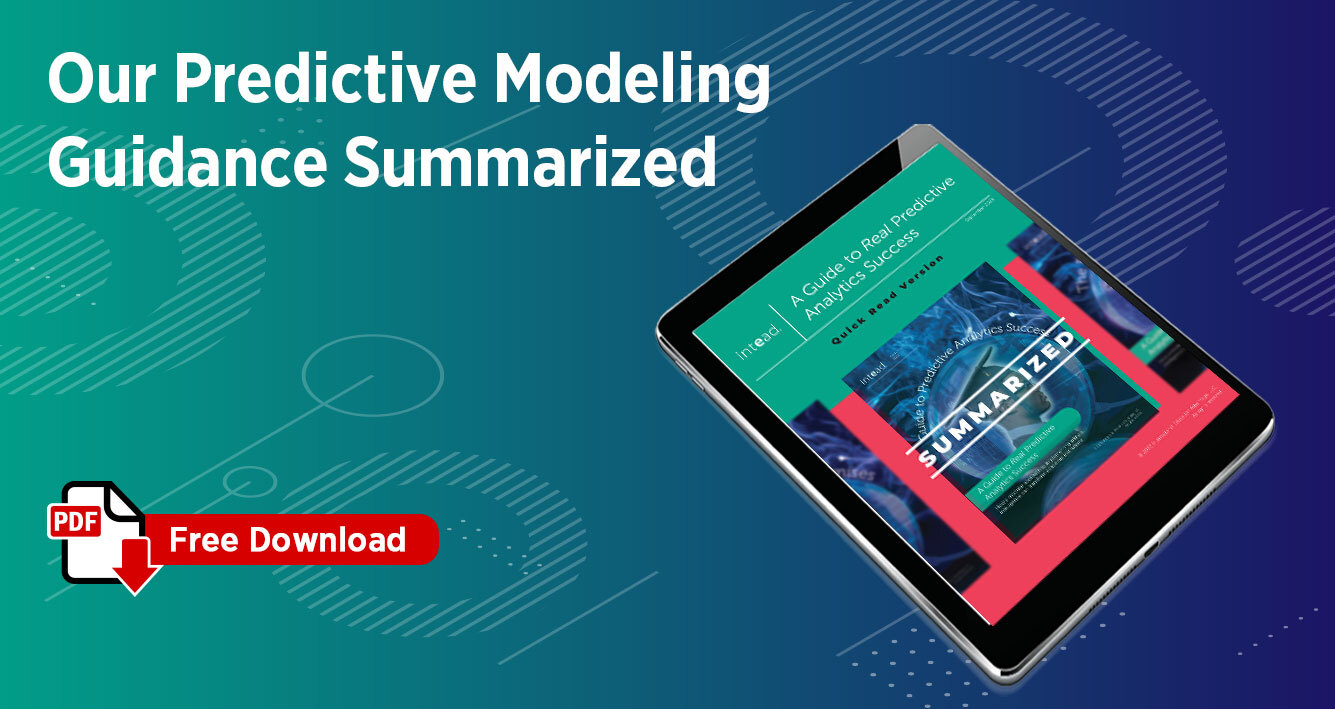
Our Predictive Modeling Guidance Summarized

Does the rise of AI change the value of predictive analytics?    

In 2020 we were all looking for a little predictability and sustainability. In life as well as enrollment. And while the pandemic may be in our rearview mirror, uncertainty remains an unflappable friend. We’re looking at you, enrollment cliff and public opinion polls about the value of higher education.

So, we thought now is a great time to revisit one of our most popular downloads because it’s all about predictability.

We published The End of False Promises: A Guide to Real Predictive Analytics ebook during the height of the pandemic as a tool to help our colleagues understand the role Big Data and Artificial Intelligence can play in enrollment strategies. After all, we know you’re increasingly looking for data to help deliver reliable, cost-effective, and transformational results for your institution. And we’re here to make sure you get what you think you’re paying for.


If you want to chat about how you are building your Fall 2024 strategy or the tactical execution approaches we have found most valuable, Ben and Iliana will be at the NACAC conference presenting alongside our colleagues from AIRC and Middle Tennessee State University on Sept. 22 in Baltimore. Can we schedule a time to chat? Send us an email and coffee's on us! 


About our predictive analytics guide, you will:

  • Decode predictive analytics
  • Access case studies of predictive analytics in action
  • Learn how to dodge prediction pitfalls
  • Get your hands on a vendor vetting checklist
  • And much more

The full guide is available on demand for Intead Plus members, while, you, our blog subscribers, can download a useful 3-page summary for free. Read on for access and a quick primer on what predictive analytics is and is not…

Read More

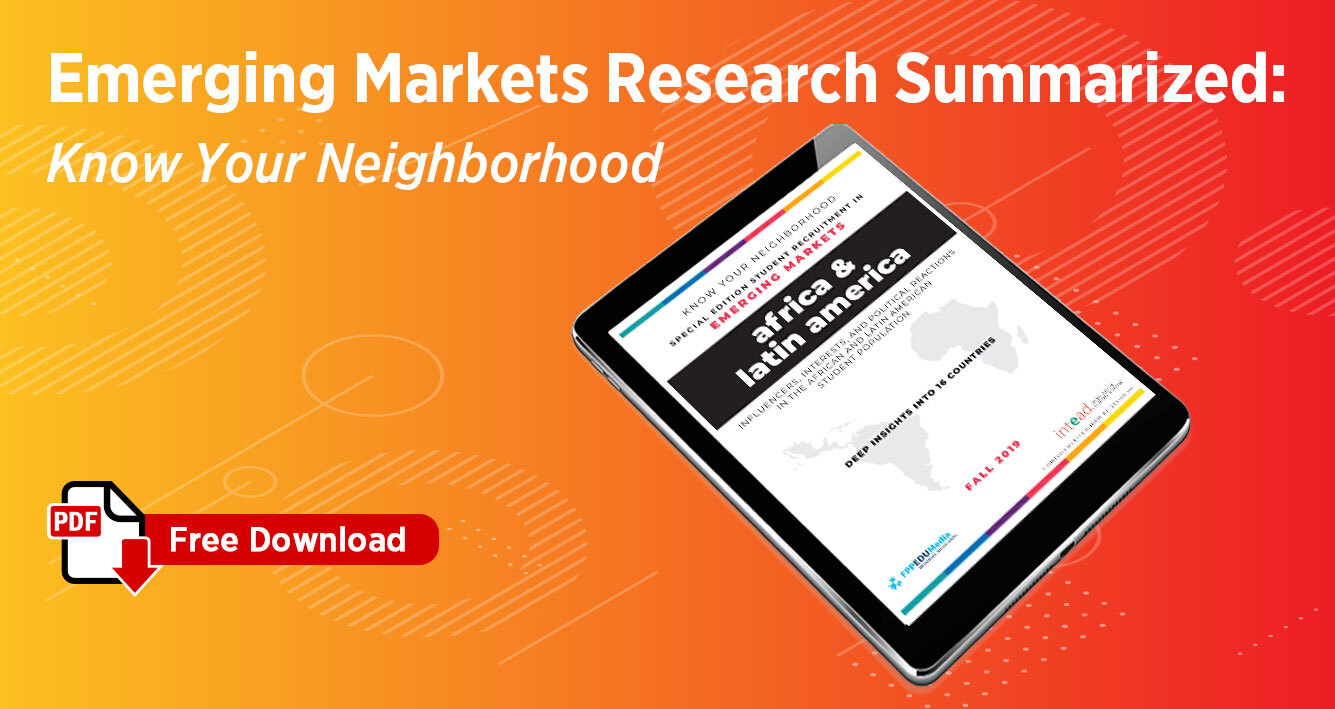
Emerging Markets Research Summarized: Know Your Neighborhood

In 2019, the Intead team along with FPP EDUMedia conducted primary research to assess the influencers, interests, and political reactions in African and Latin American student populations to help institutions like yours tap emerging, or what we now consider, evolving student markets. 

More than 12,300 international students from over a dozen countries responded to our survey. What we learned has helped shape some really important conversations with clients looking to broaden their international reach.  

Enrollment ambiguity continues to push us to explore new opportunities. We encourage you to return to this research for still relevant guidance as you look for ways to grow, diversify, and strengthen your international recruitment strategy.  

If you want to chat about how you are building your Fall 2024 strategy or the tactical execution approaches we have found most valuable, Ben and Iliana will be at the NACAC conference presenting alongside our colleagues from AIRC and Middle Tennessee State University on Sept 22 in Baltimore. Can we schedule a time to chat? Coffee's on us! 

We know folks are short on time and just want us to get to the actionable points. So, we took the key ideas from our previous research and put them into a one-pager comparing Africa, Central America, and South America. You can grab that at the bottom of this blog post.  

In the full Emerging Markets e-book, available to Intead Plus members, you will find very helpful recruitment strategy insights: 

  • How your university can best appeal to student prospects in specific evolving regions and countries (segmentation)  
  • Influential messaging tips that highlight your strongest differentiators (stand out in the marketplace)  
  • Effective distribution channels to reach your target audience with those differentiators.  

To get the free one-page comparison, read on… 

Read More

The Non-traditional Student Advantage Part 5: Audience Targeting

The non-traditional student can be anyone. To have one definition of a non-traditional learner would limit what we’re trying to achieve. And trying to reach all of them is essentially like trying to boil the ocean. – Hillary Dostal, former director of global marketing, recruitment, and enrollment initiatives at Northeastern University  

A 26-year-old who has just been laid off and seeks to complete a credential program and a 45-year-old stay-at-home mom thinking about a return to the workforce will respond to different messages communicated in different ways. These two prospects will be intrigued by selling points that speak to their own interests. They will prefer messaging written in different tones. They get their information through different channels. At their core, they have different wants, needs, concerns, and aspirations.  

Still, both are terrific prospects for your institution.  

This is part 5 in our 5-part blog series on reaching and enrolling non-traditional students. Find part 1, part 2, part 3, and part 4. 

So, what to do? Get to know your individual audiences. Speak directly to them on their terms. This is how you convey truly compelling messaging. It doesn’t require separate marketing initiatives per se, but it does require audience segmentation and very specific targeted messaging and execution. 

Importantly, before you dive into the engagement piece, you’ll want to be sure that what you have on offer will help these prospective students succeed. 


This is a very insightful ebook. It underscores the importance of differentiating non-traditional students from traditional students throughout the pipeline–from marketing to student success and engagement. The section on conducting an effective marketing audit is a good conversation starter for strategic development conversations. The real-world insights make the book a unique and valuable resource.  ~ Santhana Naidu, Vice President for Marketing and Communications at Rose-Hulman Institute of Technology  


Done well, market segmentation enables you to create better-targeted content and helps ensure that you are spending your resources on initiatives that are the best fit for your institution. This marketing work is simply the organization of your potential students into groups by demographic, psychological, and behavioral characteristics. Segmentation allows you to decide which group represents the biggest opportunity for your institution. And by opportunity, we mean they will find success and their investment of time and money will pay off for them. 

Make that group your target audience and create an offer that will appeal to them specifically. 

Ready to learn how? Read on. 

Read More

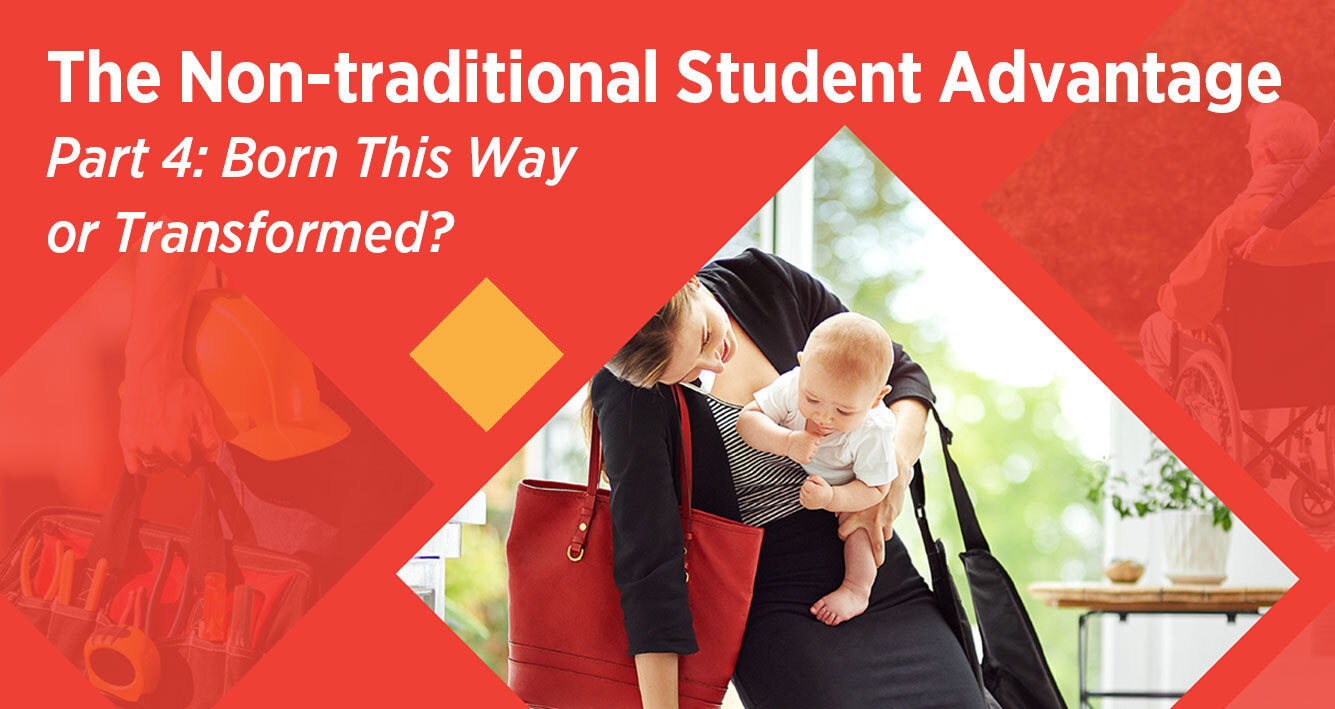
The Non-traditional Student Advantage Part 4: Born This Way or Transformed?

Growth-minded institutions are taking a long, hard look at their approach to non-traditional students. 

This is part 4 in our 5-part blog series on reaching and enrolling non-traditional students. Here are links to part 1, part 2, and part 3.

Truth is, courting and supporting non-traditional students has been part of the mix for decades. Most institutions of higher learning have embraced this broad swath of students. For some, the non-traditional market segment was part of their original focus. We think of them as “born this way.” For others, they are demonstrating market adaptability. We call these institutions “transformed.”  

 Which type is your institution? 

 Both have strengths to embrace and challenges to overcome. 


This ebook provides a very comprehensive look at non-traditional students. Many adult learners think that they are too late, too old, and will not fit in. In reality, there are more non-traditional students than traditional pursuing their education. Marketing to this audience is challenging as they are often working full-time and may lack the confidence to go back to school. This book offers real strategies that we should all consider.  ~ Dr. Richard Carter, Associate Vice President for Global Engagement at University in South Alabama 


Read on to take a closer look at these two roads to an institutional identity that embraces non-traditional students. We will consider the strengths and weaknesses associated with each route, while also offering food for thought about your own path. 

Read More

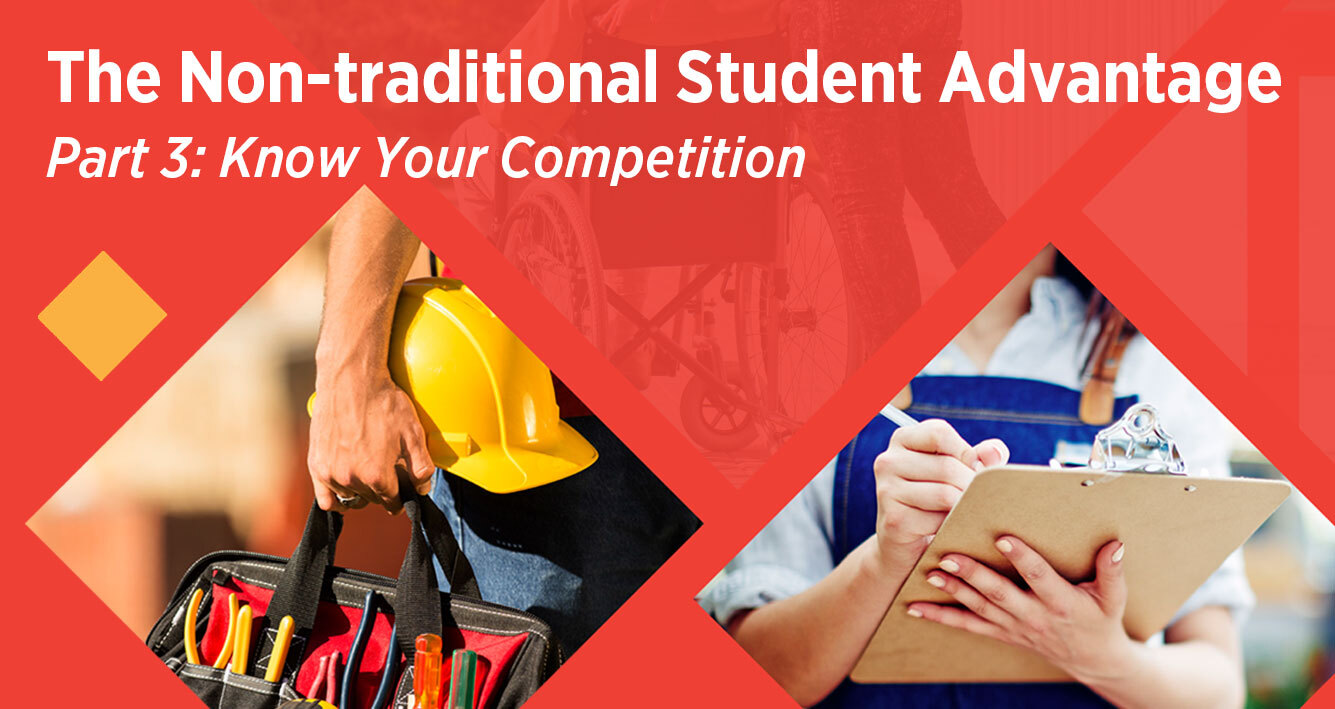
The Non-traditional Student Advantage Part 3: Know Your Competition

If you’ve been following this series on non-traditional students, or paying attention to the shifting student landscape at all, then one thing’s clear: non-traditional students are a valuable growth market. And your competition knows it.

This is part 3 in our 5-part blog series on reaching and enrolling non-traditional students. Links to part 1 and part 2.

Yes, non-traditional students demand more than traditional students. They need flexible schedules, targeted certificates, different student service support, and a strong return on their investment. And institutions are (finally) responding. Is yours?

Five years ago, when we published “Quality. Cost. Convenience. How academic leaders are competing for today’s non-traditional students.” – an e-book available for free to Intead Plus members – there was a lot of speculation about MOOCs (massive open online courses). Would they eat into the non-traditional piece of the pie?

While it’s true that student interest in MOOCs soared during Covid, the actual threat they pose to degree programs is, well, not much.


I love the blend of data, environmental scans, case studies, and basic recommendations that are interwoven in each section. This ebook is excellent for institutions that seek to fine-tune their non-traditional services or begin the process of addressing their needs. It covers the many daunting challenges that universities face when focusing on this student segment. ~ Mary Marquez Bell, retired Vice President for Enrollment Services, SUNY Old Westbury


From what we’ve seen, MOOC students are mostly filling leisure time with these types of programs (rather than pausing other academic pursuits). Typically, MOOC students only engage in the coursework a few hours a week. They really aren’t reaping any financial gains from having taken these courses, either. And, in the end, most are pleasantly surprised they actually learned something. So that’s good – for the student and you!

The more urgent conversation has shifted to involve certificates and credentials, for-profit online colleges and universities, and extension programs. Read on for what you need to know.

Read More