Recruiting Intelligence

Yes, you should consider Tanzania, but here’s the thing…


Sub-Saharan Africa (SSA), a 48-country region with 1.2 billion people has a gross tertiary education enrollment ratio of just 9.4%. The global average: 40%.

To put it another way, young Western European and North American students are 10 times more likely than their SSA peers to get a shot at a degree. Another example of where you are born truly matters.  

Many capable degree-seeking SSA students look beyond their home countries for education opportunities. The good news here is you are likely in a position to help them find and actualize their dreams. Let’s look into the numbers. 


Our next opportunity to meet! 
EducationUSA Forum, Washington, D.C., July 30-August 1. Ben and Virginia Commonwealth University SIO Jill Blondin will share insights on Navigating Budget Challenges in International Recruitment: Practical Strategies for Every Phase.  Hope to see you there! 

The Resource Center for Industry Insiders 
Take your challenge of the day and plop it into our search bar. With 800+ publications and our 15 years of weekly blogging, you will find relevant content on any topic important to enrollment management and student recruiting.  Valuable perspective and data on topics you care about. From agent-university partnerships to predictive modeling and CRM efficiency, to new market development, our Resource Center has you covered. Check it out.


As it stands, a full 70% of the SSA population is under age 30. And, by 2050, the number of university-age individuals in the region is expected to double. Yet, there is little chance its higher ed system will meet the demand. The most recent count shows 88 rated higher ed institutions in SSA, that’s per the Times Higher Education Sub-Saharan Africa University Rankings last year. That’s a tight (read: unrealistic) enrollment squeeze for these universities by any measure.  

Are you taking note? If you aren’t, France sure is. They are the top receiving country for this significant cohort. A Campus France report shows that 92,000 (27%) of the 430,000 SSA international students in 2021/22 studied in Europe, with France their top choice, followed by Germany, then Portugal. That same year, 42,518 traveled from SSA to study in the US, a number that rose to 50,199 in 2022/23. That's 18% growth from just 2021 to 2022.

These student decisions make sense as SSA is home to 23 Francophone countries, and more than 60% of people who speak French daily live in Africa. In fact, 80% of children studying French are in Africa. For some prospects, this makes France an appealing choice for international education. Others are less interested in studying in the country that once colonized them, as one U.S.-bound student noted at the 2023 AIEA conference. 

Our suggestion: Get to know this region. The growing youth population of sub-Saharan Africa offers a clear contrast to America’s enrollment cliff. Of course, not every student source country will be right for your institution – and none will match the application potential from India, even China – but as you expand your market reach, you may find parts of SSA make a whole lot of sense for the programs you offer and the internationalized campus you are building.  

Key questions your enrollment team should ask before entering any new market. Obvious, but helpful to clarify and state them as you think about each country:  

  • Is there a growing youth population? 
  • Is there a growing middle-class/GDP growth?
  • Can a set of families afford travel costs and your program tuition? 
  • Do your programs line up with the job opportunities in that market? 
  • Can you provide a welcoming community and academic support for these students on campus? 

If you ever need help exploring new market opportunities, we are just a click away: info@intead.com.

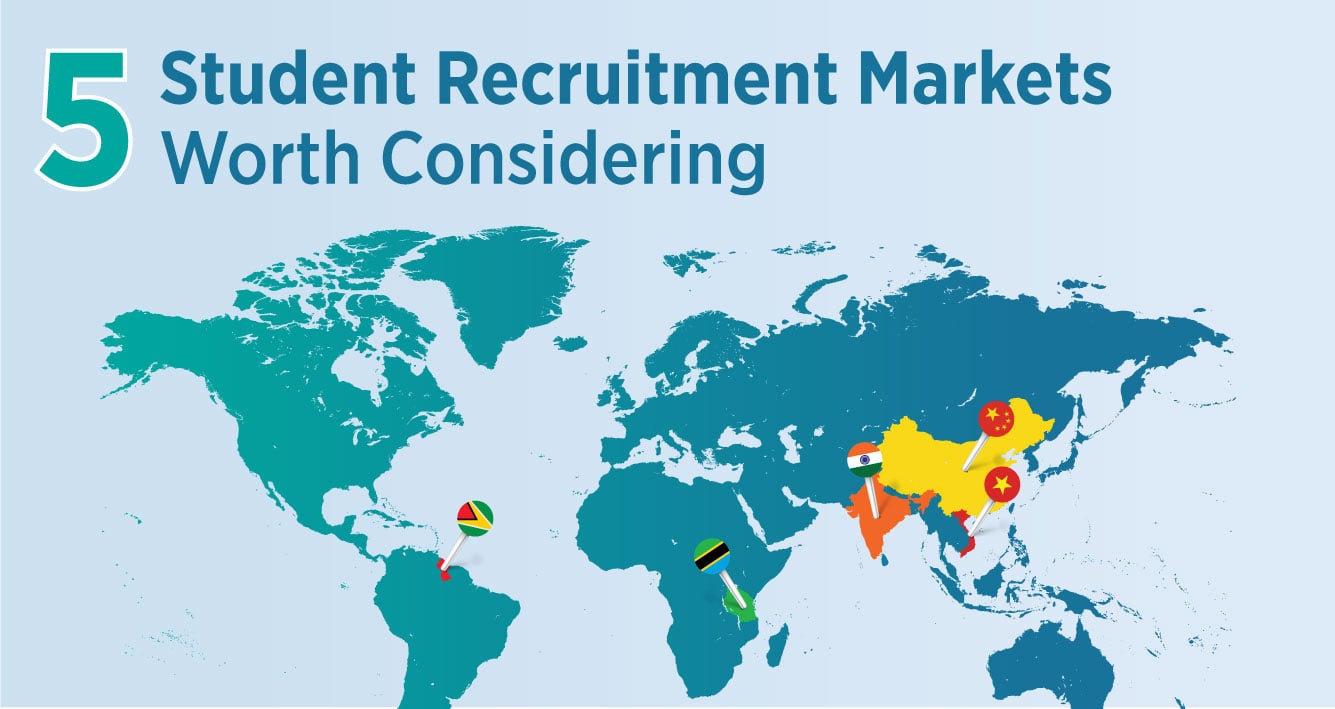
We've written about and analyzed African source countries before. Today, let's dive into Tanzania, an SSA country that currently meets 3 key market entry requirements. 

  • Rising youth population: Nearly 20% of Tanzanians (68.6 million total pop.) are aged 15 to 24, with the median age 17. 
  • Rising incomes: In 2020, Tanzania moved from low-income to lower-middle-income status and today gets a B+ per credit rating agency Fitch. 
  • Employment opportunities for returning graduates: Tanzania’s unemployment rate is forecast at 2.38% this year, with growth in agriculture, mining, tourism, infrastructure, and energy sectors.  

Your institution's rank is far less important here and, as we noted, your competitor institutions are likely not present in this market.

Take a closer look with us at how you might position your institution to attract Tanzanian students. Read on for 5 key recruitment insights on this market. Go even further using our Resource Center offering 15 targeted articles and reports on specific approaches to recruiting students from Africa. Pro Tip: use the search bar and type in "Africa" to find, for example, this post on African Tech Hubs.

Read More

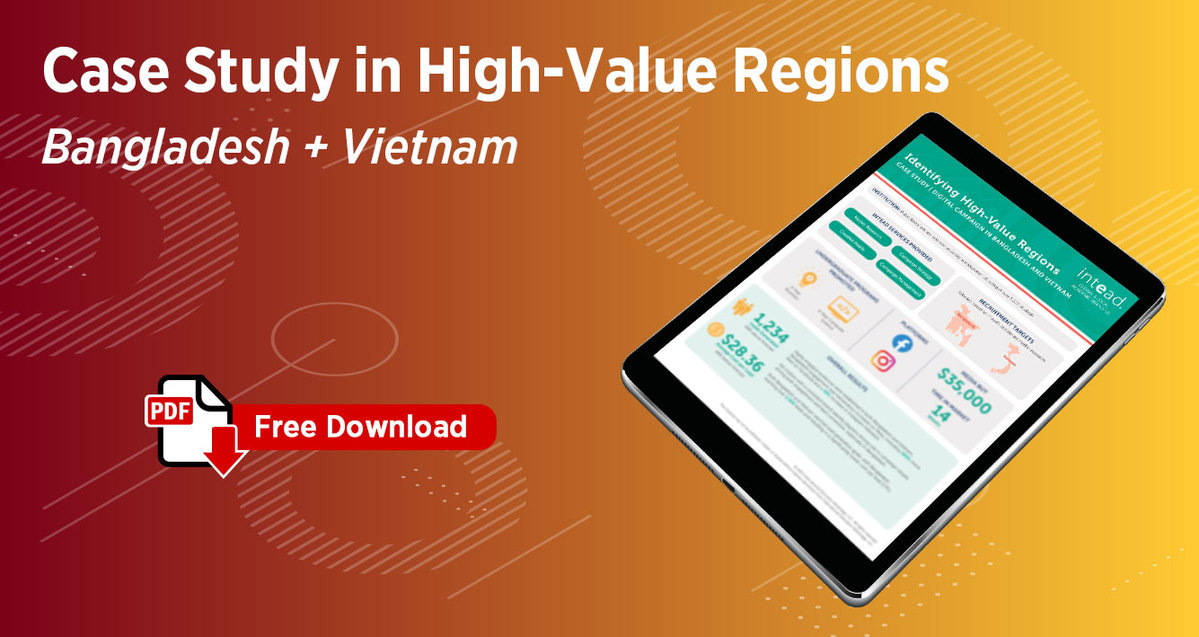
Case Study in High-Value Regions: Bangladesh + Vietnam


Market diversification is one obvious answer to sustaining enrollment numbers. How to successfully go about it, however, is often less obvious. Looking beyond your own campus to see how others are doing it can help. So, we have a story to share. 

If you've seen our other case studies, you know we share more concrete details and data than any other agency out there. We want to make you that much more dangerous and demonstrate the value of investing in customized, creative, and well-tracked paid campaigns.

In 2021, a mid-tier, public, Midwest regional university needed to recruit international students. It’s a student segment they’d had success with in the past, but Covid, as it does, threw a wrench in their recruitment efforts. It became clear they needed new ways to reach prospective students residing overseas. We know you were wrestling with this very issue at the time, too. We all were. 


Find us at AIRC and ICEF. Let’s connect! 

The Intead team is gearing up for some amazing presentations and we hope you can join us. 

  • AIRC Annual Conference – As you read this, our team is in Phoenix offering our full-day digital marketing workshop. If you are at the AIRC conference, please look for us here in Phoenix, Dec 6-9, 2023 
  • ICEF North America Workshop in Miami, Dec 11-13, 2023. We'll be offering a half-day workshop on Dec 11 and meeting with everyone on Dec 12-13.

Let us know if you’ll come share a cup of coffee and a conversation about all things global and digital (info@intead.com) 


Back to the results of our digital campaigns in Bangladesh and Vietnam.

With a media buy budget of $35,000, the institution was admittedly skeptical they’d be able to make any meaningful progress in a new market. We always want more wiggle room with our media buys, but we also felt certain they could succeed, with the right approach. They trusted our experience and the market research we delivered.

Our mission: understand who and where the prospective families are and then reach them in ways that prompt engagement. So our data detectives and creative talents set out to: 

  • Confirm the institution’s high-value student recruitment regions and where there might be room to grow
  • Develop on-brand, targeted, and effective digital marketing assets   
  • Launch and optimize digital campaigns to generate highly qualified leads (and build awareness, but really, we all want the high-value leads) 
  • And of course, report on campaign analytics to inform future marketing investments.

By any measurement, it went really well. One $12,000 media buy generated 40 million impressions, 500,000 clicks, 1,087 leads, 122 applications, 40 admitted students, and 7 enrolled. But who’s counting? (Please say you are!)

It was a fast, 14-week campaign involving two markets, two academic programs, and two social platforms. Want more insight? Download our free case study. Read on… 

Read More

Yes! You Should be in India, but here’s the thing…


Forget
Wordle. Here’s a real problem for you to solve: If India, which recently unseated China as the world’s most populous nation, has over 1.4 billion people and 17.5% are aged 15 – 24 (that's ~240M students), will its roughly 1,100 universities have enough seats for all its university-eligible students?

The short answer: no.

Clearly, India's education leaders have some planning to do.

Take a step back and consider: India is enjoying a big year. They just landed on the moon. Hosted the G20 summit. Are top-dog population-wise. And its fast-growing economy is as strong as ever. A Pew Research Center survey this year even shows a full 68% of Indians feel their country is growing in global influence. All really good news for India.

But the devil is always in the details with rising nations and the truth is, there are too many young Indians who can’t get the higher education they want. At least not now and not at home.


Opportunities to Meet In Person 

The Intead team is gearing up for some amazing presentations and we hope you can join us. 

  • PIE News Live in Boston, Nov 13-15, 2023 
  • AIRC Annual Conference – we’ll be offering our full day digital marketing workshop here in Phoenix, Dec 6-9, 2023 
  • ICEF North America Workshop in Miami, Dec 11-13, 2023 

Let us know if you’ll come share a cup of coffee and a conversation about all things global and digital (info@intead.com) 


The Indian government is fully aware of this growth and for the first time its University Grants Commission has taken strides to welcome foreign universities into the country. (Note: only institutions in the top 500 global rankings need apply.) Deakin University and University of Wollongong, both of Australia, are the first to be granted approval. You can bet others (and we’ve had interesting conversations with a few) are doing the financial analysis and considering the blueprints for academic collaborations of their own.

One key caveat of the regulations, India is not recognizing online degrees from foreign institutions. India’s leadership wants in-person set-ups. As the former vice-chancellor of New Delhi’s National University of Educational Planning and Administration puts it, Online education goes against the expected gains of internationalization. Plus, the government would like to increase on-campus higher education access in-country while also attracting foreign students to India. Makes sense on multiple levels.

You know what else makes sense? US institutions vying for Indian students’ attention. And yes, of course you are already recruiting in this key region and have seen an uptick in actual enrollments. US visa approvals of Indian applications have hit record numbers since the pandemic.

Trust us, there’s so much more we think you should consider doing to tap this market effectively. Let us tell you why. Read on…

Read More

Recruiting Intel Digest: The Most Useful Stuff from Q3 2023

For an industry that takes a lot of heat for being slow-moving, it sure feels like change is happening fast. You feel it, too, right? The pains of adjustment and growth. We’re learning to get comfortable getting uncomfortable. And we’re all here for it.

This blog, as you know, is one way you can keep up with important topics and industry trends that are propelling higher ed forward. This past quarter, for instance, we weighed in on pivotal topics like the current drivers of Chinese student mobility (hint: keep recruiting!), the integration of predictive modeling (new inescapable buzzword: AI), non-traditional student’s non-traditional needs, the use of agent aggregators, and more.

Of course, you were busy juggling all this progress with bottom line issues like student yield. So, if you didn’t get to all of our posts, we understand. Read on for a summary of the top news from Intead’s “Recruiting Intelligence” blog and click through on those topics that are meaningful to you now.


As we publish this week, NACAC 2023 just wrapped up in Baltimore. Some great opportunities to connect and learn, as always. And some growing and adjustment pains for NACAC as well as they figure out how to serve their members and regional leaders. Some natural frustration there, to be sure. We’ll share the slides from our presentation and more reflections on the gathering in a couple weeks.

Next Up: Join us in Paris Nov 8-10 at CIEE's 76th Annual Conference. Let us know if you'll be there (info@intead.com).


But here, and now, for many of you, we share some great reading while you are traveling the world in search of students while others are setting the recruitment plans in motion back in the office. Read on…

Read More

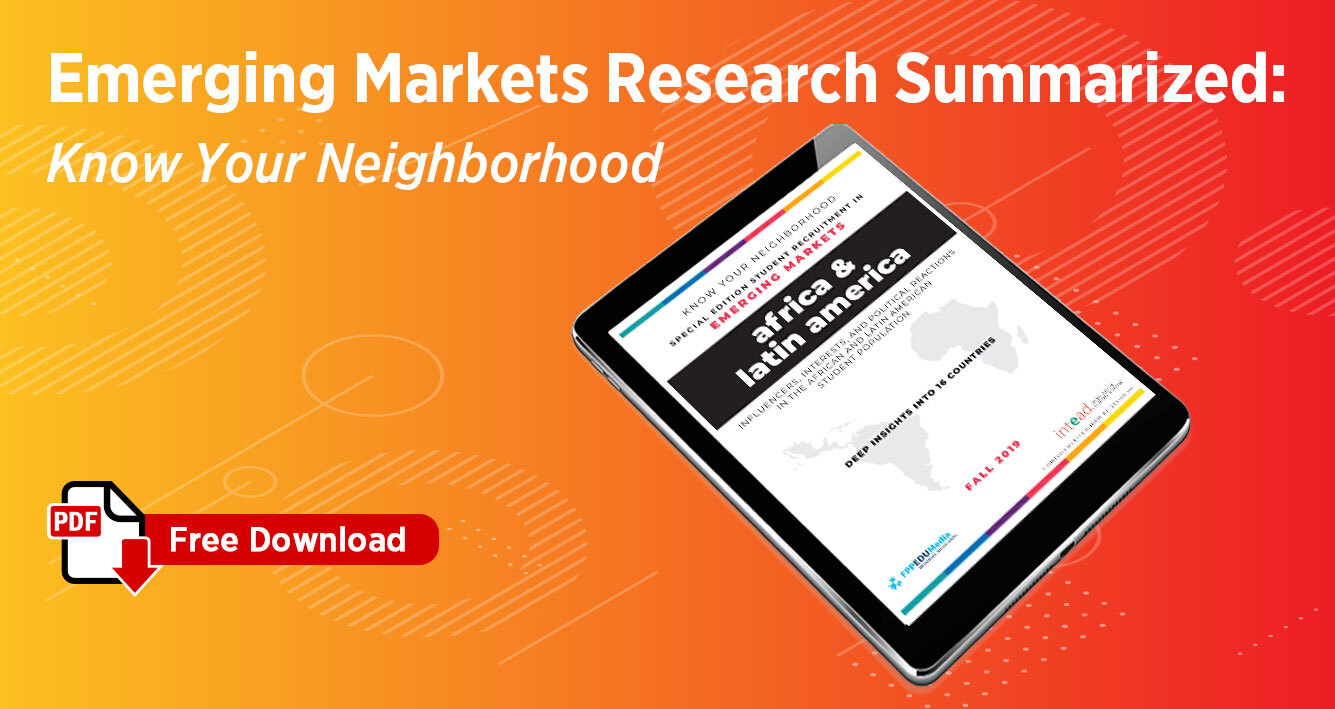
Emerging Markets Research Summarized: Know Your Neighborhood

In 2019, the Intead team along with FPP EDUMedia conducted primary research to assess the influencers, interests, and political reactions in African and Latin American student populations to help institutions like yours tap emerging, or what we now consider, evolving student markets. 

More than 12,300 international students from over a dozen countries responded to our survey. What we learned has helped shape some really important conversations with clients looking to broaden their international reach.  

Enrollment ambiguity continues to push us to explore new opportunities. We encourage you to return to this research for still relevant guidance as you look for ways to grow, diversify, and strengthen your international recruitment strategy.  

If you want to chat about how you are building your Fall 2024 strategy or the tactical execution approaches we have found most valuable, Ben and Iliana will be at the NACAC conference presenting alongside our colleagues from AIRC and Middle Tennessee State University on Sept 22 in Baltimore. Can we schedule a time to chat? Coffee's on us! 

We know folks are short on time and just want us to get to the actionable points. So, we took the key ideas from our previous research and put them into a one-pager comparing Africa, Central America, and South America. You can grab that at the bottom of this blog post.  

In the full Emerging Markets e-book, available to Intead Plus members, you will find very helpful recruitment strategy insights: 

  • How your university can best appeal to student prospects in specific evolving regions and countries (segmentation)  
  • Influential messaging tips that highlight your strongest differentiators (stand out in the marketplace)  
  • Effective distribution channels to reach your target audience with those differentiators.  

To get the free one-page comparison, read on… 

Read More

You’re In the Right Place: Predicting the Future of Student Recruiting

The enrollment cliff has everyone a little on edge. People are burned out and frustrated. Leadership is looking for bigger gains in shorter time frames. And traditional students just aren’t showing up in ways they traditionally have.

It’s so clear that higher ed is at an inflection point. Thank the pandemic. Thank technology. The economy and unpredictable job market. The changing student landscape. What you need now more than anything is support. Ideally in the form of a soothsayer to tell you where and how to invest your time, energy, and resources. If only.

Our advice: take a deep breath and read this post.

While soothsayer we may not be, we do have some perspective on what lies ahead. And our record for predicting changes in the market has proven accurate for more than a decade. Long before the recommendations below became standard practice in enrollment management (they all sound so obvious now, right?), we advised colleagues to:

  • Make better use of your CRM (or get one if you don’t have one), and embrace the add on features and API connections that improve tracking and results.
  • Identify staff with the skills you need for each function of the enrollment process. Your creatives are not your meet and greeters and they are not your data analysts. You need all of these skills.
  • Develop your international alumni as global ambassadors. (Most of you are still not doing this).
  • Find reputable commission-based recruiting agents in your target countries and invest time in managing them very carefully.
  • Train your domestic recruitment team in the nuances and needs of international students already studying in the US so they know how to address the important topics (visas, parental concerns, economic realities, etc.)

We know, it’s all old hat now. But a decade ago, very new to international enrollment management teams.

Today we are facing some pretty significant headwinds. Post-pandemic changes to how students evaluate universities. Growing financial pressures facing families. Increasing importance of careers and the ROI of your degrees. Heightened interest in certificates and shorter paths to career growth. Political divisiveness harkening back to the US civil unrest of the 1960s (or 1860s?). Are you factoring social justice including climate activism into your marketing plans?

These factors are all part of the student and parent mindset as they evaluate investments in university level education. The pool of nontraditional students is much larger and more diverse than the shrinking traditional student pool. And yet, the international student pool is one that is growing and projected to grow dramatically in the coming years.

If you’re ignoring any of these market segments, we strongly advise you don’t. Our analysis of and predictions about what influences student decision making, the tools and processes you need in place to be both efficient and effective, this counsel has been spot on for a very long time (our blog records act as our receipts).

You’re in the right place. Read on to be sure you are able to anticipate what is next and what to do about it.

Read More

Where the Viable Students Are

Reading Jon Boeckenstedt’s piece “I’ve Worked in Admissions for 40 Years. It’s More Stressful Than Ever,” published last month in The Chronicle of Higher Education felt like a familiar conversation. It will help remind you that your admissions stressors are not yours alone; you’re in good company. (Jon is vice provost for enrollment management at Oregon State University).

That article was a particularly apt read coming on the heels of the Association of Governing Boards (AGB) annual conference where university trustees and leadership gathered to discuss big industry issues (read Intead’s key takeaways from that event here). These individuals were representing the other side of Boeckenstedt’s coin.

On the one side is “The Number.” Those enrollment targets or revenue figures that are at best daunting, at worst utterly unreasonable to actually meet. And these numbers seem to grow higher each year. On the other side of the coin are leadership’s own goals – namely having to do with the very viability of the institution you’re serving.

Truth is, there really is no toss-up. The coin lands leadership side up every time.


Heading To NAFSA 2023: Our presentation with SIO Paulo Zagalo-Melo (Western Michigan University) and Reporter Karin Fischer (Chronicle of Higher Ed) will be on Wed. May 31 at 9:30am. A reality check with the data that informs our student recruitment decisions. Hope you'll join us. Be in touch to meet with us during Nafsa: info@intead.com.


So, the churn continues. Your target numbers rise. You must be able to think quickly, act nimbly, and produce the enrollment results. This is where a good partner comes in (yes, shameless plug, but it’s so true).

The way we see it, there are three pools of students that represent growth opportunities right now:

  1. International students
  2. Adult learners
  3. Underprepared students

Read on for our quick perspective on these 3 pools and the unique approach needed for each to first, choose your campus, and second, to succeed there.

Read More

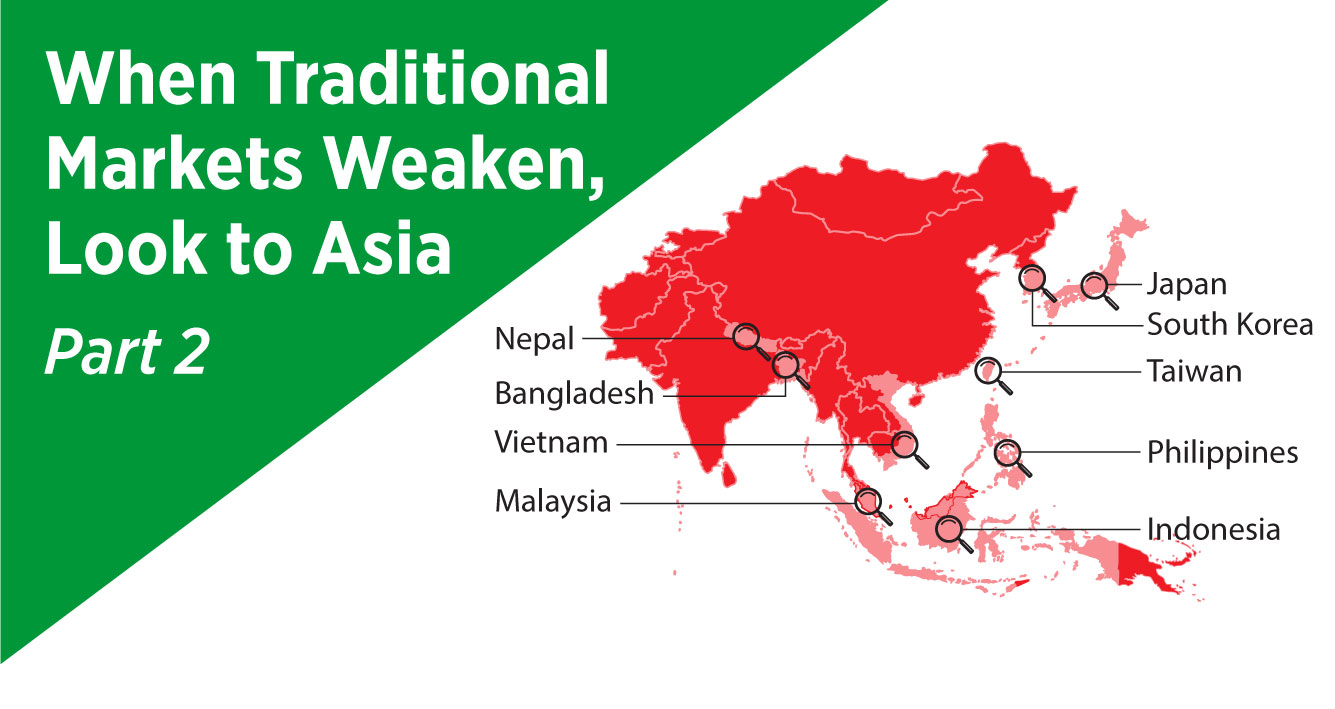
When Traditional Markets Weaken, Look to Asia Part 2

Emerging markets are the talk of the town in the world of international student recruitment. Diversifying enrollment takes many forms. Looking beyond the traditional global student sources has become a valuable exercise.

Last week we took a look at South Korea, Vietnam, Taiwan, and Japan (part 1). This week we turn to Nepal, Bangladesh, Indonesia, Malaysia, and the Philippines.

We are looking at the 3 key indicators that act as a first level screening to see if they point toward student sources worth deeper evaluation: a rising youth population, rising incomes, and employment opportunities for returning students.


Heading To NAFSA 2023: Our presentation with SIO Paulo Zagalo-Melo (Western Michigan University) and Reporter Karin Fischer (Chronicle of Higher Ed) will be on Wed. May 31 at 9:30am. A reality check with the data that informs our student recruitment decisions. Hope you'll join us. Be in touch to meet with us during Nafsa: info@intead.com.


While the countries we are reviewing below will never match the overall outbound student volume of China or India, most institutions are not seeking thousands or even hundreds from a single source. Most universities would do well to gain 10, 20, 50 new students a year from a single new source country. With the right recruitment initiatives, each of these countries could produce these kinds of enrollment results. It requires a multi-year commitment, but you knew that.

The benefits of these diversification efforts:

  • You aren’t relying on the top one or two markets.
  • You are building a vibrant, diverse student experience at your institution.
  • You are recruiting from countries that can most benefit from the programs and experience your institution offers.

And, as you also may know, the markets we cover in this post do come with a bit of risk. Their economies are strong enough, but the cost of international education can be out of reach for many of their families. We know international students are highly motivated to find steady work – so career connections are going to be as important as your academic chops. With any new market entry (Intead advice on that here), there are important analyses that must be done to confirm the opportunities outweigh the risks.

We’d welcome a larger conversation about how these Asian countries may or may not fit into your overall international student recruitment strategy.

Read on for a helpful overview and our usual helpful  insights about these markets to support your deeper evaluation.

Read More

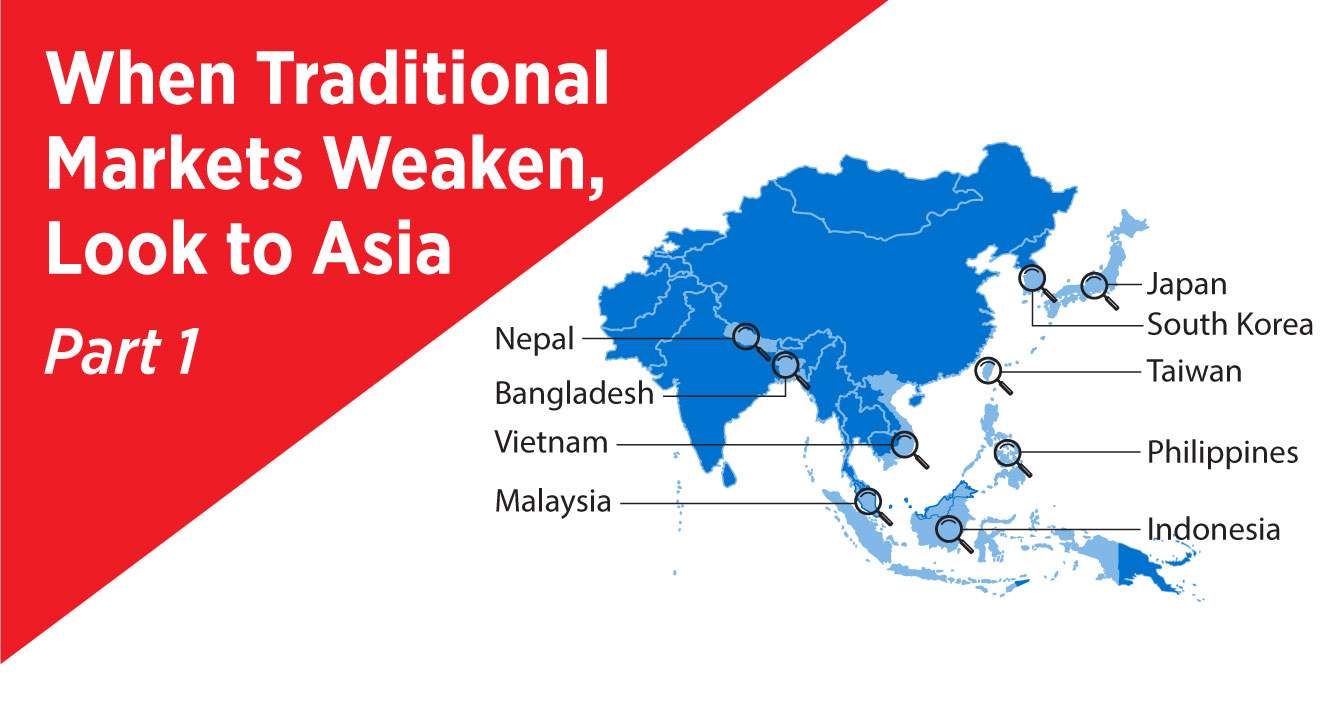
When Traditional Markets Weaken, Look to Asia Part 1

It’s good news / hurry-up-and-move news for Chinese students.

The good news: pandemic-era travel bans are lifted.

The hurry-up-and-move news: China announced it is returning to its previous position of NOT recognizing online credentials obtained from a foreign institution.

More than a few Chinese students spent spring semester scrambling to ensure their hard-earned credits will count. We trust they will, but there nevertheless was a swift rush to secure logistics.

We know what you’re thinking. A coveted market that’s been declining is now being encouraged, no, required, to travel if they want a foreign degree. Fantastic! While that’s all true, indications remind us to keep our expectations in check. And yes, we’re talking about politics, TikTok, and the increasing appeal of the UK’s brand of higher ed and career opportunities. 

So, while it makes sense to keep courting the Chinese market that continues to be the top exporter of students, it also makes sense to proceed with efforts to diversify student sources.

Important to note: It always has been wise to diversify, though only a small percentage of US institutions have historically invested in this level of internationalization. The volume is in China and India and that is where the recruiting investment has been focused for more than a decade.

Also important to note: China remains a highly valuable source country and we absolutely do not advise turning your institutional back on these students. There are still more Chinese students eager for a US education than any other nationality. India is the only other country that comes close.

In the midst of the more recent waning of Chinese students coming to the US (the decline first stared in 2016), we’ve provided insights on promising markets that may help boost your student yield. In recent blog posts, we’ve offered insights into evaluating Africa (part 1, part 2), Latin America (part 1, part 2), and the Middle East.

Today we turn to Asia, evaluating whether specific countries exhibit the important metrics that demonstrate a market ripe for student recruitment:

  • Rising youth population
  • Rising incomes
  • Employment opportunities for returning students

In this week’s post, get ready to take notes on student market opportunities in South Korea, Vietnam, Taiwan, and Japan. Next week we will look at Nepal, Bangladesh, Indonesia, Malaysia, and the Philippines. These countries are likely already on your radar. Are you keeping tabs on the potential for each one? We think it is in your best interest.

Read on to find out why…

Read More

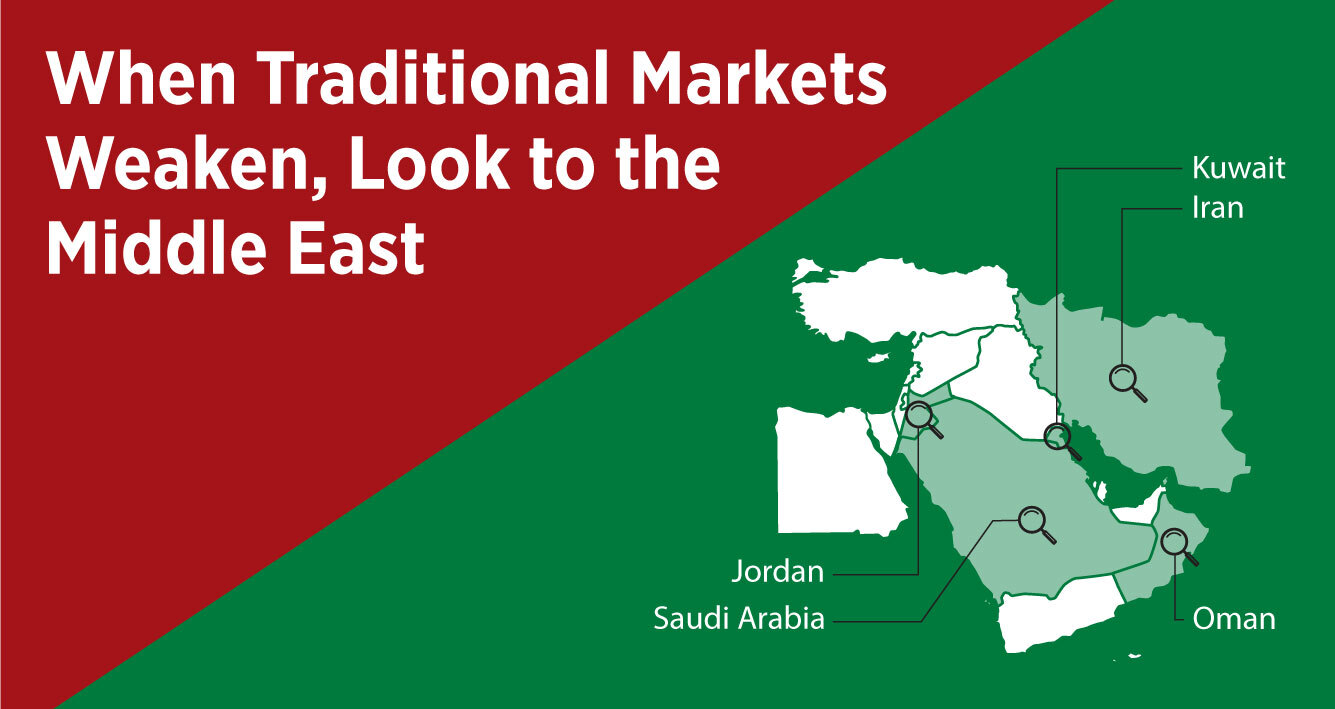
When Traditional Markets Weaken, Look to the Middle East

What we know: On a macro level, stalwart student recruitment sources are in flux with China declining a lot and India rising a lot. Other source countries are similarly difficult to predict as the repercussions of the pandemic and other global factors continue to play out.

Statistically speaking, US institutions hosted 8.4% fewer international students this past fall compared to fall 2020 (and that year wasn’t so hot either). Public 4-year institutions saw the largest decline (17.2.%). This is all per the National Student Clearinghouse Research Center.

While macro stats offer perspective, they are not what drive recruitment strategy. Your goals and differentiators drive strategic enrollment decisions.


On the topic of high-level institutional internationalization: We will be in San Diego presenting at the AGB conference in April. Honored to join Brad Farnsworth from Fox Hollow Advisory (former ACE VP) and Dr. Gretchen Bataille from GMB Consulting (former president of the U of North Texas among other amazing higher ed roles). We will be talking all about insights university presidents and trustees need to guide internationalization efforts. Reach outif you'll be there.

And in less than 2 weeks we will be in DC for the AIEA Conference presenting alongside Karin Fischer from Chronicle of Higher Ed and Dr. Ahmad Ezzeddine from Wayne State University. If you will be in DC for the event, we are talking about how trend data informs international student recruitment planning on Monday, Feb. 20. Hope to see you there. (Email us if you'd like to find coffee together).


Recruitment strategy derives from the number of students you need to meet enrollment targets tied to what your institution excels at (your market differentiators) - that, along with an evaluation of where in the world (domestically and internationally) market opportunities exist. Our blog post on new market entrycontinues to be a popular one.

Most institutions across the country still believe that international markets work to their advantage. The latest “Mapping Internationalization on US Campuses” report by the American Council on Education (ACE) concurs. 66% of its survey’s 900+ responding institutions anticipate their overall level of internationalization will increase in the coming years. (Our recent blog post on the ACE report provides more perspective).

With traditional source countries in flux (China, India, Vietnam, South Korea, Brazil), we have been pointing to opportunities in developing markets (Africa part 1, part 2) and Latin America (part 1, part 2). Today we offer insights on the Middle East.

The value of reaching a broader swath of prospects gets to the very heart of why most institutions say they are for internationalization in the first place:

  • To improve student preparedness for a global era
  • To diversity students, faculty, and staff
  • To become more attractive to prospective students
  • To generate revenue

In evaluating new markets, we look to countries with rising incomes, a growing youth population, and real employment opportunities for returning graduates. The Middle East is a region with a rising youth population, plentiful job opportunities, and only a handful of competitive higher education institutions.

Many students in this region are looking to study abroad due to changes in political climate or the fact that many of their local universities are newer or understaffed. Though let’s not discount the entire system. Two Saudi universities are ranked in the top 200 of global 2023 QS World University Rankings: #106 King Abdulaziz University In Jeddah and #160 King Fahd University of Petroleum & Minerals in Dhahran.

In this week’s post we offer you insights on student market opportunities in Saudi Arabia, Iran, Kuwait, Oman, and Jordan.

Read on.

Read More