Recruiting Intelligence

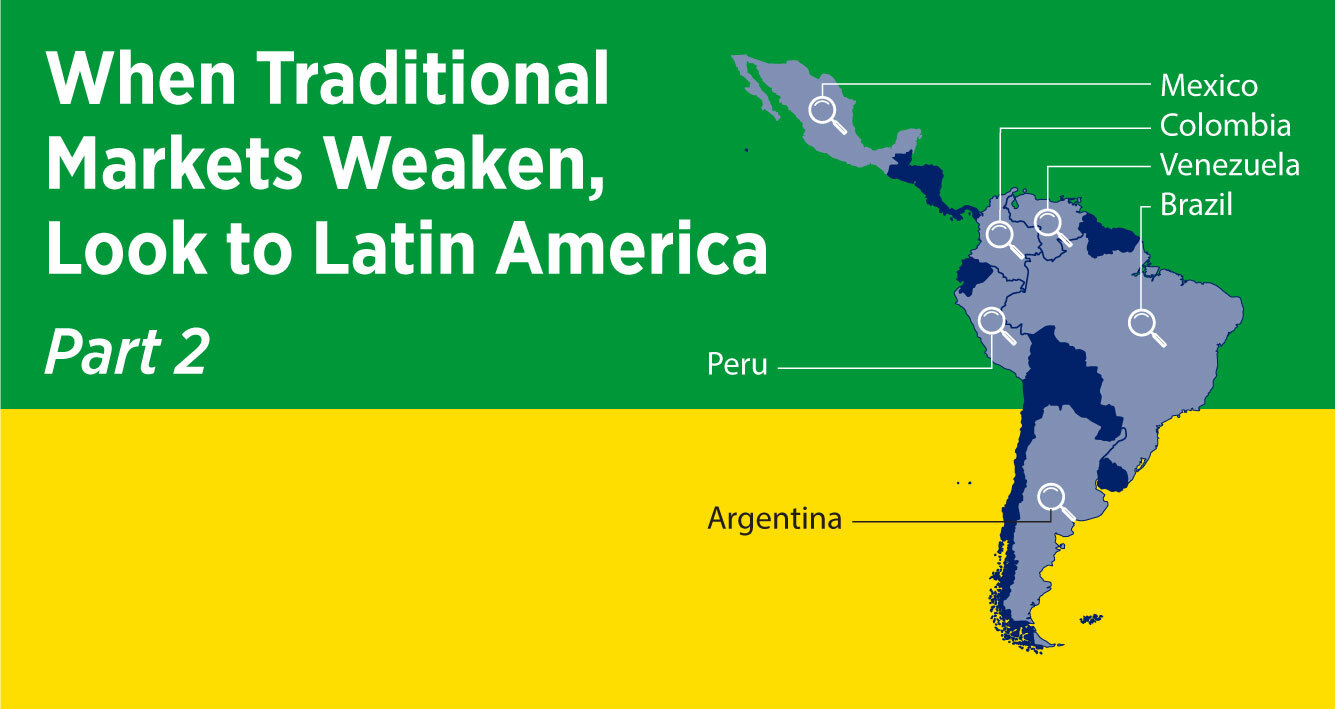
When Traditional Student Markets Weaken, Look to Latin America: Part 2

As our industry reckons with the decline in Chinese student enrollment, we offer insights on regions that may fill the void. But, it’s so much more than that. Broadening our international recruitment reach will serve our bottom line, yes, but it also enriches and enlivens our campuses and deepens the student experience. You know all this already. It’s why so many of us do what we do. Cultural understanding matters.


REGISTRATION CLOSES TOMORROW (Dec. 8, 2022). So, before we dive into part 2 of our review of LATAM recruitment opportunities, how confident are you with your selection of international student recruitment markets right now? And do you want to tap some of the brightest, experienced minds in our industry?

The Intead/San Diego State University One-Day Workshop will be a hands-on opportunity to learn from an awe-inspiring international student recruitment faculty. Colleagues from Syracuse University, Tennessee State University, Cal State Northridge, San Diego State, English USA, and edX, Rutgers Prep and Idlywild (for our high school colleagues), simply SO much talent in one room.

  • Come with questions, leave with a plan.
  • Two luminary keynotes
    • Luncheon on Social Justice with Dr. Jewell Winn and Dr. Adrienne Fusek
    • Dinner on Chinese Student Influencers with Dr. Yingyi Ma and Brad Farnsworth
  • At $350 for the day (inclusive of all meals), this learning opportunity is a steal.

Last week we looked at Brazil, Colombia, and Mexico. (And before that Africa, see part 1 and part 2.) This week our eyes are on Venezuela, Peru, and Argentina. These top sending countries from Latin America are worth your team’s consideration.

And if you need a partner to help you refine your recruitment focus, be in touch. We’ll help you find new recruitment opportunities that make sense for your specific, culturally relevant programs and campus.

Read on for our regional insights.

Read More

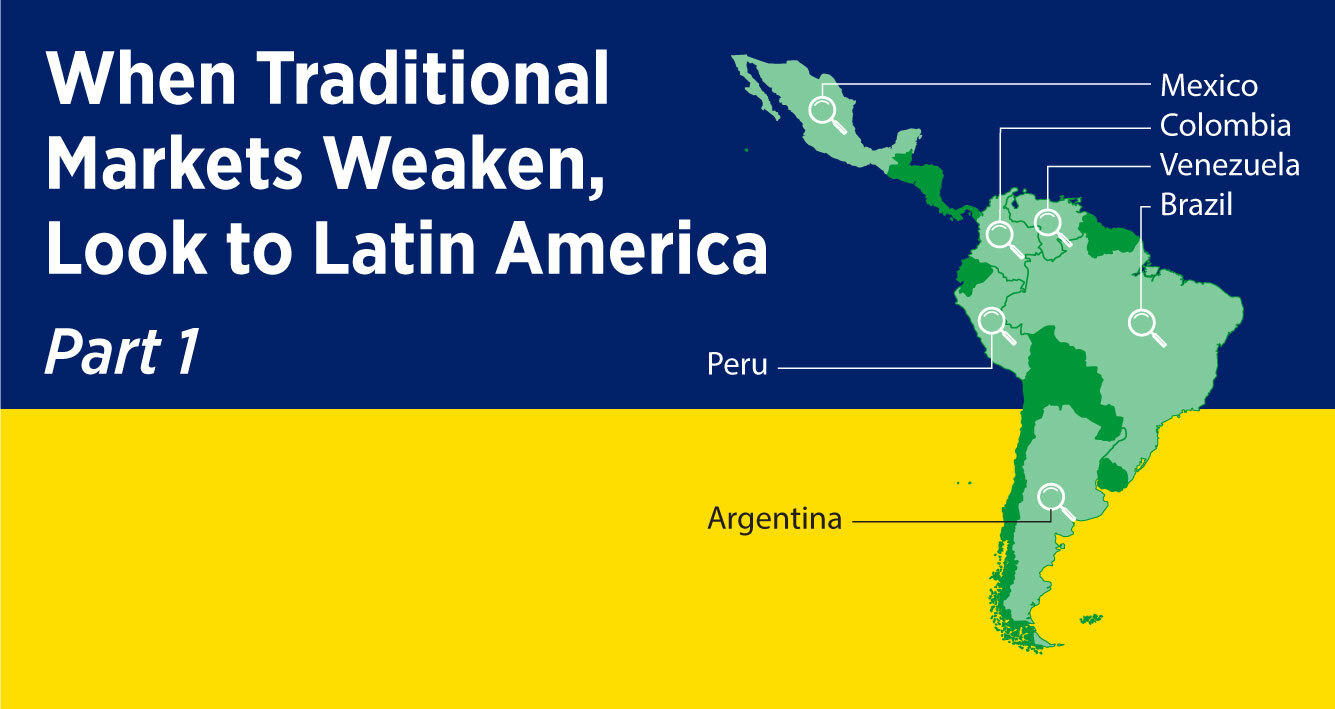
When Traditional Student Markets Weaken, Look to Latin America: Part 1

The decline in enrollment continues in two really important student segments for so many US universities: domestic US and Chinese students.

So, what are you doing about it? Plenty, we are sure. 

As campus pressures continue to mount, institutions are diversifying enrollment targets and considering options that were only peripherally on their radars in the past. Today's discussion: Part 1 in a 2-part series on LATAM.

A word to the wise: while China as an enrollment target has shifted for many institutions, the Chinese student audience is not one any of us should ignore. The volume of students from China to the US, UK, Australia, and Canada, among other nations, continues to be significant as compared to the flow from other countries. Strategies, messaging, and expectations should adjust.

As far as domestic recruiting in the US, we don’t see US institutions bailing on domestic student recruitment any time soon ; -) Again, strategies, messaging, and expectations.


Registration is about to close. Join us in San Diego on Dec. 13 to evaluate how your institution can adapt to the new international student recruitment landscape. The Intead/San Diego State University One-Day Workshop will be a hands-on opportunity to learn from an awe-inspiring international student recruitment faculty.

  • Come with questions, leave with a plan.
  • Two luminary keynotes
    • Luncheon on Social Justice with Dr. Jewell Winn and Dr. Adrienne Fusek
    • Dinner on Chinese Student Influencers with Dr. Yingyi Ma and Brad Farnsworth
  • A full day of international student recruitment strategy and execution discussion. 
  • At $350 for the day (inclusive of all meals), this learning opportunity is a steal.

What we are seeing: more institutions are (finally!) taking global diversification seriously and are reconsidering how and where to spend student recruitment marketing dollars. Recruiting beyond China is the right move, right now. And no, this doesn’t mean going all in on India either.

It’s time to add a few new eggs to your basket (or make your current basket of eggs larger). Look for markets ripe for recruitment -- those with a growing youth population, rising incomes, and real employment opportunities for returning grads. Oh, and some institution-specific data that supports your institution’s connection to that source country.

It’s a drum we’ve beat before (see our recent two-part series on recruiting students from Africa: part 1, part 2). Today, Latin America is a region with a rising youth population, a range of strengthening economies, and only a handful of in-country competitive higher ed institutions.

In fact, this year only one Latin American university made it into the top 100 global 2023 QS World University Rankings. Two more made it into the top 200. (#67 Universidad de Buenos Aires, #104 Universidad Autonoma de Mexico, #115 Universidad de Sao Paulo). In other words, enterprising youth have very few top-tier research-intensive universities from which to choose within their region. 

Thankfully, we know, it is not all about rankings. And yes, just like you, we have all the same misgivings and cranky commentary about the ranking systems and what they perpetuate. There are many reasons, beyond rankings, that students from Latin America seek study opportunities abroad. Our market research (pre-COVID) continues to provide valuable insights into the motivations of students from emerging markets. Download that report HERE.

All this to say, Latin American students represent an opportunity worth exploring right now (have been for a while).

So, we’re giving you our latest analysis to get you going in the right direction. In this week’s post we offer a review of Brazil, Mexico, and Colombia. Next week, Venezuela, Peru, and Argentina. We think you’ll find our insights useful as a starting point for the work you’re doing this recruitment cycle as well as the next. Read on.

Read More

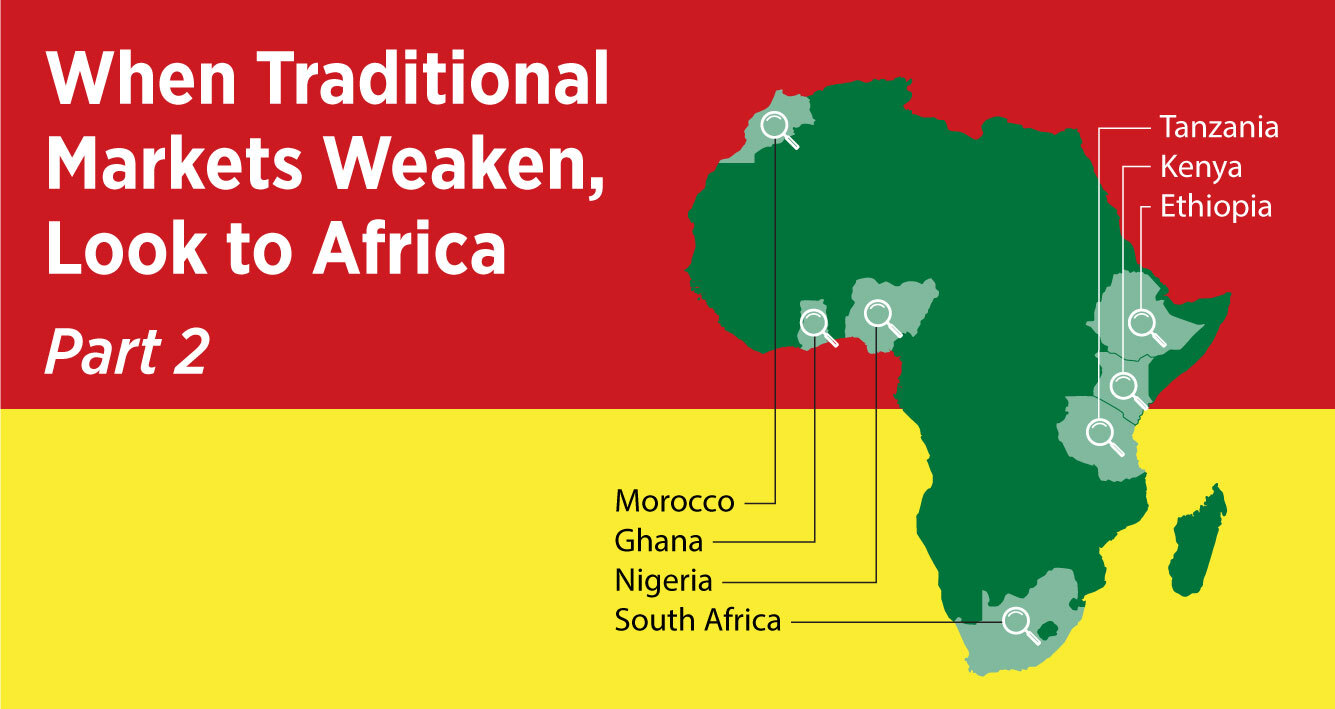
When Traditional Student Markets Weaken, Look to Africa: Part 2

All eyes on China is not a winning international student recruitment strategy today. Not that it ever was. The stronger approach: diversifying the pool of countries your institution pulls from. We’ve been saying this for more than a decade. Institutional budget allocations have not always heeded the advice.

We get it. Student volume and confidence in achieving enrollment targets have driven academic CFOs and others who manage risk to take the more conservative path. Over the past decade+, our clients are typically those interested in pushing beyond the conservative global recruitment path. They are the institutions that recognize the value of building a broad range of relationships to feed their student enrollment.

This diversification, both domestic and international, provides for more long-term stability. That strategy is becoming far more attractive to many more institutions today. And that strategy takes time and investment to execute well, to build a reliable and diverse supply chain as it were.

Last week we wrote about the three key things to look for in markets ripe for international student recruitment: a growing youth population, rising incomes, and employment opportunities for returning graduates. And a growing list of countries in Africa is meeting the short(er) list for institutions seeking international students. It may be time you take a closer look at this region.

Here’s the link to Part 1 in this 2-part series (in case you missed it). Today we offer student recruitment insights for Ethiopia, South Africa, Morocco, and Tanzania.

And for more African student recruitment insights from our pre-Covid research (still highly relevant as you develop your recruitment plans), check out:

With a nod to last week’s post (with many useful links for the careful planner that we know you are), important to note that there is competition for these students from attractive and less expensive institutions in Russia (before the Ukrainian crisis), France, Germany, China, and some Middle Eastern countries.

In our discussion of 7 African nations, we cite a variety of useful sources to demonstrate how varied information sources will add to your country and cultural perspectives. Hopefully through this post and the next, you will find some new research sites to support your planning. (We love participating in that broader teaching mission as well).

Read on for tips on recruiting students from Ethiopia, South Africa, Morocco, and Tanzania

Read More

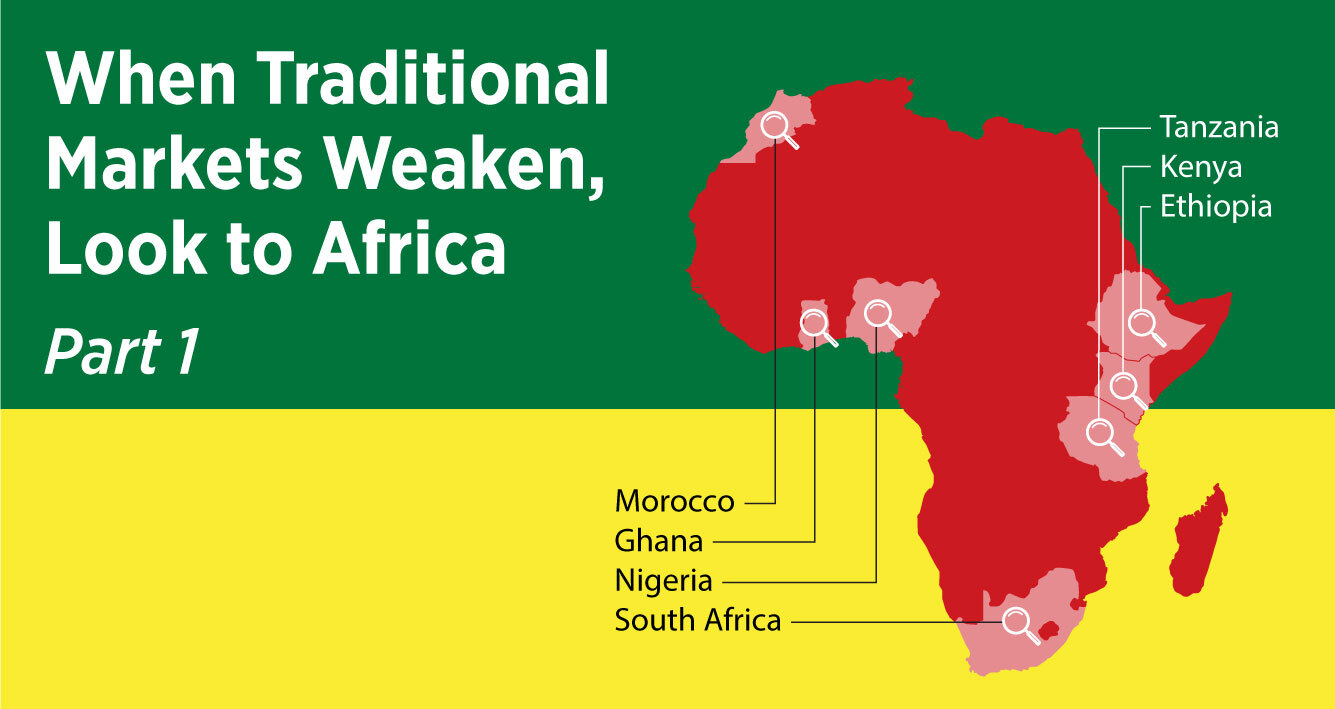
When Traditional Markets Weaken, Look to Africa: Part 1

The best markets for international student recruitment have three key things going for them:

  • a growing youth population, 
  • rising incomes, and
  • employment opportunities for returning graduates.

The African continent has a number of under-utilized recruitment hubs that boast all three.

The three bullet points above are useful generic perspective applicable to pretty much any institution – higher ed and private high schools. But what about your specific institution?

How do you make headway in the new(ish) student recruitment markets that African countries represent? Will your differentiators resonate there? Which channels will reach your ideal student segments?

Perhaps start with some of our analysis with helpful, still valid insights compiled prior to Covid. You’ll appreciate the discussion of recruiting agents, creative partnerships, and other valuable recruiting channels:

To be clear, African countries, as sources of international students will not replace the flow of students coming out of China. So, if your enrollment goals are all about achieving target numbers and not about diversifying your campus, you may hesitate to invest here.

And yet, the thing about hitting your enrollment goals is that you win by building strong relationships and pipelines. Clearly, China and India have the volume and the larger accessible market size, but your institution needs student recruitment opportunities where you can be truly competitive. And diversifying your campus has rewards that speak directly to your institution’s broader teaching mission. Seeking less common sources of international students is one way you do all that.

An increasing number of institutions are approaching the Intead team to explore further afield. A welcome and important mindset. While regular readers of our blog know we continue to share perspectives on, and implement recruitment strategies for, traditional student sources (China, India, Vietnam, Brazil, S. Korea). With more institutions seeking new markets, it is a good time to revisit the approach to Africa as a valuable source.

Obviously, the pandemic slowed the inflow of international students from all parts of the globe, and Africa is no exception. But now, as pandemic restrictions ebb and economies recover, smart institutions are bringing Africa back into their awareness as a prime source of engaged, qualified students.

In fact, more than a few African countries have achieved the World Bank’s “middle economy” status and are expanding their leadership in sectors such as agriculture, oil and gas, and tech. These industries offer promising careers but tend to demand higher education degrees. Foreign degrees draw attention to job candidate resumes. Many US institutions offer long-established degrees and certifications that African higher education institutions are still developing.

Important to note that there is competition for these students. While the US has a strong draw (the US brand and all that), Russia (before the Ukrainian crisis), France, Germany, China, and some Middle Eastern countries have been courting students from African countries for a while with less expensive degrees than are typically found in the US.

Also interesting to note that over the past 5 years, both the US and China have each invested in the African continent at around $40B annually. Much of the investment has gone toward construction (roads/transportation) and mining.

According to The Brookings Institute, “China’s influence goes beyond the trade relationship: It is also the top investor in infrastructure, and now is the first destination of English-speaking African students, outperforming the U.S. and the U.K.” (source cited below).

In our 2-part blog post about 7 African nations, we cite a variety of useful sources to demonstrate how varied information sources will add to your country and cultural perspectives. Hopefully, through this post and the next, you will find some new research sites to support your planning. (We love participating in that broader teaching mission as well).

Read on to evaluate some of the strategies that we have found effective for recruiting students from the African continent.

Read More

New Market Entry: Key Benchmarks for Student Recruitment Initiatives

"Where else should we be?"

This question comes up consistently in our workshops, webinars, and client conversations,

The reality: you’ve been wanting to diversify your recruitment efforts for years. Until the pandemic and the latest global political wrangling made recruiting from China problematic, your leadership wouldn’t listen. Now they will and they’re wondering why you hadn’t diversified earlier. 🙄

China and India have always been safe bets for international student recruitment. Of the nearly 1 million international students in the US, 34.7% are from #1 student sender China and 18.3% from #2 India, per the latest Open Doors data. #3 South Korea claims a distant 4.3%.

Despite Covid, these sources of international students in the US remain front and center.

If the majority of your recruitment efforts are focused on China and India, well, we get it. Your leadership team is comfortable investing where they feel safe and is typically fearful of starting something new. These markets are proven and for the most part steady, pandemics notwithstanding. But should all your eggs be in these two baskets?

Of course not.

Relying on only one or two markets for the majority of your international student intake leaves your institution vulnerable to market fluctuations. For most institutions, that strategy does not align with the overarching mission of diversifying your student body. It only aligns with the revenue side of the equation.

Here’s the thing: you relied heavily on those two markets because of the significant challenges of identifying and succeeding in a new market. How do you even do that?

[Side Note: maybe you’ll want to start with our country comparison cheat sheet]

So, let’s suppose you’ve done the market research analysis and you’ve found a new market (or two). How do you know if you’ve selected the right one(s)? How do you evaluate your investments in these new markets since they don’t behave like the markets where you already have experience?

You know it will take patience, too, as most institutions won’t yield real results until 2+ years of targeted recruiting and nurturing. Will your institutional leadership give you enough time to prove the effort? Or will they see the lack of traction after year one and pull the plug? (You’ve seen that before, we know).

This is where identifying effective benchmarks can help you set expectations and make the case for sustained investment.

We’ll be talking about this and so much more at #NAFSA2022 in Denver this month. Be in touch to set up a meeting with us. And please join us for one of our four interactive NAFSA presentations where we are honored to share the dais with our colleagues from Benedict College, San Diego State University, Clark University, Northeastern University, CIEE, ICEF, and GNET.

Read on to learn how you can tell which new markets are a good idea to enter and how to know if early recruitment efforts are likely to create the traction you need over time. Use these benchmarks to create your plan and set leadership expectations.

Read More

Recruit International Students in Your Own Backyard

What if recruiting international students was as easy as looking in your own backyard? OK, maybe not literally in your backyard. But, there is certainly a lesser-tapped market that is closer than you might think. (And we found this beautiful photo of a typical American front yard and really wanted to use it  ;-)

In 2014, the Institute of International Education reported that 73,019 international students were enrolled in secondary schools in the United States. And of those students, 67% were seeking their secondary diploma. Exchange students, as well as domestically-based international students, are an important target group. They have knowledge of the culture, language and education system in the U.S. and they are easily accessible in the high schools just down the road from you!

Bottom Line: There is plenty of potential for recruiting international students from within the U.S. secondary school system. These students typically have a much easier time adjusting to post-secondary education in the U.S. at a university. But, recruiting them is different than the process your recruiting team might use when attracting domestic students. If you are using your domestic student marketing approach with the international students in your backyard, you are not reaching this target market effectively. Emily can add to your perspective here and share a few tips you might want to pass along to your domestic recruitment team.

Read More

Compelling Content for International Recruitment

Have we talked enough about telling compelling stories lately? If we haven’t, here is a friendly reminder. Compelling content is key to engaging your target audience. And as a university, your target audience happens to have some of the most tech-savvy people on the Internet today…and not because of their technical training, simply because of their age. Seems like they were all born with a cell phone in hand.

What we’re saying is, your prospective domestic and international students spend a lot of time online and on social media. They visit university pages to find out more information about academics and programs, and they visit universities’ social media pages to learn more about the culture, campus, the surrounding area and student life.

They want to know, “Will I fit in here?” and then they go online thinking, “Let’s see what their social media feeds look like.”

Here’s the Pro Tip: When they check out your social media, there better be some compelling videos: Inspiring. Clever. Goofy. Engaging. Convincing.

Let’s check in with Emily who found some excellent (totally worth the click) examples to point us in the right direction. Congratulations to both of our winners: two more universities have won the coveted Intead Award for Creative Engagement. 
(Framable certificates are on their way!)

Read More

International Student Recruiting in Africa Part II: Nigeria

In last week’s introductory post Africa's Competitive Edge on international student recruitment in Africa, we set the scene. Though the economies in many countries have seen hard times recently, the momentum of students in both North and Sub-Saharan Africa seeking to study in the U.S. and other places around the world is increasing. Documenting the trend: increasing numbers of competitive SAT scores being sent from Nigerian students to U.S. universities.

Today, we will share our thoughts on the trends and opportunities of student recruiting specifically in Nigeria—the largest sending country in Africa in 2015. Almost 9,500 students from Nigeria are studying in the U.S. today. Let's look at a few ideas about how to market to this particular group of students. There is a lot to learn about this country to be successful in your recruiting efforts. We want to get you started.

Read More

International Student Recruiting in Africa Part I: Africa’s Competitive Edge

Have you been to Nairobi? Vibrant city there. International student recruiting options? Yeah, worth evaluating.

There are a number of African countries that interest us as potential international student recruiting pools. Like other regions of the world, many countries here are experiencing very recent economic pain due to dropping oil prices. In addition, competition is growing from a number of higher education institutions within Africa – primarily in South Africa.

This continent is a difficult territory to navigate as a student recruiter. And given some of the recent increases we’ve seen in international student mobility from some regions on this continent, we wanted to see what we could learn. And of course, we wanted to share that with you.

Today and for the next two weeks, we share insights in our three-part series about recruiting from select markets in Africa. Part I, below, provides a larger picture of Africa and the trends of international students studying abroad. Parts II & III will take a deeper dive country focus on Nigeria and Kenya and the potential for recruiting international students from those countries, as well as tips on how to reach them using the most promising marketing channels we could identify.

The Bottom Line: The reality is that many other destinations are more sought by your U.S. recruiting colleagues. African markets are less so. And therein lies the opportunity. The less traveled path represents the less competitive path. Consider how nice it would be to be among the top ranked universities at a college fair. Is that possible for your institution in Beijing? There are market opportunities and then there are market opportunities. Depends on who you are and what you are willing to put into the hunt for international students.

Let’s find out what Emily, our American international student stationed in Leiden, Netherlands, can teach us about this vibrant part of the world.

Read More

Are Saudi Students Key to Your Recruitment Goals?

How many mobile devices do you have? You got your cell phone, your tablet… Turns out in Saudi Arabia, a heck of a lot of people have more than one mobile device, too. We Are Social reports that the number of mobile subscriptions as a percent of total population = 173%.

Yes, More mobile subscriptions than there are people! So, we’ll ask you again, as we have in so many of our posts, is your international student recruitment content mobile friendly?

Let’s get to the point of this post: Saudi student recruitment. In the last few years, students from Saudi Arabia have certainly left their mark on international higher education. With the growth of government sponsored scholarship programs, such as the King Abdullah Foreign Scholarship Program (KASP), the number of students from Saudi Arabia studying in the U.S. for the 2014/2015 school year jumped to just about 60,000. That's an 11.2% increase from the previous year, according to the International Institute of Education (IIE). With numbers like these, you should be paying close attention to this market.

And most of you are. Paying attention that is. In our conversations with our colleagues at many institutions, we hear concern. A strong reliance on Saudi Arabian students to help meet recruitment targets might be leaving institutions vulnerable. Not unlike the reliance many schools have on Chinese or Korean students. When the political or economic winds blow, it affects a significant swath of your international student population.

You are not alone in this vulnerability. So we asked Emily, our international blogger, to dig into the international student recruitment scene in the land of Saud and let us know where and how to focus our recruitment efforts. As usual, she did a great job and found some really interesting research.

BOTTOM LINE: Potential changes being enforced by the Saudi Arabian Cultural Mission (SACM), are affecting how many Saudi students are studying abroad and the funding available. However, many Saudi students are able to pay their way, independently. When recruiting in this particular market, it will be essential to brush up on your Saudi cultural knowledge and reach out to prospective students online. Mobile phone apps, YouTube content and targeted landing pages will put you ahead of the competition and help you meet your recruitment goals. There's a lot of information in this post, read on...

Read More