
Recruiting Intelligence

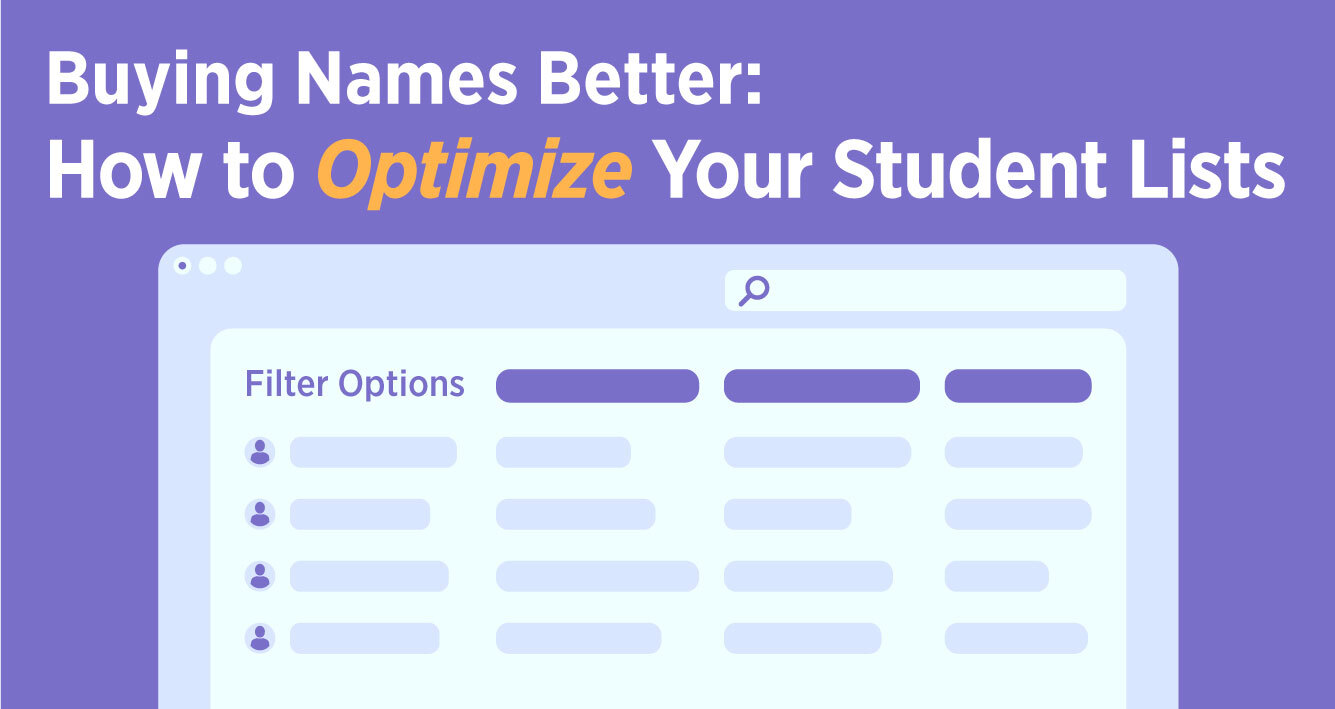
Buying Names Better: How to Optimize Your Student Lists

Lead generation is more critical, and more complex, than ever. If you don’t get the top of the funnel right, it’s difficult to fix it further down the enrollment stream.

Likely your institution is already licensing significant numbers of student names through lists from vendors like College Board, ACT, Education Testing Service (ETS), Hobsons, Niche, EduCo, among others. These lists have value. However, your institution may not be leveraging the full benefit. 

There is tremendous upheaval impacting the lists: dramatically shifting demographics, changing patterns of student behavior, severely reduced participation in testing programs, and changing policies related to student privacy.

Accumulating the names is the easy part. But with a bewildering array of names and filters available for searching, the challenge is to identify, target, and – ultimately – convert prospective students that are the right match for your institution.

How can you best navigate these platforms to license and leverage the leads for right-match prospective students?  

Intead can help: 

We’re talking a fresh, more focused strategy to your list approach, both internationally and domestically, that can transform your lead generation process for the next recruiting cycle.

Tailoring and refining your outreach is as important as acquiring the lists. And, in this particularly challenging and dynamic year for student decision-making, the need for an innovative approach is even more urgent.

What you can achieve:

  • Increased conversions
  • Lower CPAs
  • Greater diversity in your application pool

We spoke with someone who knows these platforms inside and out: Clay Hensley, former Senior Director of International Strategy & Outreach at the College Board (and Intead Research Advisory Board member). Having represented the College Board and its programs to international constituents for more than 20 years, Clay’s deep product and market knowledge is an invaluable resource for your institution as you take a fresh look at how you acquire and nurture leads.

Pair that expertise with Intead’s capacity to analyze your institution’s enrollment and paid social media data, website traffic, and census and other demographic data – and the results you can achieve will raise eyebrows and produce smiles.

Read on to learn how your institution can avoid common pitfalls, boost the utility of those licensed names, and make the data work for you. Spoiler: The expertise you need is just an email away.

Read More

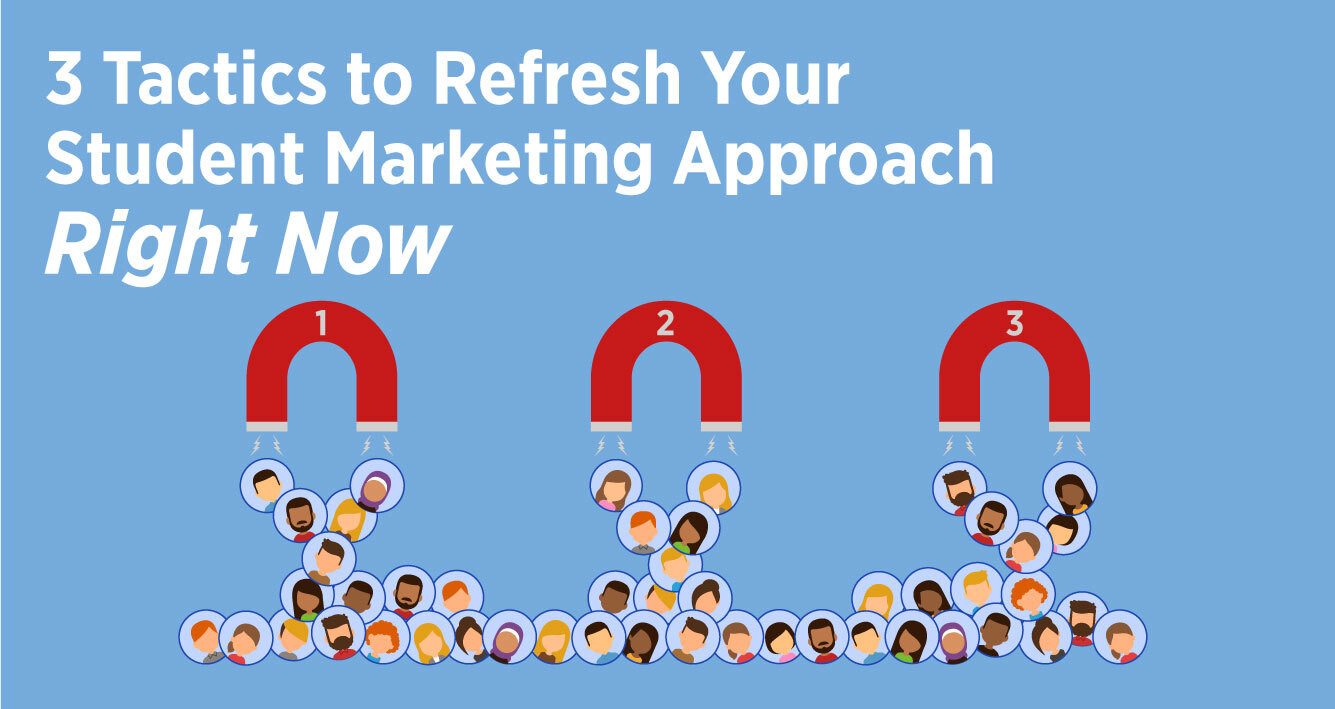
3 Tactics to Refresh Your Student Marketing Approach, Right Now

You don’t need to be a CMO to know that there’s more to attracting students than coming up with a pithy headline for your Instagram ads and postcard mailers.

And yet, what we often see are institutions full of creative minds doing the same marketing initiatives year after year, not really realizing how they appear to their target audiences.

At the end of the day you want your institution to stand out in a field of sameness, ubiquitous blather, and endless repeats of campus images and smiling students with backpacks and laptops. You want to highlight your institution’s differentiators and deliver the right message to a targeted audience at the right time.

But we get it — whether it’s lack of budget, time, or most likely, both, swapping out last year’s campaign photos, shuffling around your headlines, and hitting a few buttons in Facebook Ads Manager are sometimes the only levers that are in scope. And establishing a feedback loop of performance analysis for continuous campaign iteration and optimization? An even more distant goal state.

So, before you reach for that updated “smiling student with backpack” image to juice your Fall 2021 recruitment campaigns, turn your attention to today’s post: 3 recruitment marketing ideas to help you reach students where they are right now.

We’re talking specifics on topics, audience, tone, and dissemination channels for campaigns that can set your institution apart and attract and nurture those high-quality leads you’re looking for. And what would an Intead blog post be without an insight on  how to use your data better?

Throw these ideas to your creative team and see if something valuable emerges from the brainstorm session. Something that truly fits your institution. 

Read on.

Read More

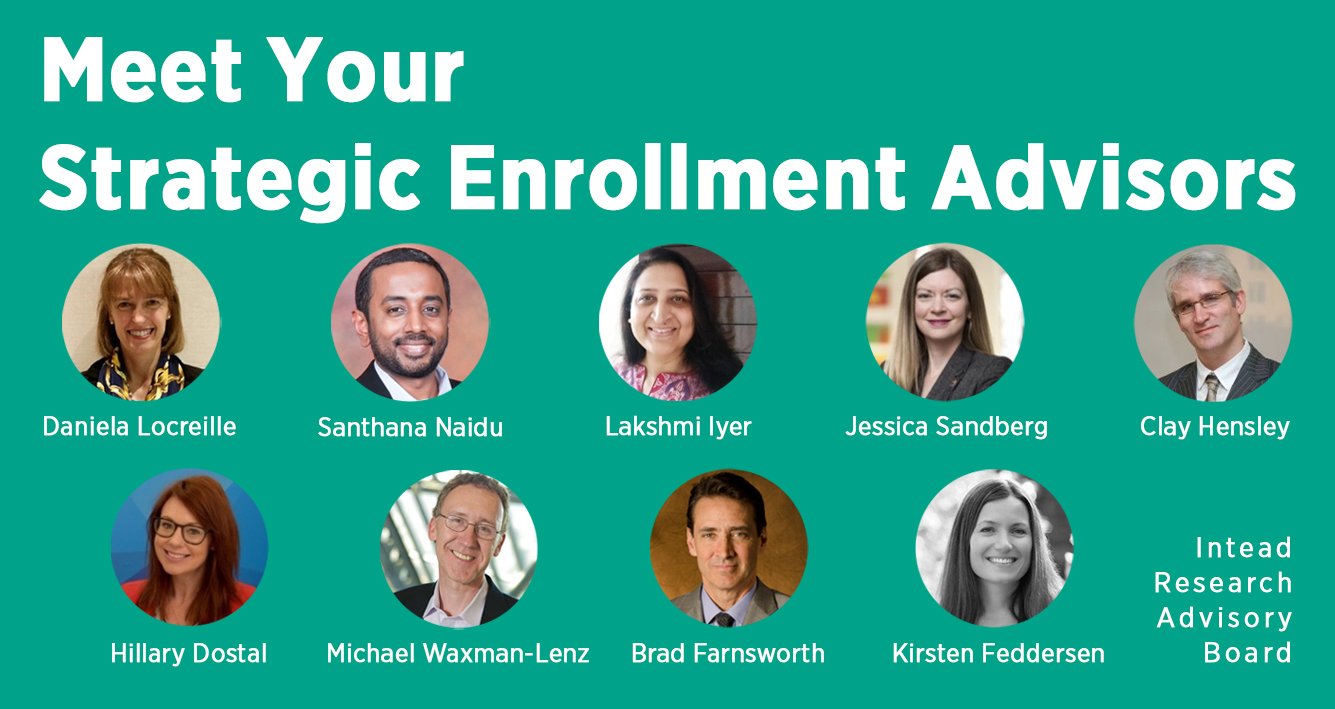
Meet Your Strategic Enrollment Advisors

As an education professional, you know deeply the power of a knowledgeable guide to expand your mind, challenge your beliefs, and push you to new heights.

Whether this guide takes the form of a favorite professor, dean, mentor, colleague (or a favorite blog), even the most experienced leaders among us can benefit from a little outside perspective and wisdom from time to time (read: always).

For Intead, that source of wisdom is our recently expanded Intead Research Advisory Board, a veritable who’s who of education industry leaders who guide our student recruitment and enrollment research on both domestic and international approaches.  

Don’t worry, we’re not just here today to sing their praises (although we could do that all day) or talk about how they help us look smart (although they do). ;)

The truth is, the Intead Research Advisory Board isn’t really for Intead. They’re here to serve you. With their expertise, we are able to provide you with fresh and deeply knowledgeable perspectives and new research and insights on topics that drive our industry and your institution forward. We’re ever grateful for their valuable work.

Read on to learn more about this powerful line-up, how their wealth of experience can help to power your institution, and the market intelligence we are working on and presenting soon.

Read More

Not Traveling? Making the Case for Your Recruitment Budget

Your budget is the tactical expression of your strategy. What you value most is where you put your funds. Or at least, that’s how it should be.

Whether you are submitting your budget for approval or evaluating the budget requests others submit to you, this year’s budget season is looking a little different. International recruitment travel? Still off the table. Student recruitment dollars? Still in need of allocation.

With your standard recruitment playbook out the window, a comprehensive budgetary framework  to evaluate all the different strategic initiatives on the horizon becomes more important than ever.

Are you devoting enough to the digital channels available? Are you selecting the right channels for your institution? The virtual fair folks are telling you they are really the way to go. Of course they are. Have they shared hard attendance, engagement, and results numbers to prove it?

To help you and your team identify, assess, and evaluate your recruitment initiatives this year, the Intead team took our collective experience with so many different institutional assessments and strategic planning sessions and simplified the process of budget evaluation into 3 Essential Budget Questions — a 1-pager that offers a simplified, high-level approach to considering any budget request.

With this framework for evaluating your plans and whether they merit investment, you’ll take those complex quandaries down to a basic starting point and identify where the opportunities for growth really are.

We think you’ll want to share this one widely. This and a quick review of our recent, highly popular post about how to say no to ideas that are not good enough.

Read on to access the downloadable budget consideration flowchart.

Read More

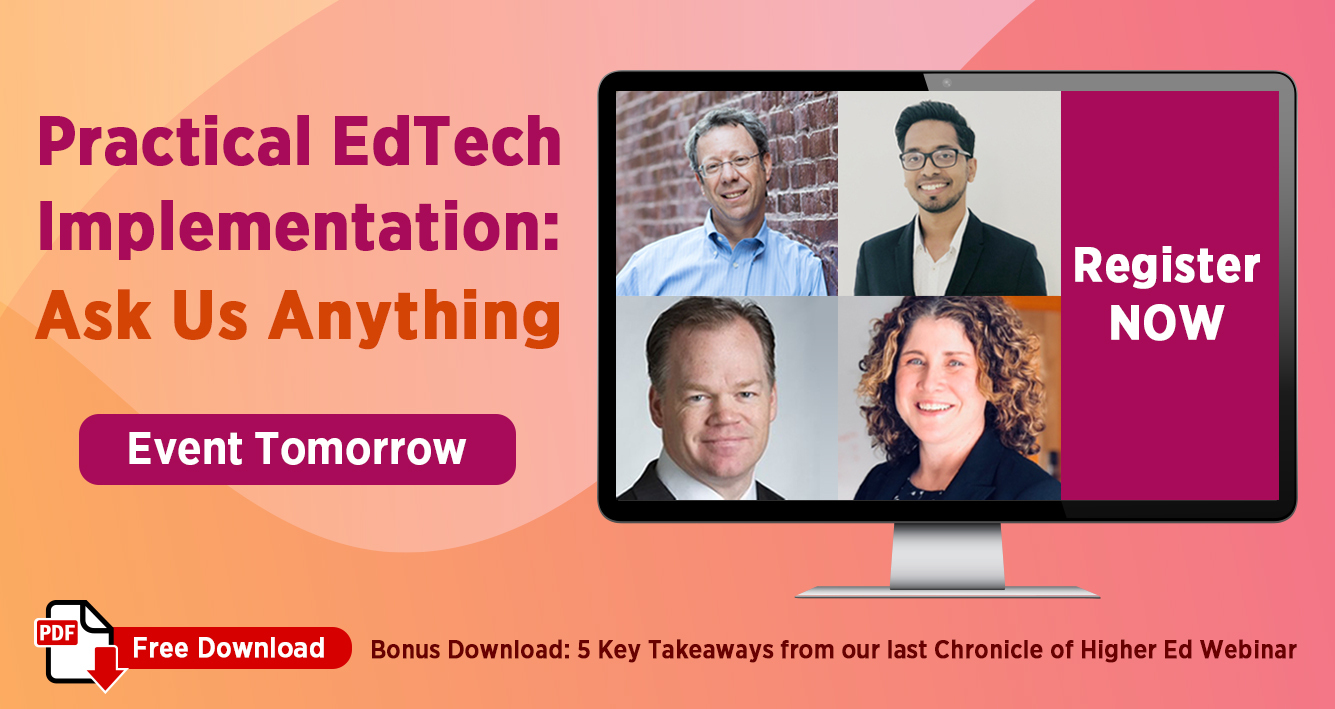
Practical EdTech Implementation: Ask Us Anything — Register Now

The roadmap for EdTech implementations a decade ago had a linear feel. There was an expectation of securing a significant tech budget and allocating that to a carefully selected vendor with a 3-5 year plan. There was talk of “flexibility” and integrations. APIs would be built to tie different parts of the legacy systems together or the legacy piece would be replaced outright. The future system was going to be a real game changer.

It rarely worked out as planned…ever. Been there?

Today, replacing aging technology is an entirely different process. We’re eager to share insights into how campuses develop truly flexible systems and integrations with technology that is evolving every 6-12 months.

The technology process today has a heck of a lot more to do with justifying ROI than choosing technology.

Confused? Register for our webinar, "EdTech: The Road Map Has Changed. Successful Implementation Processes Look Like This" tomorrow, February 18th at 2pm Eastern. 

Register Now

Join Intead and iSchoolConnect as we talk about pushing decisive, cross-departmental collaboration at speed and scale like never before. We're talking agility in planning and innovation in technology and digital tools far beyond the usual benchmarks of annual progress in our notoriously slow-moving industry.

There’s a lot of work to do to pull complex technology and analytics projects all together. Best to have some really strong partners.

In the webinar, we’ll be sharing practical advice for successful, cost-effective technology implementations. Implementations that, long-term, produce stabilized and predictable revenue streams for your institution, even in unpredictable times.

You won’t want to miss this

Adding valuable perspective to this Ask Us Anything conversation will be:

  • Seamus Harreys, Vice President, Global Enrollment, CIEE
  • Kerry Salerno, CMO, Babson College

We’ll have plenty of real-world stories and insights to share. Stories about Northeastern University’s amazing growth from 2009 and onward. We’ll talk about technology investment approaches at different size institutions. Stories about vendor selection, technology features, and most importantly, the challenge of getting all of the internal stakeholders aligned. 

Throughout, we will welcome your questions.

Important note: if you can’t attend the event live, your registration will ensure you’re first to receive access to the recorded conversation.

And as a primer for tomorrow’s implementation-focused conversation, how about a free PDF download: “Using Tech to Thrive in a Volatile Time” sharing our 5 key takeaways from our February 4th panel event with The Chronicle of Higher Education and your colleagues from five different institutions.

Read on to access your copy of the 5 key takeaways and to learn how your peer institutions across the country are getting their technology investments right. A quick and helpful read before we dive deeper tomorrow.

Read More

Successful Tech Implementation Processes Look Like This — Register Now

In last week’s virtual event, “Using Tech to Thrive in a Volatile Time”, Chronicle of Higher Education host Ian Wilhelm surveyed attendees with one key question — 

Will the pandemic experience help your institution make better decisions about using technology?

The answer from respondents? A resounding YES.

But what exactly are those decisions? Who’s making them? And most importantly, how will these decisions about technology made now lead to successful implementation and transformational change for your institution down the road?

On Thursday, February 18th at 2pm Eastern, Ben Waxman, CEO of Intead and Ashish Fernando, CEO of iSchoolConnect will be leading a follow-up webinar, "EdTech: The Road Map Has Changed. Successful Implementation Processes Look Like This" to further the valuable Chronicle discussion of last week.

Register Now

In this “Ask Us Anything” conversation, we’ll be getting practical, covering all things tactical implementation when it comes to technology on your campus. The key objective? Identifying how successful tech implementation really happens (despite the obstacles) and how you can create that new reality for your students, faculty, and staff. We want to discuss your specific case —wins, challenges, and all.

Adding valuable perspective to the event will be Jesus Trujillo Gomez, Strategic Business Executive for Higher Ed at Google Cloud, as well as other special guests from academic institutions across the country. Get those questions ready.

Registrants will receive access to the recording of this event, so if you can’t attend live, never fear. (And if you want your questions answered but can’t attend — let’s chat.)

And if you missed last week’s “Using Tech to Thrive in a Volatile Time” event, stay tuned in the coming weeks for the Director’s Cut recording, as well as a download of the key takeaways, including Intead and iSchoolConnect’s, “6 Insights in 6 Minutes.” Exciting, valuable stuff to come.

Read on for a preview of the keys to tech implementation success. Plus, one of the most common tech myths, debunked.

Read More

Using Tech to Thrive in a Volatile Time — Register Now

How do you and your team feel as you choose technology partners and platforms? Not exactly a walk in the park, right?

We’ve worked with many institutional leaders and there are common elements of a successful process. And those common elements are not the same today as they were a decade ago. Today, institutional investments in technology follow a different path, with different expectations. Success has been modified over the years. Integrations consistently evolve.

Our point: Enrollment management upgrades are essential to your institution’s future growth. Competition for students is growing more intense with no end in sight. You need both the team and the technology to succeed at stabilizing and growing revenue, and achieving the diverse student environment that your mission statement purports. 

What is this redefinition of how technology investments help universities move forward? Intead and iSchoolConnect are participating in a Chronicle of Higher Education webinar tomorrow, February 4th at 2pm Eastern, to discuss just that. All registrants will have access to the recording. So, even if you’re tethered to that critical Zoom meeting tomorrow, you can still get the inside scoop and all our best insights and advice.  

Register Now

The Chronicle is bringing an all-star panel to discuss the big picture. How are institutional needs assessed? How are institutional goals identified? How are technology investment decisions made? The panel features:

  • Cedric Howard, Vice President for Enrollment & Student Services, State University of New York at Fredonia
  • Keith W. McIntosh, Vice President and Chief Information Officer, University of Richmond
  • Mary Ann Rafoth, Provost, Robert Morris University

Plus, Intead and iSchoolConnect will be adding some grounded tactical perspective with a special segment,"6 Insights in 6 Minutes", featuring: 

  • Ben Waxman, CEO, Intead
  • Ashish Fernando, CEO, iSchoolConnect
  • B. Donta Truss, Vice President for Enrollment Development & Educational Outreach, Grand Valley State University 
  • Derrick Alex, Director, Admissions Processing, University of Houston

All in all, this webinar will help you consider the broad range of quality available in the marketplace as you find the trustworthy technology partners you need. Many of the vendor options available do not understand the complexity and varied needs of the academic environment. We do.

Read on for a preview of those insights. 

Read More

The Data That Informs Us Part 3

Today we ask, “Right, what about international”?

Honestly, don’t even think about skipping this post. Long because: worth it.

With schools now publishing their actual fall 2020 international enrollment numbers, the proof is in the pudding for many.

Recent survey data offered up by Inside Higher Ed tell us fewer institutions are planning to recruit international students this cycle. While they might rightfully point to the market turmoil, travel restrictions and the like, the underlying concern for many, from our point of view, is a lack of confidence in what the institution has to offer.

So, where is the opportunity for international? The good news: student desire springs eternal. Below we consider recent SEVIS data and data on India, Nepal and China that point the way forward.

Speaking of the way forward, ever notice that those who anticipate opportunity and plan for it are in a vastly better position to capitalize? The opposite is also true. Fear of the future and planning for scarcity perpetuate the same.

To put it simply, you can’t harvest crops if you don’t plant seeds.

And yet, this perspective shared by an SIO of an important US public university in one of our recent email exchanges: Public universities always have their speed set to “caution”. When universities deal with a complex or unprecedented situation, they switch gears to “Halt”. If they are scared, they engage the public university turbo, a button that reads “Ignore”.

This scenario gives the proactive the opportunity to take tremendous leaps forward. So few take this opportunity.

The past two posts in this three-part series largely focused on the data that points to opportunities for domestic student enrollment growth and what to do next. Now, in Part 3, we speak to yet another student segment everyone is scratching their heads about.

Coming next week, more discussion about the latest research on Gen Z and their preferences to help reduce the head scratching about domestic student enrollment plans. Stay tuned for that.

Now, Part 3, what can we offer to international students to overcome the obstacles to enrollment?

The reality: managing international enrollment in the near term is going to be an uphill climb, especially if your institution was slow to develop a robust and flexible remote learning pathway for students throughout the spring and summer. Your plans now (seed planting) will set you up for future harvests as international students continue to seek education and adventure. They won’t be stopped, even if they are slowed. Know that we’re just a call away if you want help making those plans data driven and successful.

Note: if you’re still struggling with the faculty and student processes and fostering engagement, read our earlier post on global turnkey campuses for a clear path to flexible opportunities. Take steps to salvage the spring enrollment numbers within the next few weeks. We have a plan and examples from the 8 universities that innovated and are now reaping the benefits.

Read on as we dive into the latest international student data and what it means for your 2021 enrollment marketing strategy and beyond.

Read More

The Data That Informs Us Part 1

This just in: undergraduate enrollment at the George Washington University fell nearly 25 percent this year based on preliminary estimates. That decline includes more than 600 upperclass undergrads and more than 900 international students. A budget impact of ~$76 million

This is only the start of the pandemic impact figures from institutions set to roll in over the next few weeks. 

But there's no time to wait around for the bad news. It's time to work with the data we have now

Fortunately, the National Student Clearinghouse Research Center has preserved a crucial record of the last few months that provide a wealth of indicators of what is to come: summer 2020 enrollment numbers.

Today’s post is the first in a three-part, data-focused series in which we’ll be diving into the latest enrollment trends and early indicators of COVID-19’s impact — plus what these findings mean for your marketing, of course.

The web has been rife with clickbait headlines and data from student sentiment surveys since the early spring, each claiming to predict COVID-era student decision-making in the fall and beyond. Despite our love for data around here, you might have noticed that we haven’t given these surveys much attention on this blog. 

Think: when was the last time you accurately predicted your own thoughts and behavior six months in advance? What about the last time you predicted anything in the evolving economic, health, and employment conditions of the COVID-19 reality?

Chances are, many students don’t even know what they want for tonight’s dinner, much less what decisions they’ll be making in the months ahead. And any of those surveys regarding their stated future COVID-era educational plans from six months ago? Well, we hope you took them with a grain of salt.

So much of the planning we see being done by individuals and institutions is based on hoping that things will improve in 2 weeks, 2 months, 6 months. Hope is SO important to developing vision and inspiring the team, but when it gets down to academic and business planning to execute on the strategic vision, stability is what feeds accurate predictions. We are sorely lacking in stability these days, making predictions far less reliable.

We look for data that can support the work – data that is not based on point in time records of hopeful sentiments.

In the National Student Clearinghouse’s newly released report, which includes data from 7 million students enrolled in May-July summer sessions across 2,300 colleges, we have our first look at concrete, behavioral insights on the enrollment effects of COVID-19 across various degree levels, institution types, and demographic groups. This is the type of data that gets our marketing gears turning.

 Read on for these early enrollment signals and a few hints at what’s to come.

Read More

Investing in Growth, Looking Beyond Fall

Your institution’s mission has not changed.

Despite all that is swirling around us, you are still in the business of helping people improve and achieve. You are still helping them understand what to learn and how to learn it.

Resilience is Built

Many institutional leadership teams are demonstrating the very resilience their mission statements say they will instill in their students. Others are suggesting business as usual with little change to their operations beyond physical distancing practices.

Investing in adaptation and innovation builds long-term resilience. This is what students are doing by investing in their educations – building resilience.

What is the story we tell students and parents? “Take the risk. We know it is a lot of money, but you’ll be better off in the long-term.” We tell students to invest in a 4-year growth plan, and we reinforce it along the way, “Don’t be deterred! Finish in 4 years!”

Are academic leaders following that same advice to build resilience for their institutions? Or are they crying poor, just like the students they are trying to convince to spend savings and take on debt for future gains?

Here’s the thing: institutions rarely stick to their own 4-year plans.

Example: Enrollment marketing initiatives often start with 3-5 year plans. The team acknowledges that real returns won’t materialize in years 1 or 2. And then, turnover in senior administrators and other outside factors suddenly defund the growth plan and little to no progress gets made. The planned investment halts after just 12 months.

I’m sure you’ve seen this happen all too often.

What To Do?

Develop the vision. Build the buy-in. Invest in the execution. Stay the course.

We will be adding a new set of research and resources available to our Intead Plus members over the next 8 weeks to help you do just that.

Read on to take a look at where forward-looking institutions are making these investments for longer-term growth (case studies are available).

Read More