
Recruiting Intelligence

Listen to the “Cockroaches” - When a Meme Becomes Market Intelligence

Sometimes the most important market signals come as memes. 

One tweet. 24 hours. Millions of followers. That’s all it took for India’s satirical Cockroach Janta Party (CJP) to become a lightning rod for frustration among young people navigating one of the world’s most competitive education systems. 

If you’re recruiting students from India, this isn’t a political story. It’s a student sentiment story. And an effective use of social media story. And hey, Go Boston University!!! 


Can benchmarking help universities navigate today’s internationalization headwinds?

Yes - but don't take our word for it. Read The PIE News coverage of our new AIEA benchmarking study. 22 institutions have joined, 40 in progress, 100 more evaluating the opportunity. Are you?

Not yet a subscriber?
Get Recruiting Intelligence delivered to your inbox. Smart move.


In mid-May, Abhijeet Dipke, who recently completed his master’s in public relations from Boston University’s College of Communication, saw that Chief Justice of India Surya Kant had compared unemployed young people in India to “cockroaches” and “parasites.” Dipke reacted by posting a single line on X: What if all cockroaches came together? 

While Kant later clarified his comment was aimed at people using fake credentials, not young people in general, the explanation was too little too late. A movement had taken shape. 

Memes and comments streamed in, with some suggesting young people start their own party. Dipke took that as his charge. With no budget and AI as his lone partner, he built a manifesto, logo, and website for the CJP (Cockroach Janta Party) within 24 hours. 

If you haven’t been following the news (or CJP’s Instagram account, now topping 26 million followers), the meteoric momentum of this online movement traveled swiftly offline, igniting street protests after the National Eligibility cum Entrance Test (Undergraduate), or NEET-UG, was canceled due to a leak of test answers. The repercussions of this decision were significant, including at least 13 reported suicides among students who had taken the voided exam. Protestors held Education Minister Dharmendra Pradhan morally responsible and sought his resignation. Pradhan quit  on July 25, 2026.

That’s not all the new CJP won. Families of suicide victims will be compensated. And, no legal action will be taken against protestors. 

The CJP’s protest campaign secured its demands and wound down, but what becomes of the movement itself remains to be seen.  

The mindset behind this historic movement and significant events offers an important lesson in the evolving Indian student market. Read on… 
Read More

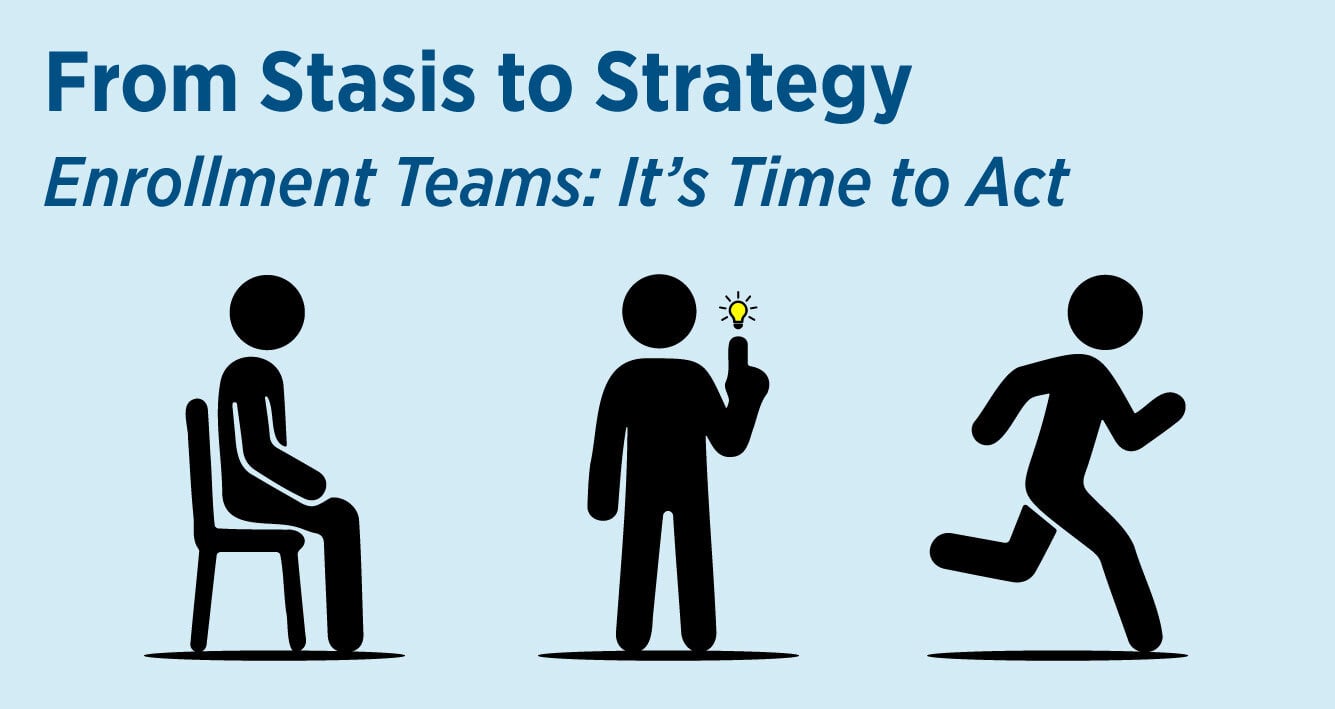
From Stasis to Strategy: Enrollment Teams, It’s Time to Act

Churn happens in every setting. Promotions, departures, budget realignment, team and department consolidation.

Disruptive, yes, but hardly unprecedented – a common cycle typically prompted by fiscal changes and then the disruptions ripple out from there. 

And yet, change rarely feels routine. Especially at the scale we are experiencing right now.

Still, your programs need promotion, your Deans have their own priorities, and everyone knows that your important leadership chair is about to turn over (you know the one, right?).

What is an enrollment team to do? Do you launch a new marketing campaign now, or wait? What if today’s A, B, and C priorities become tomorrow’s D, E, and F because the new leader coming in 4 or 5 months will have their own ideas.

And what happens in the meantime as you try to sort it all out? Stasis.  

So often, teams sit on their hard-won budgets, waiting for stability and clarity. An approach, for sure, but not a good one. Doing nothing isn’t leadership (too blunt?) – and doing nothing will do nothing to advance your yield or deliver your next class.

We all know there are legitimate excuses for not hitting your numbers. Yet we see this stasis mode all the time. And yet...

What your enrollment team needs in times of ambiguity: smart bets and clarity. 


Going to AIRC in Atlanta? Let’s connect! 

Join us Dec. 3, 2025, 1 – 4 p.m., for our workshop, Exploring Third-Party Business Models for International Student Recruitment, or any one of our other conference sessions. You are registered, right? 🙂

Or, meet us at:AIEA in DC in February and ASU+GSV in San Diego in April.


How you get to clarity and forward motion: concrete data to identify the opportunities and cut through uncertainty. And importantly, you need stong presentations to build internal support for your plans. 

In this time of seemingly never-ending uncertainty, institutions need leaders who act. Read on for our views on what proactive enrollment leadership looks like… 

Read More

Is Your Content Functional but Vibeless?


So, my oldest child joined us for dinner out the other night. She dressed with her usual flair, all yellow and brown this time. And she ordered herself a drink to match – some cocktail concoction that apparently took a cue from her hues. I had never ordered a drink to match my look before, so I asked her what I should get. Her response: "Dad, I have no idea. Your look is functional but vibeless – jeans with a black fleece. How about a Miller Lite?" 

Absolutely loved that line: functional but vibeless. How common is that situation in the marketing/communications world? Consider all of the functional but vibeless emails we receive. You probably can’t consider them. They’re all just so forgettable.  


Our next opportunity to meet! 
NAFSA Region XI, Hartford, CT, Oct 27-29. The Intead team will be there presenting on Admission Process Analysis, Marketing Data Analytics, and Marketing Study Abroad with university partners from our New England region friends from Quinnipiac, Johnson and Wales, Clark, and Emerson. Practical strategies and creative tactics to hit your enrollment targets.  Hope to see you there! 

The Resource Center for Industry Insiders 
Take your challenge of the day and plop it into our search bar. With 800+ publications and our 15 years of weekly blogging, you will find relevant content on any topic important to enrollment management and student recruiting.  Valuable perspective and data on topics you care about. From agent-university partnerships to predictive modeling and CRM efficiency, to new market development, our Resource Center has you covered. Check it out.


Examples of what we mean:

→ Dear inquiring student, 

Thank you so much for submitting your application. We note you are still missing one document. Blah, blah, blah…our deadline is approaching. 

Thanks, Vibeless University Admissions Team 

---

→ Dear admitted student, 

Let us introduce you to all of the really great student associations you could join here at Vibeless U! When you arrive, you should look into one. Oh, and here’s a fun picture … 

Sincerely, Vibeless University Admissions Team 


All function, no form, low response rate, immediately forgotten. Instantly deletable. 

Taking time, tapping consumer insights from your current students, injecting creativity, tracking the metrics to figure out what works, what converts. These are the activities that produce results. These are the activities that will share your institution’s true vibe far and wide. 

Every communication you have with students and prospective students, matters. It’s how you connect with them. Correction: It’s how you stay connected. Retention is as important as recruitment.

Today, we offer the three golden rules to creating a lead nurturing campaign that’s got the function you need and that all important vibe. We think this post will be really helpful for your team members tasked with the nuts-and-bolts details of your institution’s prospective student outreach.

Important to communicating vibe: the order you present your messaging matters by region and student type. Is affordability your first hook? Career opportunity? Environmental justice? Academic prowess? All important content areas. Different student segments will click on one or another topic at different points in their decision-making process. THAT is what consumer insight research confirms for you as you use your content to improve application rates and yield.

Share this one with the right folks on your team and, read on 

Read More

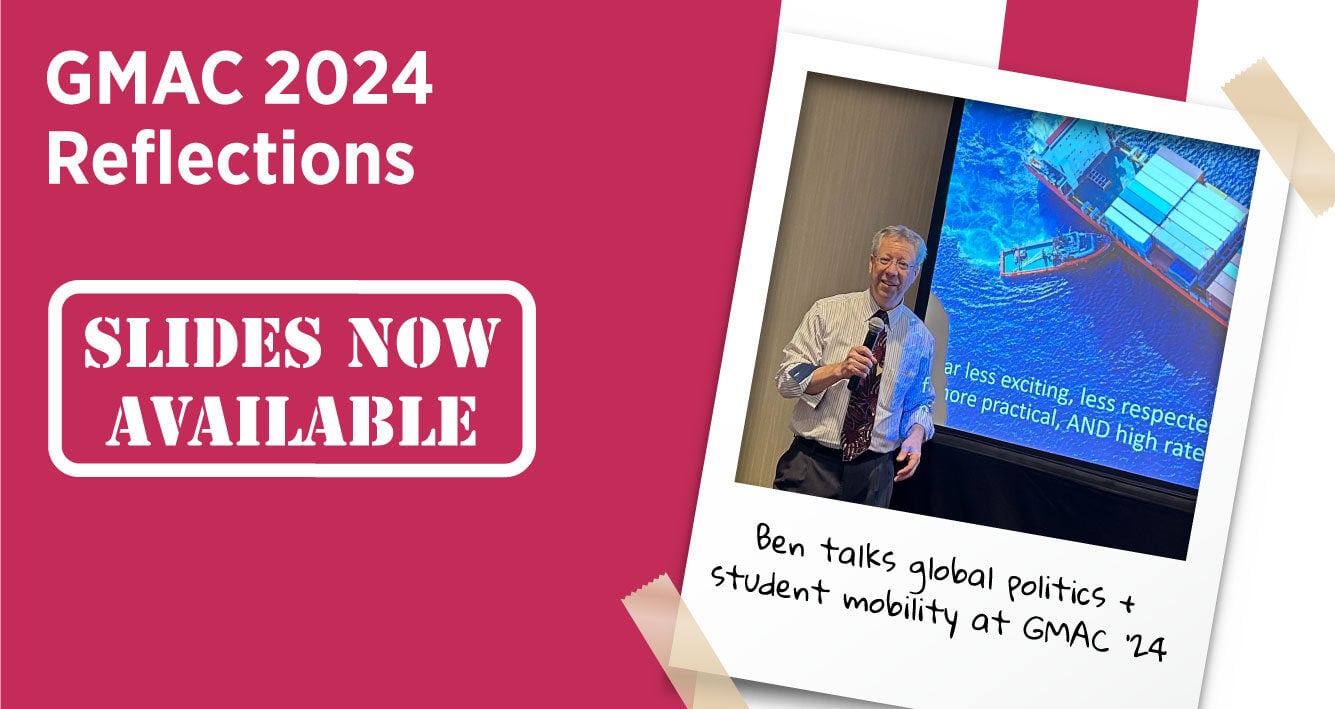
GMAC Conference 2024 Reflections


Our first time attending the GMAC Conference put on by the talented folks who produce and manage Graduate Management Education (GME) testing and so much more. With 600+ in attendance, the networking flows easily and the conference logistics seem a bit smoother than some of the other conferences we attend.  

GMAC, as an organization, has a larger, more international staff than other U.S. academic associations. And they have a revenue stream (from testing) that others in this field do not have. Their global outposts support academic business programs in countries around the world and confirm the value of their entrance exam for institutions in these countries as well. 

Conference sessions covered marketing, recruiting, admissions, diversity, program management, and predicting future enrollment, among others. With many concurrent sessions, I found it hard to identify the most valuable use of any given hour in my schedule. That’s a good thing. 

Our presentation topic: predicting the student recruitment future based on international data and the global shift toward stronger anti-immigration policies. Our slides will be available to you for the next week before they move to exclusive access for our Intead Plus members. 


Our next opportunity to meet! 
EducationUSA, Washington, D.C., July 30-August 1. Ben and Virginia Commonwealth University SIO Jill Blondin will share insights on Navigating Budget Challenges in International Recruitment: Practical Strategies for Every Phase.  Hope to see you there! 

The Resource Center for Industry Insiders 
Take your challenge of the day and plop it into our search bar. With 800+ publications and our 15 years of weekly blogging, you will find relevant content on any topic important to enrollment management and student recruiting.  Valuable perspective and data ontopics you care about. From agent-university partnerships to predictive modeling and CRM efficiency, to new market development, our Resource Center has you covered. Check it out.


Below we share 4 way-cool and thought-provoking takeaways from the sessions I attended at GMAC. And of course, the slides from my session about the future and how cultivating an innovation mindset is your best approach in the face of national and international policy threats. We compare and contrast very reliable sources (IIE, British Council, and IDP) and make our own case for the value of innovation and perseverance. 

Read on for the insights and be sure to scroll to the very bottom for the link to our slide deck – which we think is well worth the scroll ; -) 

Read More

Did you say something?...I’ve already scrolled on


With the amount of time prospective students spend online, you’d think connecting with them would be easier.  

The average US teen spends 7 hours 22 minutes each day looking at a screen, or 43% of their waking hours, per Exploding Topics. And that’s being conservative – Common Sense stats show teens on screens 8 ½ hours per day outside of school-related screen time. Need confirmation? Just look around your campus at all the students not looking at you, but rather their screens. (Reality check: the rest of us aren’t off the hook as the average person clocks 6 hours 58 minutes of screen time per day, just so you know. So yes, that is where all the time goes!) 

Do you know the average number of phone notifications a US teenager receives each day? We answer that below. Make sure you are sitting down when you read it.

Yet, despite all their screen time, or perhaps because of it, your prospective students are discerning consumers of marketing. If they’ve seen one university ad, they’ve seen a thousand. We’re certain you can relate. We all can. But some messages clearly do get through, and it almost always comes down to creativity, cultural nuance, and an appetite for taking a little risk.

Fun fact for the risk takers: Humor is a tough marketing message to achieve with a broad and diverse audience, but when you get it, it REALLY works. 


The Intead team is gearing up for some amazing presentations and we hope you can join us. 

  • ICEF North America in Niagara, Canada, April 30 - May 3, 2024
  • NAFSA 2024 Annual Conference and Expo in New Orleans, May 28-31, 2024
  • GMAC 2024 Annual Conference in New Orleans, June 19-21, 2024

Let us know if you’ll share a cup of coffee and a conversation about all things global and digital (info@intead.com) 


Take fintech, an increasingly rising "it" program in the eyes of so many STEM-degree seekers, especially those with a bent toward accounting and money-making in general. And rightly so as financial services operations around the world increasingly rely on new technologies to do business. (Shout out to Worcester Polytechnic Institute on its recent fintech doctoral program launch giving students a full-stack (BA>MS>PhD) option in this coveted field. Talk about reading the market!!!)  

Fintech is a huge, booming industry and one that universities with fintech programs are leveraging to draw the attention of prospects. The same can be said for Data Analytics, Cybersecurity, AI, and other “sexy” programs that now drive global and local economies. 

Important note: the counsel that follows here applies to how you message your programs even if you computer sciences are oversubscribed and you are trying to attract students to other options.

We want to promote programs that will draw eyes and pique interest. Highlighting them in your recruitment efforts makes sense. Of course, you know this. And yet somehow marketing that ultimately makes it onto the screen in front of your prospective students’ gaze is so often watered down, generalized speak about “great programs in computer science” or “practical business degrees” or the now far overused, “advance your career.” Ugh. Your prospect just scrolled on.

We know you know exactly what we’re talking about. So often there is a fear of getting too specific. Why mention one computer science program and ignore the others when students need to know there are many amazing degrees from which they can choose?  

Here’s why: you need their attention, and the coveted, interesting, or unusual programs will get it. Not the generalized track that simply prompts the finger flick and scroll right by. 

It’s not just your message you need to consider, it’s also the medium.

95% of US teens now own or have access to a phone per Pew Research. Worldwide, the stats vary (China has the most active smartphone users, followed by India, the US, Indonesia, and Brazil), but it’s safe to say many of your prospective students living outside of the US are on their phones, too. In Sub-Saharan Africa, affordability and access is improving such that there will be 692 million unique mobile users by 2030, 88% of whom will be using smartphones according to lobby group GSMA.

Many of your prospective students will not only be accessing information about your institution via smartphone, but will be completing the entire application process on it as well. Something your international team knows but your domestic team might not be thinking about. 

Marketers and message makers read on for our tips on phone screen engagement tips. Like all good listicles, we’ve got 5 steps to push your team to create effectively... 

Read More

Required: Cultural Nuance in Edu Marketing - 3 Helpful Examples


Cultural nuance is no “nice to have.” It’s a must. Does your current marketing team understand this? Do they have the deep consumer insights needed to attract, recruit, and convert different cultural cohorts? Let’s get into it.  

When we talk about audience segmentation – the customization of content by region or country or academic interest AND country/region – what we’re talking about is the language and metaphors, images, and offers that resonate. We’re talking about deep consumer insight research that enables marketing efforts to move the needle in a competitive marketplace. Without these insights, your colorful examples, imagery, phrases, and language can only take a campaign so far.  

Non-marketers you can roll your eyes if you like. We suggest you take a look at our 3 examples below for a quick look under the hood at how deep market research informs the creative process and produces stronger results. 


Opportunities to Meet In Person 

The Intead team is gearing up for some amazing presentations and we hope you can join us. 

  • The Forum on Education Abroad in Boston, March 21, 2024
  • AIRC Spring Symposium and ICEF North America in Niagara, Canada, April 30 - May 3, 2024
  • NAFSA 2024 Annual Conference and Expo in New Orleans, May 28-31, 2024

Let us know if you’ll share a cup of coffee and a conversation about all things global and digital (info@intead.com) 


As we develop approaches to attract and recruit students to institutions, we carefully consider what they will find relatable and help them make wise decisions. What will capture their attention among the many ads and posts they see online? What phrases will resonate with them as they consider their options – at each point in the decision process (the marketing funnel)?

Essentially, we are trying to figure out what will pause their scroll and prompt the smart click.

Prospects can only follow up with so many offers. In the end, they will apply to somewhere between 5 and 20 institutions. Most will receive 3 to 7 acceptance letters, sometimes more. What will help them make a wise decision for their particular situation? Will the content you create and disseminate influence them to apply and then enroll? 

So many institutions believe their own marketing and put out the most generic messaging because they think the great pool of prospective students will simply find them and connect with them. Some faculty and administrative leaders still believe that "marketing" is unnecessary (or worse) because their institutions are clearly excellent and students will simply find and select them. This point of view persists within the academic community -- marketing as snake oil sales. And hey, there are plenty of marketers out here lacking integrity in their approach, so, we understand the disdain for the marketing field.

To be clear, effective marketing is communication with integrity. Effective marketing helps consumers make wise decisions. Full stop.

Read on to explore the use of motivational language, colorful metaphors, and local language to create marketing campaigns that will attract attention, resonate, inform, and recruit. 

Read More

Get Your Students Career Ready. Here's How - Part 1 of 2

Let’s talk about the messaging your institution uses to convince students and families that what you offer has value. Pretty simple stuff, right? Maybe not. You’ll appreciate the helpful checklist that follows in part 2 of this series. Think marketing differentiators in a competitive marketplace. You won’t want to miss it. 


Opportunities to connect in person and hear our latest market intel:

  • Join us in Paris Nov 8-10 at CIEE's 76th Annual Conference.
  • Join us in Boston Nov 13-15 at PIE News Live.

Let us know if you'll be joining us (info@intead.com).


But first a story. 

Ok, so you are up in front of your board of directors presenting your business growth and marketing plan. You and your team have been figuring this out for a while and last night was a late one as you worked together to put the finishing touches on your slides. There were still disagreements among your team, but you settled the issues and felt nervously ready. 

Everyone has a speaking role but some on your team are stronger than others. Some don’t have appropriate clothes to wear for the presentation so they borrow something professional looking from friends. Some sway nervously back and forth and read their slides rather than engage with the very important board members. You realize early on in the presentation that the data presented on slide 7 is wrong. It doesn’t support your final recommendation. Maybe no one will notice. 

It is your Marketing Business class final presentation to a mock board of directors and as first year undergrads, your team is anything but seasoned. Your final grade is riding on how your team performs. 

Every semester for years now, I have had the honor of judging the final marketing analysis presentations of undergraduate students in a marketing business class at Suffolk University. A good friend of mine there teaches the class and gathers a set of judges from the biz to help the students get some real world feedback. Each judging session is as different as the teams presenting. It’s a blast for us, the judges. Nerve racking for the students. 

Recently, the department asked a few of the real-world judges for additional input and it truly impressed me. They wanted to hear from us as employers to understand what we look for in candidates as we hire. What tools should their students know how to use? What business concepts and approaches are critical to us as employers so their graduates will crush the interview?  

That line of questioning is SO important for business programs that often focus so much on esoteric business theory and simplistic case studies while purporting to be all about the real world. As our Intead Advisory Board Member Hillary Dostal, global marketing advisor at Pegasystems, says: There is best practice and then there is actual practice.  

This goes for your team, too. Read on…

Read More

The Non-traditional Student Advantage Part 5: Audience Targeting

The non-traditional student can be anyone. To have one definition of a non-traditional learner would limit what we’re trying to achieve. And trying to reach all of them is essentially like trying to boil the ocean. – Hillary Dostal, former director of global marketing, recruitment, and enrollment initiatives at Northeastern University  

A 26-year-old who has just been laid off and seeks to complete a credential program and a 45-year-old stay-at-home mom thinking about a return to the workforce will respond to different messages communicated in different ways. These two prospects will be intrigued by selling points that speak to their own interests. They will prefer messaging written in different tones. They get their information through different channels. At their core, they have different wants, needs, concerns, and aspirations.  

Still, both are terrific prospects for your institution.  

This is part 5 in our 5-part blog series on reaching and enrolling non-traditional students. Find part 1, part 2, part 3, and part 4. 

So, what to do? Get to know your individual audiences. Speak directly to them on their terms. This is how you convey truly compelling messaging. It doesn’t require separate marketing initiatives per se, but it does require audience segmentation and very specific targeted messaging and execution. 

Importantly, before you dive into the engagement piece, you’ll want to be sure that what you have on offer will help these prospective students succeed. 


This is a very insightful ebook. It underscores the importance of differentiating non-traditional students from traditional students throughout the pipeline–from marketing to student success and engagement. The section on conducting an effective marketing audit is a good conversation starter for strategic development conversations. The real-world insights make the book a unique and valuable resource.  ~ Santhana Naidu, Vice President for Marketing and Communications at Rose-Hulman Institute of Technology  


Done well, market segmentation enables you to create better-targeted content and helps ensure that you are spending your resources on initiatives that are the best fit for your institution. This marketing work is simply the organization of your potential students into groups by demographic, psychological, and behavioral characteristics. Segmentation allows you to decide which group represents the biggest opportunity for your institution. And by opportunity, we mean they will find success and their investment of time and money will pay off for them. 

Make that group your target audience and create an offer that will appeal to them specifically. 

Ready to learn how? Read on. 

Read More

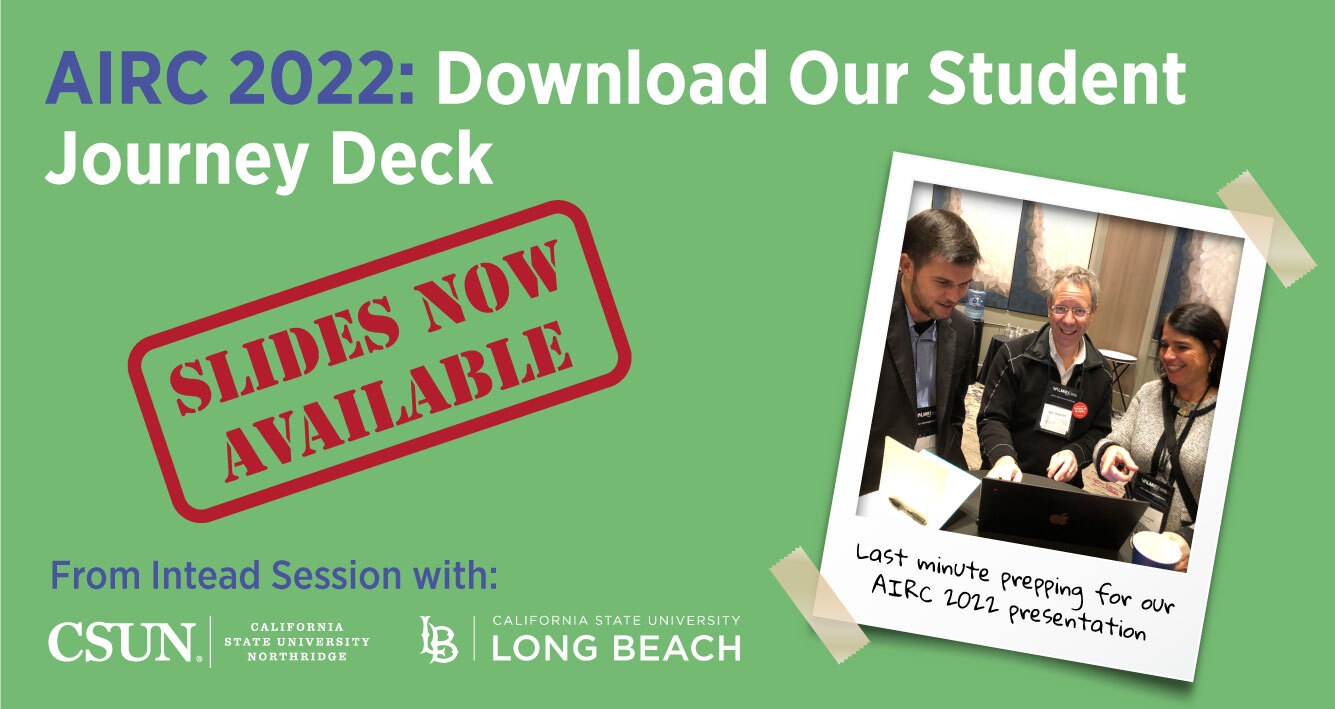
AIRC Conference: Download Our Student Journey Slides

Love this photo: a last-minute session prep discussion as we reviewed the slides for our AIRC 2022 session all about the student journey. The student path to enrollment is really no path at all. That, despite even our best efforts to pave a smooth walk to first-year orientation.

Experience tells us time and again that the actual route to enrollment is filled with intersections, stop signs, potholes, and wrong ways. And influence comes from all directions. It is a multi-factor decision for students. And the path itself is not linear.

In December, Intead had the great pleasure of sharing the stage with Vanessa Andrade and Sean Cochran at the AIRC conference in Los Angeles. Vanessa is the SIO and director of international partnerships at California State University, Northridge, and Sean is the international enrollment management director at California State University, Long Beach. It was a lot of fun. Our session prompted a great discussion with attendees – a hallmark of AIRC Conference sessions.

If you couldn’t sit in, don’t worry. We’ve got you covered by making our slides available to you for a limited time.

And Hey! If you are at AIEA next week in DC, look us up. Join us for a great session on how trend data informs international student recruitment planning. Co-presenting with Karin Fischer from Chronicle of Higher Ed and Dr. Ahmad Ezzeddine from Wayne State University.  Always happy to talk through this student journey perspective to help you hone your approach.

 In the AIRC session back in December 2022, we had a few important learning objectives:

  • Learn to re-envision the many and varied touchpoints of the student journey
  • Gain perspective on which touchpoints can be controlled and emphasized to help students select a “best fit” institution
  • Understand, from the student's point of view, just how influential some of the nontraditional touchpoints are to university selection

 Sound worthwhile? It is. Read on to access this valuable content.

Read More

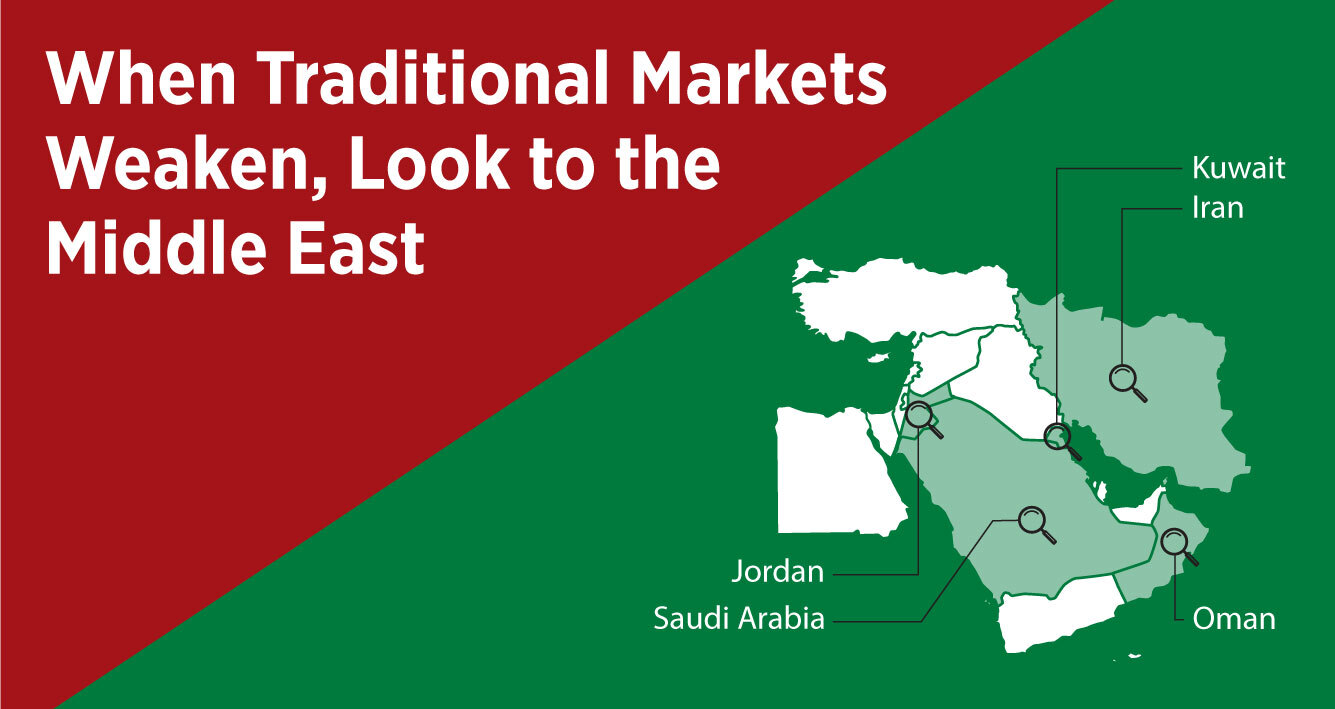
When Traditional Markets Weaken, Look to the Middle East

What we know: On a macro level, stalwart student recruitment sources are in flux with China declining a lot and India rising a lot. Other source countries are similarly difficult to predict as the repercussions of the pandemic and other global factors continue to play out.

Statistically speaking, US institutions hosted 8.4% fewer international students this past fall compared to fall 2020 (and that year wasn’t so hot either). Public 4-year institutions saw the largest decline (17.2.%). This is all per the National Student Clearinghouse Research Center.

While macro stats offer perspective, they are not what drive recruitment strategy. Your goals and differentiators drive strategic enrollment decisions.


On the topic of high-level institutional internationalization: We will be in San Diego presenting at the AGB conference in April. Honored to join Brad Farnsworth from Fox Hollow Advisory (former ACE VP) and Dr. Gretchen Bataille from GMB Consulting (former president of the U of North Texas among other amazing higher ed roles). We will be talking all about insights university presidents and trustees need to guide internationalization efforts. Reach outif you'll be there.

And in less than 2 weeks we will be in DC for the AIEA Conference presenting alongside Karin Fischer from Chronicle of Higher Ed and Dr. Ahmad Ezzeddine from Wayne State University. If you will be in DC for the event, we are talking about how trend data informs international student recruitment planning on Monday, Feb. 20. Hope to see you there. (Email us if you'd like to find coffee together).


Recruitment strategy derives from the number of students you need to meet enrollment targets tied to what your institution excels at (your market differentiators) - that, along with an evaluation of where in the world (domestically and internationally) market opportunities exist. Our blog post on new market entrycontinues to be a popular one.

Most institutions across the country still believe that international markets work to their advantage. The latest “Mapping Internationalization on US Campuses” report by the American Council on Education (ACE) concurs. 66% of its survey’s 900+ responding institutions anticipate their overall level of internationalization will increase in the coming years. (Our recent blog post on the ACE report provides more perspective).

With traditional source countries in flux (China, India, Vietnam, South Korea, Brazil), we have been pointing to opportunities in developing markets (Africa part 1, part 2) and Latin America (part 1, part 2). Today we offer insights on the Middle East.

The value of reaching a broader swath of prospects gets to the very heart of why most institutions say they are for internationalization in the first place:

  • To improve student preparedness for a global era
  • To diversity students, faculty, and staff
  • To become more attractive to prospective students
  • To generate revenue

In evaluating new markets, we look to countries with rising incomes, a growing youth population, and real employment opportunities for returning graduates. The Middle East is a region with a rising youth population, plentiful job opportunities, and only a handful of competitive higher education institutions.

Many students in this region are looking to study abroad due to changes in political climate or the fact that many of their local universities are newer or understaffed. Though let’s not discount the entire system. Two Saudi universities are ranked in the top 200 of global 2023 QS World University Rankings: #106 King Abdulaziz University In Jeddah and #160 King Fahd University of Petroleum & Minerals in Dhahran.

In this week’s post we offer you insights on student market opportunities in Saudi Arabia, Iran, Kuwait, Oman, and Jordan.

Read on.

Read More