Recruiting Intelligence

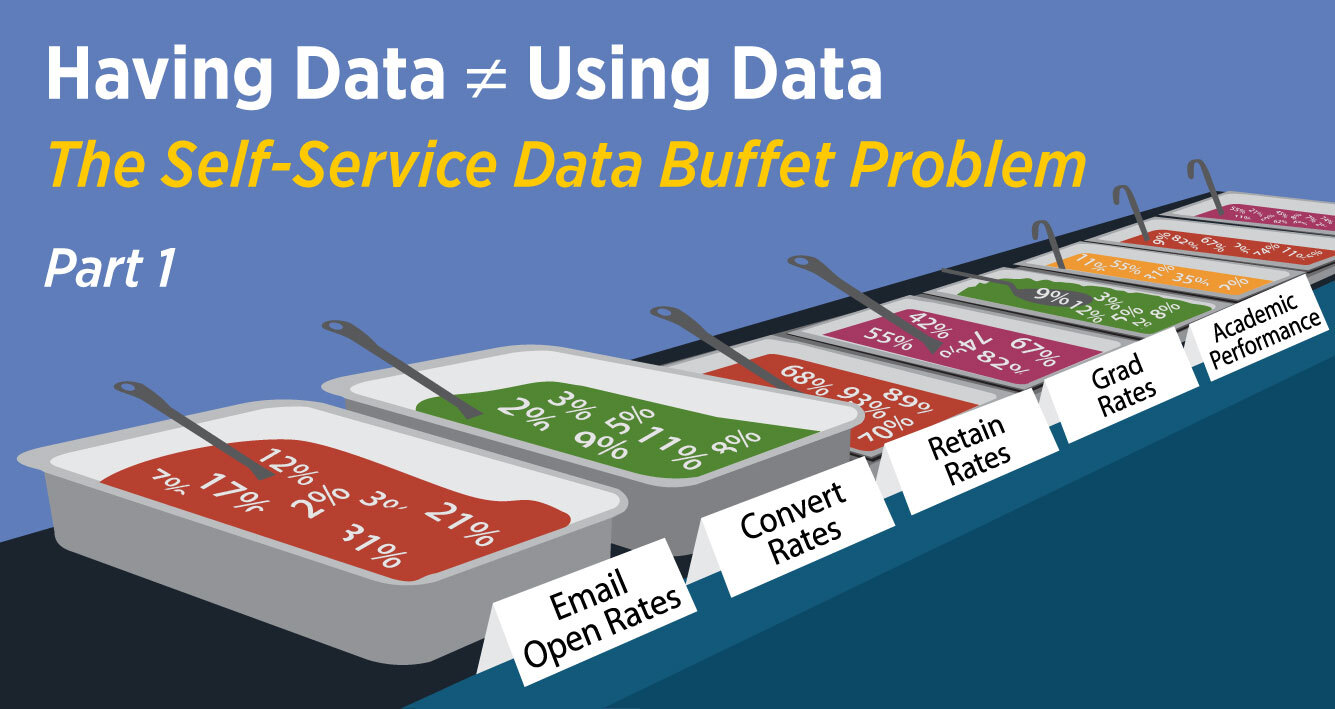
Having Data ≠ Using Data Part 1

You only thought you were using data to make smart decisions.

Understanding how to use data to support institutional planning and growth requires talents and skills that are learned and practiced and honed over time. All these tech companies selling tools and platforms into our systems want leadership to believe that all is simple, clear, and that their dashboards will transform your operational planning and decision making. Wondrous growth is just a click or two ahead. If only.

You’ve tried to create a self-serve data buffet for your leadership team so that they can dive in on their own and make informed decisions.

But…what if they’re not?

We mean, you gave your full team access to the tools with loads of features and data reporting. In the realm of marketing, your CRM captures and reports on email open rates, click through rates, conversion rates, and so much more. Your marketing dashboard tools pull data from Facebook’s Business Manager and Google Analytics (with updates to GA4 that your team is scrambling to implement and fine tune as you read this).

We all want to eke every last drop of data from the platforms available to us now.

Truth is, in the battle of data informed decisions vs human nature, human nature usually wins. Reality: creating, viewing, and understanding reports is not as simple as the tech vendors tell you it is.

Many of your leadership team are simply not data people. They may grab some of the data that supports their ideas, but ignore relevant data that would add more insight, nuance, or might even negate their suppositions.

What we have seen over the last decade is that many organizations are assuming their team’s new access to data dashboards and tools will naturally result in effective use of those tools. Often leaders simply don’t prioritize learning the necessary bells and whistles in the midst of other important deadlines. Still others can’t wrap their heads around it. They have other skills that your institution values and data analysis/interpretation is simply not one of them.

Simple test: Your marketing dashboard provides you with your email open rate monthly average. Among your other standard emails last month, on the 10th your team sent a mass email to a newly purchased, cold email list. What is worth reporting on to your leadership team? How can the data available inform your decisions and actions?

Read on to learn more about what self-service data is, why it can be useful, and how to actually make it work for you. (Oh, and we answer the question about the email open rates).

Read More

My MBA Program Isn’t Growing Like Theirs!

Your MBA program had been a sure bet for years. So, why the more recent application declines?

The latest data from Graduate Management Admission Council’s Application Trends Survey – 2022 Summary Report offers a clue. According to the report, which collected data on applications received by graduate management education programs for the 2022-23 academic year, 76% of professional MBA programs in the US saw a decline in applications, as did 75% of part-time MBA and 67% of executive MBA programs.

Those are some significant across the board declines. So, clearly you are not alone.

The only outlier: flexible MBAs. Just over half of these programs, which allow students to change between full-time and part-time status, reported application volume growth. An important indicator of the flexibility the current cohort of MBA students find important to their decision making.

If you'll be at the AGB Conference in San Diego on April 1, 2023, please reach out. Happy to buy you a cup of coffee and talk about best practices in leading in internationalization.

As we’ve reviewed the data and the global landscape, we can see there are opportunities for programs that focus on market demand (as opposed to “doing what we’ve always done”).

So maybe it’s not the sky that’s falling on the MBA, it’s the student landscape that’s shifting – as it tends to do. Read on for a link to the GMAC report and our take on what you can do to boost your MBA enrollment rate.

Read More

Productive Conflict in Action — Agent Aggregators: an ICEF Podcast

“The term you’re looking for isn’t ‘diversity of thought.’ It’s ‘productive conflict.’”

A thought-provoking post from Lily Zheng, a diversity, equity, and inclusion consultant. If you don’t follow her already, she’s one to look up.

Reading her words took me back to the Dec. 2022 ICEF conference in San Diego. I had the good fortune of sitting on a panel alongside Eddie West, assistant dean for international strategy and programs at San Diego State University; Sadiq Basha, the CEO of Edvoy; and Tony Lee, chief visionary officer for ICEF. The topic: agent aggregators.

It was a really great discussion. Open. Honest. And what Zheng may describe as “productive conflict.” I had a blast. And I think everyone in the room did, too. 90 minutes of panel discussion and audience engagement in a packed room and everyone stayed for the length of it. Not many looking at their phones either. Powerful and cutting edge conversation.

It’s exactly the kind of conversation you’d hope to have at ICEF. And I thank the leadership for including me. Because if you know me, I have strong opinions about the student journey and student success. The Intead team has been doing this stuff for a long time.

Please reach out if you'd like to chat over coffee at the AGB Conference in San Diego April 1.

If you’ve not been to the ICEF North America show, I highly recommend it. The value of it is different for institutions at different stages of their student recruitment journey. Definitely worth evaluating. Shoot us an email if you’d like more perspective on the value.

For those who were not in San Diego with us in December, you’re in luck. Read on for a link to the podcast of the agent aggregator discussion. I think you’ll find it both informative and entertaining.

Read on

Read More

Budgeting as an Expression of Values: 3 Essential Questions

Worth evaluating: will your 2022 student recruitment plan and budget be relevant for 2023?

Some are saying Search is dead. It is certainly getting increasingly complex. And hello ChatGPT.

An old Chinese adage (loosely translated): May you live in interesting times. The original idea from Ming Dynasty Poet Feng Menglong in1627, "Better to be a dog in times of tranquility than a human in times of chaos." (寧為太平犬,不做亂世人 – thank you Wikipedia!)

The good news: not everything changes. The core questions you use to evaluate next steps remain the same. The truth is, no matter the tactics your strategic plan includes, the framework for budget planning and evaluation is (or should be) constant. If it’s not, let’s talk.

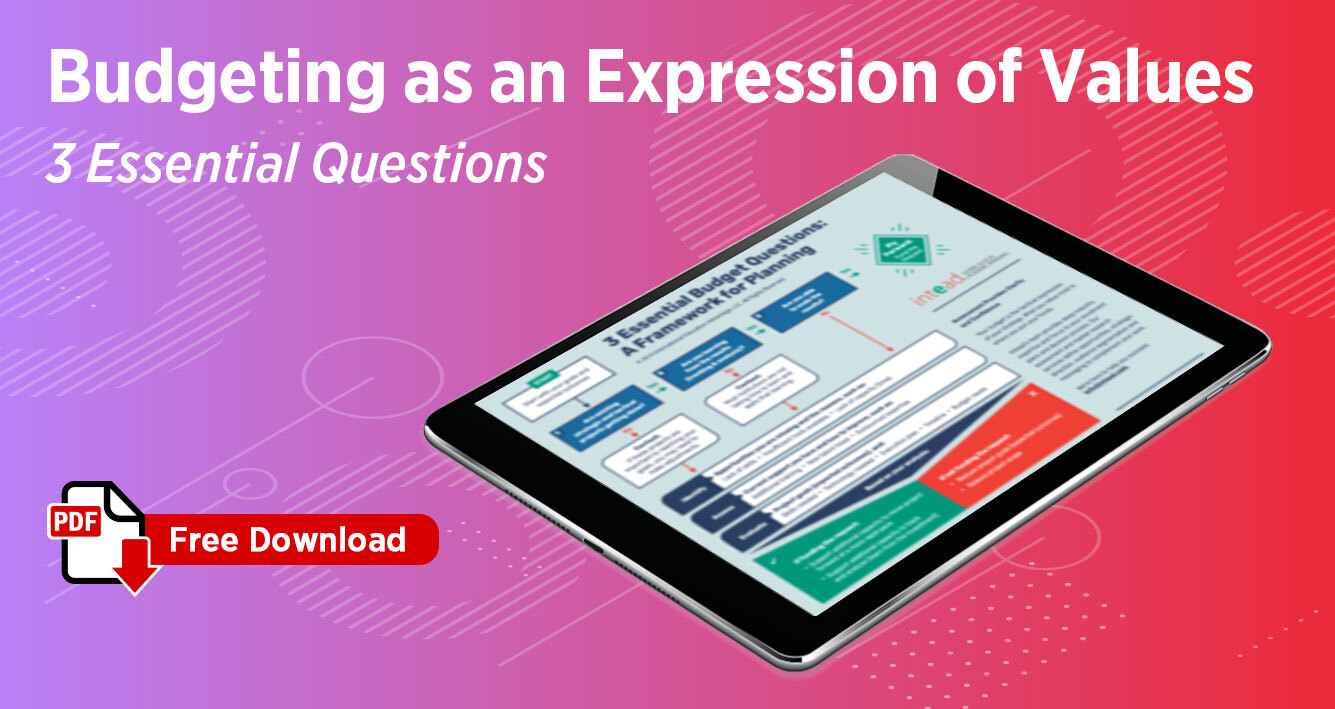
That’s why “3 Essential Budget Questions: A Framework for Planning” is one of our top go-to downloads. And why we often give it a reboot around budget season.

This free download distills any budget request/evaluation process into three essential questions. A quick 2-minute read, our framework for evaluating your plans and whether they merit additional investment, narrows your focus on a consideration of what is truly important to you. Where are the strongest opportunities for growth? What do you truly value? And are you performing at the level that produces desired results? 

Here's the thing, if you are not willing to fund something to get the results you want, then you don’t value those desired results as much as the thing you do decide to fund. What went into that decision? All too often, institutional politics carries more weight than an evaluation of values and growth opportunities. Ouch!

This download will be available for free to our blog subscribers for a limited time. Or, join Intead Plus and your team can access this and all our other Intead Index student recruitment essentials any time the need arises (annual budgeting, new team member training, etc.).

Ready to get your copy of Intead’s budget framework flowchart? Read on

Read More

Are Your Student Leads Intent-Ready or a Joke?

It’s late. A Friday. And the undergrads are relaxed and thinking out loud, among other things undergrads tend to do late on a Friday night.

“I don’t know. Maybe I should do an MBA program instead,” one says.

“Ya. Why not? You’re like really good at business,” a friend weighs in.

So, they search “top-ranked MBA programs in the US.”

You already know the student recruitment platforms that pop up based on that Google search. They choose the top result and start browsing around. They enter their name, give an email address. This is the lead you will get when you purchase the lead generator’s services in one package or another.

The platforms lure you in with beautiful numbers. So many student visits per month. Amazing.

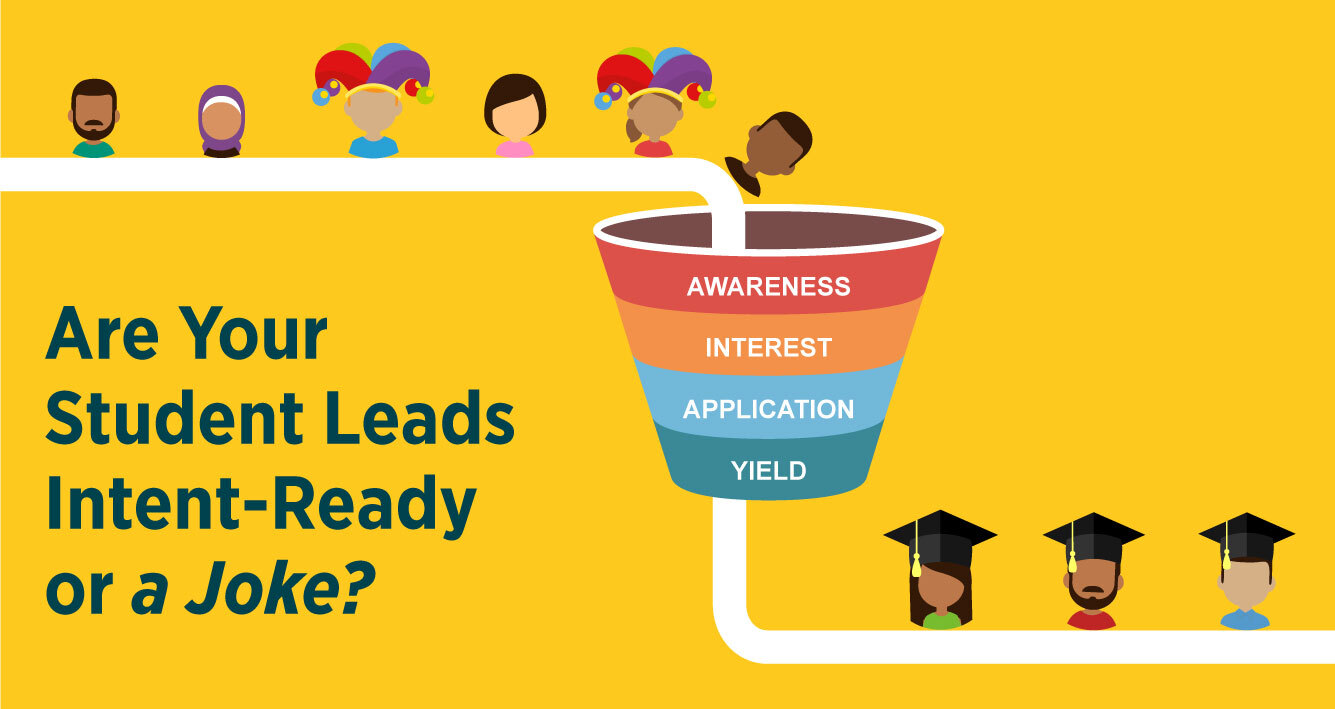
How intentional are these leads? How many will convert?

Come Monday, your lead is back on their pre-med path. And all you’re left with is a useless email address.

Now, every institution has junk leads. Even with the best platforms. The fact is, there are just so many “solutions” out there, all claiming to boost your enrollment numbers. It’s hard to know which ones actually move the needle, and which are peddling false enrollment growth for you and your team.


Come with Questions. Leave with a Plan.

If you are attending the AIRC or ICEF Conferences - here is a huge plus opportunity. 

The Intead/San Diego State University One-Day Workshop on December 13, 2022 will be a hands-on opportunity to learn from an awe-inspiring international student recruitment faculty.

  • A full day of international student recruitment strategy and execution discussion
  • Two luminary keynotes
    • Luncheon on Social Justice with Dr. Jewell Winn and Dr. Adrienne Fusek
    • Dinner on Chinese Student Influencers with Dr. Yingyi Ma and Brad Farnsworth
  • Early Bird Pricing Extended One Week. With many of our colleagues telling us they are still seeking approval to attend, we are extending the early pricing until October 31. At $200 for the day (inclusive of all meals), this learning opportunity is a steal. (Pricing goes up to $350 on November 1, 2022).

Now, back to lead generating platforms. If you’re scratching your head over the swath of lead generators out there, rest assured you’re in good company. From what we’ve seen, there’s total confusion in the marketplace. Your best bet is to take a step back and look at the enrollment tools you know you need (responsive social media presence, mobile-ready content, reliable online chat). From there, you can better evaluate the many platforms with clear eyes. Read on

Read More

For Chinese Students, Authenticity Counts

Let’s talk about specific tactics for mid- to lower-funnel marketing communications. And specifically, what do Chinese students really want? And how are they making their decisions? For those in our line of work, it’s on everyone’s minds right now. A lot.

On average, international students are receiving 3-5 admissions letters. What they do next to select their top institution has everything to do with the information they have available to them. This is no time for institutions to let go of the recruitment communications.

With all of the turmoil and enrollment fluctuation with Chinese students in the US, when we publish on this topic we see a significant uptick in our blog and site traffic. What to do about Chinese student enrollment is a popular topic. See our latest relevant insights here:

While recent declines in Chinese enrollment in the US have a range of reasons (slow visa processing, political tensions, Covid response disparities, US violence, economic turmoil), the past decade has also brought increasing global competition for Chinese students. The intensity has only grown in the past few years.

Look, beyond all the headlines about this decline in Chinese student changes of heart, we are willing and able to predict the future. Similar to Warren Buffet’s prognostications about the stock market (it will go up, but we don’t know exactly when it will go up), we are extremely confident that China as a source of international students will not struggle forever. Over time, it will return in strength. In the meantime, it continues to be a dominant source among all international sources.

The institutions ready to take advantage of global recruiting opportunities will be the winners. That’s why when we ran across a handful of new student handbooks written by current US-based Chinese students for prospective Chinese students, we wanted to learn more.

Sure, the handbook idea is nothing new. What really intrigued us was the fact that so many institutions don’t actually have this tool in play. Seriously? We all know how meaningful personalized, authentic, and tailored communication is to international students. Going the extra mile takes your recruitment and retention efforts so much further.

Truly, it’s the small authentic gestures that count.

So we did a small thing. We took a minute to review the handbooks (they are written in Chinese for incoming Chinese students). It’s always interesting to see what current international students think is important for the newbies. And it’s important you know, too.

Read on to learn what these handbooks have to say and how they are being used.

Read More

Insider Take: Chinese Parent/Student Priorities, Now

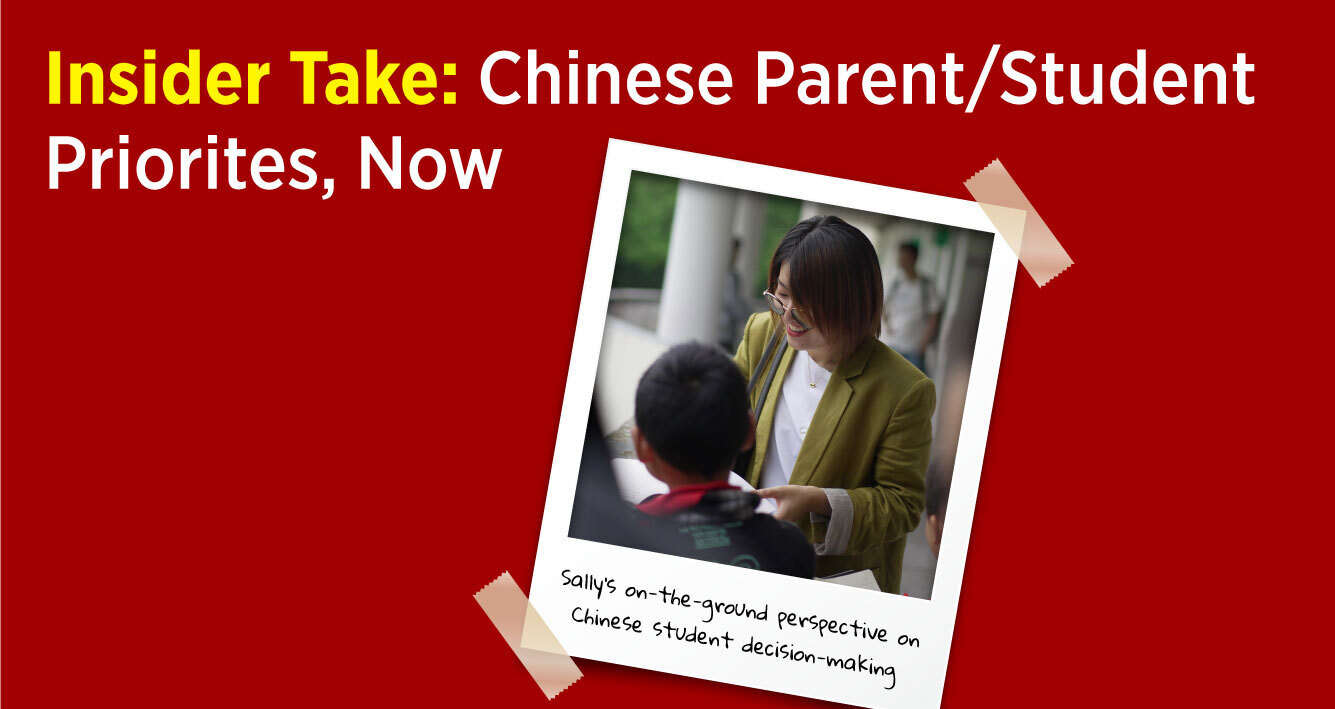
With Chinese student numbers in serious flux in the US, we thought we’d check in with our colleague Sally Zhu who is currently working with international students in Ningbo, China. Our goal: find out what’s working in recruitment for institutions across the Pacific.

Sally, a contributing Intead Marketing Data Analyst and US PhD aspirant, grew up in China and acquired her post-secondary degrees in the US, returning to her home country in 2020 where she landed a job with a sino-foreign university. Today she’s working as an international student support advisor there. She has a front-row seat to what is on Chinese students’ minds. 

We know this topic will be part of the hallway and session chatter throughout the NAFSA regional conferences coming up this fall. Intead will be discussing a range of student recruitment and marketing topics at Nafsa Region XI in Manchester, NH in October. If you will be there, be in touch to set up a coffee date with Ben or Iliana. We can also meet folks in California in December when AIRC and ICEF fire up. Look for some big news very soon about the learning opportunities coming up.

A couple of weeks ago, Sally sat down (virtually) with the Intead team to give her boots-on-the-ground account of how Chinese students and parents are evaluating their options today. Read on for some valuable perspective on the student recruitment market everyone is fretting about.

Read More

Spontaneous Learning

I need this couch moved to our second floor sitting area. Clearly this is going to take both of us working in tandem.

“You want to go up first?” You ask.

“Sure,” I say.

I reach for the bottom and the side. You find your handholds as well. We lift in unison.

I need to adjust my grip as I navigate the first stair. You feel the couch shift and adjust accordingly. We make eye contact over the bulky thing and nod to each other. We are innovating as we climb and adapt to the shift in weight and the angle of the couch with each step.

Innovating together in real time. Communicating with words and body language. Collaborating on our way to achieving our goal.

I have to give credit to my friend and colleague Dr. Michael Mascolo, Professor of Psychology at Merrimack College for this metaphor I’m employing. During a recent conversation with Mike, I was making observations about the debate over remote vs. in-office collaboration. We’ve all seen it: the loss of innovation and spontaneous learning when the whole team is working remotely.

As much as we want to leave the commute behind, put a quick load of laundry in after the 9:30am Zoom call is done, even bake a banana bread mid-day, because, why not? Look, I’ve been running virtual teams since 1993 (mmm hmmm, that’s when I started consulting, dinosaur that I am). The power and efficiency of remote work is undeniable.

And yet, and yet…also undeniable is the loss of opportunity for us to learn from each other (even at my dinosauric age, I am learning from the team here). What we all need is much, much more face-to-face interaction – from the fresh graduates entering the workforce to those with decades of experience. We grow and learn together in different ways. We innovate in real time.

Over the past few years, we’ve been growing significantly here at Intead. More universities, high schools, rising edtechs, and established academic providers have been tapping our expertise. So, we’ve been hiring more talent. The talent market has shifted and there are a lot of folks looking for greener pastures right now.

Read on for a bit of perspective that I am surprised far too few current job applicants seem to grasp...

Read More

Not Rocket Science

Global student recruitment, finding student segments domestically and abroad, is simply not rocket science.

We know the processes and don't need another generic report about what students are thinking and how important parents are to the process. If new student mobility trend data of significance emerges (thank you IIE and National Clearinghouse), you can count on us to evaluate it and report on it. But, most of the reports we are seeing right now from marketing agencies (like us) are rehashing everything we already know.

And annoyingly, they are somehow pointing to their nothing new findings as revelatory. Wut?

So, let’s get to work plotting out the work and bringing the successful results we all want.

The Formula: custom research on your differentiators, your strongest recruitment options (countries/regions), and messaging that engages your target audience on the channels they use.

That’s really about it. That’s what we need. Oh, and to do it successfully, that actually requires investment, technology, and expertise.

So...yes, trend analysis because decision making actually did change since 2019 - safety, cost, the value of education overall, visa issues - all much more significant. These factors existed before the pandemic, before the Trump administration’s anti-immigrant rhetoric, and the ever-horrific state of gun violence in the US. Not new info. All of these factors have been on students’ and parents’ minds for a while. Yours too, right?

And yet, international students continue to find value in a US education and the experience of living and studying in the US. And as they make their decisions, all the things we see in the latest reports and infographics about student mobility trends say essentially the same things we’ve seen for more than a decade.

Reputation matters. Rank matters (more in some regions than others). Career connections matter, parent opinions matter, etc., etc., etc. Tedious findings touted as new, ground-breaking, must-have trend analysis.

Read on for a few student influencers that are actually rising to the top of students' decision-making criteria, and more importantly, what all of this means for your institution's recruitment planning. 

Read More

Some College, No Credential, Open Opportunity

Consider the fact that postsecondary institutions have lost nearly 1.3 million students over the course of the past two years. And last year over 940,000 “Some College, No Credential” students re-enrolled. Do the math.

The National Student Clearinghouse Research Center issued its latest “Some College, No Credential Student Outcomes” report, and the numbers are as you may expect. Large.

Based on July 2020 headcount, the NSC shows there are now 39 million people who can claim some-college, no-credential (SCNC) status—up 8.6% from 2019. In real-time, though, we are confident those numbers are even higher.

Look, we don’t need to tell you that we just wrapped up the fifth consecutive semester of declining student yield. After all, you’re knee-deep in recruitment expectations right now. And those of us working with the undergrad population, well, we’re down about 1.4 million students since 2020.

We are all feeling that and struggling with how all those predictive models seem to be anything but predictive right now. Weren’t they supposed to help us all hone in on growth? A few assumptions there need to be recalibrated.

But, there’s a story in this latest data that may be more optimistic than the doomsday headlines would suggest. Per various pundits’ predictions, a recovery rise in enrollment is on the horizon along with the demographic shift that points to an overall decline in the number of high school graduates. The SCNC crowd represents a significant opportunity that is so often overlooked as traditional recruitment efforts focus on the fresh out of high school crowd.

For the SCNC segment (a rather large segment that requires further segmentation -- they are not one block with common traits), it’s a matter of finding them and presenting your institution’s distinct opportunities to them. They clearly have different motivators and a different decision-making timelines than high school graduates.

Taking a closer look at the National Student Clearinghouse SCNC report – the third in a series – you’ll find that it quantifies the population growth of this large student subset and identifies levels of opportunity for re-engaging these one-time students. Sound interesting? It should if you’re looking to boost enrollment.

Unlike previous reports, this one tracks:

  • Re-enrollment (students who hold a valid enrollment record)
  • First credential (those earning their first-ever credential during the first academic year of stopping out)
  • Perseverance (indicated by continuous enrollment after re-enrolling in 2019/20).

So, lots of good stuff.

For our key takeaways on SCNC prospects including best-bet recruitment opportunities, read on. And for actionable inspiration on how to woo this important crowd, check out our ebook: Quality. Cost. Convenience.”

What others are saying: This must-read primer will help anyone looking to better position their institution within today’s complex and competitive recruitment landscape. This is your guide to adapting to the new competitive environment.

~ Dr. David DiMaria, Senior International Officer & Associate Vice Provost, University of Maryland, Baltimore County
Read More