Recruiting Intelligence

Why International Student Numbers Will Grow

Five years from now what will you be glad you did right now, this year? 

IIE here in the US and other prognosticators across the pond who track student mobility have predicted the number of international students in the US and around the world could double by 2030. Some projections suggest upwards of 10M or more globally. We’re not placing any bets on that figure. However… 

We’re optimistic about international student numbers and the opportunities ahead in higher education. We’re not banking on 10M+ in the next few years. That’s a bit of a stretch by our measure. But continued growth will come and the question is whether your institution is psychologically capable of weathering the storms and building for the future, or bureaucratically paralyzed and unable to capitalize on the opportunities ahead.  

Said simply: Resilient individuals and businesses adapt, leverage their strengths, and pursue opportunities to grow. 

Pro Tip: Your academic leadership will value reading this post. (Share button below)

What you do in the coming year will set the stage for the benefits you reap five years from now. Sit on your hands due to fear of the ambiguity that surrounds us, and all those who are acting now will be miles in front of you in 2030. Miles.   

Below we offer three specific areas where we think smart institutions and academic leaders will focus their attention in the years ahead to capitalize on future growth opportunities. How many of the three do you think you can help your institution address? 

Some context: Back in the day, our industry’s powerhouse forecasters were looking at the global growth of students seeking a foreign education from 2010 through 2016 and said with absolute confidence that there would be 8M+ international students globally by 2020. Maybe you were sitting with me in those conference presentations? Had trends continued on pace, that would have been true. Emphasis on “had trends continued on pace.” 

Instead, global factors combined with the US Muslim ban (Trump 1.0) were followed by a global pandemic (COVID 19). Those student numbers (8M+) have yet to pan out. But significant growth has happened - just 20% shy of the projection by 2020. (UNESCO reports 6.4M students globally studying in a country other than their own that year and we are at about 7M today.) Trend predictions are complicated by so many factors. Some might say predictions are truly unpredictable ; -)


Opportunities to Meet the Intead Team 

  • Look for us at ASU+GSV next week, and NAFSA in May. Let us know  if you want to connect at these events.

Bookmark this: Intead’s Resource Center 
Access 800+ articles, slides decks, reports with relevant content on any topic important to enrollment management and student recruiting.  Check it out.


Here's the thing: there are some human behaviors and economic factors that we feel very confident about. And that helps us understand the world and get a strong sense of what is likely coming our way in the years ahead.  

Reality: The US is now grappling with Trump 2.0, which is full of bluster and chaos-inducing pronouncements equivalent to watching an over-the-top World Wrestling Federation pre-fight drama. It’s all designed to draw attention and ramp up excitement for a spectacle. Often, there’s no substance to the bluster, though it consistently delivers pain. 

This drama coming from the US White House makes predictions all the more challenging. You need to push past all the obfuscating dry ice smoke machine billows to get at baseline reality. 

So yes, despite the chaos surrounding US policies and politics and how that will play out around the world, we have reason to believe international student numbers will rise over time similar to our confidence that the stock market will rise over time. We can’t tell you if the market will be up or down tomorrow or next year, but longitudinally, stocks have gone up since the market’s founding, and international student mobility has gone up as international travel has become more accessible. 

Consider this: In 1970, there were 310M airline passengers globally according to the World Bank. In 2024 the figure was 5.2B according to the International Air Transport Association. That’s an indicator of accessibility. Important to note, those figures include domestic and international flyers. 

Our belief in future growth of international student mobility primarily comes down to basic consumer (student) behavior trends, like increased usage of international flights (accessibility).  

Making the Accessible Visible 

Hailing from Hyderabad, Satya Nadella, current CEO and Chairman of Microsoft, earned his engineering master's degree at the University of Wisconsin-Milwaukee in 1990 and his MBA from the University of Chicago’s Booth School of Business in 1997. On the minds of nearly every Indian engineering student today: “If he could do it, so can I.” A lure as strong as it is old.  

With the rise of social media since 2010, success stories have proliferated in ways the world has never seen before. Basic human behavior: communicating success builds desire among others (word of mouth referrals drive sales).  

Among all those who have not risen to the top of Microsoft, there are millions of former international students who have carved out careers and influential positions, inspiring and encouraging future generations to follow in their footsteps. And hear us when we tell you that your prospective international students are looking for the proven path forward. Without overpromising, your institution needs to tell that story and build confidence in that future. 

A graduate student from India attending a private New England university recently told our staff how searching for (and making real connections with) alumni and current students on LinkedIn is what landed her on campus in the US. In her words, she appreciated but generally bypassed the university’s marketing and contacted other international students who had been there, done that. Their stories convinced her to enroll in the institution. Case in point: basic human behavior tied to the advent of internet communication. 

What we know: A student who graduated just a few years ago and is now a manager at a major company is immediately relatable to prospective applicants (much more tangible to them than their aspirations to run Microsoft someday). These conversations make the journey feel more attainable.

So, when international alumni share their experiences—whether through personal networks, mentorship, or social media—they reinforce the appeal of studying in the US (or any other country that contributed to their success).  

Considering how well your institution leverages its international alumni? Find customized perspective here. 

While we believe word-of-mouth marketing will play a role in future international student enrollment growth, there are other factors working in our industry’s favor – namely how institutions are poised to react to the changing market and the pace at which these changes are implemented on your campus. You may be surprised to learn our take on the opportunities ahead. Read on…
Read More

So you think you have a campus community?


Spoiler alert: It is simply not ok to tell prospective students you have a vibrant campus community. You gotta show them.  

Our goal: marketing messaging that resonates based on very real consumer connection. 

Human beings rally around things. We rally around our families (biologic or chosen), our sports teams (Celtics, Manchester United), our celebrities (TSwift, Beyonce), our professions (cybersecurity engineer, IP attorney), events (Rio Carnival, Chinese New Year), crises (Gaza, Ukraine), political issues (don’t get us started). 

It has a lot to do with shared experience over time. The connections we make with others who engage in a project, achieving a goal, together. As humans, we want to protect and bolster the things we love.

So, no wonder, people rally around their campus community. Having shared a period of time together and having a degree conferred by the same administrative body – these activities and achievements form bonds. 

We eat in the same cafeterias, walk the same halls and pathways, endure the same exam schedules, and wear the same cap and gown as we walk the same stages to receive our parchment pressed with our school seal. 

With the rise of online degrees, a new sense of shared experience develops.


Opportunities to Meet the Intead Team 
- NAFSA Region XI, Hartford, Connecticut, Oct. 27-29, 2024
PIE Live North America, Boston, MA, Nov. 19-20, 2024
- AIRC, Seattle-Bellevue, Washington, Dec. 4-7, 2024

Bookmark this: Intead’s Resource Center 
Access 800+ articles, slides, reports with relevant content on any topic important to enrollment management and student recruiting.  Check it out.


There is far less connective tissue to draw students together with the online experience. Yet, there remains a common set of activities and the earned degree creates that same sense of pride in achievement born of concerted effort toward a shared goal. 

When we think about student recruitment from the prospective student point of view, as the university selection list gets shorter, the heart plays a larger and larger role in determining where they will enroll. In focus groups, the most common phrase is some form of, “After all the thinking, I felt this was the right choice for me.” (emphasis added) 

Here’s the thing: it’s hard to build student evangelists within your community when they see their education and their community as entirely transactional.  

Not rocket science. However, it takes the investment of dedicated time. This is more than a simple 90-minute brainstorming session with your team's marketing talent. There's trend data to evaluate, focus groups to convene, influencer affinity groups to build and manage. 

Sounds like a fair amount of work, right?

And when you think about those institutions out there who just seem to be crushing it, what do they seem to have going for them? Sure, they have the product mix and the measured price point. But what hits you right in the face is the vibe. That is the thing that gets you thinking, "Oh, I wish we had that connection to our audience."

That audience connection doesn't just happen. It is cultivated by talented, thoughtful, invested people who believe in the opportunity.

Below we share a few pointers. Please be in touch if you'd like to dive into a deeper analysis of the specific opportunities for your institution (info@intead.com). This is about the consumer insights the Intead team is so very good at identifying and leveraging. Read on… 

Read More

Are You Ready for an International Alumni Strategy?


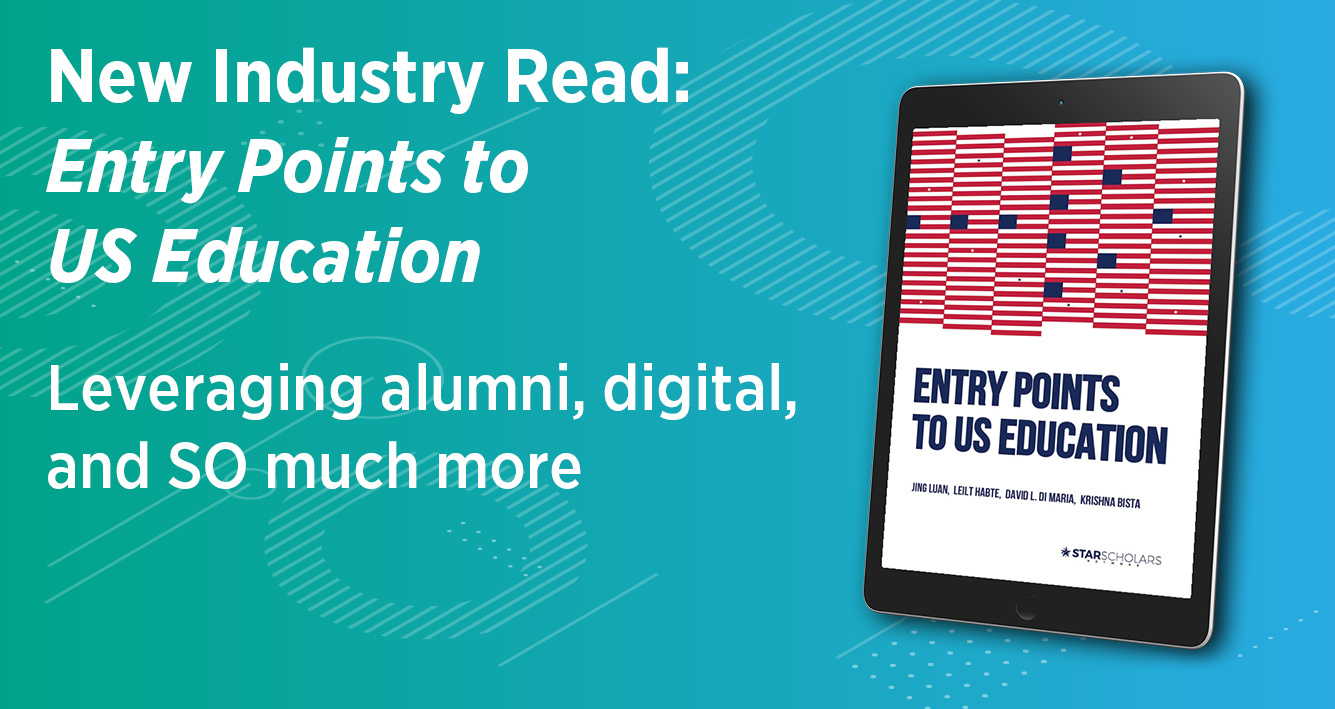
Cue the confetti. A new guide for international education practitioners just hit the bookshelves.

Produced by Star Scholars and filled with analysis and counsel from luminaries in our field, you'll want to grab a copy (link to purchase below). With thanks to editors Dr. Jing Luan, Leilt Habte, J.D., Dr. David Di Maria, and Dr. Krishna Bista, and too many amazing chapter contributors to list here, this book packs a punch.

We were honored to participate by contributing a chapter on how to Leverage International Student Alumni in your student recruitment efforts and another chapter on Using Digital Marketing for International Student Recruitment. Below, we will be talking about your international alumni and serving up a really nice interactive tool offering guidance based on where you are at with your alumni program.

We could not have provided the clear and actionable content without the leadership of our friend and colleague, Dr. Gretchen Dobson with the depth of her work in this area.

The value of your international alumni cannot be understated. Few ready-made resources can connect as quickly and honestly with prospective international students, making them feel understood and welcome. This is about helping them connect with what is real and tangible based on a degree from your institution. Yet, for many institutions, tapping into this network remains on the to-do list. It’s one of those great ideas that remains underutilized. Blame resources, blame poorly maintained databases, blame, well, you know exactly what we are talking about.  

Of course, your institution has strong institutional support for building and maintaining a robust domestic alumni network. All the while, the relative importance and financial value of international students are often overlooked. In some cases, 7% of the total student population being international represents as much as 30% of total tuition revenue. A good idea to do that math for your institution if you have not already. Yet our institutional infrastructure remains lopsided, heavy on domestic alumni, light (or non-existent) on international alumni despite what they can contribute.


Our next opportunities to meet! 

EducationUSA Forum, Washington, D.C., July 30-August 1. Ben and Virginia Commonwealth University SIO Jill Blondin will share insights on Navigating Budget Challenges in International Recruitment: Practical Strategies for Every Phase.  

Be in touch! We’ll buy the coffee. 


In Entry Points to US Education: Accessing the Next Wave of Growth, our chapter on international student alumni management is a great read for any enrollment leader looking to justify the costs associated with building a stronger connection to international alumni. It delves into the motives behind such an effort, including: 

  • Brand awareness 
  • Reputation management 
  • Recruitment 
  • Employability 
  • Global connections 
  • Public diplomacy 
  • Financial resource  

At the end of the chapter, we offer the link to an interactive questionnaire designed to assist international student recruitment teams in evaluating their ability to deploy alumni ambassadors. This simple 8-question form provides customized recommendations based on your responses.Today this tool is available to Recruiting Intelligence blog readers (even if you don’t purchase the book. But really, purchase the book!) Read on to check out the evaluation form… 

Read More

For Chinese Students, Authenticity Counts

Let’s talk about specific tactics for mid- to lower-funnel marketing communications. And specifically, what do Chinese students really want? And how are they making their decisions? For those in our line of work, it’s on everyone’s minds right now. A lot.

On average, international students are receiving 3-5 admissions letters. What they do next to select their top institution has everything to do with the information they have available to them. This is no time for institutions to let go of the recruitment communications.

With all of the turmoil and enrollment fluctuation with Chinese students in the US, when we publish on this topic we see a significant uptick in our blog and site traffic. What to do about Chinese student enrollment is a popular topic. See our latest relevant insights here:

While recent declines in Chinese enrollment in the US have a range of reasons (slow visa processing, political tensions, Covid response disparities, US violence, economic turmoil), the past decade has also brought increasing global competition for Chinese students. The intensity has only grown in the past few years.

Look, beyond all the headlines about this decline in Chinese student changes of heart, we are willing and able to predict the future. Similar to Warren Buffet’s prognostications about the stock market (it will go up, but we don’t know exactly when it will go up), we are extremely confident that China as a source of international students will not struggle forever. Over time, it will return in strength. In the meantime, it continues to be a dominant source among all international sources.

The institutions ready to take advantage of global recruiting opportunities will be the winners. That’s why when we ran across a handful of new student handbooks written by current US-based Chinese students for prospective Chinese students, we wanted to learn more.

Sure, the handbook idea is nothing new. What really intrigued us was the fact that so many institutions don’t actually have this tool in play. Seriously? We all know how meaningful personalized, authentic, and tailored communication is to international students. Going the extra mile takes your recruitment and retention efforts so much further.

Truly, it’s the small authentic gestures that count.

So we did a small thing. We took a minute to review the handbooks (they are written in Chinese for incoming Chinese students). It’s always interesting to see what current international students think is important for the newbies. And it’s important you know, too.

Read on to learn what these handbooks have to say and how they are being used.

Read More

Spotlight on Your Institution’s Student-First Approach

We recently talked with students past and present from Vietnam to Bangladesh and heard encouraging stories.

  • A professor hand-delivered a recommendation during the early phase of the pandemic.
  • A class specifically designed around a student’s pursuits.
  • A helpful phone call to a trusted member of the international student services team when tragedy struck.

Stories that embody the kind of student-first experience we all imagine we provide to our students. It’s the kind of experience we certainly all tell the world of prospective students (and parents) that we will deliver.

The reality, unfortunately, is often quite different. Blame branding or the bottom line (lack of resources), but the undeniable truth is that competing priorities often win out over the well-founded ideal of student-first. 

Today’s post is not a how-to on making your website user-friendly. Today we put a spotlight on the policies and actions that put students first. We’re looking at what is undermining your institutional integrity and how you can address it. And trust us, students are well aware of how well your institution delivers on the promise of student-first. And they tell stories. So, yes, this post is enrollment marketing-focused.

When you delight, they gush with positive word-of-mouth support. And when you fail, they tell that story too.

To offer deep perspective on this topic, in addition to our own experience, we tapped a few colleagues who know more than a thing or two about fostering the student-first mindset:

  • David Hautanen, Vice President for Enrollment Management at St. Mary's College of Maryland
  • Jessica Sandberg, Dean of International Enrollment Management at Duke Kunshan University
  • Jewell Green Winn, Senior International Officer of International Affairs at Tennessee State University (and newly appointed chair of AIEA)
  • Brad Farnsworth, Principal of Fox Hollow Advisory and former Vice President at the American Council for Education (ACE)

They each had great perspective on the subject. We are so appreciative of their time and the insights shared. You, our readers, are the beneficiaries of their wisdom.  

Read on to learn concrete actions you can take now to help ensure your enrollment program is student-first. Is this post a good one to share with your leadership? Uhm, yes.

Read More

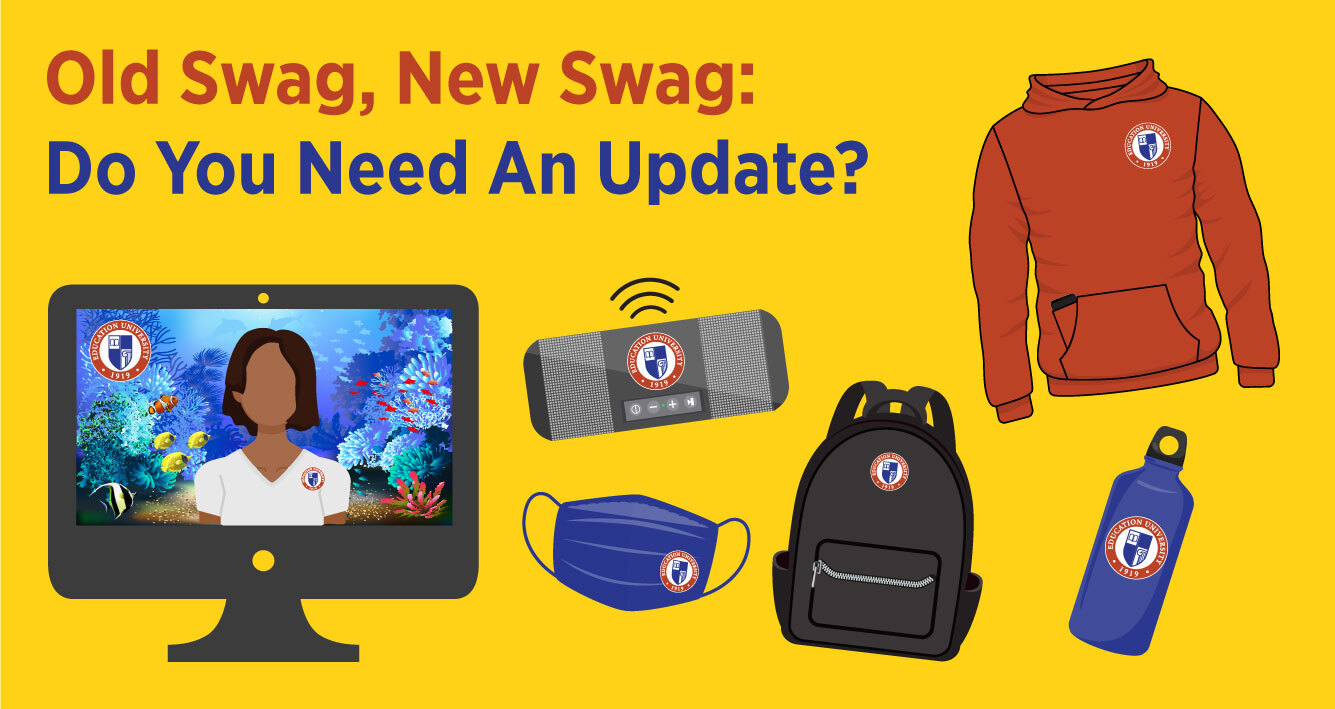
Old Swag, New Swag: Do You Need An Update?

Making a statement through promotional swag in 2021 has a more profound impact than in years past. With student ambassadors taking a power position in marketing and influence, your institution’s brand sent out virtually and in real life (#IRL) can provide a unique statement that sets your university apart from the others. And if not apart from others, at least with them.

Tech-savvy students want something they can share online to brag their swag. It’s always been about expressing pride and being cool. The in crowd knows before anyone else. Except that the out crowd often defines what is going to be next. 

Confused? We get it. You’re not in the demo.

To help all of us in the “wrong” generation try (desperately) to get with it, the Intead team recently took a deeper look into student ambassadors and the potential for success. You can revisit those insights here. And while you are considering who your institution’s greatest ambassadors are, know that they are totally gonna wanna sport that beautiful half-zip hoodie with the phone pocket.

As you prepare for the Fall 2021 re-entry into the classrooms and virtual Zoom rooms, let’s take a look at what is topping the list of popular swag items for the university set. Read on. 

Read More

Your Most Influential Recruiter Is Right in Front of You

A bustling campus: backpacks slung over shoulders, coffee cups and water bottles in hand. These thoughtful, exuberant, media-savvy students filling your hallways, classrooms, and online portals, THESE are your most powerful recruiting influencers.

Last month, Intead teamed up with Unibuddy and Northeastern University to present our research on Peer-to-Peer platforms as student recruitment tools at the AIRC Conference. The discussion was lively. So many questions and ideas emerged. And now that research, and the guidance it offers, is available to you.

Consider this: When deciding where to apply for university,

  • 57% of students said online conversations with an institution’s student ambassador were their most helpful resource. 
  • 47% said friends and family were their most helpful resource.

Read that again.

Current students were more important than friends and family.

First-hand student experiences established trust and that came through loud and clear in these conversations. This student connection is SO significant to the recruitment process.

Read on for more insights and to download the full report…

Read More

Companionship Transforms


Let’s talk about student recruitment without the data for a change. Let’s talk about the underpinnings of this human experience of recruitment. Stay with me here.

Why are we doing this work in the first place?

The cynical among us point to the economics: we recruit students to get their tuition dollars. Ok, this is true. Faculty must be paid to get them to deliver education services. They actually get pretty adamant about this. And administrators need to get paid to keep the operation going.

Bigger thinkers among us believe education fosters cultural understanding. And global education fosters cross-cultural understanding. All this education helps build stronger economies (think jobs) and more peaceful times. 

Personal growth and communal growth.

And how in the world will this blog intro bring us to our favorite topic: student recruitment? Trust me and read on...

Read More