Recruiting Intelligence

Small Talk, So Underrated

You are welcome here.

DEI efforts to address inclusion.

These are big concepts that deserve big discussions on campuses everywhere. Discussions with senior leaders setting policies and developing programs to make everyone on campus feel involved and connected.

And to make all that happen, that feeling of being welcome and included, will rely on some of the small things that often are met with eye rolls. Yet, these small things are really important to this whole inclusion effort.

You know that inside joke and the trendy celebrity stuff you are not on top of? The conversation that just kind of left you like roadkill as it blew right by? Maybe silly. Perhaps kind of uncomfortable. Happens to all of us. And it happens to your new students frequently. Domestic, yes. International, all the time.

If you think small talk is meaningless, think again.

In our work for a large, highly ranked Midwestern institution, we were talking with Pham (not his real name). He traveled from Vietnam for his US studies. A natural networker, smart, interested in business, he chose to major in Business Management Information Systems and Finance. With that degree, it is no wonder he was snapped up by Deloitte where he currently works as a Senior Consultant in Tax Management.

To hear Pham tell it, connecting to the US community with small talk was critical to his success. He came to understand this during his studies as he tried to connect with the other international students and with his American peers. He found he was struggling to make friends.

Read on for Pham's perspective and our tips for getting these really important conversations started. It is all about personal and student success. 

Read More

Offering Up Inspiration for DEI

When Vice President Harris said, “Your nation is SO proud of you,” to a group of 20 Frederick Douglass Global Fellows, you could not have found more inspired university students anywhere. Absolutely anywhere. Their eyes said it all.

International education speaks deeply to all of us. And yet it remains inaccessible to so many. What we know is that roughly 6% of US students participating in study abroad are Black. How to make this privilege and opportunity available to many, many more?

Intead’s international team has been deeply honored to work alongside our colleagues at CIEE on an inspired and inspiring project – a concerted effort to bring the opportunity of international education, experiential education, to more BIPOC students. In just a few months, we’ve watched this effort draw pledges from dozens of university presidents who have matched CIEE’s scholarship funding to allow more students to experience the power of international education.

As the Frederick Douglass Global Fellowship barrels forward with applications for 2022 now open, we bring you this bottle of inspiration — a 5 minute film featuring the perspectives and experiences of the 2021 cohort. This will lift your spirits and get you thinking.

To hear Dr. Roslyn Clark Artis, president of Benedict College tell it, this program offers a lot and demands just as much back from the students who participate. Frederick Douglass Global Fellows and Scholars have a responsibility to share what they’ve learned as they become leaders in their chosen fields. To be, as one Frederick Douglass Global Fellow put it, “the first of many.”

We are gratified to see university presidents not just encouraging, but taking real action — signing up to catalyze their DEI initiatives in a valuable and visible way through this program. Will your institution be next? 

Read on to watch the film and hear from these future change-makers. 

Read More

2 Ways to Get Gen Z

It is wonderful to see a number of institutions touting strong, even incredible, increases in applications for their fall 2021 enrollment. And then the crowing over the record number of students actually enrolling. These successes are fabulous, for sure.

Yet, NCES data just released, with about 50% of all institutions reporting, shows the broader, less rosy picture. Most institutions saw average enrollment declines of around 3% (or worse) in various student segments.

Those few who are cheering, and the larger number of enrollment managers furrowing their brows, are evaluating all of this in the context of what happened in fall 2020 when so many institutions saw frightening and dramatic declines. Bigger than the enrollment blips that 2020 and 2021 represent is, of course, the enrollment cliff predicted for 2025/2026. How are institutions preparing for the challenges ahead?

We’ve seen an increasing number of institutions re-evaluating the game plan and getting very concerned about whether or not they appeal to Gen Z. It is a valid question. An important question. And here’s the thing: marketing agencies everywhere are making the most of that question in ways that can be highly misleading – the level of exaggeration coming from the marketing world prompts a bit of an eyeroll.

Sure, the decision-making process has differences today, but honestly, it is more the same than it is different. Not saying institutions seeking to attract and enroll students don’t need to adjust. They do.

Note: We recently presented an AIRC-hosted webinar alongside Technion Israel Institute of Technology talking about digital marketing and Gen Z that is now available to subscribers to our Intead Plus library.

Read on for insights on two important avenues for getting Gen Z to think more seriously about your institution. And join us at the AIRC conference in Miami in December 2021, where there will be plenty of talk on this topic.

A key idea: re-evaluate the hoops you make applicants jump through.

Read More

Competitor Analysis: Quick Insights Available

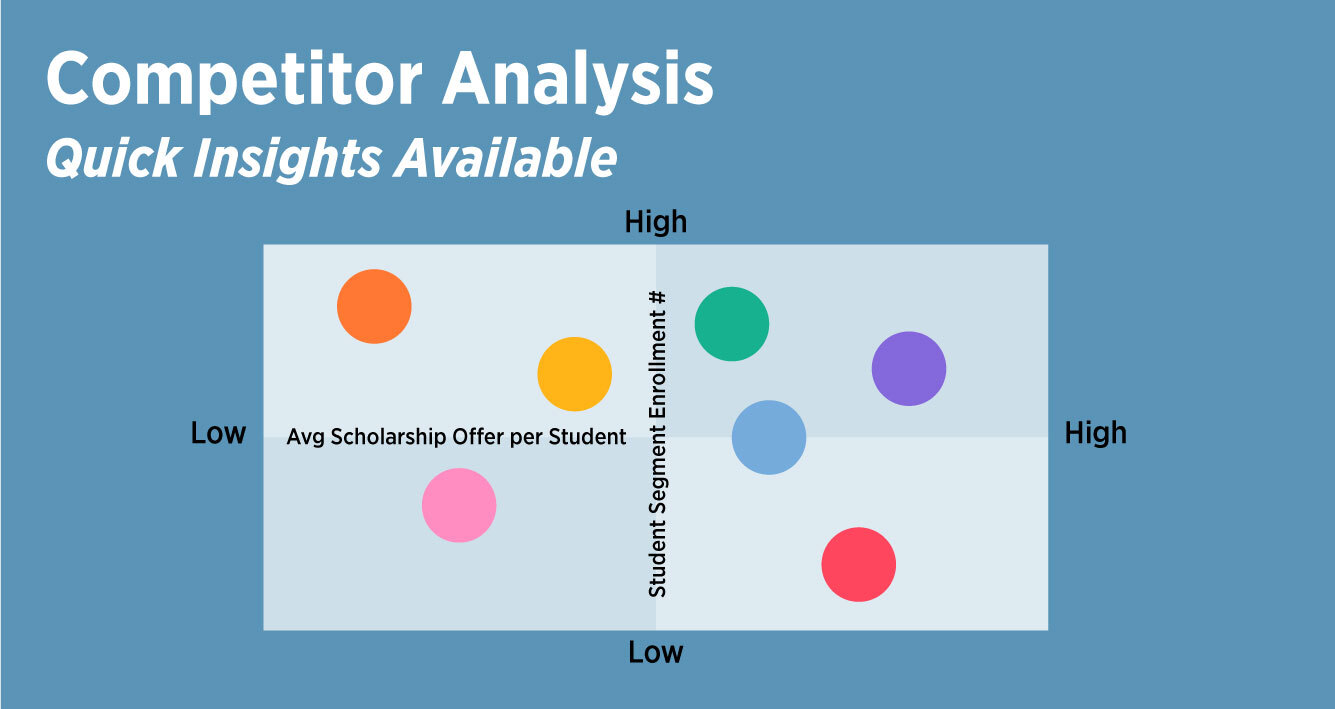
Every enrollment VP is fighting for students who will add value to their institution. Domestic is heading for the 2025 cliff while international is beginning to rebound from the pandemic travel restrictions. 

What better way to win market share than to tell the story that differentiates your institution? This week, for those of you not already familiar, we introduce you to Jon Boeckenstedt and a tool he’s created that can help you see quickly how your institution stacks up to your competition. Jon’s work consistently brings data insights and knowledge of the field to help institutions make better enrollment management decisions.

On the international side of things, be sure to register for the AIRC conference coming up in December where we will be presenting two valuable learning opportunities alongside colleagues from Northeastern University, Fordham Law School, and San Diego State University. Early bird rates are still on the table! See link below. And see you in Miami!

Read on to dive into the amazingly fast competitor insights you can gather and how you might use them to put the best version of your institution’s story out there. 

Read More

Student Recruitment Platforms Or…DIY

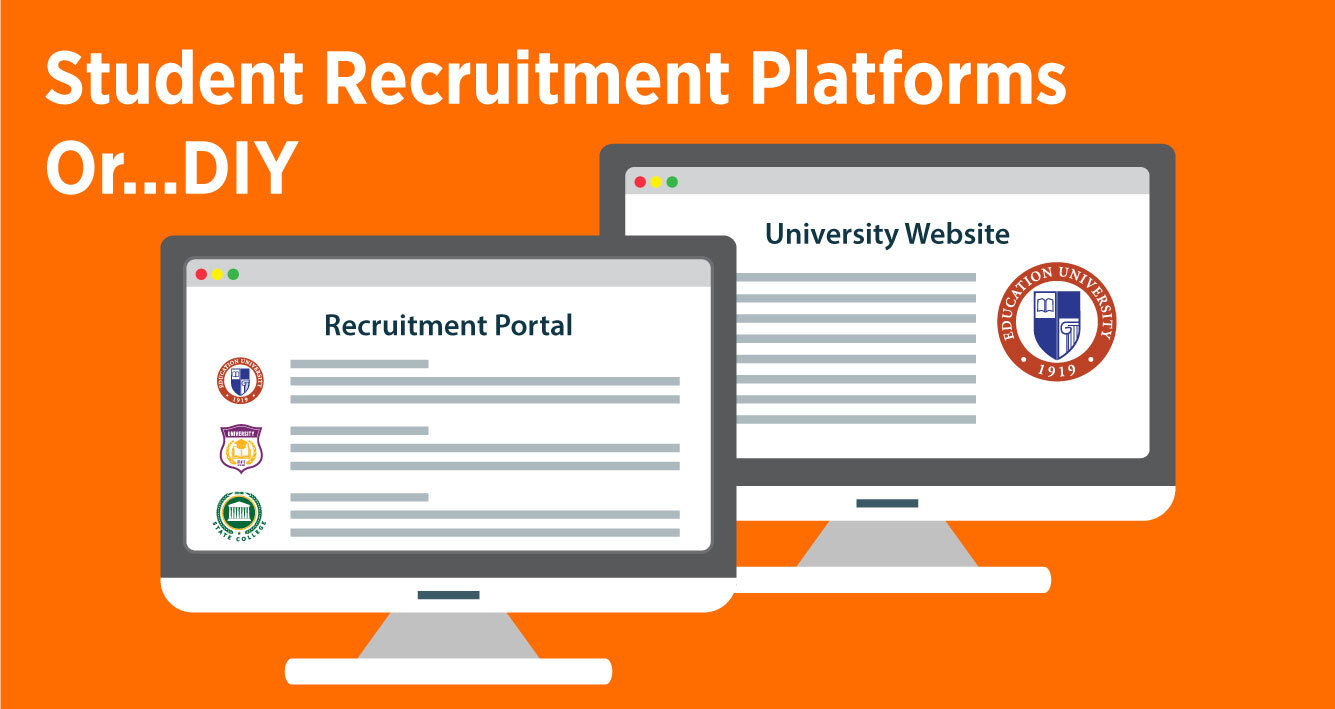
Online student recruiting platforms have become an industry staple and the proclamations of power and reach among them as they battle for market share is reaching a crescendo. They promise to find you leads and/or enrollments. They talk about customized approaches while their business model is all about rinse and repeat, cookie cutter marketing. 

Is their automated customization going to get you the results you want? Will they draw the valuable student click? You know, the one that is serious about pursuing your institution? Or simply the click that looks good on digital reach reports but never converts?

More importantly, are these platforms your only option for digital student recruiting? You actually have a DIY secret weapon that so many have lost sight of.

Read on to learn how your institution just may have all the tools it needs to be its own digital student recruiting platform (spoiler: it starts with your website).

Read More

A View from My Seat: SIO Edition

Today, we start a new occasional series with our Recruiting Intelligence Blog calling on the expertise of our colleagues in the field and sharing their views with you. Many of you know our first “View from My Seat” writer and worked with him in his former role as Vice President for Global Engagement at the American Council on Education. Brad Farnsworth now runs Fox Hollow Advisory helping institutions develop and execute international strategy.

We are thrilled to share his counsel to SIOs as universities around the world continue to grapple with how the pandemic has changed their approach to global partnerships, student services, student enrollment, and overall academic business models.

Be sure to sign up for our AIRC-hosted webinar with Technion Israel Institute of Technology presenting “Shifting Student Perspectives: Digital Marketing Now” — Free to AIRC members and $45 for non-members. Register HERE. (If your institution is not an AIRC memberhit us up for a code and we'll see about getting you past the velvet ropes.)

Read on for Brad’s counterintuitive recommendations for all of our SIO colleagues.

Read More

Would You Like Some Feedback?

Sometimes feedback is well received. Other times, not. Leaders see feedback as invaluable.

In two of our recent, highly-clicked blog posts, we discussed STRATEGY and CULTURE as they relate to academic institutions seeking enrollment growth. Our discussion of enrollment management would be incomplete without a few observations about the need for LEADERSHIP.

When are we leaders?

Leaders come in all forms. Some of us lead organizations, others departments, others a single project. Being a leader has to do with taking ownership of the vision or reason for the work, the people, the process, and the results.

And being a leader has everything to do with the learning. The analysis before, during, and after. And that has a lot to do with feedback. Receptivity to feedback, even when unsolicited is truly important. These are the learning moments with value for those willing to step into a leadership role; a role that requires humility and listening along with confidence and daring.

Read on for a few quick and helpful insights that just may help you take a fresh view of the feedback you are likely getting all the time. There are more gems coming your way than you may realize. Plus, our closing link will bring a smile to your day.

Read More

The Essential Guide to Implementing a University CRM System

With so much in enrollment management being in flux right now, going back to the basics is important. Managers across the country are looking to their 2021 intake reports and trying to predict spring and fall 2022. Challenging under normal circumstances, right?

So where are those reports coming from and how much is what should be a simple process driving you up a wall?

The more important the task, the more frustrating it is to have a tool that isn’t helping you succeed. For those among us still reviewing excel spreadsheets with enrollment data, we feel your pain.

It’s no surprise that many universities, high schools, and language schools feel incredibly irritated by customer relationship management (CRM) systems that don't meet their needs. We know this is a topic worth discussing in part, because some of our most read blog posts over the past 2 years (Post 1, Post 2, Post 3) are about enrollment managers' user experience with Technolution's #Slate.

If any of this sounds familiar—and if you wish you had more guidance on how to set up a system that will actually help you anticipate what your future enrollment will bekeep on reading.

Read More

Marketing Culture. What’s Yours?

We’ve all heard about how company culture eats company strategy for lunch, yeah?

Last week, we wrote about how folks often confuse strategy and tactics. And we gave a little side eye to those colleagues among us who use the word “strategy” to appear smart and make others feel less than.

The cheat sheet on that one: replace the word “strategy” or “strategic” with “different” or “differentiation” and you’ll be able to get to the nub of the discussion topic quickly. Strategy has everything to do with position in the marketplace, which means how you stand out and leverage your differences against the competition. Tactics are all about the marketing tools and channels you use to make your institution’s valuable differences shine, be heard, and understood.

But in academic marketing (and virtually every other operation we can think of), how we achieve our strategic differentiation, how we meet our institutional goals, has everything to do with the team we have to do the work (the team that creates and delivers the product).

An interesting observation here: academic institutions really are all the same, right? Sure, there is R1 and R2, public and private, not-for-profit and for-profit, 4-year and 2-year, but these categorizations, when you get down to it, are not that significant, at least at the undergraduate level, right? They are all producing the same thing and in the eyes of the consumer, what is really different? They all have the same administrative and academic departments. And the rankings are a sham anyway, right?

Read on for how to counter that sad and ineffective point of view.

Read More

So That’s Your Strategy?

People look smart when they reference strategy. It elevates any discussion to greater importance as soon as the word strategy enters. Often, it gets others in the room thinking, “Right, maybe I’m not thinking about this strategically.” Followed by the thought, “What exactly would a strategic version of this discussion look like?”

The idea of strategy is often misunderstood. I fully admit, it really can be difficult. I can’t tell you how many discussions I’ve been in where people describe their tactical execution plan as the strategy. 

A simple example of why folks get confused, and I’ll use what we know best, the world of marketing: Your marketing strategy to enroll more students requires great marketing content. Content is a tactic you will employ to achieve your strategic goal. Yet, you will need a content strategy to be successful. So, content is not a tactic. It is a strategy, right? No, it is a tactic in this scenario. A tactic that needs its own strategy.

Oy vey.

Our team, of course, lives in the world of marketing strategy, planning, and execution. Today's post shares some insights into how to simplify the discussion and confirm when you are employing a strategy vs. discussing the tactical execution of any given initiative.

Read on and maybe we can shed some light on how to actually be smart in the discussion, not just look smart.

Read More