
As you interact with international students, your job is to present your academic programs the best way you can and identify the right students who will be a good academic, personal and financial fit for your institution.
Universities rarely go out of business or let's say out of existence. Maybe we should carefully add "so far" since we know that financial pressures are increasing dramatically. Competition is intensifying. Public funding has decreased and as we all know tuition has increased to a level where it is difficult to raise net tuition. Students and their parents are more reluctant or unable to take on the financial burden. I am a strong believer that education is one of the best investments young people can ever make. Financial pressures, among other reasons, have pushed many colleges to recruit more international students. Full paying students are rare in the United States, so adding a cohort of more or less full paying international students can make a difference. As a result, we see many universities entering the international markets. And by the way, we don't mind since we enjoy working with colleges and it is helping us grow our business as well.
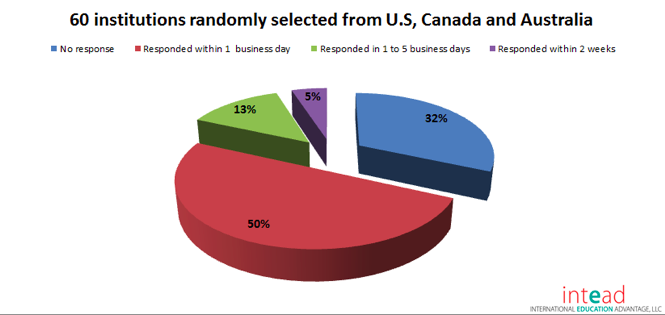
Well we've done it again. It provided such a fascinating glimpse into how institutions engage with prospective students that we decided to run the experiment all over again. If you are an avid reader of our blog (thanks, Mom!) then you know that last May we published the results of our mystery shopper experiment, phase one. We could hardly believe that nearly 25% of institutions we contacted to request information for a prospective Chinese undergraduate student never replied. For the full report, read our blog 25% Don't Reply to Prospective International Student Inquiries. Since we ran that experiment in the spring, April to be exact, we decided we would try it again in the fall. And so we bring to you, dear readers, the results of the mystery shopper experiment, phase two.
In my last post, I discussed my experience at Bahcesehir University and gave some of my impressions about what drives students to study abroad. Working at BAU didn’t just give me a chance to observe students, though. It also allowed me to look at overseas university systems close up. I was able to see how their programming and administrative organization compare with older American schools, and how they differ. Below are four things that I saw overseas schools doing right, to keep themselves relevant and sustainable in a global education community.
How many social media accounts do you have? Two? Five? Eight? Do you have any in China?
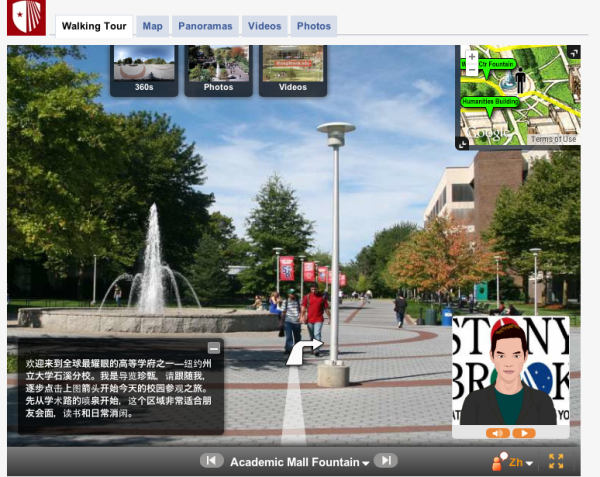
Marketing to prospective students, especially prospective international students can no longer rely on print materials and websites alone. The array of digital engagement tools available for marketing and admission departments is vast. These engagement tools are affordable, entertaining and can help to distinguish your institution from the competition.
Do you know the travel books from Lonely Planet? If you do, you probably love them as much as I do. If not, you should get to know them if you travel anywhere in the U.S. or in the world. They are great guides for your travels. What does that have to do with St. John's University in New York?
College admission cycles are like the seasons of the year. If you follow a traditional admissions cycle you know what it's like to live through the cycles of the process. Many schools are admitting more frequently than annually but there is still a big new start in the fall.
Remember the three Rs: reading, writing and arithmetic? For enrollment marketers and admission counselors, the three Rs have a much different meaning. This time of year there is such focus on rankings. In fact, today is the official release of the US News and World Report College Rankings. So happy college rankings day to you, dear colleagues.
When it comes to international student recruitment and marketing there are many obvious factors that affect a student's interest in one institution over another. Things like (US News and World Report) rankings, cost/financial assistance, availability of desired programs, an international student presence, post-graduation opportunities. These factors all play into a student's decision making process. But there are other factors, which I'll call "soft" factors that also affect student's decision making. In building or maintaining recruitment and marketing efforts it's certainly worth your while to consider these factors.
At Intead we understand the forces driving academic institutions to seek international students. Our Recruiting Intelligence blog addresses the various factors that contribute to a successful international student recruitment and enrollment program. We consider:
We hope you will find new ideas and gain perspective that ignite your international recruitment. This resource is available to inspire our community of international enrollment professionals to share best practice and learn from each other. We welcome your input.
All content ©2026 International Education Advantage, LLC.
All rights reserved. Privacy Policy | Terms of Service