Recruiting Intelligence

The More Things Change…The More We Need to Figure Out

So, ICE tells all the online international students in the U.S. to go home and Harvard tells all students to go online for Fall 2020 (without lowering tuition). That’s quite a news day.

From day to day, the landscape continues to shift, sometimes dramatically.

If you’ve missed the past few months of Recruiting Intelligence posts because you’ve had other pressing priorities (we get it), then you may want to take a scroll through it all.

Read on for a quick summary of all the things we all need to figure out. (Spoiler alert: we've already figured out a lot of them).

Read More

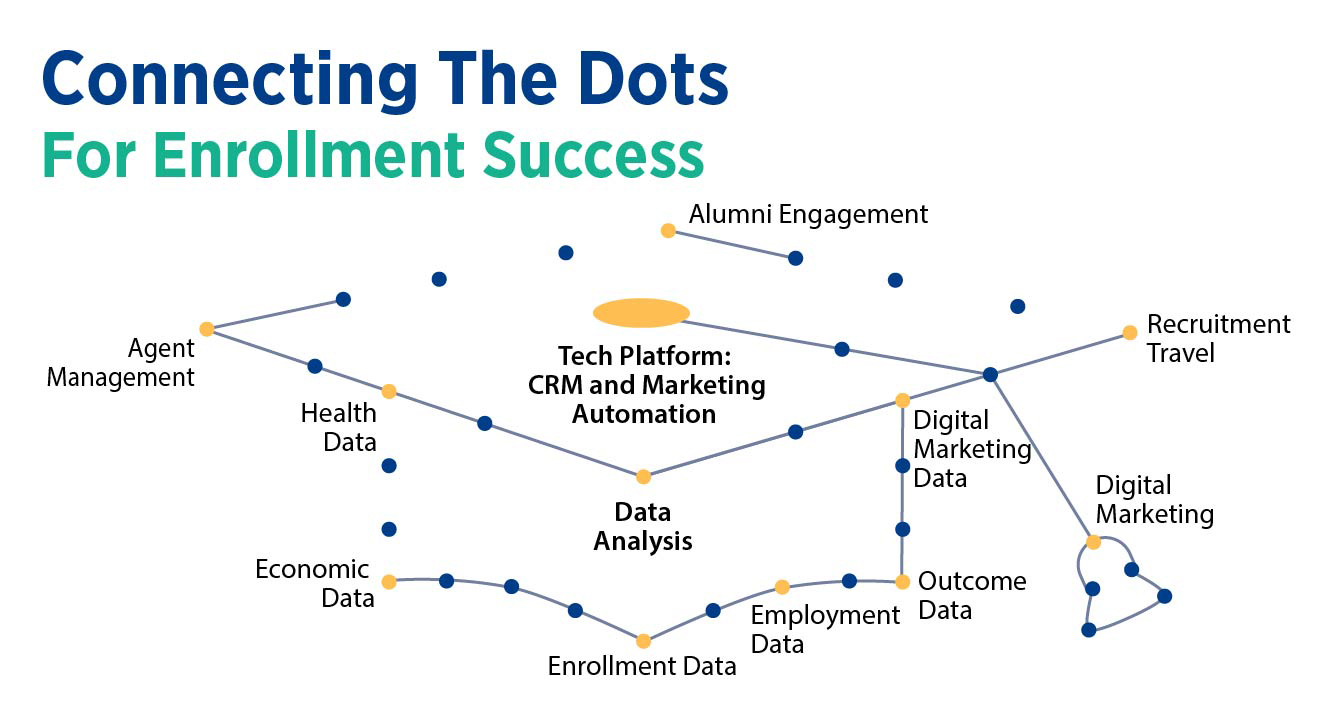
Connecting the Dots for Enrollment Success

Let’s pause for just a minute or two and take a few deep breaths. The pace of all that is going on, right?

With this post, we are going to connect a few dots. Reconfirm the why’s and how’s of what we are doing in the enrollment management arena.

Right now, we see civil unrest around us that is the expression of communities not understanding each other. Lack of cultural understanding, lack of connection, lack of empathy, all leading to severe consequences. This is an age-old struggle and we, in the education sector, pour our hearts into changing the underlying factors that contribute to the mess we find ourselves in.

Getting our work right really does matter. Education IS such a huge part of moving our communities in the right direction.

For most of us, maybe all of us, recent events make it crystal clear why we do this: every mind opened, every cultural connection built, is a win.

To achieve loftier goals, the academic institution must remain economically viable. And we need the students to enroll.

We know, looking ahead, more dramatic change is coming as we navigate various immigration decrees and virus news. We’ve all been working really hard to maintain the pace and make smart decisions. So, let’s just pause and reflect for a moment and connect some dots.

In short, the process is: view the data, assess the tools, make a plan, execute. Sounds simple, right ; -)

Our Intead Plus library of recruitment content and worksheets has supported so many. It’s out there if you need it. Below we review our process with some helpful lists to get you thinking, considering.

This is such an important time to plan and act.

Often, as the team here begins our projects with a new client, institutional leaders apologize for the many silos across their campuses that hold information and work far too independently. We are often tasked with gathering the necessary information and bringing as much unity to the siloed teams as possible.

Deep breath.

And again.

Getting our important work done the best way: There are so many approaches and so many adjustments that are necessary as circumstances and the people involved shift. All of our talents for listening, embracing and connecting ideas, all of this is needed from all of us.

There are underlying processes to how we do enrollment marketing that are essential and consistently required regardless of the circumstances. These processes adapt as situations change. 

Knowing where your processes stand, and which dots might need more attention has real value. Read on and consider whether your enrollment management system’s dots are functioning holistically.

Read More

Can Bootcamps Go to University?

Thinking about tech bootcamps as a new revenue stream? We are.

If you've not already read last weeks post about Full On Armchair Recruiting with clear and supported guidance on what comes next for student enrollment, student experience and student services, well, we highly recommend it ; -)  We've received a fair number of emails from your peers who found the advice highly valuable as they make plans for fall 2020 and beyond.

Here's the thing: given anticipated and imminent enrollment drops, new revenue sources are going to be really important.

With all the changes happening now and coming down the pike for academia, we want to continue to look forward and point the way for how your institution demonstrates its value and hopefully finds new revenue sources. Turns out, in this environment, thinking about new revenue streams has suddenly taken on a fevered pitch. That's a good thing. We LOVE innovation.

You and your colleagues have likely talked about the quick-hit education providers cropping up in the form of coding bootcamps. We’ve been keeping an eye on these burgeoning businesses ourselves. After all, they’ve been sprouting like weeds over the past eight or so years.

Their aim is to teach practical skills to nontraditional students looking to enter or change careers or move up the professional ladder. Courses tend to use project-based learning to cover topics like full-stack web development, digital marketing, data analytics, UX/UI design, cybersecurity, cryptocurrency, blockchain and more.

Universities have seen this as a threat to their engineering and IT offerings. But are they truly threats?

Within the past few months, Michigan State University, George Washington University and the University of Toronto School of Continuing Studies each announced their own tech bootcamp (or fintech) programs. There are others taking this direct competitive approach.

The trick for many universities is that their infrastructure is not necessarily set up to provide continuous, short-run programs. One challenge for bootcamps is that their administrative infrastructure is slim and stuggles to support scaled growth. They also struggle with credibility. Will their certificates have value for the graduates over time?

Can you see where we’re going with this?

There’s an opportunity for a symbiotic relationship that can benefit students, local economies and your respective programs. Enrollment marketing, take note! Read on.

Read More

Full On Armchair Student Recruiting Has Arrived

We're coining a new phrase here: COVID Caveat. As in, “Yes, I’ll join your Zoom meeting next Tuesday morning…COVID Caveat.”

There’s so much change that we are all facing right now. It's hard to predict what will happen this Tuesday, much less this fall. Still, there is a bunch of data out there that, taken together, makes a clear case for what this fall will look like for academia.

The information below is seriously valuable to your enrollment planning. And technology will play such a huge role. Thankfully, the tools are available to take your student recruiting entirely digital until everyone is traveling again and recruitment fairs are back in business -- Digital Student Orientation, anyone?

Look, China, 4 months into this thing, has yet to re-open any universities due to concerns about bringing people together from many places. If you want to travel (business or pleasure) between Shanghai and Beijing, you have a 14-day quarantine before you can move about the new city. As leaders, we need to be thinking about the near-term and much farther out. And we need data from many sources to make good decisions. 

Your students will not be showing up on campus this fall. Below we provide the data and thinking that justifies that radical thought. We are demonstrating the broad and deep industry insight that the Intead team brings to our clients every day, along with the ability to execute on the plans.

Our primary take away: putting all your classes online is simply not enough if you want to compete with all the options students will be considering this fall. How and what you use to attract, nurture and then deliver an education to your students online needs to improve, a lot, and fast.

From our point of view, when you boil it all down (and maybe spritz it with some bleach spray), these are your essential imperatives:

  1. Deliver on your education mission to your students, your community and the world, and
  2. Maintain a student enrollment base that allows you to continue to operate.

You're going to need to be versatile and act fast. The only way large organizations pull that off is by hiring smaller, nimble agencies. You know this, but you can ask your business professors for confirmation based on case studies.

Read on for how we think this all plays out in the near-term and longer-term and what we think you ought to be doing about it. Quickly.

Read More

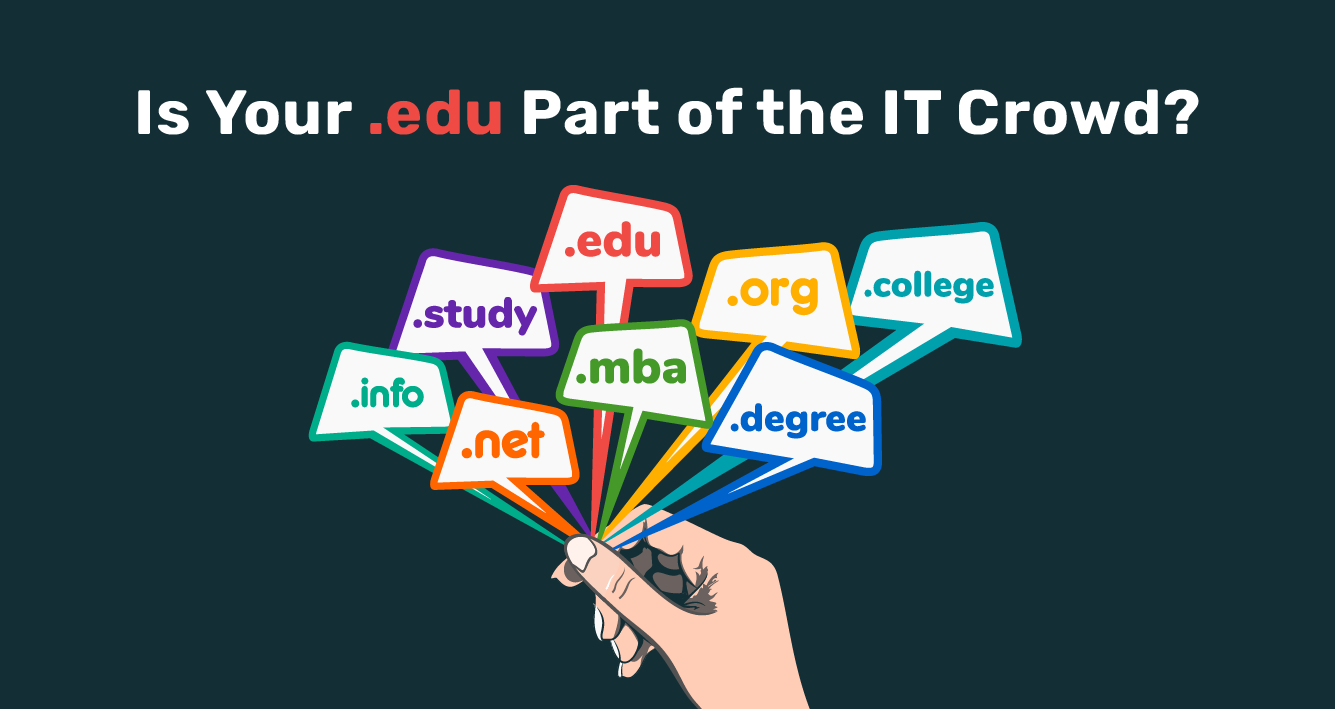
Is Your .edu Part of The IT Crowd?

A few years back, the business world faced an onslaught of new domain extensions. Companies formerly satisfied with their .com addresses suddenly had new options to choose from: .info, .biz, and the like. Even .cool made the scene. 

While the gold standard for academic sites has always been .edu, alternatives such as .college, .degree, .education, and .university present a new, distinctly 21st century challenge: how can you protect your institution from copycat sites?

More importantly, is it just brand management at stake, or does the availability of these domain names put your students’ privacy and online safety at risk?

There seem to be more #EdTech issues emerging every month. We're here to help make some sense of it all. When it comes to protecting your institution’s digital footprint in today’s ever-changing tech landscape, a bit of research and a thoughtful game plan can save you a great deal of headache. Today, we look at these digital hazards and make some concrete recommendations. Read on. 

Read More

Breaking the Ice: What’s New with EdTech Accelerators?

Our calendar is full of conferences and events where we’re presenting on the latest education, recruitment, and EdTech trends. And if you’re familiar with these conference circuits, that means you’re also familiar with the mixing and mingling time. From coffee breaks to cocktail hours, and maybe even the line for the bathroom (hey, you never know where you’ll cross paths with a potential new contact), the networking opportunities are everywhere.

If you’d like to schedule some time to chat with us at your next conference stop, let us know HERE, and don’t hesitate to say hello if you spot one of us in line for the cheese and crackers.

And because you really shouldn't always lead your conversation starter with, “How about this weather we’re having?”, it’s important to have a few relevant industry soundbites in your back pocket to break the ice.

So, what’s a go-to hot topic right now that shows you are both worldly and in the know?

This just in from Singapore: there’s a new model for EdTech accelerators.

Read on to find out what’s happening in the EdTech acceleration space, how it is changing, and what might be coming soon to a cocktail hour conversation near you.

Read More

How Students Pay You Is Changing - Part 3

This week we wrap up our three-part series on #FinTech, where we’re exploring how money for college can be found and moved faster, safer, and smarter, alleviating some of the headache for students, their families, and this time around, for university administrators. This is part of our focus on #EdTech and all the changes our industry is experiencing.

In our first piece, we talked about new student loan options, especially for students from underserved demographics, those looking for social equality, those who want unique repayment terms, and international students. Then last week, we jumped to alternative funding sources, such as micro funding, income share agreements, and new developments in scholarship FinTech.

Those areas of FinTech were all helpful to the students seeking ways to finance their educations and helpful for university administrators to understand as the financing tools and options you students can access change.

Today we are looking at what is new in the world of financial data and payment processing. Let's consider how your job might get a little easier.

And speaking of making your job a bit easier, we have 3 new Intead student recruiting research reports headed your way. Now is a great time to consider an Intead Plus Bookshelf subscription. Don’t miss these valuable reports to help you improve your institution’s recruitment game:

  • Student Interactions on Peer-to-Peer Recruiting Platforms
  • Student Interactions with Chatbots and other Artificial Intelligence Tools
  • Student Recruiting in Emerging Markets: Africa and Latin America

Or you can learn from us with a personal meeting: we will be discussing our latest research and presenting our student recruitment insights at the upcoming TABS, ICEF and AIRC conferences. Email us to set up a meeting.

Read on for important insights into a set of really valuable questions you need to ask before embracing the latest FinTech tools…

Read More

How Students Pay You Is Changing - Part 2

This week we continue our three-part series on #FinTech, where we’re exploring how money for college can be found and moved faster, safer, and smarter, alleviating some of the headache for students, their families, and even for administrators. This is part of our focus on all things #EdTech.

Last week, we dove into new student loan options, especially for students from underserved demographics, those looking for socially conscious financing, those who want unique repayment terms, and international students seeking financing. If you didn’t get a chance to read it, you can check it out here.

A quick shoutout to NAFSA's latest issue of International Educator. It was in our mailbox this week and it should be available online soon. Great articles on priority topics: student services, and student employment opportunities.

With 3 new Intead student recruiting research reports headed your way, now is a great time to consider an Intead Plus Bookshelf subscription. Don’t miss these valuable reports to help you improve your institution’s recruitment game:

  • Student Interactions on Peer-to-Peer Recruiting Platforms
  • Student Interactions with Chatbots and other Artificial Intelligence Tools
  • Student Recruiting in Emerging Markets: Africa and Latin America

Or you can learn from us with a personal meeting: we will be discussing our latest research and presenting our student recruitment insights at the upcoming TABS, ICEF and AIRC conferences. Email us to set up a meeting.

Now a look at alternative funding sources. Read on to find out what exists outside of student loans.

Read More

How Students Pay You Is Changing - Part 1

When you think of student loans, your first thought might not be of the Space Race between the US and the Soviet Union, but that’s exactly where they started. Following the launch of the Soviet Sputnik, the first federal loan program began in 1958 with the National Defense Education Act (NDEA) to serve students studying engineering, science, or education degrees.

Since then, technology has rapidly advanced—both in outer space and right here in the earthly realm of higher education. Interestingly, tech has also advanced in how to finance education.

Continuing our exploration of #EdTech, today we are turning to FinTech in what will be a three-part series. Most of us have probably checked our bank balance online and many are cashing checks with a click of our cellphone cameras. The younger ones among us are transferring funds to each other using Venmo. (You had to pay your babysitter that way just the other week, didn't you?). These same digital advances in FinTech are starting to overlap with EdTech.

The rising cost of higher education is a huge concern for most students and families. Today we explore some of the new financial technologies that allow money to be moved faster, safer, and smarter for the students and families that are eager to attend your institution.

Why is this important?

Knowing what your target audience is into is always important from a recruitment and retention point of view. Is your institution making it easy for students to use the modern financial tools available?

In our FinTech series, we are going to look at new student loan offerings and alternative funding sources for scholarships and crowdsourcing. And while those are helpful on the student end, we will also discuss FinTech solutions for verifying financial details and aid approvals as well as payment management systems.

Quick reminder: This December, the Intead team will be attending the TABS conference in Boston, the ICEF conference in Miami Beach and the AIRC conference in Miami. Drop us an email if you’d like to meet and hear about our latest research. We are releasing 3 new market research reports in the coming months. So much insight!

Read More

#EdTech Basic Training: Bootcamps and the Future of Coding

Students are settled into their dorm rooms, pumpkin spice is again a major topic of conversation, and the craziness of the drop/add period is wrapping up. Summer might already feel like a distant memory. But, way back in June—before all of the student orientations, barbecues and beach trips—we spoke about credentialing and badges. One of the non-credit suggestions we made was for universities to offer coding bootcamps in order to help credential their students or alumni.

There are so many ways to engage prospective students at all levels who want to advance their careers. Our Non-Traditional Student e-book Quality. Cost. Convenience. has 9 case studies from your peer institutions. It might be worth a look if you’ve not already downloaded it. The Extended version for Intead Plus members includes three bonus chapters on market segmentation and recruitment strategies.

Read on to take a look at some of the options already out there for these coding bootcamps, and see if they actually make a career difference for students and offer your team an enrollment edge.

Read More