
Recruiting Intelligence

Ben Waxman

Ben Waxman

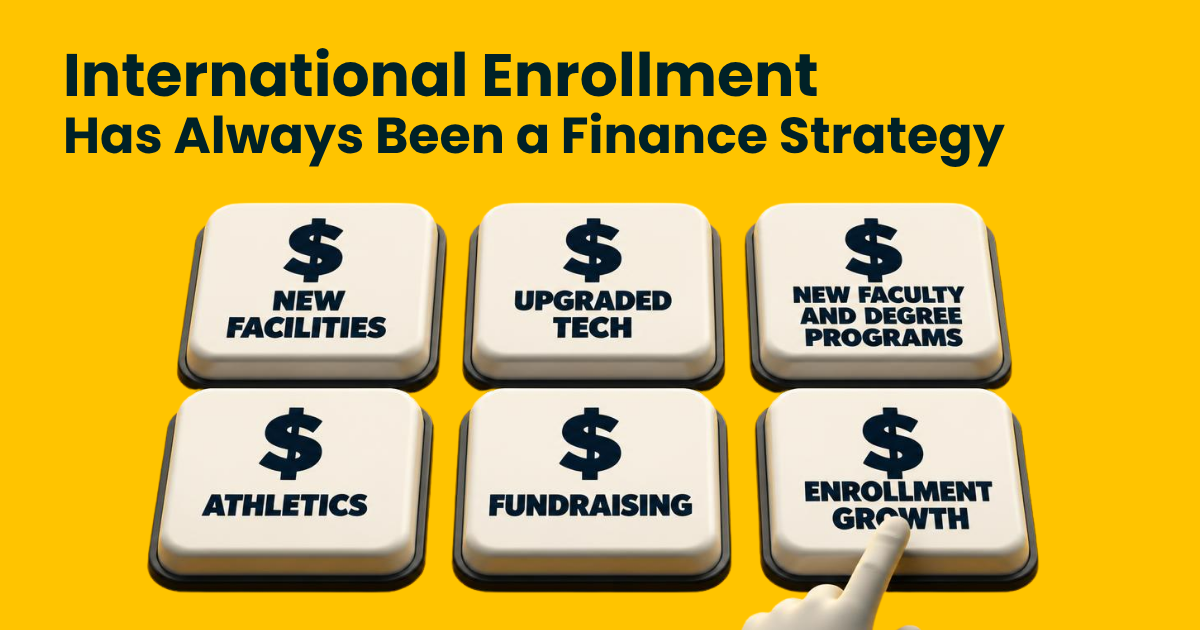
International Enrollment Has Always Been a Finance Strategy

Our regular readers know our devotion to cross-cultural intersections. Today we focus your attention on the financial value of global.

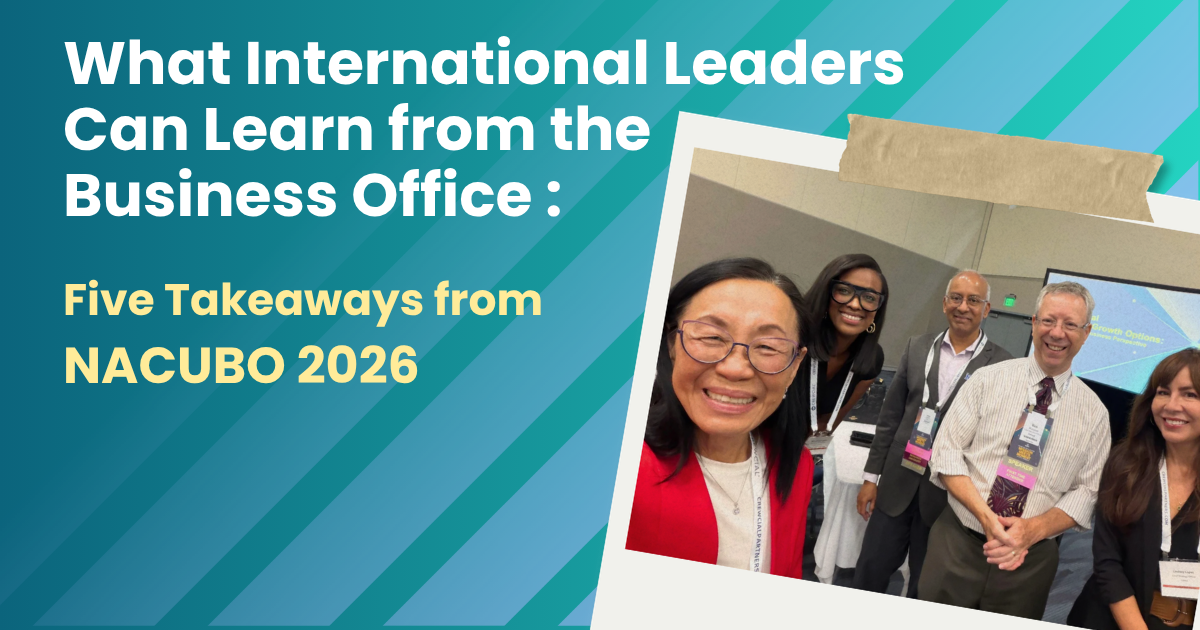
At the NACUBO 2026 Annual Meeting, I spent several days listening to chief business officers talk about the problems consuming higher education: rising personnel costs, deferred maintenance, enrollment pressure, AI investments, student success vs. access, the loss of institutional knowledge as long-serving leaders retire, oh, and changing Federal policies and guidelines.

Important to note: just 13% of CBOs say their institution understands per-student program and activity costs very well as reported in Inside Higher Ed from their annual survey of CBOs. There’s an opportunity for you right there.

You know what did not come up at the conference? International enrollment.


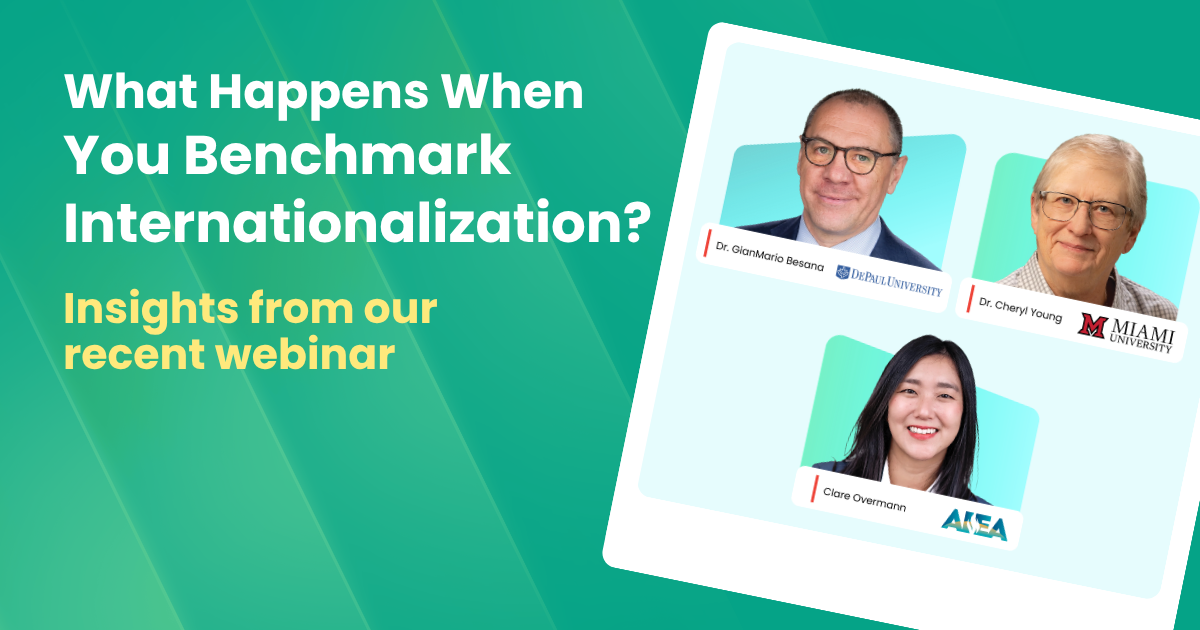
Ready to benchmark your internationalization strategy against your peers?

Find out live. Join Dr. GianMario Besana (DePaul) and Dr. Cheryl Young (Miami University) as they unpack early findings from the AIEA-Intead Internationalization Benchmarking Study.

August 27, 12:30-1:15pm EST. Have you registered yet?

Not yet a subscriber?
Get Recruiting Intelligence delivered to your inbox. Smart move.


Nearly every concern being discussed at NACUBO pointed toward the need for new, sustainable revenue streams. While international enrollment cannot solve every financial challenge facing a college or university, it can become a meaningful part of the solution. And given today’s pressures, international is just as reliable as any other options for revenue-sustainability being evaluated by your leadership.

The larger point is easy to miss amid headlines about visa delays, geopolitics, and fluctuating student demand: international enrollment drives revenue. And that revenue opportunity is not well understood by your business officers. In fact, your CBO needs to hear from you, and this is important: they don’t know that they need to hear from you.

Read on...

Read More

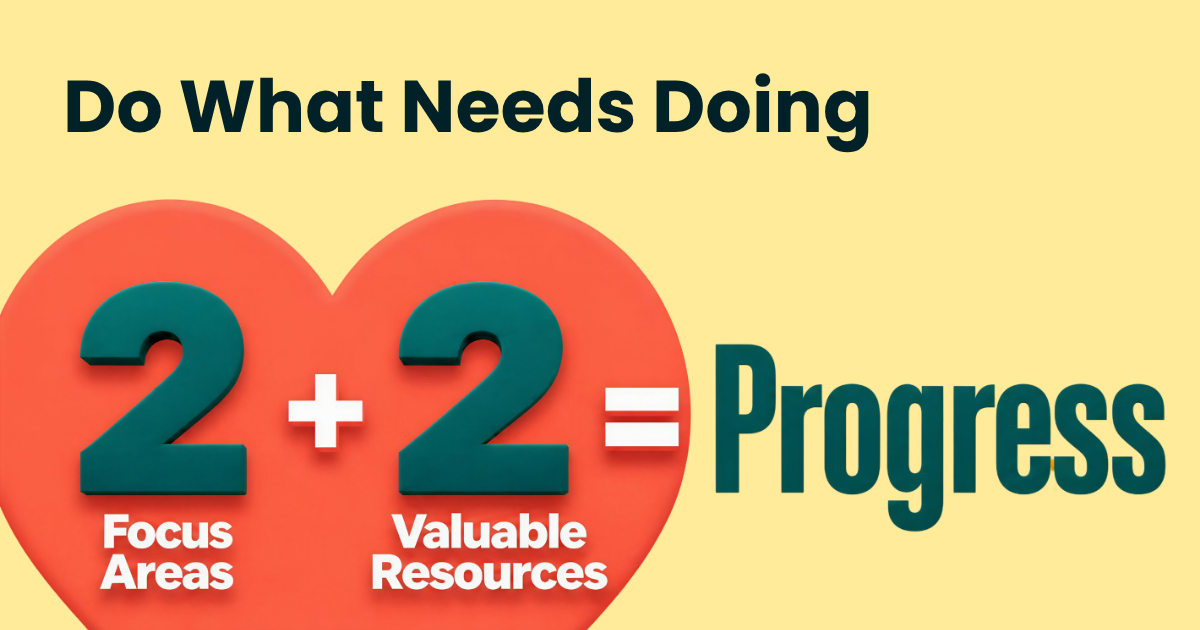
Do What Needs Doing: 2 Focus Areas, 2 Valuable Resources

How is your LinkedIn feed treating you lately? The algorithm has so finely curated mine at this point that I have a seemingly endless stream of academic news from a wide variety of “mostly” insightful posts. All good food for thought.

Mostly, I scroll and learn. Other times, I marvel at the patterns of folks trying (perhaps too hard) to get noticed. Sometimes I’m frustrated by the all-too-common story arc: take something well known and accepted as truth and call it into question. These posts often prompt reader engagement but act as just a surface-level contrarian view with little insight to truly add to the conversation. And that description is likely generous.


Join Us Today at NAFSA 2026!

  • If you get this in time, RSVP to meet us at 7:30 am today for coffee, bagels, and an informal discussion about the groundbreaking research study we are conducting with AIEA. Learn about how participating in this national study can help position you and your institution for long-term success. If you miss the bagel chat, still be in touch and we'll explore the research ideas with you (info@intead.com). 

There are many of us in the field seeking insights to help us navigate these troubled times. Academia, the headlines seem to tell us, is under tremendous strain. True enough, and yet, a lot of those headlines end up being a whole lot of noise.

History shows us that troubled times come and go. Some institutions will fail to ride out the storm. Those that do make it to the other side sometimes prevail by what seems to be dumb luck. Others plan and adapt, giving their institution the best shot at future success. With so much noise in the system and so many distractions, planning and adapting require focus – a focus that helps you see the important signals separate from the noise. No easy task.

Two recent trips to DC for conferences (AIEA and WIEC) offered the desirable opportunity to meet with our community, maintain connections, share experiences, and noodle about what really is noise and what the truly important signals are. Really helpful, as so many in our field seem to spend a lot of time wringing their hands and falling into the rut of complaining. It’s easy to do when times are legitimately tough.

But that isn’t leadership.

And that is not planning and adapting.

Below we offer two valuable focus areas where we believe academic leaders can move the needle despite the turbulence AND two helpful resources in times like these.

Read on…

Read More

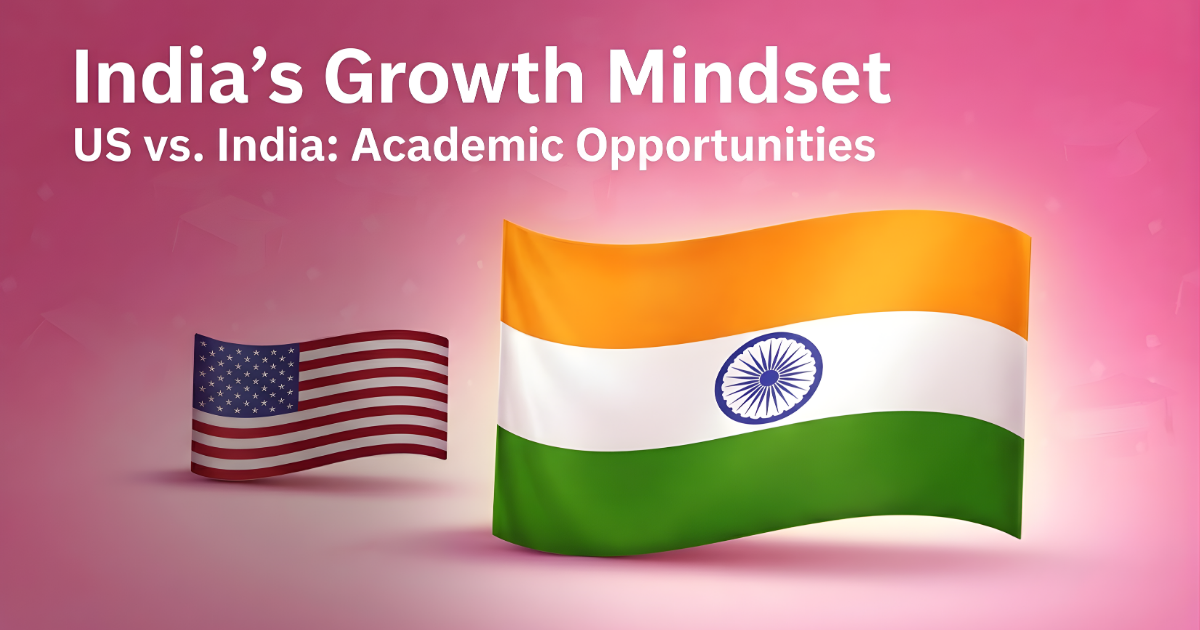
India’s Growth Mindset - US vs. India: Academic Opportunities

Growth follows investment and attitude.

We talk about growth mindsets. We talk about innovation. These are attitudes or approaches to our work and our lives. There are best practices we can apply to achieve our goals. And superseding best practices are our actual practices. Our efforts to be great.

Those who take growth seriously invest their personal energy into using past knowledge to envision what could be. These are the people who lead in small ways and big. We look to them for inspiration, and they motivate us to do more.

I recently had the opportunity to participate in the Junction 91 Gathering in Delhi. I also joined the GenNext tour and visited academic leaders in four additional cities (Ahmedabad/GIFT City, Jaipur, Hyderabad, and Bangalore).


Meet Intead!

  • Find us at at NAFSA in Orlando in May. Be in touch to share a cup of coffee in person.

Fight for your Internationalization Program Funding with Data


The GenNext tour, led by Girish Ballolla and Pritika Sachar, was top-notch. The GenNext team provided the connections to be sure we met with senior-level folks at each university. Also important when traveling internationally, when so many things can easily go wrong, GenNext had the logistics down with all the city hopping, ensuring we arrived where we were supposed to be each day of the trip. 

The conversations were eye-opening, refreshing, and valuable. We spoke candidly to students along the way. 

Here’s the thing: India is all about growth mindset right now. oh, and investment.

This, while the big four English-speaking student destinations (US, UK, Australia, and Canada) are all struggling to figure out what they care about and where to invest.  

Read on for insights about what this means for our work building global campuses and some eye-opening global data. Don't miss our bottom line recommendation at the end! 

Read More
Topics: India, Trends

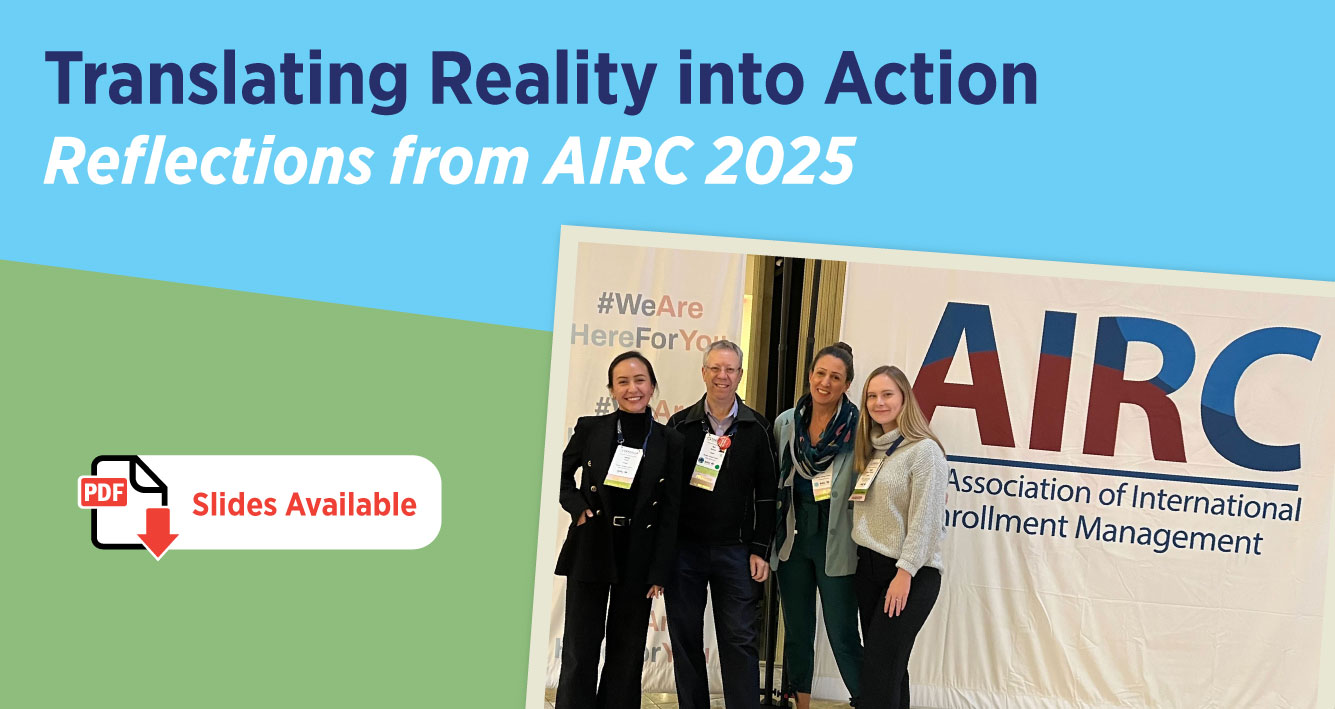
Translating Reality into Action: Reflections from AIRC 2025

Is your leadership happy right now? How about your staff? 

We’re talking to you, enrollment leaders. The conversations we are having consistently are about managing up and managing down. The challenge of leading those around you through significant disruption. 

Your institutional leadership is rightfully worried about the enrollment future (domestic and international). Your staff are rightfully worried that the current climate is a doomsday scenario for academic institutions. There is a lot of job dissatisfaction going around.  

Still, truth is, there have always been times like these. The stressors may be different, the intensity a bit higher, but the anxiety and resulting need for focused work to solve problems are nothing new. 


Meet Intead! 

  • Find us at AIEA in DC in February, WEIC in DC in March, and ASU+GSV in San Diego in AprilBe in touch to share a cup of coffee in person.
eBook Reboot:  88 Ways to Recruit International Students  2025 update. Your tactical toolkit for the year ahead. Covering all the bases in 10 quick-read chapters. Fosters great ideation discussions with your team.


At the AIRC 2025 conference that just recently wrapped in Atlanta, almost all of the presenters and participants ultimately addressed the question of how to talk to institutional leadership and help them to understand the complexities of internationalization –  because most academic leaders are unaware of how the international education community works. 

Helpful slides from one of our sessions are available below. They speak to 6 hesitations leadership leans on when deciding not to invest in international and what you might present to them to modify their perspective. 

But here’s the focus: institutional leaders do not need to know HOW it all works. They simply need to see the value of it and the investment required. To do that, they need to listen to and trust the messenger (that’s you).  

Read on… 

Read More

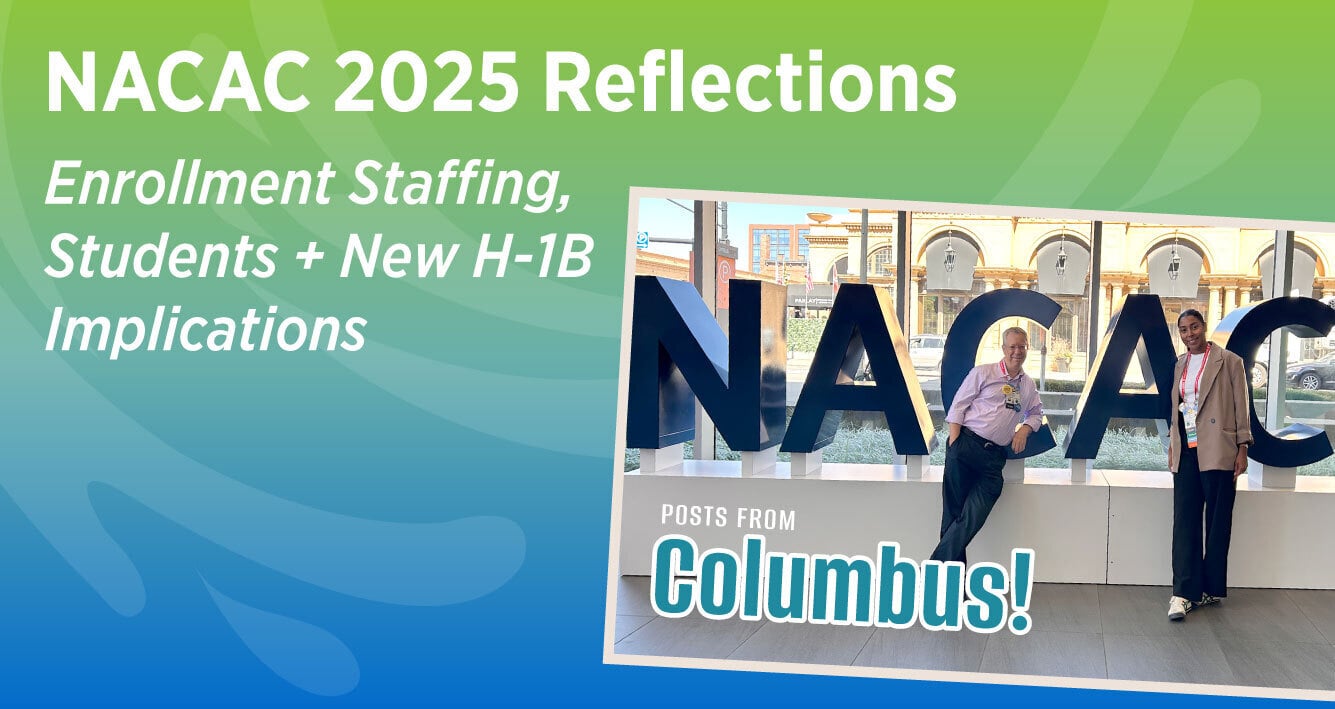
NACAC 2025 Reflections: Students, Staffing, + New H-1B Implications

How far does the data go in helping us develop a strategy? Create a plan? 

Iliana and I took to NACAC in Columbus, Ohio this year. Reveled in hearing Brene Brown talk all things leadership and vulnerability. Participated in the sessions on global and domestic enrollment realities. Wandered the expo hall checking in on colleagues and clients throughout.  

NACAC is such a multi-faceted group of academic leaders paired with the many, many student-facing counselors. The responsibilities of these different facets of higher education are often at odds and that too is on display at every NACAC conference.  

Pro Tip: If you truly want to understand an organization, attend their business meeting and listen to the issues raised (or ignored). Fascinating stuff and the true grist that both slows and drives progress. NACAC, along with the many other associations serving our community, has very well-meaning leaders and members all struggling to figure out how to move forward in aggressively turbulent times. 


Going to AIRC in Atlanta? Let’s connect! 

Join us Dec. 3, 2025, 1 – 4 p.m., for our workshop, Exploring Third-Party Business Models for International Student Recruitment,  or any one of our other conference sessions. You are  registered , right?  🙂

Or, meet us at:AIEA in DC in February and ASU+GSV in San Diego in April.


Kudos to NACAC leadership for never shying away from the hard issues in the face of ever-present financial challenges. Prompts feelings of mad respect for all those who put in the long, fretful hours forging the path forward. Especially now when our fairly recognizable business landscape has morphed into a very strange wilderness. 

The Intead team feels the consistent pressure to deliver actionable insights to our community. Below, we share a few significant takeaways from our NACAC presence. What we’re thinking about:

  • How will chief enrollment officers deliver the enrollment numbers their institutions need?
  • Where will we see universities closing next year?
  • And will the new H-1B fee proposal from the White House support international student mobility to the US? (spoiler alert: Yes!) 

Read on…   

Read More

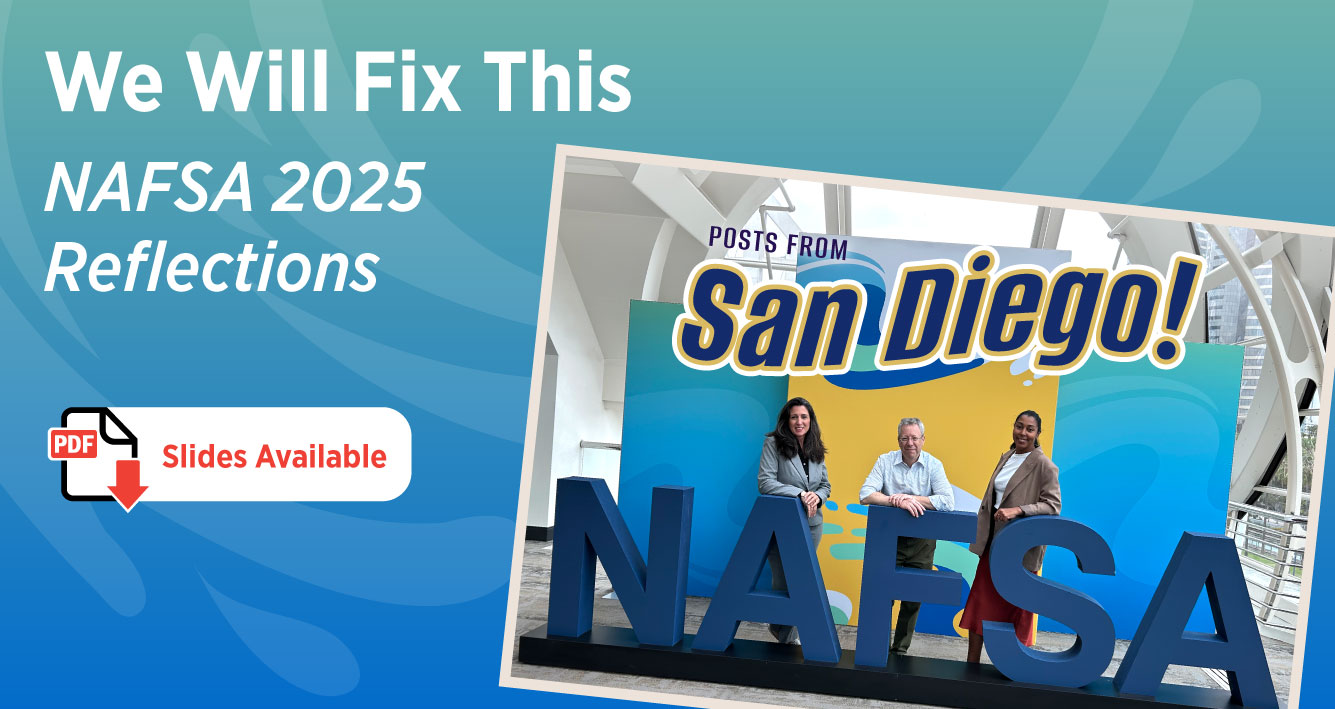
We Will Fix This – NAFSA 2025 Reflections

We all absorbed a few sucker punches at NAFSA 2025. And we experienced all the feels. 

While the White House released a new set of directives to further disrupt international student access to US institutions, NAFSANs gathered and found support amongst each other in San Diego. We ran as a pack (more on that below).

I spent my time at the conference largely with community and institutional leaders who have been down similar paths before. With sighs, eyerolls, and steadfast determination, we assessed what we knew, gave each other hugs, and took to planning for the future.  

As NAFSA CEO Dr. Fanta Aw says, “We do not get to be tired.” 


Meet Intead! 

  • Find us at APLU in NYC in June, NACUBO in DC in July, and NACAC in Columbus in September. Be in touch to share a cup of coffee in person.

Bookmark this: Intead’s Resource Center 
Access 800+ articles, slides decks, reports with relevant content on any topic important to enrollment management and student recruiting.  Check it out.


While many NAFSANs did express a weariness and some sessions had a very somber tone, that feeling was not pervasive. There will continue to be pain along the way, no doubt. Some of us will suffer losses due to the threats and disruptions. Student stress (and worse) is no joke. Fabulous and motivated international students will be denied access. Nevertheless, the dust will settle. Reason will prevail. And our community will fix what is being broken. NAFSA, among other leaders in our field, will be there throughout and after.  

To be clear, no one is giving up the fight.  

We were part of three presentations at NAFSA this year, mostly about career outcomes for international students and about how institutions can use this information to improve enrollment and advocate for our community. Find the link to our data (slides and a report) later in this blog post. 

Read on… 

Read More

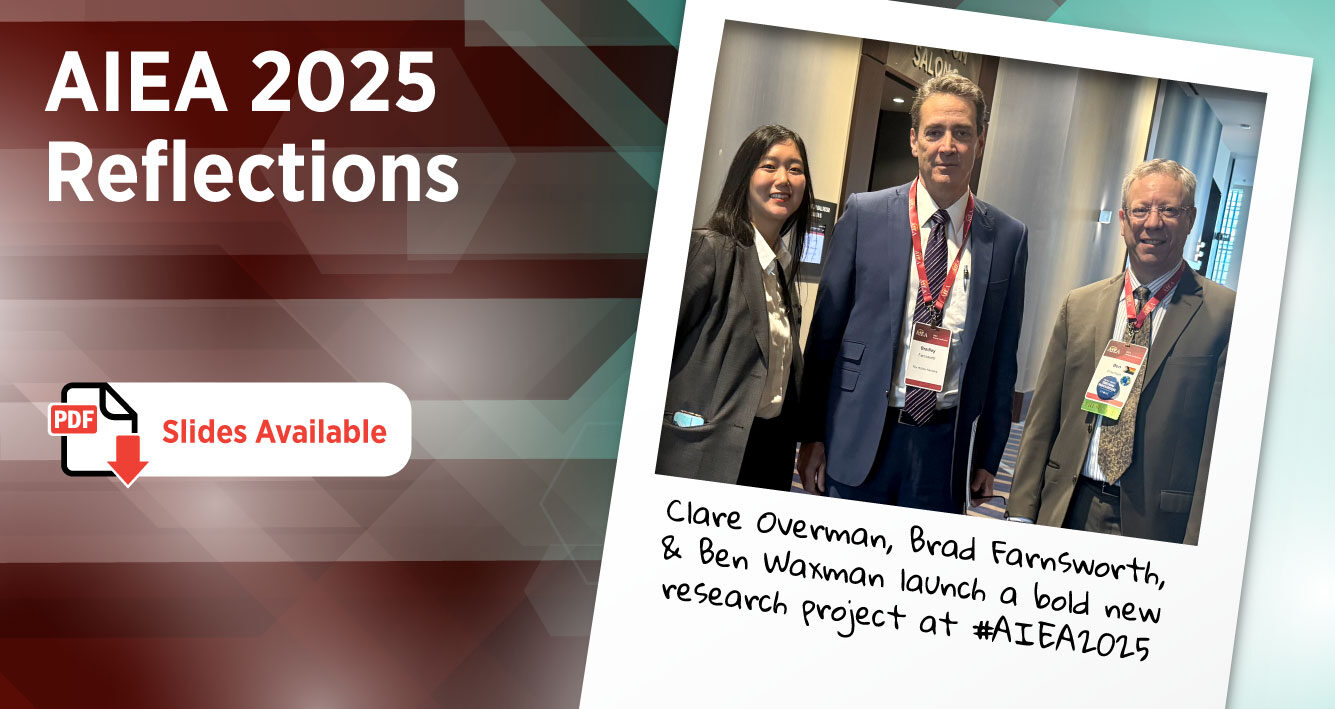
AIEA 2025 Reflections

AIEA rode into town overlapping the Houston Livestock Show and Rodeo in March. You tell me which one brought more excitement and better BBQ? 

The truth: I was down for the whole AIEA thing more than the rodeo. Clearly, I’m not the one to call when you are going out to a raucous party. It’s a character flaw, I know. 

AIEA’s board and their dynamic staff, led by newly minted CEO Clare Overman, delivered exactly what academic leaders and SIOs needed. An opportunity to gather amidst the chaos of the new administration in Washington, DC. An opportunity to fret, consider, and plan.  

Under the heading of planning, our boldest initiative, launched at the conference: a two-year research project in conjunction with AIEA to identify and share the effectiveness of various internationalization office structures. A complex endeavor to be sure. Learn a bit more about it HERE and sign up to stay informed. We are thrilled to be collaborating with former ACE Internationalization Lab leader Brad Farnsworth for this research. 

Those in this field do a whole lot with fairly little support or budget. Shared models and simply thinking together has so much value. The Intead team was honored to share the dais for three very different presentations with colleagues Balaji Krishnan (University of Memphis), Vivian Wang (University of Tulsa), Helen Zhang (Northeastern University), Mirka Martel (IIE), Andrew Chen (FrogHire.ai), and Brad Farnsworth (Fox Hollow Advisory).


Opportunities to Meet the Intead Team 

  • Will you be at ASU+GSV in April or NAFSA in May? Let us know  if you want to connect at these events.  

Bookmark this: Intead’s Resource Center 
Access 800+ articles, slides decks, reports with relevant content on any topic important to enrollment management and student recruiting.  Check it out.


Below, I share a few observations about the conversations at the conference ranging from fundraising from international families (alumni giving) to global partnership development and how that plays with enrollment management and student services. You’ll also find links to our slide decks and an invitation to chat if you’d like more information about our ideas on how your institution can improve in three areas: 

  • Global Partnership Development and Management 
  • International Student Career Placements
  • Internationalization Office Structure and Outcomes

Read on for perspective on the machinations over White House pronouncements and access to our slides… 

Read More

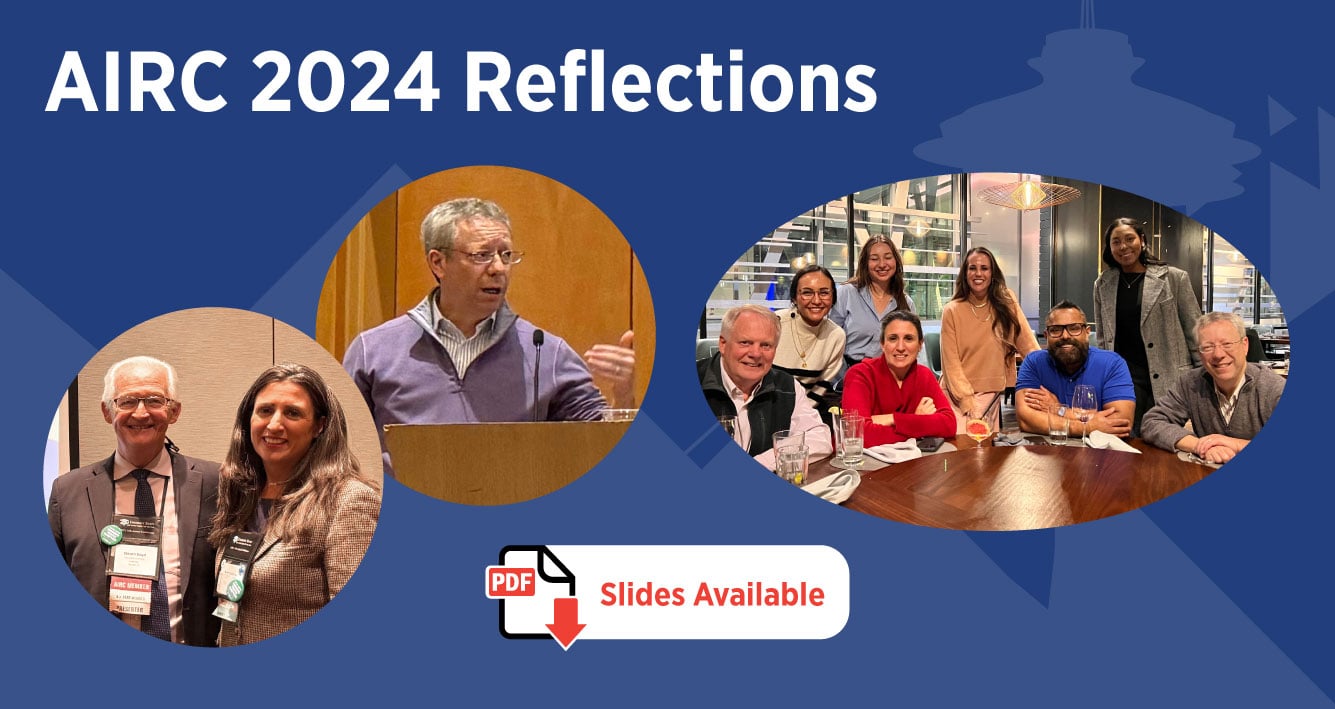
AIRC 2024 Reflections


Grabbed my briefcase, checked the full-length mirror. Yup, got my badge. Opened the hotel room door dashing to get to the AIRC conference networking breakfast buffet. Eyeroll and back into the room. Forgot to brush my teeth. 

Conferencing tip for my colleagues: If, in your morning rush, you forget to brush your teeth, remove your conference badge and lanyard before you brush. The physics of the lanyard and badge during the lean over sink, rinse and spit process…well, you can imagine. 


Opportunities to Meet the Intead Team 

  • AIEAin March, ASU+GSV in April, and NAFSAin May. We'll be presenting our latest findings with colleagues at AIEA and NAFSA. Let us know  if you want to connect at either of those two events. 

Bookmark this: Intead’s Resource Center 
Access 800+ articles, slides decks, reports with relevant content on any topic important to enrollment management and student recruiting.  Check it out.


The AIRC 2024 Conference produced exactly what it was supposed to produce at the end of a pretty arduous year. It’s all about the people in the room, their knowledge and expertise, and the culture of the gathering. AIRC achieves all of the right elements, repeatedly. The information we gathered will help us perform better in 2025 and beyond. 

The Intead team showed up in force. We presented our daylong Global Marketing Workshop as well as conference sessions focused on budgeting for international student recruitment and an approach to streamlining admissions processes to improve the overall intake. All very practical stuff.  

Institutions so often fail to calculate the full cost of IEM, leaving their international recruitment teams to a minimalist (at best) budget. An increasingly important consideration as demand for an international education grows in the coming years: How will changing student purchasing power influence your messaging? Can you reduce students’ total cost for a degree? 

Read on to download our AIRC presentations.  

Read More

What We Understand About Affinity - AMA Higher Ed Reflections


The opening plenary at the AMA Higher Ed conference by Dr. Steve Robbins was spot on great. With a neuroscientific underpinning, he presented the human desire for inclusivity as a biological need we all share as part of our survival instinct. Playfully using the rivalry between Michigan State and University of Michigan, he pointed out how we make excuses for “insiders” (those in our affinity group). When they exhibit frustrating behavior, we often give them a pass. At the same time, “outsiders” are seen as annoying and exhibiting behavior typical of their group. No pass for them.   


Opportunities to Meet the Intead Team  
  • PIE Live North America, Boston TODAY Look for Ben on stage at the IIE Open Doors: What is the Latest Data Telling Us? session at 2:30 in Grand Ballroom A&B.
  • AIRC, Seattle-Bellevue, Washington, Dec. 4-7 -- including our pre-conference global marketing workshop. A full day of Intead global intel (lunch included ; -). Details here. 
  • AIEA in March and NAFSA in May, we'll be presenting our latest findings at both. Let us know if you want to connect at either of those two events.

Bookmark this: Intead’s Resource Center 
Access 800+ articles, slides decks, reports with relevant content on any topic important to enrollment management and student recruiting.  Check it out.


With 1,800 people in attendance, this year was the AMA Higher Ed’s largest conference attendance yet. And from what the AMA says, that is the largest attendance of any AMA branch conference. People from 14 countries were there. And of the 1,800 attendees, about 430+ US higher ed institutions were represented. 

Dr. Robbins’ approach to introducing and promoting the idea of inclusion to those who may be of the mind that DEI and “woke” perspectives are simply too much to handle is welcome and perhaps the necessary path forward. Since this is the AMA, we are looking at inclusion in light of human (read: consumer) behavior and the importance of understanding this human desire to be part of a group as it relates to student marketing and recruitment. Diversity results from inclusive policies and practices. 

Dr. Robbins discussed the importance of feeling valued within the tribe you join. As a consumer of education or any other product or service, there is an affinity we are aiming to acquire. That connected and valued feeling leads to student retention and marketing concepts of customer lifetime value (think continuing education and alumni engagement). 

He also talked about the opposite effect: when people do not feel welcomed or included. These feelings light up the same pain centers in our brains that physical pain (a slap or a punch) elicits when experienced. And so, when we don’t promote inclusive practices, we are pushing people away and prompting quite literally a painful experience. 

People I talked to at the conference found Dr. Robbin’s talk a welcome and eye-opening presentation. Another aspect of the conference I found valuable: AMA’s use of Topical Idea Exchanges. These gatherings were smaller groups who circled up the chairs and focused on specific topics. The two I attended (one on celebrating and leveraging milestones (think: centennial celebrations), the other on leveraging organic social channels using institutional and senior leader accounts (think: managing chancellor social accounts). Both sessions were well led and filled with smart people who shared ideas and perspective, asked great questions, and overall made networking and information gathering comfortable and valuable. Though, I did hear some mixed reviews on that format from others.

I attended a couple of sessions during the 1-day I had available at the conference. Kerry Salerno, vice president marketing and communications at Babson College and my co-presenter this week at PIE Live in Boston, talked about presenting marketing results to leadership. A great topic, as in, how do you simplify all the marketing information and results in a meaningful way that prompts wise decisions from the top? The short answer: simplify.  

What I most valued in Kerry’s presentation was her candor about how, over the past 6+ years in the position at Babson, she has made a concerted effort to train and adapt her marketing team to embrace a data informed culture. That work is hard and laborious. Having run a marketing agency for more than 30 years now, when I consider all the elements of running a business, the hardest part is always choosing and developing the talent around me to achieve the goals. How do you accommodate all of the personal, professional, and financial goals for each person and align that with company goals?  

It’s a lot. Always. 

Which brings us back to the idea of inclusivity. Who is part of the tribe? How do you help them feel valued? How do you maintain that feeling despite the challenges that your team, your administration, your students will inevitably face over time? Are you taking the time to figure this very difficult stuff out? How strong is your team’s affinity for each other and the work? Read on... 

Read More

So you think you have a campus community?


Spoiler alert: It is simply not ok to tell prospective students you have a vibrant campus community. You gotta show them.  

Our goal: marketing messaging that resonates based on very real consumer connection. 

Human beings rally around things. We rally around our families (biologic or chosen), our sports teams (Celtics, Manchester United), our celebrities (TSwift, Beyonce), our professions (cybersecurity engineer, IP attorney), events (Rio Carnival, Chinese New Year), crises (Gaza, Ukraine), political issues (don’t get us started). 

It has a lot to do with shared experience over time. The connections we make with others who engage in a project, achieving a goal, together. As humans, we want to protect and bolster the things we love.

So, no wonder, people rally around their campus community. Having shared a period of time together and having a degree conferred by the same administrative body – these activities and achievements form bonds. 

We eat in the same cafeterias, walk the same halls and pathways, endure the same exam schedules, and wear the same cap and gown as we walk the same stages to receive our parchment pressed with our school seal. 

With the rise of online degrees, a new sense of shared experience develops.


Opportunities to Meet the Intead Team 
- NAFSA Region XI, Hartford, Connecticut, Oct. 27-29, 2024
PIE Live North America, Boston, MA, Nov. 19-20, 2024
- AIRC, Seattle-Bellevue, Washington, Dec. 4-7, 2024

Bookmark this: Intead’s Resource Center 
Access 800+ articles, slides, reports with relevant content on any topic important to enrollment management and student recruiting.  Check it out.


There is far less connective tissue to draw students together with the online experience. Yet, there remains a common set of activities and the earned degree creates that same sense of pride in achievement born of concerted effort toward a shared goal. 

When we think about student recruitment from the prospective student point of view, as the university selection list gets shorter, the heart plays a larger and larger role in determining where they will enroll. In focus groups, the most common phrase is some form of, “After all the thinking, I felt this was the right choice for me.” (emphasis added) 

Here’s the thing: it’s hard to build student evangelists within your community when they see their education and their community as entirely transactional.  

Not rocket science. However, it takes the investment of dedicated time. This is more than a simple 90-minute brainstorming session with your team's marketing talent. There's trend data to evaluate, focus groups to convene, influencer affinity groups to build and manage. 

Sounds like a fair amount of work, right?

And when you think about those institutions out there who just seem to be crushing it, what do they seem to have going for them? Sure, they have the product mix and the measured price point. But what hits you right in the face is the vibe. That is the thing that gets you thinking, "Oh, I wish we had that connection to our audience."

That audience connection doesn't just happen. It is cultivated by talented, thoughtful, invested people who believe in the opportunity.

Below we share a few pointers. Please be in touch if you'd like to dive into a deeper analysis of the specific opportunities for your institution (info@intead.com). This is about the consumer insights the Intead team is so very good at identifying and leveraging. Read on… 

Read More