Recruiting Intelligence

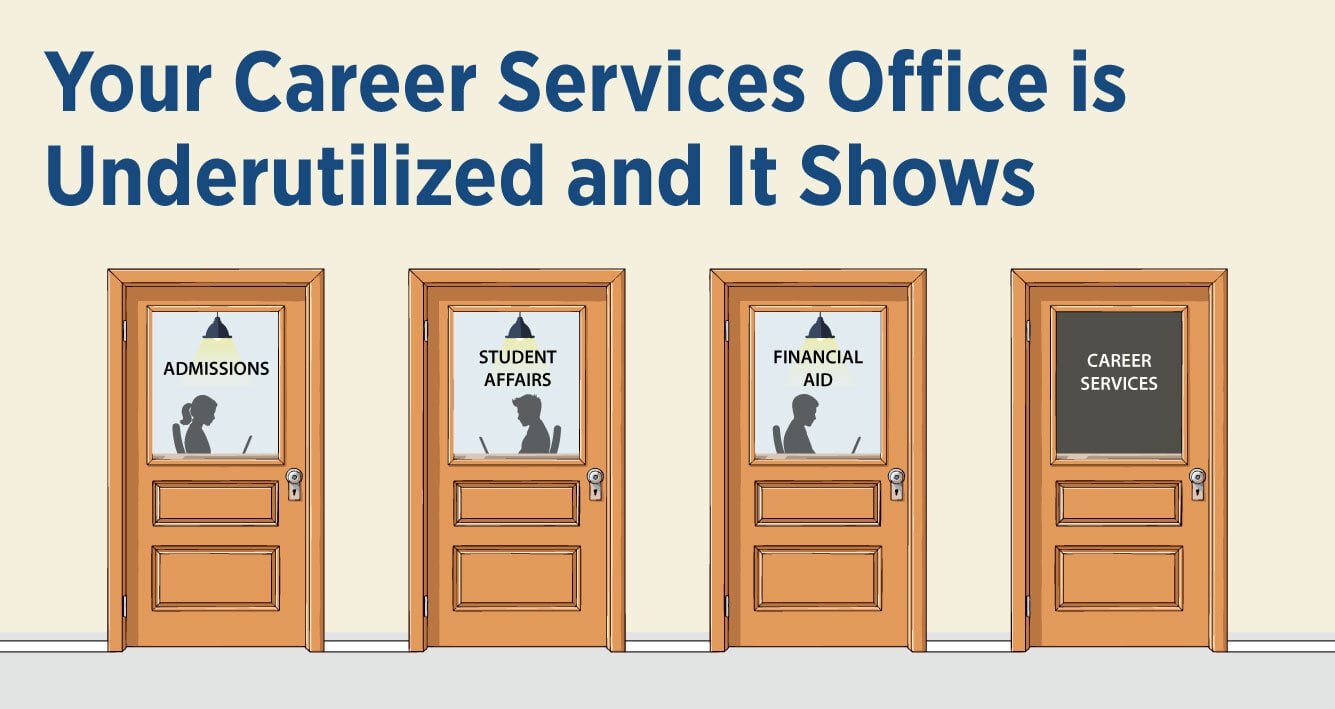
Your Career Services Office is Underutilized and It Shows

It’s well understood that future careers motivate students to pursue higher education. You could ask almost any student – domestic or international – whether career opportunities and outcomes influenced their decision to enroll, and the answer will be yes.   

Take the 2024 State of Higher Education study by Lumina Foundation and Gallup. In it, 84% of respondents cited at least one employment-related reason for pursuing (or potentially pursuing) a degree or credential. Another Gallup study found that students who stopped out were less likely to be motivated by career goals (they were more motivated by general learning) – suggesting that career motivations don’t just drive enrollment – they support retention. 


Meet Intead! 

  • Find us at AIRC in Atlanta in December, AIEA in DC in February, and ASU+GSV in San Diego in AprilBe in touch to share a cup of coffee in person.

eBook Reboot:  88 Ways to Recruit International Students 2025 update. Your tactical toolkit for the year ahead. Covering all the bases in 10 quick-read chapters. Fosters great ideation discussions with your team.


Our own research on the preferences and motivations of international students aligns with this. We suspect your experience does, too. Broader media reports emphasize that domestic families and students are increasingly focused on career outcomes as the justification for the cost of university. International students and families always have been. 

Where we are going with this: the more successful you are at getting students into the careers they want, the more successful you will be at getting students to fill the seats you want.  

And yes, we know you’re already telling prospective students that “95% of your graduates get a job or continue on to an advanced degree after graduation.” That’s no differentiator if everyone is saying it, despite its accuracy. 

This is where Career Services should chime in. Yet, many (read: most) students view Career Services through a lens of “why bother?” Hard to blame them. Help with resume and cover letter writing is too basic and can be provided by ChatGPT. Mock interviews have value, but there’s SO much more these departments could be doing to help students and your institution’s enrollment growth. 

Read on for some interesting data points and our recommendations for improving Career Services with an eye on driving enrollment…  

Read More

Why International Student Numbers Will Grow

Five years from now what will you be glad you did right now, this year? 

IIE here in the US and other prognosticators across the pond who track student mobility have predicted the number of international students in the US and around the world could double by 2030. Some projections suggest upwards of 10M or more globally. We’re not placing any bets on that figure. However… 

We’re optimistic about international student numbers and the opportunities ahead in higher education. We’re not banking on 10M+ in the next few years. That’s a bit of a stretch by our measure. But continued growth will come and the question is whether your institution is psychologically capable of weathering the storms and building for the future, or bureaucratically paralyzed and unable to capitalize on the opportunities ahead.  

Said simply: Resilient individuals and businesses adapt, leverage their strengths, and pursue opportunities to grow. 

Pro Tip: Your academic leadership will value reading this post. (Share button below)

What you do in the coming year will set the stage for the benefits you reap five years from now. Sit on your hands due to fear of the ambiguity that surrounds us, and all those who are acting now will be miles in front of you in 2030. Miles.   

Below we offer three specific areas where we think smart institutions and academic leaders will focus their attention in the years ahead to capitalize on future growth opportunities. How many of the three do you think you can help your institution address? 

Some context: Back in the day, our industry’s powerhouse forecasters were looking at the global growth of students seeking a foreign education from 2010 through 2016 and said with absolute confidence that there would be 8M+ international students globally by 2020. Maybe you were sitting with me in those conference presentations? Had trends continued on pace, that would have been true. Emphasis on “had trends continued on pace.” 

Instead, global factors combined with the US Muslim ban (Trump 1.0) were followed by a global pandemic (COVID 19). Those student numbers (8M+) have yet to pan out. But significant growth has happened - just 20% shy of the projection by 2020. (UNESCO reports 6.4M students globally studying in a country other than their own that year and we are at about 7M today.) Trend predictions are complicated by so many factors. Some might say predictions are truly unpredictable ; -)


Opportunities to Meet the Intead Team 

  • Look for us at ASU+GSV next week, and NAFSA in May. Let us know  if you want to connect at these events.

Bookmark this: Intead’s Resource Center 
Access 800+ articles, slides decks, reports with relevant content on any topic important to enrollment management and student recruiting.  Check it out.


Here's the thing: there are some human behaviors and economic factors that we feel very confident about. And that helps us understand the world and get a strong sense of what is likely coming our way in the years ahead.  

Reality: The US is now grappling with Trump 2.0, which is full of bluster and chaos-inducing pronouncements equivalent to watching an over-the-top World Wrestling Federation pre-fight drama. It’s all designed to draw attention and ramp up excitement for a spectacle. Often, there’s no substance to the bluster, though it consistently delivers pain. 

This drama coming from the US White House makes predictions all the more challenging. You need to push past all the obfuscating dry ice smoke machine billows to get at baseline reality. 

So yes, despite the chaos surrounding US policies and politics and how that will play out around the world, we have reason to believe international student numbers will rise over time similar to our confidence that the stock market will rise over time. We can’t tell you if the market will be up or down tomorrow or next year, but longitudinally, stocks have gone up since the market’s founding, and international student mobility has gone up as international travel has become more accessible. 

Consider this: In 1970, there were 310M airline passengers globally according to the World Bank. In 2024 the figure was 5.2B according to the International Air Transport Association. That’s an indicator of accessibility. Important to note, those figures include domestic and international flyers. 

Our belief in future growth of international student mobility primarily comes down to basic consumer (student) behavior trends, like increased usage of international flights (accessibility).  

Making the Accessible Visible 

Hailing from Hyderabad, Satya Nadella, current CEO and Chairman of Microsoft, earned his engineering master's degree at the University of Wisconsin-Milwaukee in 1990 and his MBA from the University of Chicago’s Booth School of Business in 1997. On the minds of nearly every Indian engineering student today: “If he could do it, so can I.” A lure as strong as it is old.  

With the rise of social media since 2010, success stories have proliferated in ways the world has never seen before. Basic human behavior: communicating success builds desire among others (word of mouth referrals drive sales).  

Among all those who have not risen to the top of Microsoft, there are millions of former international students who have carved out careers and influential positions, inspiring and encouraging future generations to follow in their footsteps. And hear us when we tell you that your prospective international students are looking for the proven path forward. Without overpromising, your institution needs to tell that story and build confidence in that future. 

A graduate student from India attending a private New England university recently told our staff how searching for (and making real connections with) alumni and current students on LinkedIn is what landed her on campus in the US. In her words, she appreciated but generally bypassed the university’s marketing and contacted other international students who had been there, done that. Their stories convinced her to enroll in the institution. Case in point: basic human behavior tied to the advent of internet communication. 

What we know: A student who graduated just a few years ago and is now a manager at a major company is immediately relatable to prospective applicants (much more tangible to them than their aspirations to run Microsoft someday). These conversations make the journey feel more attainable.

So, when international alumni share their experiences—whether through personal networks, mentorship, or social media—they reinforce the appeal of studying in the US (or any other country that contributed to their success).  

Considering how well your institution leverages its international alumni? Find customized perspective here. 

While we believe word-of-mouth marketing will play a role in future international student enrollment growth, there are other factors working in our industry’s favor – namely how institutions are poised to react to the changing market and the pace at which these changes are implemented on your campus. You may be surprised to learn our take on the opportunities ahead. Read on…

Read More

Are You Ready for an International Alumni Strategy?


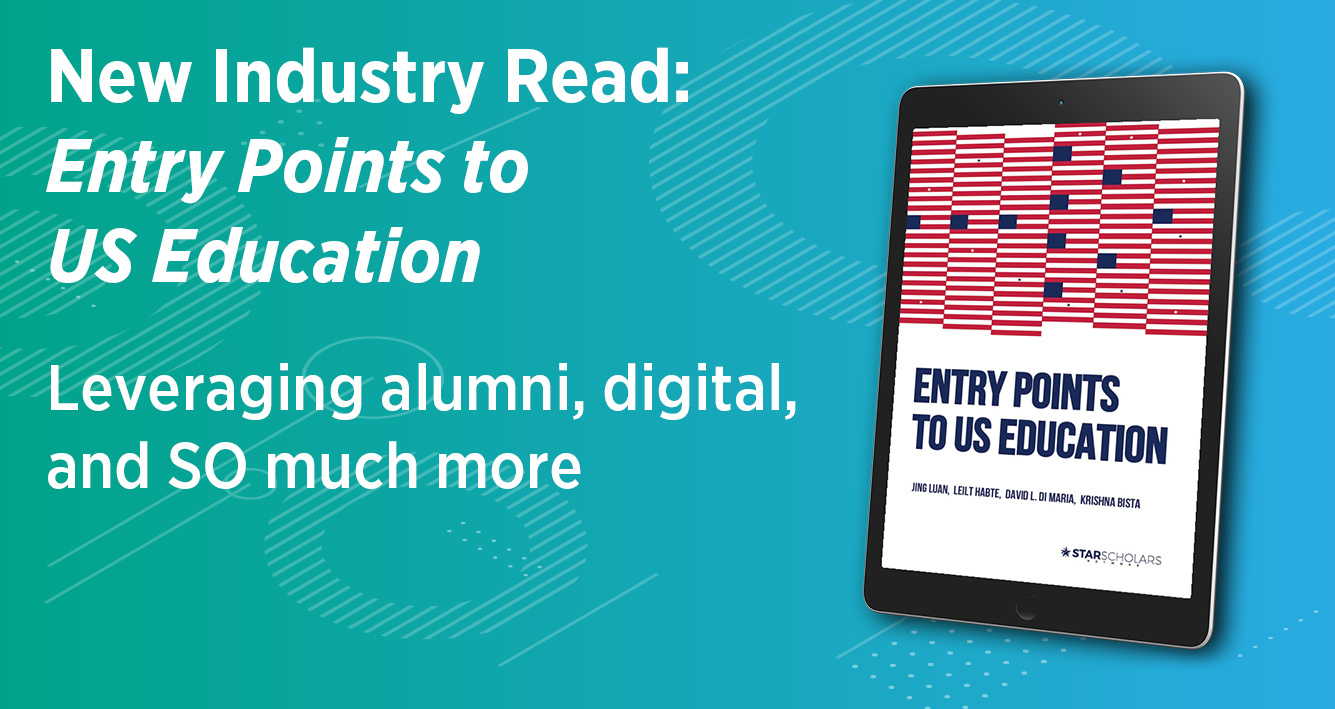
Cue the confetti. A new guide for international education practitioners just hit the bookshelves.

Produced by Star Scholars and filled with analysis and counsel from luminaries in our field, you'll want to grab a copy (link to purchase below). With thanks to editors Dr. Jing Luan, Leilt Habte, J.D., Dr. David Di Maria, and Dr. Krishna Bista, and too many amazing chapter contributors to list here, this book packs a punch.

We were honored to participate by contributing a chapter on how to Leverage International Student Alumni in your student recruitment efforts and another chapter on Using Digital Marketing for International Student Recruitment. Below, we will be talking about your international alumni and serving up a really nice interactive tool offering guidance based on where you are at with your alumni program.

We could not have provided the clear and actionable content without the leadership of our friend and colleague, Dr. Gretchen Dobson with the depth of her work in this area.

The value of your international alumni cannot be understated. Few ready-made resources can connect as quickly and honestly with prospective international students, making them feel understood and welcome. This is about helping them connect with what is real and tangible based on a degree from your institution. Yet, for many institutions, tapping into this network remains on the to-do list. It’s one of those great ideas that remains underutilized. Blame resources, blame poorly maintained databases, blame, well, you know exactly what we are talking about.  

Of course, your institution has strong institutional support for building and maintaining a robust domestic alumni network. All the while, the relative importance and financial value of international students are often overlooked. In some cases, 7% of the total student population being international represents as much as 30% of total tuition revenue. A good idea to do that math for your institution if you have not already. Yet our institutional infrastructure remains lopsided, heavy on domestic alumni, light (or non-existent) on international alumni despite what they can contribute.


Our next opportunities to meet! 

EducationUSA Forum, Washington, D.C., July 30-August 1. Ben and Virginia Commonwealth University SIO Jill Blondin will share insights on Navigating Budget Challenges in International Recruitment: Practical Strategies for Every Phase.  

Be in touch! We’ll buy the coffee. 


In Entry Points to US Education: Accessing the Next Wave of Growth, our chapter on international student alumni management is a great read for any enrollment leader looking to justify the costs associated with building a stronger connection to international alumni. It delves into the motives behind such an effort, including: 

  • Brand awareness 
  • Reputation management 
  • Recruitment 
  • Employability 
  • Global connections 
  • Public diplomacy 
  • Financial resource  

At the end of the chapter, we offer the link to an interactive questionnaire designed to assist international student recruitment teams in evaluating their ability to deploy alumni ambassadors. This simple 8-question form provides customized recommendations based on your responses.Today this tool is available to Recruiting Intelligence blog readers (even if you don’t purchase the book. But really, purchase the book!) Read on to check out the evaluation form… 

Read More

Prospective Students Seek a Career Network (Part 2)

If career outcomes truly drive prospective student decision-making (they do), then a critical question arises for most institutions: Are you effectively utilizing your alumni to recruit new and retain current students? (We know what your answer will be).

Last week’s blog post laid out the benefits of building a strong global network of alumni and three cost-effective ways to get it off the ground:

  • Modernize data management
  • Start small and build out
  • Key into senior class leadership

Now, let’s talk about getting that network to engage, recruit, and help retain students.


But first, come learn with us. Your key international student markets are not what they used to be. Among our colleagues in this field, we see a tremendous thirst for gathering and evaluating recruitment options. Now is the time to pause and think this through. Join us at the Intead/San Diego State University One-Day Workshop, it’s a hands-on opportunity to learn from awe-inspiring international student recruitment faculty. You won’t want to miss it.

  • A full-day hands on workshop on strategy & execution. Come with questions, leave with a plan.
  • Two luminary keynotes
    • Luncheon on Social Justice with Dr. Jewell Winn and Adrienne Fusek
    • Dinner on Chinese Student Influencers with Dr. Yingyi Ma and Brad Farnsworth
  • At $200 for the day (inclusive of all meals), this full-day learning opportunity is a steal. (Pricing goes up to $350 on October 24, 2022).

Ok, back to the power of your alumni!

The Michigan State University Alumni Association has had a strong program with clear goals for its Alumni Student Recruitment program:

  • Increase the number of highly competitive and qualified students considering Michigan State at the undergraduate level and increase the percentage of admitted students who enroll
  • Provide a local information source for inquiring students, applicants, admitted and enrolled students, and their families
  • Provide regional assistance to the Michigan State admissions staff

Back in 2018, we were fortunate enough to co-present with Daniel Spadafore when he built and led this program at Michigan State in his role with the International Advancement Office. Also part of the presentation, Dr. Gretchen Dobson who has provided strong, consistent advocacy for the importance of alumni engagement that universities typically overlook.

Michigan State's goals can be adapted to other institutions based on their leadership, resources, and of course, the alumni network they have tracked to date. The process of implementing such a program is not as complicated as you may think.

Read on to learn more about how to develop an action plan for your alumni network that can yield positive returns on your investment.

Read More

Prospective Students Seek a Career Network (Part 1)

Going to university remains a search for direction and a process of maturation. And yet, there is a culture shift that has been growing over the past few decades. That culture shift is around the value of degrees vs. short-term certificates. It is around the value of a traditional 4-year university education vs. acquiring the skills to quickly land a valuable job. Cybersecurity and data analytics anyone?

Before we dive in, how confident are you with your selection of international student recruitment markets right now? You, our blog subscribers, have first shot at this limited seating workshop.


Among our colleagues in this field, we see a tremendous thirst for gathering and evaluating our options, with time to really talk it through. The Intead/San Diego State University One-Day Workshop will be a hands-on opportunity to learn from an awe-inspiring international student recruitment faculty.

  • Come with questions, leave with a plan.
  • Two luminary keynotes
    • Luncheon on Social Justice with Dr. Jewell Winn and Adrienne Fusek
    • Dinner on Chinese Student Influencers with Dr. Yingyi Ma and Brad Farnsworth
    • A full day of international student recruitment strategy and execution discussion
  • At $200 for the day (inclusive of all meals), this learning opportunity is a steal. (Pricing goes up to $350 on October 24, 2022).

For most undergraduates, studying at a university is now the first opportunity to interact with and cultivate the network connections that are so vital to getting a job and building a successful career in the 21st-century global economy.

In their recently published book, The Real World of College: What Higher Education is and What It Can Be, authors Wendy Fischman and Howard Gardner note the shift in attitude and expectations among students from ‘we’ to ‘I’.

“The prevalence of ‘I’ over ‘we’ gives insight into what we believe is a troubling problem for the sector of higher education—students’ preoccupation with ‘self,’” Fischman notes.

Now we can debate if this shift is troublesome. Maybe. Maybe not. But we can’t deny the shift in attitudes toward it and how this new mindset should influence your recruitment strategies.

Read on to learn how a shift in strategy can help you secure stronger enrollment among the so-called ‘I’ generation…

Read More

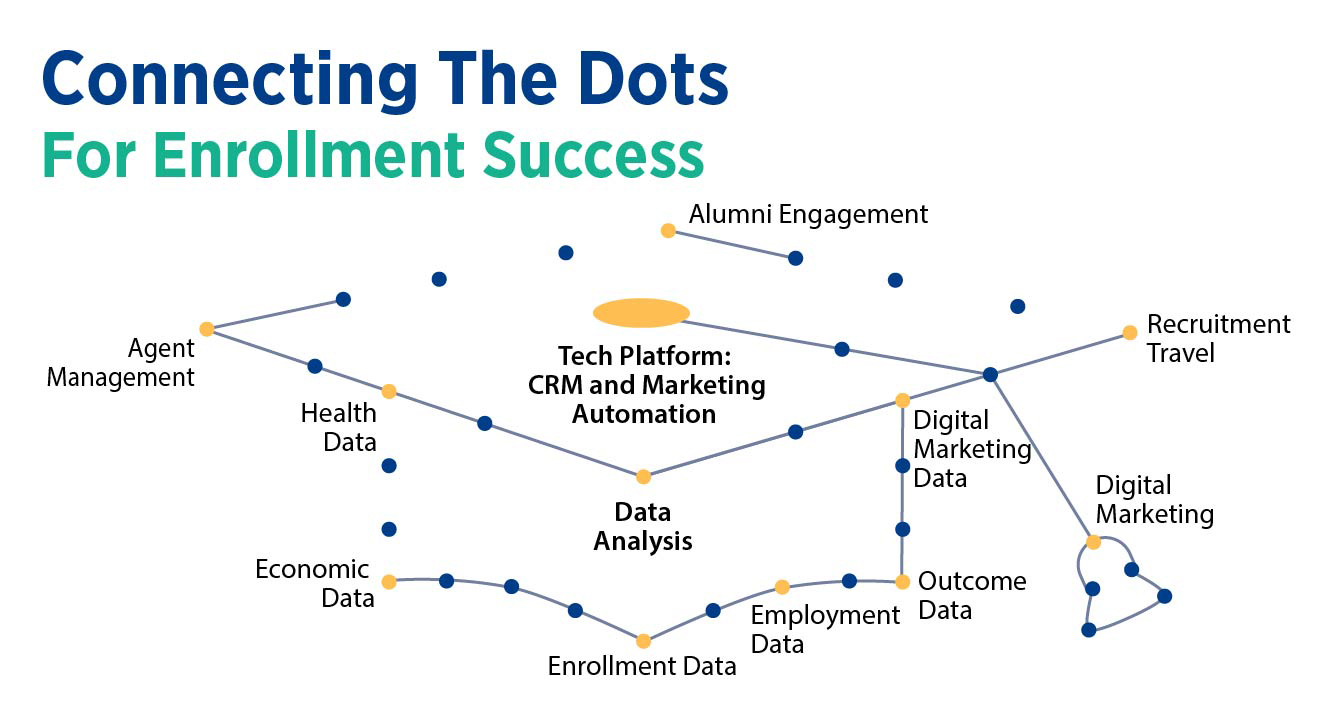
Connecting the Dots for Enrollment Success

Let’s pause for just a minute or two and take a few deep breaths. The pace of all that is going on, right?

With this post, we are going to connect a few dots. Reconfirm the why’s and how’s of what we are doing in the enrollment management arena.

Right now, we see civil unrest around us that is the expression of communities not understanding each other. Lack of cultural understanding, lack of connection, lack of empathy, all leading to severe consequences. This is an age-old struggle and we, in the education sector, pour our hearts into changing the underlying factors that contribute to the mess we find ourselves in.

Getting our work right really does matter. Education IS such a huge part of moving our communities in the right direction.

For most of us, maybe all of us, recent events make it crystal clear why we do this: every mind opened, every cultural connection built, is a win.

To achieve loftier goals, the academic institution must remain economically viable. And we need the students to enroll.

We know, looking ahead, more dramatic change is coming as we navigate various immigration decrees and virus news. We’ve all been working really hard to maintain the pace and make smart decisions. So, let’s just pause and reflect for a moment and connect some dots.

In short, the process is: view the data, assess the tools, make a plan, execute. Sounds simple, right ; -)

Our Intead Plus library of recruitment content and worksheets has supported so many. It’s out there if you need it. Below we review our process with some helpful lists to get you thinking, considering.

This is such an important time to plan and act.

Often, as the team here begins our projects with a new client, institutional leaders apologize for the many silos across their campuses that hold information and work far too independently. We are often tasked with gathering the necessary information and bringing as much unity to the siloed teams as possible.

Deep breath.

And again.

Getting our important work done the best way: There are so many approaches and so many adjustments that are necessary as circumstances and the people involved shift. All of our talents for listening, embracing and connecting ideas, all of this is needed from all of us.

There are underlying processes to how we do enrollment marketing that are essential and consistently required regardless of the circumstances. These processes adapt as situations change. 

Knowing where your processes stand, and which dots might need more attention has real value. Read on and consider whether your enrollment management system’s dots are functioning holistically.

Read More

Leading Global CEOs: From India with US Degrees

The world’s largest democracy with dominant film, agriculture, and livestock industries has the third greatest economy in terms of purchasing parity around the globe. As a fast-growing global economy, their educated, English-speaking workforce has a strong desire to work in tech fields. They boast the world’s second-largest population of 1.3+ billion that will surpass China’s population in 2028 by current UN projections. And really, 2028 is sorta near-term at this point.

We are talking about India – the second largest source of international students in the US.

There are plenty of reasons to be concerned about international student mobility in the near term. And every reason to be confident about the future of the education industry.

Human aspiration does not disappear due to strife, especially among young people.

Academia has struggled through and adapted to changing consumer needs and demands for centuries.  Our colleagues at IIE have the historical data demonstrating the ups and downs of international education for the past 80 years or so. Now is the time to take the innovations the industry has been wrestling to implement (truly engaging online learning, truly engaged alumni networks, digital marketing and audience segmentation, artificial intelligence powered student support, etc.) and make them a reality.

Today, let's take India as an example of why international student enrollment is something important for your institution.

So many Indian students aspire to a US education. And there are tangible examples of success motivating those dreams. Let's talk about why your Indian students will be coming back to your institution, eventually...with the right enrollment marketing initiatives.

Take a look at the global tech companies that innovate with real power – IBM, Microsoft, Google, Adobe. There are some non-tech global dynamos as well. They are turning to Indian talent to lead them. Consider that many of the talented Indian CEOs playing leadership power roles on the global stage were trained in the US.

Read on to find out what academic programs were the steppingstones for these once-upon-a-time students to head some of the largest, most respected companies in the world. Is your institution on the list? Can your institution appeal to the next set of global leaders?

Here is a key question from a student recruitment point of view: Are your amazing alumni part of your international student recruitment efforts? There are ways to make your global alumni network become the inspiration for students’ hearts and minds…to raise awareness, kindle passion, and draw them to your academic programs to fulfill their dreams.

And yet, so few institutions develop and leverage their international alumni network to help future students make a really smart decision. You can change that.

Read on. 

Read More

#EdTech for Career Prep in the Digital Age, Part 2

With your university years over, you are facing the end of your traditional education and the start of your career. You are done sitting through classes and handing in academic assignments. No more finals!

Your students have worked so hard to reach this point. And they’ve spent a fair amount of time researching their career options. Did they do all they could to maximize relevant work experience while in school? Internships? Career networking? Resume writing, LinkedIn profiling, interview practicing, alumni outreaching, job board searching, cover letter writing. This career entry thing is hard work!

Has your institution done all it could to help them pursue the career and land the job?

This is what education is all about. Transitioning the learner to then practice their craft, use what they’ve learned.

This is the second half of a two-part series on how to help students cross the bridge to employment. In Part 1, we spoke about EdTech that can help students prep for careers through mentorship and coaching, as well as platforms for virtual work experience, where students can do some of the daily tasks of their chosen career in an online micro internship. What other resources are out there to help strengthen their profile and seal the deal?

(Read on.)

Read More

#EdTech for Career Prep in the Digital Age, Part 1

Going to College Question: Is it the journey or the destination?

Answer: It’s both, but the destination must be worth it.

After years of classes and seminars, learning and discourse, pizza and so many late nights (SO many late nights), the goal of attending university is for a student to find a job.

A university able to give confidence about the future to their prospective students will be in a stronger position than their peer institutions. Career placement stats are found on most university websites. But how about something more concrete? How can you differentiate?

In a two-part series, we are going to talk about ways that your institution can help students arrive at that destination. There are some very cool career prep resources available.

This is about career mentoring and coaching and how your students find the professionals with employer insights and connections—either from within your faculty, administration, alumni pool or through emerging tech tools (#EdTech social platforms).

The destination of the university journey is of course a job (better yet, a career). Talking to domestic and international students regularly, their focus is, of course, on their future.

“What will I do with this degree? Will it have value to me?”

Connecting to your alumni is an essential part of all of this. And yet, universities are investing so little in their global alumni as a new student recruitment resource. If you’ve not already done so, download our Global Alumni Management: State of the Field research here.

And read on for our review of Career Prep tools and resources…

Read More

Key Factors in a Changing Environment – Insights from NAFSA

This week, we are proud to share with you an article from our friends over at NAFSA (with their blessing, of course).

We were struck by the insightful way that this short section in International Educator's September/October 2018 edition captured today's market challenges in a realistic, unflinching light. Rather than emphasizing one factor impacting higher education (politics being a popular choice), this section takes a wider look at the many diverse conditions affecting overall enrollment.

This brief summary is evidence that many of our day-to-day concerns are not limited to international recruitment, and now is not the time to back away from building your brand internationally. As competition grows, both domestically and internationally, you want to be in a strong position to continue attracting students and maintaining your enrollment. We've all faced periods of enrollment challenge before. Shrinking away was not the answer then and it is not the answer now.

In that vein, we invite you to join our session at NACAC on Saturday 9/29 at 10:30 AM for our Presentation: International Alumni Relations: The Neglected Tool in Your Student Recruitment Arsenal?  Earlier this year, in partnership with Academic Assembly we surveyed over 1,000 US institutions on their international alumni engagement practices and needs. At this session, we will present and interpret the findings of this research and offer practical ways you can leverage your international alumni network to strengthen your recruitment and development efforts. 

We have another great collection of Intead research and insights coming out next week. You don't want to miss our Webinar: Agent Commission Structures and how to maximize your recruiting agent partnerships on Thursday, 10/4 at 10 AM EST. Register here. All registrants will receive a copy of the full report following the webinar. 

Intead works with our institution clients to help them determine the best regions and channels for their strategic enrollment plans. Our proprietary research and the custom research we do for our clients makes all the difference.

As you consider your recruitment channels, we recommend you refer to Nafsa's excellent summary of the factors we all must weigh as we adjust our enrollment plans to the current global geo-political environment...

Read More