Recruiting Intelligence

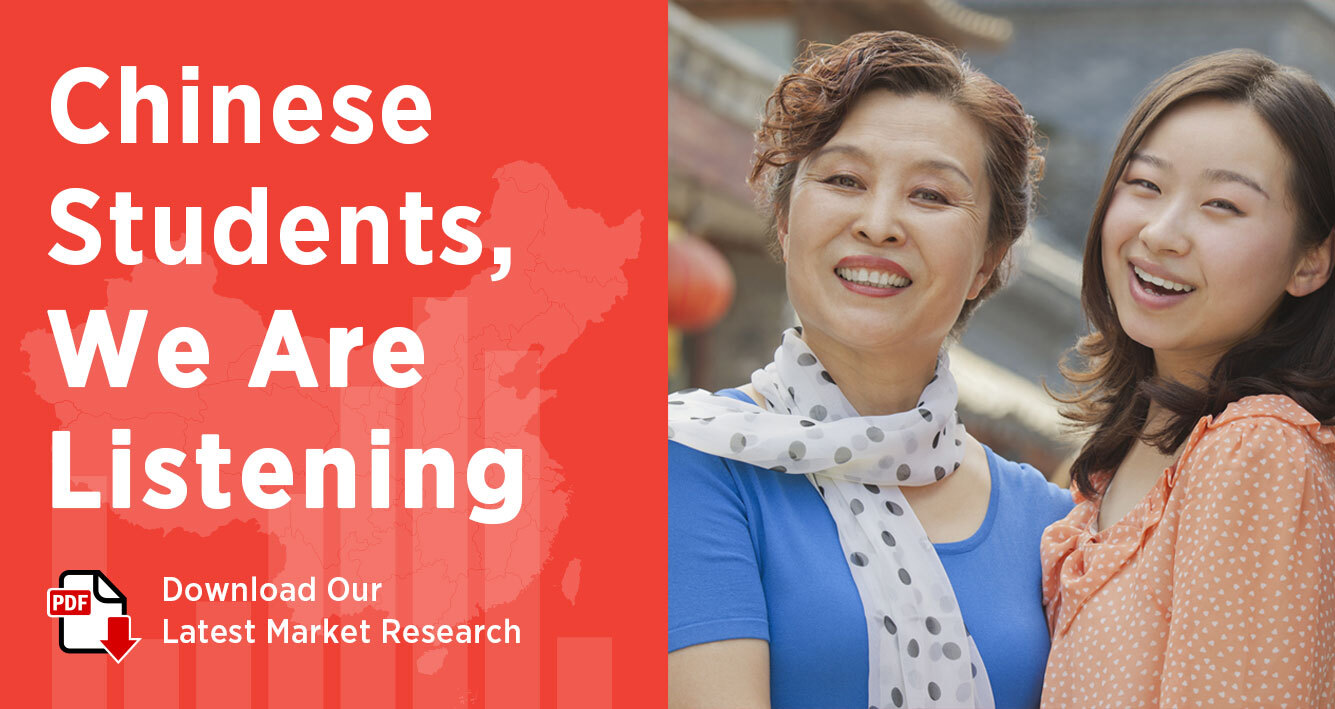
Chinese Students, We Are Listening

Your Asian student communities are hurting right now.

Nearly 3,800 hate incidents against AAPI individuals were reported from March 19th, 2020 through February 28th, 2021 according to the Stop AAPI Hate reporting center. Nearly a third of Asian Americans report having experienced racial slurs or racist jokes since the beginning of the pandemic, this from a recent Pew Research Center survey. Then the killings in Atlanta last week.

As global leaders responsible for the safety, growth, and development of diverse student populations, what institutions say and do at this moment matters. And hashtags and statements of solidarity are not enough (they never are).

We, as a higher education community, do what we do because we believe in the power of cross-cultural communication and diverse student populations to move the world forward.

As the Intead team, that often means making space for those student populations (and their parents) to speak and be heard. We know how crucial understanding and listening to those thoughts, fears, and needs are to fostering a student-first ethos on your campus. It is this work that allows you to more effectively support all of your student populations, especially those most vulnerable to systems of racism and xenophobia, as well as the disturbing hate and violence that occurs as a result.

In early 2021, with this terrifying climate of rising anti-Asian sentiment in the US and views of the US among global allies reaching its lowest point in nearly two decades of Pew Research polling, we set out to understand how Chinese parents specifically are feeling now about sending their students to American institutions.

In partnership with WholeRen Education, an AIRC-certified agency and a trusted advisor for tens of thousands of Chinese students and families since 2010, we surveyed over 20,000 Chinese parents, the vast majority of whom currently have undergraduate and graduate students enrolled in US institutions, as well as parents of current high school students considering higher education. With a better than 5% response rate, we had more than 1,000 responses to analyze. We then followed up with a focus group to dive a bit deeper into our questions. We conducted all of this work in Chinese.

Some of the findings will likely surprise you. As academic leaders we see the news, we talk to our students, and we hold an entirely justifiable anxiety for our current Chinese students as well as the recruitment path to bring new Chinese students to our campuses.

The information we’ve gathered is incredibly important to your work. But more importantly, it points the way forward for your institution in how to help parents and students feel confident and safe in their decision to study in the US.

Read on to download your free copy of our new market research report, Is There a New Chinese Mindset on US Schools?

Read More
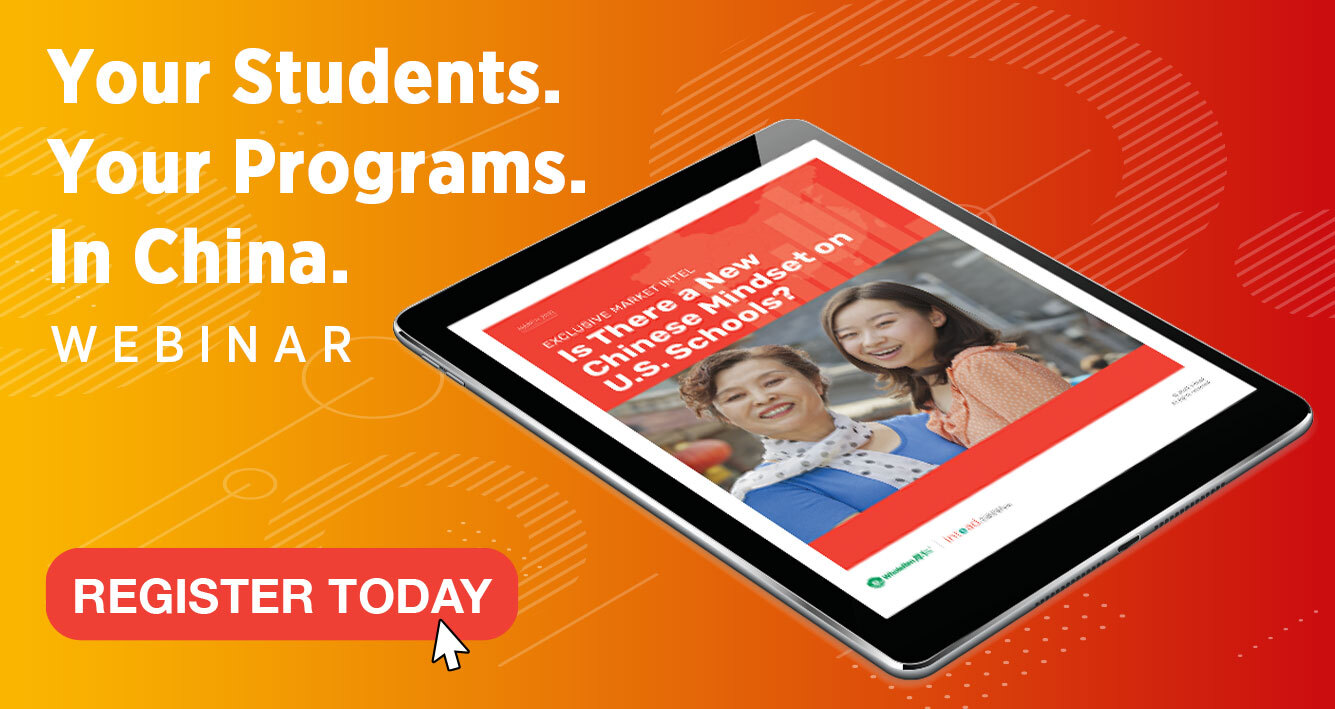

Your Students. Your Programs. In China — Register Today

The course of Chinese student recruitment never did run smooth.  

And in the last year, your institution’s road to recruiting, enrolling, and retaining students from one of the most complex international markets was bumpier than ever. Can we get our visa offices back, please?

Miraculously, despite the setbacks of the pandemic year, Chinese demand for a US education remains. Our upcoming market research with WholeRen Education (surveying 20,000+ Chinese parents) will shed some light on how the US brand identity is enduring and where your institution needs to focus to succeed in today’s Chinese enrollment market. 

Perhaps allow yourself a brief sigh of relief—but it’s not time to rest. (It rarely is).

There’s still work to be done to keep your institution strong in this new, more flexible, post-pandemic reality. And later this month, you’ll hear from those leading the charge (and learn from their successes) at our webinar event: Your Students. Your Programs. In China: Creating US-Style Classrooms for Your Chinese Students. 

Register Now

Your event pre-registration will also pre-register you for a copy of our upcoming Chinese Market research. 

At the event (date coming soon), we'll be interviewing several amazing resources for you about strategy, market insights, and powerful new program options to help your institution shore up both near-term and long-term enrollment in the Chinese market. We'll be talking about how 10 different universities managed their fall 2020 Chinese student enrollment and what they are doing to continue their success in 2021 and beyond.

 Speakers will include:

  • Brad Farnsworth, former Vice President for Global Engagement at the American Council on Education (and a member of the Intead Research Advisory Board)
  • Seamus Harreys, CIEE Vice President for Global Engagement 

More than 2,100 Chinese students studied in US-style classrooms in China during fall 2020 and spring 2021. The CIEE team helped each of them make it happen. Now, many institutions are working toward a longer term vision building a bridge between China and their US campuses. You can learn from their experience.

Read on for a preview of the valuable perspectives to be shared in the webinar.

Read More

Chinese Students Want to Hear from You

You and your team have been navigating the China recruitment challenges for years with some notable successes. Taking those long-haul flights and testing out the student fair operators. Building a reliable agent network despite the risks (thanks, AIRC). Learning WeChat and leveraging an entirely new digital marketing landscape. Developing meaningful global partnerships.

And then the visas and flights stopped.

As if China were not already the most complex marketing challenge for international student recruitment, along came COVID-19.

At this writing, the first F-1 visa appointments at US consulates in China are tentatively available as of August 12, notes WholeRen Education Chief Learning Officer Andrew Chen. Right now, it is unclear why any US institution might believe their Chinese students currently in China will be coming to their US campus this fall. Logistically, it seems entirely unlikely if not impossible.

Fortunately, and somewhat surprisingly, despite all the setbacks, Chinese demand for a US education is strong.

How do we know? Two proof points:

  • Market research we performed with WholeRen Education surveying 20,000+ Chinese parents just last month.
  • 2,000+ Chinese students voting with their feet and attending classes run by Syracuse, Rutgers, Clark, Babson, Penn State, Tulane, and others in US-style classrooms in China run by CIEE.

At the link below, you can pre-register for the release of our latest research for student enrollment professionals interested in succeeding in China based on current conditions and what will follow.

Pre-register Now

Your pre-registration for the latest research will also grant you access to our upcoming webinar interviewing three experts on the Chinese student experience. You’ll hear from one university on how they managed fall 2020 Chinese student enrollment and what the institution is doing to continue their success.

Read on for insights and practical tips to reach the Chinese market in the current climate and beyond.

Read More

Fall 2021 International Student Retention Strategies – Register Now

Today’s international enrollment challenges demand innovative solutions.

However, those innovative solutions are often easier said than done and more resource-intensive than you expect. But not always.

Enter: CIEE’s custom global programs.

We’re talking your curriculum and educational experience delivered in major international student hubs such as Shanghai and Seoul to students that can’t physically be with you on campus. And with CIEE’s robust infrastructure to support both academic and student life already in place in cities across the world, all that’s needed is you.

Intrigued? Join CIEE’s “Fall 2021 International Student Retention Strategies” webinar discussion tomorrow, Thursday, Feb. 25th at 12pm Eastern to discover how institutions across the US are already using CIEE’s global programs to attract and retain international students.

Specifically, you’ll hear from Penn State and how they created a custom, cohort-based international student program with CIEE for fall 2020 and spring 2021 in Shanghai. The result: innovative and proactive efforts that retained tuition revenue and the student relationships that will result in continued retention.

Register Now

(Note: the webinar is open to anyone working for an academic institution)

Clear Benefits and Opportunities

While student retention was a driving factor for the institutions that set up these programs in 2020, they also found surprising growth in:

  • Parent engagement - word of mouth promotion from parents who were thankful the institution was responding to the pandemic with strong and thoughtful student-first efforts.
  • Increased brand awareness - as students and parents excitedly talked up their ability to study in an American-style classroom despite travel restrictions.
  • New enrollments - from new prospective students who heard about the programs and wanted to take part in this experience rather than study from home online in China.

Fast acting and well equipped to deliver student experiences, CIEE leadership worked with institutions such as Tulane, Babson, Clark, and Syracuse during 2020 and 2021, serving more than 2,100 students in custom programs in China and South Korea.

And there’s still time for your institution to join this trailblazing pack for fall 2021 if you sign up by May 1st.

When student mobility isn’t a given and competition for international students is fiercer than ever before, you must take your student-first philosophies to the next level if you want to stand out and continue to deliver on your institution’s educational mission (and preserve your revenue streams).

This is how you do that.

Read on to learn more about this flexible, innovative solution to shore up your international enrollment this fall and beyond. This is far more than just a quick band-aid solution.

Read More

Fishing in a Gale

Even in the best of conditions, commercial fishing is a really tough job. You can’t always be sure of a catch in the first place. The work requires specialized equipment, a strong constitution, a team that works well together, patience, and an ability to read the signs. And even with all that in place, there is still no guarantee of success. 

And then, there is fishing in a gale.

Your boat is being knocked about. Your footing is unsure. There are a host of really challenging external conditions to navigate while your team continues to work with the equipment and do the important job of catching the fish.

External conditions cannot set you back!

You see where I’m going with this, right?

Right now, your enrollment managers and admissions reps are all fishing in a gale. We all are. Our institutions are counting on us to produce the catch that will keep everything afloat. Current conditions cannot set us back. And yet…there is no guarantee of a catch.

Some days, the fish simply are not biting. They only want to nibble (as Google search and click trends may indicate).

Enough with the metaphor, here are our top tips to enroll your incoming 2020 cohort and work toward your enrollment goals for 2021.

Read on for tips to produce the catch even on a bad day. (ok, so we are still using the metaphor).

Read More

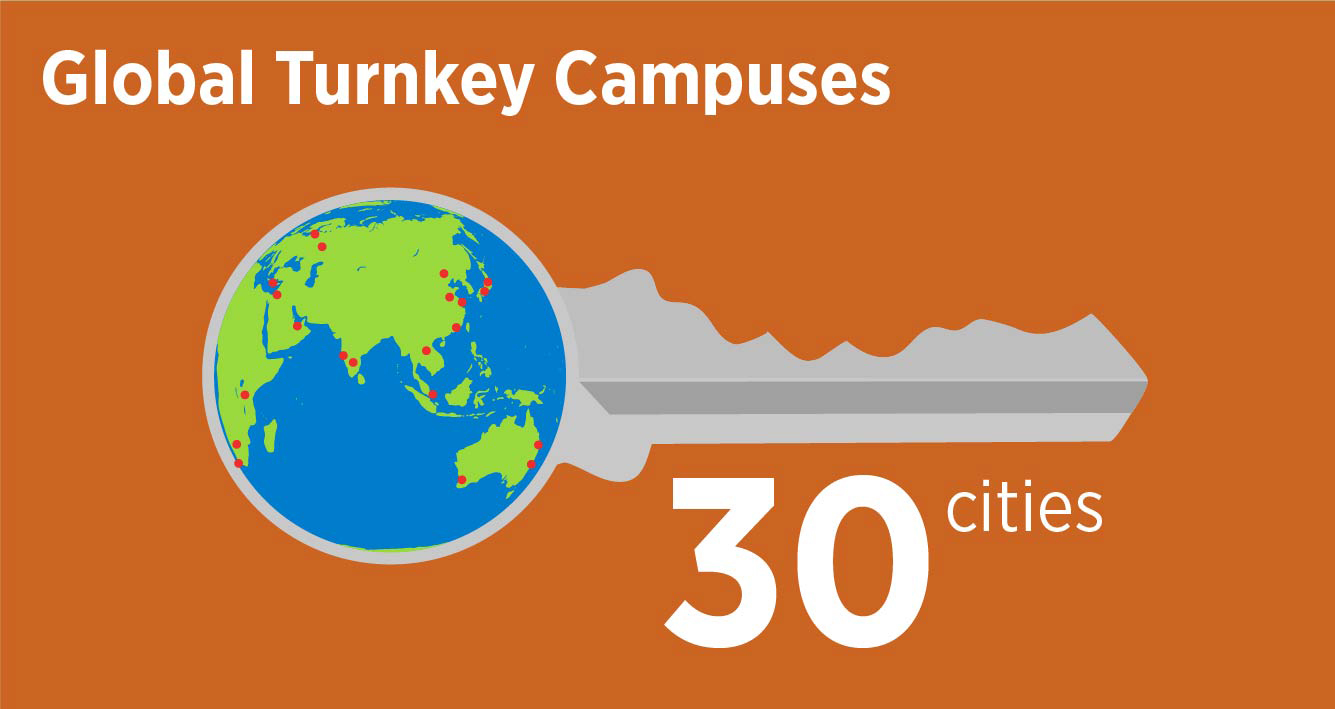
30 Global Turnkey Campuses

In our conversations with students, we hear a clamoring for certainty.

We’re betting you hear it too. Stick with us here, we’ve got two solid options to present to you. Doing this right will get your current and prospective students singing your praises all over the internet.

The set up: we can see already that the larger mechanisms for fall enrollment – from visa processing to so many other factors – are delayed at best. Intead is talking to a number of institutions that understand our new realities and are taking their student first philosophies to a new level.

In hearing from university presidents about all of the very real administrative machinations that make our new abnormal SO incredibly challenging for institutions, some are saying, “That’s not your problem, its ours.

That right there is innovation speaking. That is institutional leaders understanding why they have their jobs in the first place.

The opposite is also happening. Telling your students (domestic or international) to “wait and see” is not putting your students first and it is not a competitive advantage.

Institutions explaining why they cannot meet students’ (and families’) demands for certainty because of cumbersome internal bureaucracies and systems, well, those institutions will reap what they sow. In this crisis, the nimble (or rich) survive.

Giving students concrete options to move forward right now is where you want to be. Acting now to offer a clear plan for students to maintain their track toward graduation and do more than remote learning programs will cement more of your student relationships for the next four years.

Read on for two specific paths that will serve your international and domestic students in ways that will preserve their graduation timetable and your tuition revenue stream.

Read More

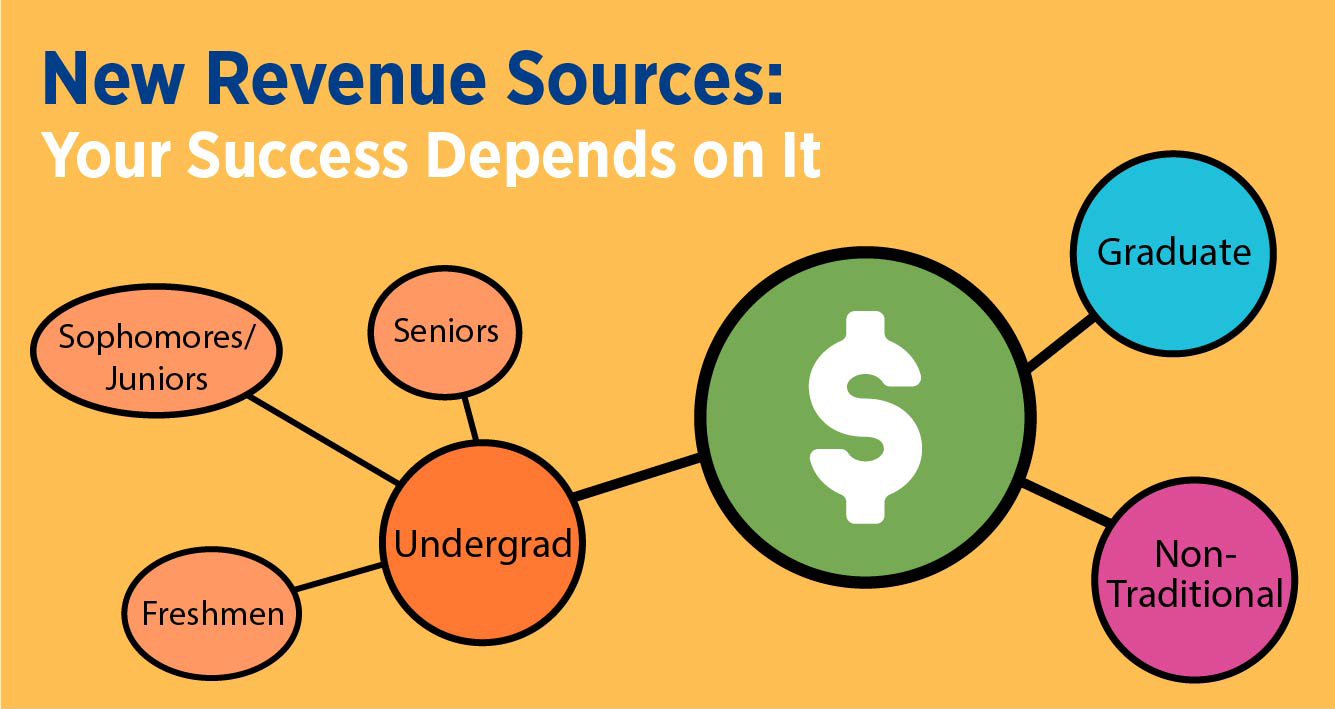
New Revenue Sources: Your Success Depends on It

How does a university facing reduced enrollment find new sources of revenue? Let's get specific. 

There are a number of answers to this question. And they hinge a bit on how much time your institution has. Is this need for diversified sources urgent, as in, “Let’s get a new program out there this summer to increase fall enrollment”? Or do you have funds (endowment or reserves) to draw upon for the next year to weather the storm, allowing new revenue sources to be developed more slowly?

Either way, the response will require speed -- not a strong suit for academic institutions in general. And it requires a level of nimble creativity and well-coordinated collaboration. These are hard combinations to pull together. But mostly, it is the compressed length of time to bring a new idea to market that will likely be your biggest challenge.

With this post we are offering a range of ideas for new academic programs that you can offer to students across the country and around the world. For the most part, these are all programs that you can create from what you have on hand already. There’s a bit of repackaging and rebranding required. And an innovative delivery system. But it can all be done in the time you have available.

What’s the catch? Why haven’t you done this before? Well…

To succeed at this, you must have support from the those at the top and the ability to innovate. Easier said than done. But now your success depends on just that — getting it done. 

Want to find a way to fill the looming holes in your revenue streams? Our recommendations and tips follow.

This is not for the feint of heart. Buckle up and read on.

Read More

Breaking the Ice: What’s New with EdTech Accelerators?

Our calendar is full of conferences and events where we’re presenting on the latest education, recruitment, and EdTech trends. And if you’re familiar with these conference circuits, that means you’re also familiar with the mixing and mingling time. From coffee breaks to cocktail hours, and maybe even the line for the bathroom (hey, you never know where you’ll cross paths with a potential new contact), the networking opportunities are everywhere.

If you’d like to schedule some time to chat with us at your next conference stop, let us know HERE, and don’t hesitate to say hello if you spot one of us in line for the cheese and crackers.

And because you really shouldn't always lead your conversation starter with, “How about this weather we’re having?”, it’s important to have a few relevant industry soundbites in your back pocket to break the ice.

So, what’s a go-to hot topic right now that shows you are both worldly and in the know?

This just in from Singapore: there’s a new model for EdTech accelerators.

Read on to find out what’s happening in the EdTech acceleration space, how it is changing, and what might be coming soon to a cocktail hour conversation near you.

Read More

Getting Smart about Edtech: Learning Management and Social Platforms


OK, let's stay focused people!

So there are a few bad eggs out there doing admissions really, really wrong. You are not doing it wrong. We are not doing it wrong. We've got work to do, so let's ignore the headlines and get back to doing our jobs.

Just a few weeks back, we wrote about the growth and growing competition in the world of “edtech:” a broad term for the array of technologies designed to enhance learning, streamline the administration of educational programs, and improve student outcomes (find the post HERE). 

Current thinking divides the area of edtech into 8 segments and we will be discussing each of them in more depth this year. Our next Can't Miss Event is a webinar on Artificial Intelligence and its relationship to Machine Learning and Predictive Modeling. What does all this mean for international and domestic student recruitment and retention? 

Join Ben and Ashish Fernando, CEO of iSchoolConnect for an exclusive Intead Plus webinar on March 28 at 1 PM EDT: Artificial Intelligence for Higher Ed Explained.

We’ll be sharing valuable data about online behavior and technology trends, as well as case studies that will help you understand the role AI can play in optimizing your own student recruitment and retention plans. 

Register for the Webinar

Let's put it this way: It's a heck of a lot more than filtered lists and chat bots. And we are afraid that many others in the field are not thinking broadly enough about how this all works and what it truly involved. And of course, the consideration of what is affordable for the value.

Join us live—or if you can’t make it, heads up that Intead Plus subscribers will have exclusive access to the webinar recording (trust us: this is one you’ll want to refer back to and share with colleagues).

In our blog today, we are not about artificial intelligence. Instead we are focusing on edtech’s potential for better connecting students to resources and each other. Ensuring that students can easily connect with enriching materials and their fellow learners is a pretty basic goal of every educational institution...and yet, one that can be surprisingly difficult to do efficiently and well. And while technology can’t solve every problem...it sure can help a lot.

Read on for our review of 2 primary buckets of helpful edtech tools: learning management and social learning. What do these terms mean? How can they be helpful? And if your institution is already using these kinds of edtech tools, how can you know if they’re working?

Good questions—let’s get going.

Read More

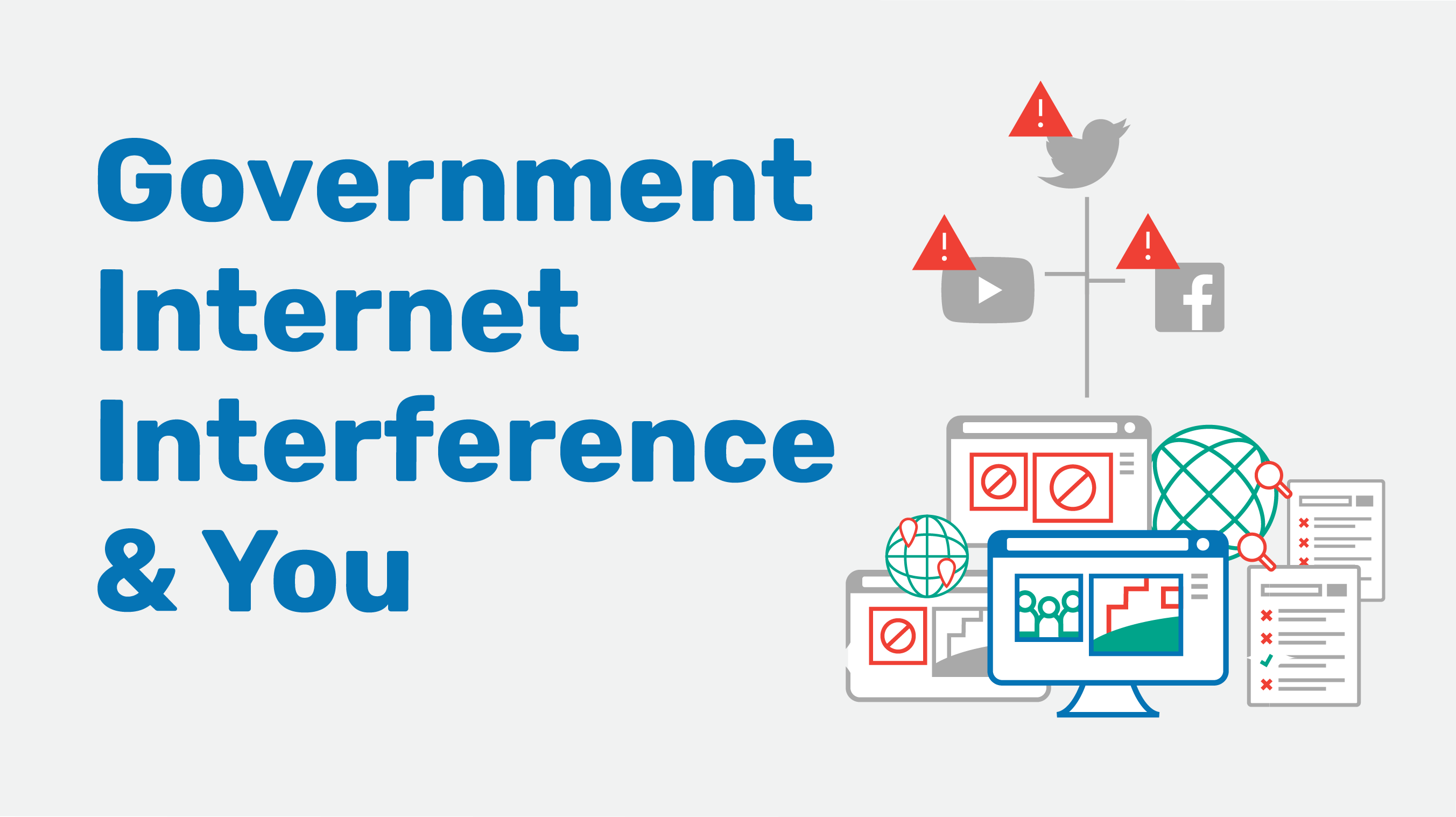
Tangles in the World Wide Web: Internet Interference & You

Sometimes, the internet can feel like the wild west. Yet readers of this blog and international recruitment pros know: things are not as free-wheeling as they may appear. Around the world, government restrictions on internet access abound. 

You may already be familiar with specific platforms that are not accessible abroad – Google SEO efforts won’t help you reach students in China, prospective Indian students probably aren’t seeing your Tweets, and Iranian students can’t freely access Facebook, for example.

But are you keeping your eye on government internet interference in your target markets more generally? And do you have a plan for how to respond if channels that were once your online go-to’s cease to be available to the students who you most want to reach?

Read on to see how you can be aware and protect yourself against potential changes...

Read More