Recruiting Intelligence

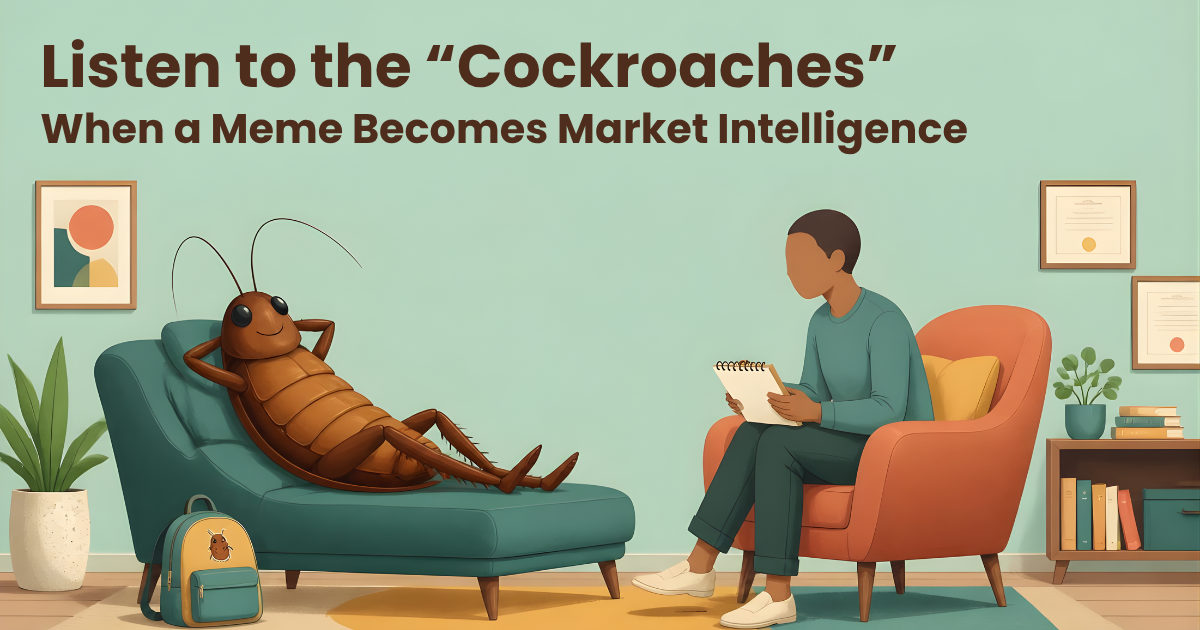
Listen to the “Cockroaches” - When a Meme Becomes Market Intelligence

Sometimes the most important market signals come as memes. 

One tweet. 24 hours. Millions of followers. That’s all it took for India’s satirical Cockroach Janta Party (CJP) to become a lightning rod for frustration among young people navigating one of the world’s most competitive education systems. 

If you’re recruiting students from India, this isn’t a political story. It’s a student sentiment story. And an effective use of social media story. And hey, Go Boston University!!! 


Can benchmarking help universities navigate today’s internationalization headwinds?

Yes - but don't take our word for it. Read The PIE News coverage of our new AIEA benchmarking study. 22 institutions have joined, 40 in progress, 100 more evaluating the opportunity. Are you?

Not yet a subscriber?
Get Recruiting Intelligence delivered to your inbox. Smart move.


In mid-May, Abhijeet Dipke, who recently completed his master’s in public relations from Boston University’s College of Communication, saw that Chief Justice of India Surya Kant had compared unemployed young people in India to “cockroaches” and “parasites.” Dipke reacted by posting a single line on X: What if all cockroaches came together? 

While Kant later clarified his comment was aimed at people using fake credentials, not young people in general, the explanation was too little too late. A movement had taken shape. 

Memes and comments streamed in, with some suggesting young people start their own party. Dipke took that as his charge. With no budget and AI as his lone partner, he built a manifesto, logo, and website for the CJP (Cockroach Janta Party) within 24 hours. 

If you haven’t been following the news (or CJP’s Instagram account, now topping 26 million followers), the meteoric momentum of this online movement traveled swiftly offline, igniting street protests after the National Eligibility cum Entrance Test (Undergraduate), or NEET-UG, was canceled due to a leak of test answers. The repercussions of this decision were significant, including at least 13 reported suicides among students who had taken the voided exam. Protestors held Education Minister Dharmendra Pradhan morally responsible and sought his resignation. Pradhan quit  on July 25, 2026.

That’s not all the new CJP won. Families of suicide victims will be compensated. And, no legal action will be taken against protestors. 

The CJP’s protest campaign secured its demands and wound down, but what becomes of the movement itself remains to be seen.  

The mindset behind this historic movement and significant events offers an important lesson in the evolving Indian student market. Read on… 
Read More

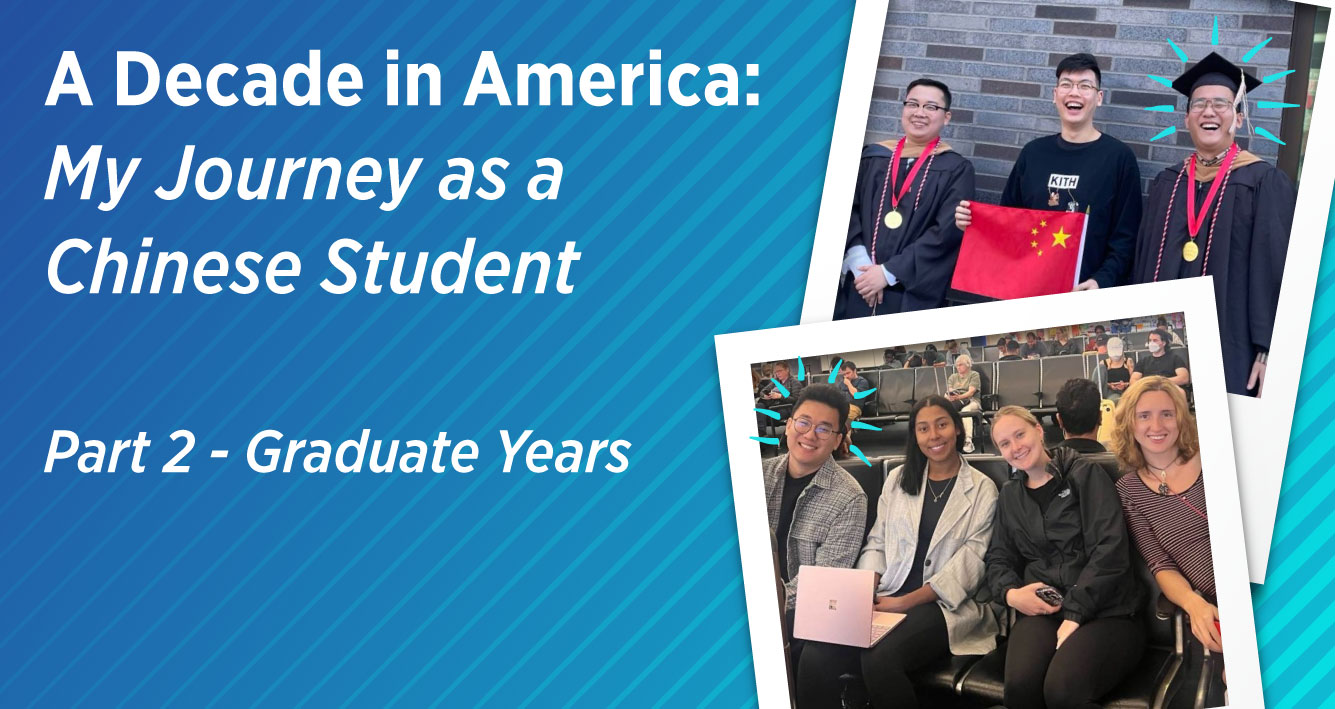
A Decade in America: My Journey as a Chinese Student, Graduate Years

As much as Tianyu Shen’s undergraduate years as a Chinese student in the US were about belonging, his postgraduate experience in Boston revealed the other side of the international student journey: employability, professional development, and deeper cultural immersion.


Meet Intead!

  • Find us at WEIC in DC in March, ASU+GSV in San Diego in April and NAFSA in Orlando in May . Be in touch to share a cup of coffee in person.

eBook Reboot: 88 Ways to Recruit International Studentsupdated for our times. Your tactical toolkit for the year ahead. Covering all the bases in 10 quick-read chapters. Fosters great ideation discussions with your team.


If you missed our last post, Tianyu shared the influencing factors that prompted his decision to study in the US and how he selected his institutions from language program to undergraduate university. Today, he shares what came next. And for those of us in enrollment, we know that all eyes are on what happens next.

Caution: If you have not experienced the job search process as an international student, you might be surprised at what Tianyu has to say.

My Journey as a Chinese Student, Graduate Years

I want to share my story not only as a reflection of what I gained but also as a plea to policymakers: behind every F-1 visa and OPT application is a human being who comes to the US with hope, ambition, and a willingness to contribute. Policies that close doors hurt not just students but also the communities, universities, and employers making up the vast economic and societal ecosystem that is America.

I feel so fortunate for the time spent in the US, though it wasn’t always easy.

Read on…

Read More

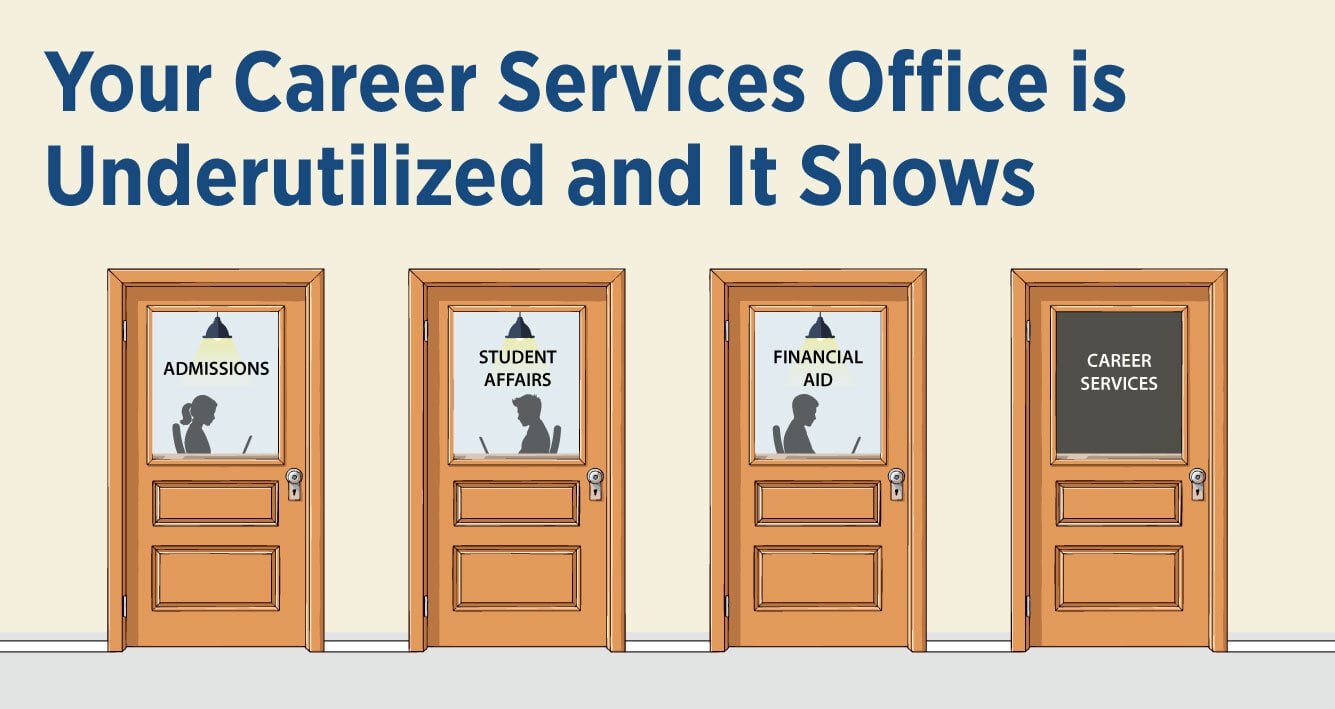
Your Career Services Office is Underutilized and It Shows

It’s well understood that future careers motivate students to pursue higher education. You could ask almost any student – domestic or international – whether career opportunities and outcomes influenced their decision to enroll, and the answer will be yes.   

Take the 2024 State of Higher Education study by Lumina Foundation and Gallup. In it, 84% of respondents cited at least one employment-related reason for pursuing (or potentially pursuing) a degree or credential. Another Gallup study found that students who stopped out were less likely to be motivated by career goals (they were more motivated by general learning) – suggesting that career motivations don’t just drive enrollment – they support retention. 


Meet Intead! 

  • Find us at AIRC in Atlanta in December, AIEA in DC in February, and ASU+GSV in San Diego in AprilBe in touch to share a cup of coffee in person.

eBook Reboot:  88 Ways to Recruit International Students 2025 update. Your tactical toolkit for the year ahead. Covering all the bases in 10 quick-read chapters. Fosters great ideation discussions with your team.


Our own research on the preferences and motivations of international students aligns with this. We suspect your experience does, too. Broader media reports emphasize that domestic families and students are increasingly focused on career outcomes as the justification for the cost of university. International students and families always have been. 

Where we are going with this: the more successful you are at getting students into the careers they want, the more successful you will be at getting students to fill the seats you want.  

And yes, we know you’re already telling prospective students that “95% of your graduates get a job or continue on to an advanced degree after graduation.” That’s no differentiator if everyone is saying it, despite its accuracy. 

This is where Career Services should chime in. Yet, many (read: most) students view Career Services through a lens of “why bother?” Hard to blame them. Help with resume and cover letter writing is too basic and can be provided by ChatGPT. Mock interviews have value, but there’s SO much more these departments could be doing to help students and your institution’s enrollment growth. 

Read on for some interesting data points and our recommendations for improving Career Services with an eye on driving enrollment…  

Read More

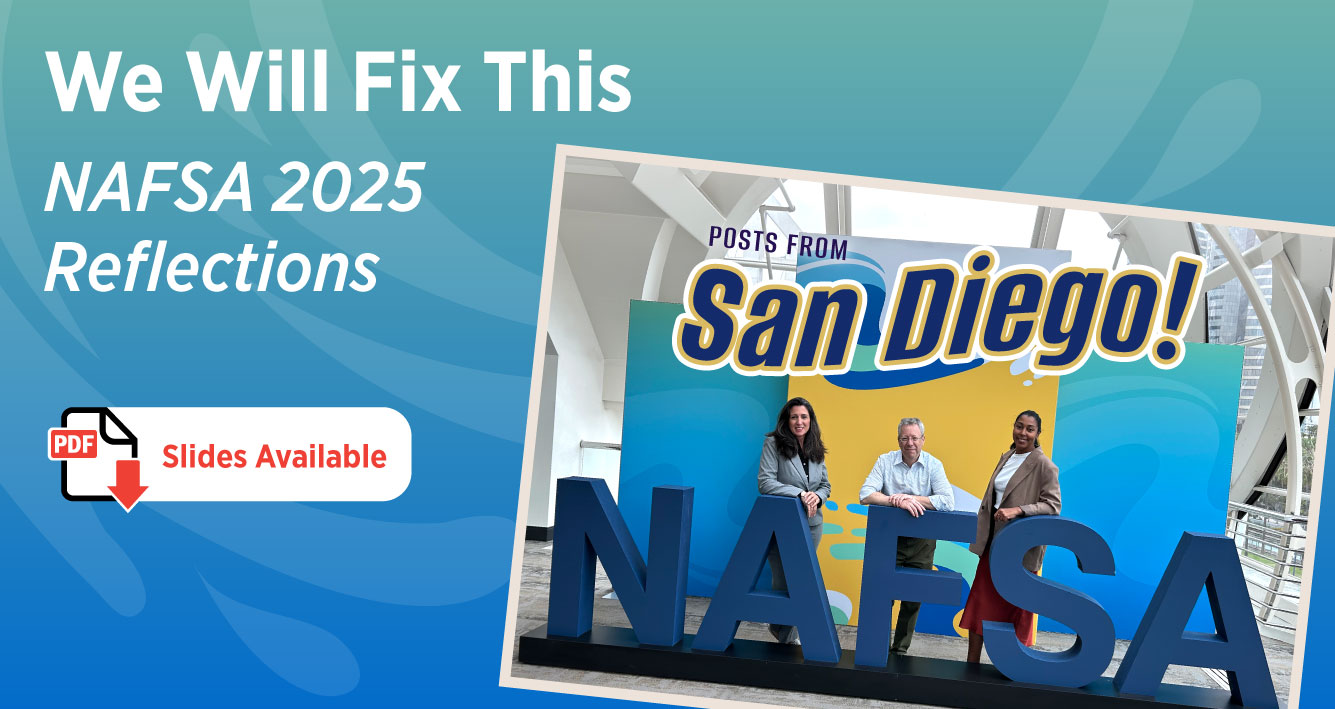
We Will Fix This – NAFSA 2025 Reflections

We all absorbed a few sucker punches at NAFSA 2025. And we experienced all the feels. 

While the White House released a new set of directives to further disrupt international student access to US institutions, NAFSANs gathered and found support amongst each other in San Diego. We ran as a pack (more on that below).

I spent my time at the conference largely with community and institutional leaders who have been down similar paths before. With sighs, eyerolls, and steadfast determination, we assessed what we knew, gave each other hugs, and took to planning for the future.  

As NAFSA CEO Dr. Fanta Aw says, “We do not get to be tired.” 


Meet Intead! 

  • Find us at APLU in NYC in June, NACUBO in DC in July, and NACAC in Columbus in September. Be in touch to share a cup of coffee in person.

Bookmark this: Intead’s Resource Center 
Access 800+ articles, slides decks, reports with relevant content on any topic important to enrollment management and student recruiting.  Check it out.


While many NAFSANs did express a weariness and some sessions had a very somber tone, that feeling was not pervasive. There will continue to be pain along the way, no doubt. Some of us will suffer losses due to the threats and disruptions. Student stress (and worse) is no joke. Fabulous and motivated international students will be denied access. Nevertheless, the dust will settle. Reason will prevail. And our community will fix what is being broken. NAFSA, among other leaders in our field, will be there throughout and after.  

To be clear, no one is giving up the fight.  

We were part of three presentations at NAFSA this year, mostly about career outcomes for international students and about how institutions can use this information to improve enrollment and advocate for our community. Find the link to our data (slides and a report) later in this blog post. 

Read on… 

Read More

Admissions Teams and Resilience. Lessons from the Past.

There’s a reason people look to Netflix as a case study in perseverance. After transforming the video rental landscape – from in-person stores to in-home DVD delivery, then to streaming and producing new video content – Netflix now leads a global shift in how content is created and consumed. Blockbuster was once its biggest rival. Today it’s YouTube. 

Netflix’s journey is marked with notable missteps and market hits. Headlines like “The Year Netflix Almost Died” capture the 2011 fallout when the company lost 800,000 customers and its stock value plummeted nearly 80 percent. Yet, here they are, stronger than ever and global. So, do you have a Netflix subscription? Yeah. Us, too. The company clearly knows how to recover.  

The lesson here: We can survive really rough times if we’re smart about our response to market volatility. Time to focus on the details and control the controllable. 


Opportunities to Meet the Intead Team 

  • Look for us at NAFSA in May, APLU in June, NACUBO in July, and NACAC in September. Let us know  if you want to connect at these events.
  • NEW WEBINAR: AI and the Future of Student Recruitment. All about university recruitment in this dynamic and changing AI environment. AICA's Emily Pacheco, Ashley Kern (MeetYourClass, Sightline), and Ben Waxman (Intead). Free Registration here. June 10, 2025 at 3pm Eastern time.

Bookmark this: Intead’s Resource Center 
Access 800+ articles, slides decks, reports with relevant content on any topic important to enrollment management and student recruiting.  Check it out.


US higher ed is at a pivotal moment as policy develops around the world and potential students consider how best to pursue their own interests.  How we respond now will affect our viability tomorrow and in the years ahead. The good news: history (and Netflix) shows us that recovery is possible. And there are lessons of resilience and recovery from within academia worth looking at as well. 

Take the UK. In 2008, the UK introduced a point-based immigration system and a Post-Study Work (PSW) visa allowing two years of work after graduation. Four years later, PSW was shuttered, causing an immediate decline in international student interest. A self-inflicted wound from Downing Street to the UK higher education system not unlike the international student disruptions being inflicted on US higher ed today. Interestingly, the number of main applicant-sponsored study visas issued only fell to 2008 levels and remained mostly stable until 2016, when numbers began to rise again.  

Even though overall visa numbers fell some universities took action that helped them outperform the sector and beat their own pre-2012 enrollment. Queen’s University Belfast was one with a comprehensive data-informed package of measures, including extensive faculty engagement, scholarship packages, enhanced agent involvement, and a focus on processes to improve the applicant journey. It was a whole institution approach matching strategic investment with operational excellence. They controlled the controllable.    

Then there’s Australia, which saw a steep international student decline a decade ago due to tightened visa scrutiny. Now, they are seeking to limit the number of international students studying in-country each year to 240,000. Canada, too, is currently working through its own hastily decreed cap on incoming international students, self-inflicted just last year.  

In fact, not once during this century have all four major anglophone recruiting countries (US, UK, Australia, Canada) had benevolent student and work visa policies simultaneously. There is almost always one or another imposing self-defeating rules upon themselves. Yet, 2025 brings us to a point where all four of these nations want to limit incoming international students – whether through direct intent or visa policy and rhetoric – rather than smoothing the international student path. It seems some policymakers have lost sight of the direct correlation between economic growth and academic strength (education and research capability). 

This current state is not the first period of stress and difficulty international students and institutions have faced. 

Despite bouts of turbulence, each receiving country continues to see an incoming flow of international students. In our view, it’s reasonable to assume international students will remain motivated to attain a foreign degree and a US degree will remain attractive to a large number of foreign students. So, we pursue what we can control and what can be changed (or challenged) and do so with a mindset that is measured not panicked.  

What does all that mean for your approach to internationalization? 

Read on…  

Read More

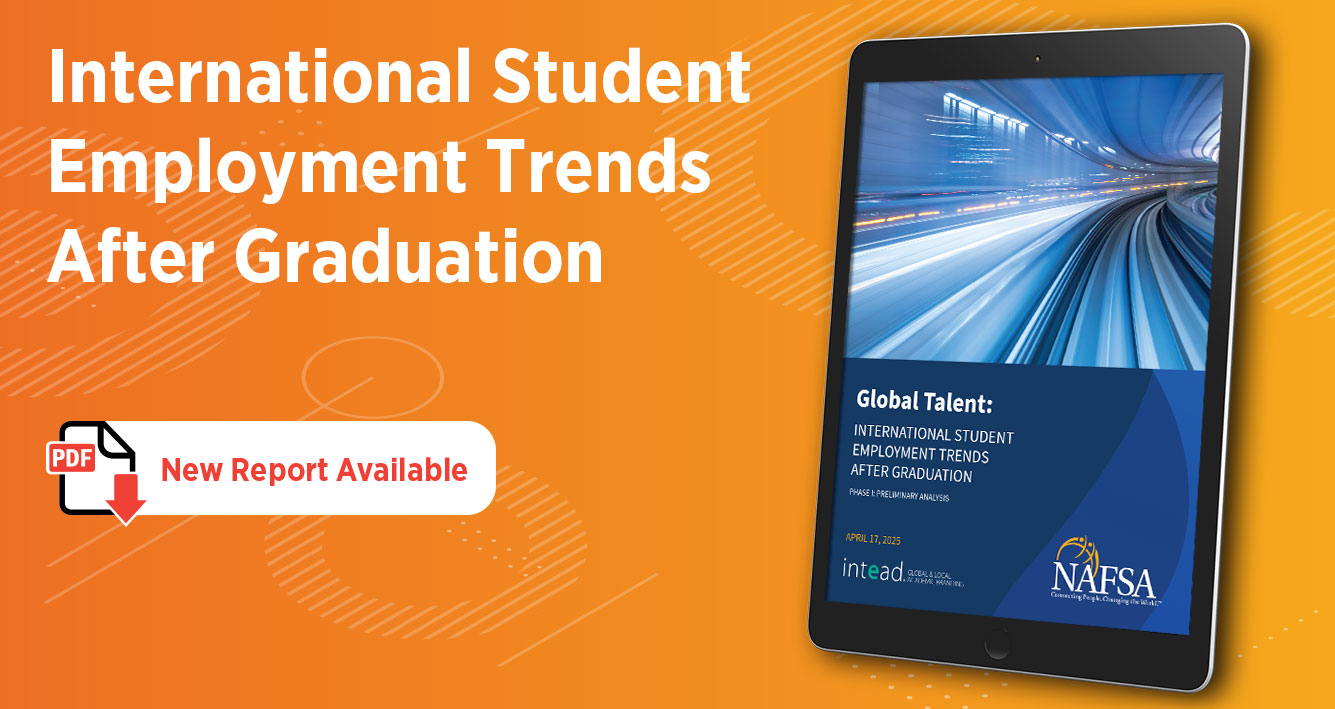
International Student Employment Trends After Graduation

What we know: international students have a well-documented and unambiguous impact on the US economy and society. Each year the US is $43+ billion wealthier because of these students. And our classrooms, campuses, and communities benefit from their diverse viewpoints and clear-minded ambitions, keeping our workforce competitive, tech companies growing, and sciences advancing. 

There’s no skirting the fact higher education is in a reactionary period as the White House does all it can to implement short-sighted changes to US higher education (and we’re being generous here with our choice of words). Advocacy has never mattered more. Which makes the release of our latest research – done in collaboration with the great minds at NAFSA and Fox Hollow Advisory – that much more important. 


Opportunities to Meet the Intead Team 

  • Look for us at NAFSA in May, NACUBO and APLU in June, and NACAC in September. Let us know  if you want to connect at these events.
  • Meet us online Tues., May 6, for the next AIRC webinar where Intead CEO Ben Waxman will join Co-panelists Kevin Timlin, Southeast Missouri State University and Manisha Zaveri, Career Mosaic for the expert-led discussion: IEM Student Lifecycle Series: Effective Student Recruitment Strategies.  

Bookmark this: Intead’s Resource Center 
Access 800+ articles, slides decks, reports with relevant content on any topic important to enrollment management and student recruiting.  Check it out.


Phase I of Global Talent: International Student Employment Trends After Graduation – released for download today – gives preliminary, yet important findings that will help bolster conversations we’re all having right now. This report goes beyond public data to answer:  

  • What is the longer-term value of attracting and retaining international students to US higher ed institutions?
  • How do international graduates contribute to the US workforce and economy?    

The report analyzes behaviors, motivations, and the economic impact of international students after earning their US degree. Special thanks to each of the following participating institutions:  

  • California State University, San Bernardino
  • Ottawa University 
  • Salem State University 
  • Southern Methodist University 
  • University of California, Davis 
  • University of Houston 
  • University of Kansas 
  • University of North Texas 
  • University of Redlands 
  • University of Texas at Austin 
  • Washburn University 
  • Wichita State University 

This research explores the alignment between US institutions producing international student talent, the US economy, and US job market demands. It’s part of a larger initiative aimed at understanding how US education benefits both international students and the nation. Read on to download the report… 

Read More

AIEA 2025 Reflections

AIEA rode into town overlapping the Houston Livestock Show and Rodeo in March. You tell me which one brought more excitement and better BBQ? 

The truth: I was down for the whole AIEA thing more than the rodeo. Clearly, I’m not the one to call when you are going out to a raucous party. It’s a character flaw, I know. 

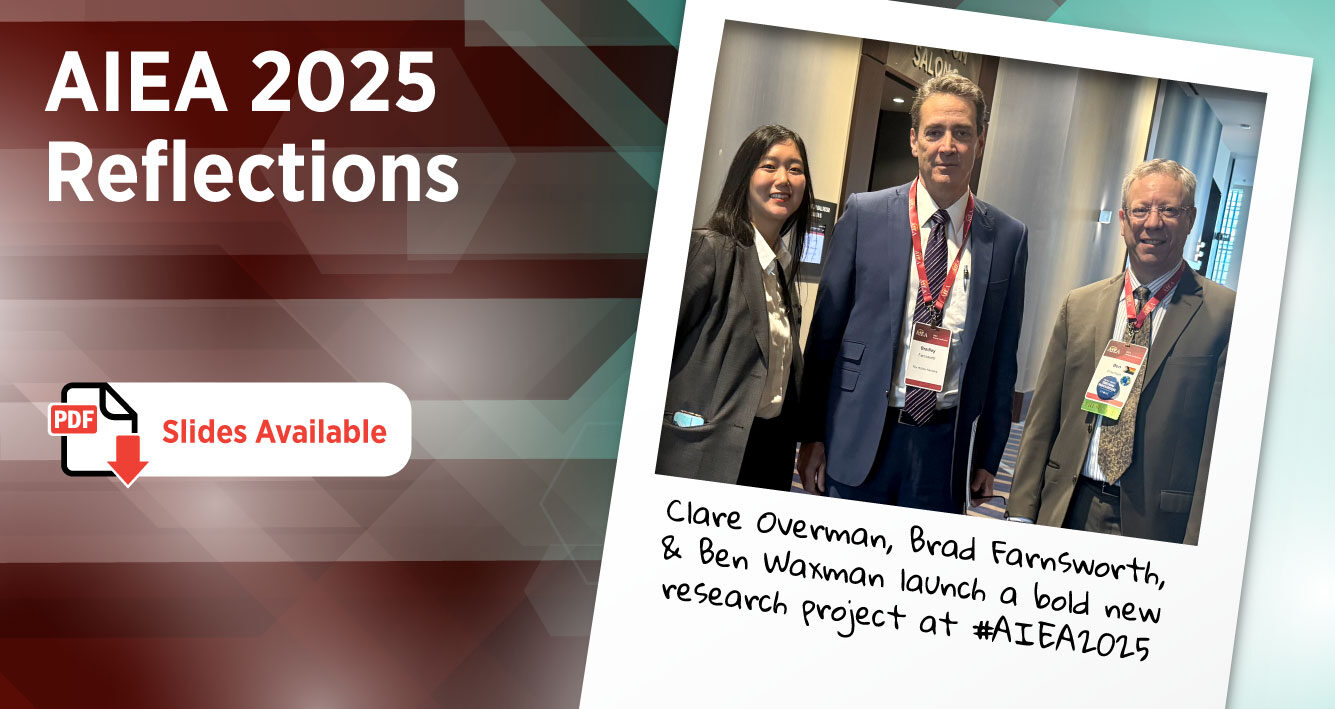
AIEA’s board and their dynamic staff, led by newly minted CEO Clare Overman, delivered exactly what academic leaders and SIOs needed. An opportunity to gather amidst the chaos of the new administration in Washington, DC. An opportunity to fret, consider, and plan.  

Under the heading of planning, our boldest initiative, launched at the conference: a two-year research project in conjunction with AIEA to identify and share the effectiveness of various internationalization office structures. A complex endeavor to be sure. Learn a bit more about it HERE and sign up to stay informed. We are thrilled to be collaborating with former ACE Internationalization Lab leader Brad Farnsworth for this research. 

Those in this field do a whole lot with fairly little support or budget. Shared models and simply thinking together has so much value. The Intead team was honored to share the dais for three very different presentations with colleagues Balaji Krishnan (University of Memphis), Vivian Wang (University of Tulsa), Helen Zhang (Northeastern University), Mirka Martel (IIE), Andrew Chen (FrogHire.ai), and Brad Farnsworth (Fox Hollow Advisory).


Opportunities to Meet the Intead Team 

  • Will you be at ASU+GSV in April or NAFSA in May? Let us know  if you want to connect at these events.  

Bookmark this: Intead’s Resource Center 
Access 800+ articles, slides decks, reports with relevant content on any topic important to enrollment management and student recruiting.  Check it out.


Below, I share a few observations about the conversations at the conference ranging from fundraising from international families (alumni giving) to global partnership development and how that plays with enrollment management and student services. You’ll also find links to our slide decks and an invitation to chat if you’d like more information about our ideas on how your institution can improve in three areas: 

  • Global Partnership Development and Management 
  • International Student Career Placements
  • Internationalization Office Structure and Outcomes

Read on for perspective on the machinations over White House pronouncements and access to our slides… 

Read More

International Students Seek US Jobs: How You Can Help


The plight of your visa-seeking international grads may best be summed up in this quote, “Given the choice between a prostate exam and sponsoring a work visa, hiring managers will probably choose the former.”  

Zeke Hernandez, a Wharton School professor and author of The Truth About Immigration, gave us a good chuckle with that one when we read it in an August 2024 issue of The Economist. It’s funny because it’s true as the meme goes.   

In an analysis done by ed tech company F1 Hire, only 1.6% of the 1.5 million job postings analyzed had sponsorship-friendly language in the job description. This research was part of Intead’s Connecting Dots report How International Students are Finding US Jobs, published in May. If you haven’t seen it yet, find it here. Our analysis of US Department of Labor data and proprietary data from F1 Hire offers job market insights you won’t find anywhere else. 


Opportunities to Meet the Intead Team 
- NAFSA Region XI, Hartford, Connecticut, Oct. 27-29, 2024
PIE Live North America, Boston, MA, Nov. 19-20, 2024
- AIRC, Seattle-Bellevue, Washington, Dec. 4-7 -- including our pre-conference global marketing workshop. A full day of Intead global intel (lunch included ; -). Details here. 

Bookmark this: Intead’s Resource Center 
Access 800+ articles, slides, reports with relevant content on any topic important to enrollment management and student recruiting.  Check it out.


Understanding career pathways for international students is an increasingly necessary topic for those of us who advocate for and work on behalf of this valuable and important student population. In fact, 84% of international students cite career advancement as their top motivator for studying abroad. And >99% believe it’s why their families want them to study abroad (source: Intead’s Know Your Neighborhood 2024 report).  

But it’s so much more than that. These bright, highly skilled students are a crucial part of the economy. As pointed out in a recent Economist article, immigrants account for 14% of the US population yet are responsible for 36% of the country’s total innovation. It makes sense why. They bring not just knowledge, but new ideas, perspectives, and networks that help shape their work environments. Global perspectives, ideas, and connections benefit everyone.  

At Intead we need only look up from our own desks to see the positive impact of multinational teams (and to our case studies for bottom-line proof of results). We expect many of you are fortunate enough to work in similar environments. We are all better for it as individuals. Our work product is stronger as well.  

The Biden Administration offered a bit of good news for international students earlier this year when they issued guidance making it easier for foreign graduates of American academic institutions to get work authorization. But it’s a small gesture that will likely have minimal impact. Still, we welcome the forward motion. 

Read on for ways your institution can improve career connections for your students... 

Read More

LinkedIn for Edu Marketing? - Career-Minded Students Say Yes!


All recruitment conversations with students lead to careers.  

Disagree? Convince us otherwise.

When prospective students ask about your top programs, they’re really inquiring about their career paths. Questions about student outcomes? They’re assessing their post-degree job prospects. Asking about your institution’s rankings? They are assessing how your degree will play on their CV as they apply for jobs. Inquiring about alumni connections? Clearly thinking about their career network. Calculating your institution’s ROI? All about grads’ salaries. 

Look to our recent Know Your Neighborhood (KYN) survey where a full 84% of respondents view career advancement as their primary motivation for studying abroad. Over 99% will tell you this is also their family’s top reason for pushing them forward. So, career opportunities matter – a whole lot. 

Which begs the question: If prospective students are thinking about careers so much and you have a thoughtful, creative (not stale) social media presence (you do, right?), then wouldn’t it make sense to weave LinkedIn, the top social media platform for the career-minded, into your marketing strategy? Especially when it comes to your graduate programs. More reasons? Consider your referral sources including your alumni network and adjacent target audiences like high school counselors and consulate staff. Turns out, LinkedIn is where these folks live and the platform could be a great place for your institution to connect with a career-minded (read as "less playful") tone. 


Opportunities to Meet the Intead Team 
- NAFSA Region XI, Hartford, Connecticut, Oct. 27-29, 2024
PIE Live North America, Boston, MA, Nov. 19-20, 2024
- AIRC, Seattle-Bellevue, Washington, Dec. 4-7, 2024

Bookmark this: Intead’s Resource Center 
Access 800+ articles, slide decks, reports with relevant content on any topic important to enrollment management and student recruiting.  Check it out.


The latest data from LinkedIn shows its network boasts over 1 billion registered users from 200 countries and regions worldwide. That said, per We Are Social, only 1 in 3 (or somewhere between 330 – 350 million) are active on a monthly basis. This is not Tik Tok! Still the numbers are high enough to matter and much more audience targeted. Within these data you can also find 136,000 schools listed. Yours is likely among them.

Impressive numbers overall, though at some point these supersized stats can feel a bit meaningless. That's why we write about them - unearthing sense from the writhing mess that is social media.

The following numbers may be more tangible for your recruitment work: 50.6% of LinkedIn users worldwide are between the ages of 25 and 34; 24.5% are 18 to 24 (Statista). Further, it’s the 4th most used social platform among our KYN respondents (prospective international students), falling in line behind #1 Facebook, #2 YouTube, and #3 Instagram. Where they use other platforms for entertainment, connecting with friends, and yes, research, they turn to LinkedIn with far more specific tasks in mind. It's all about career opportunities. Perhaps your case for building a LinkedIn recruitment strategy is beginning to take shape.  

Fact is, institutions like yours are increasingly using LinkedIn as a recruitment tool. Its professional focus and networking capabilities make it useful for connecting with career-oriented prospects, particularly those seeking higher degrees, as well as alumni who are arguably your ultimate word of mouth advocates. Not sure if you’re getting the most out of your institution’s account? We’ll tell you how.

This post is a great read for those involved in the details of your social media execution as well as those trying to evaluate the value of the platform in your overall strategy. Be sure to forward it along to the right folks on your team. Read on… 

Read More

Career Success for US-Educated International Students?


Career opportunity is the primary motivating factor for international students. All our research into the international student journey says so. We’ve known this for a long time. If you can demonstrate that your degrees pave a beaten path to positive career outcomes, then you’ve got your prospect’s ear. Not many institutions can back up their promises with data...until now. 

Institutions seem to have had a hard time making the case for bottom line ROI. Sure, there’s the usual “x% employed within 6 months” data every institution flaunts, but what does that really tell a student who’s halfway around the world? Not a whole lot. We’re not saying to nix that stat – definitely keep it – but it’s hardly concrete proof for your prospective students. 

The fact is most institutions simply don’t have the student data on the whole job search process to offer much more. Especially for international students graduating from your specific institution. 

Nor do most institutions have the bandwidth to think it through for the international cohort. But data does exist that can help you uncover a truer and fuller picture of career potential for your international students. It’s a matter of knowing where to look, how to look, how to clean and crunch the data, and then interpret that data appropriately.  

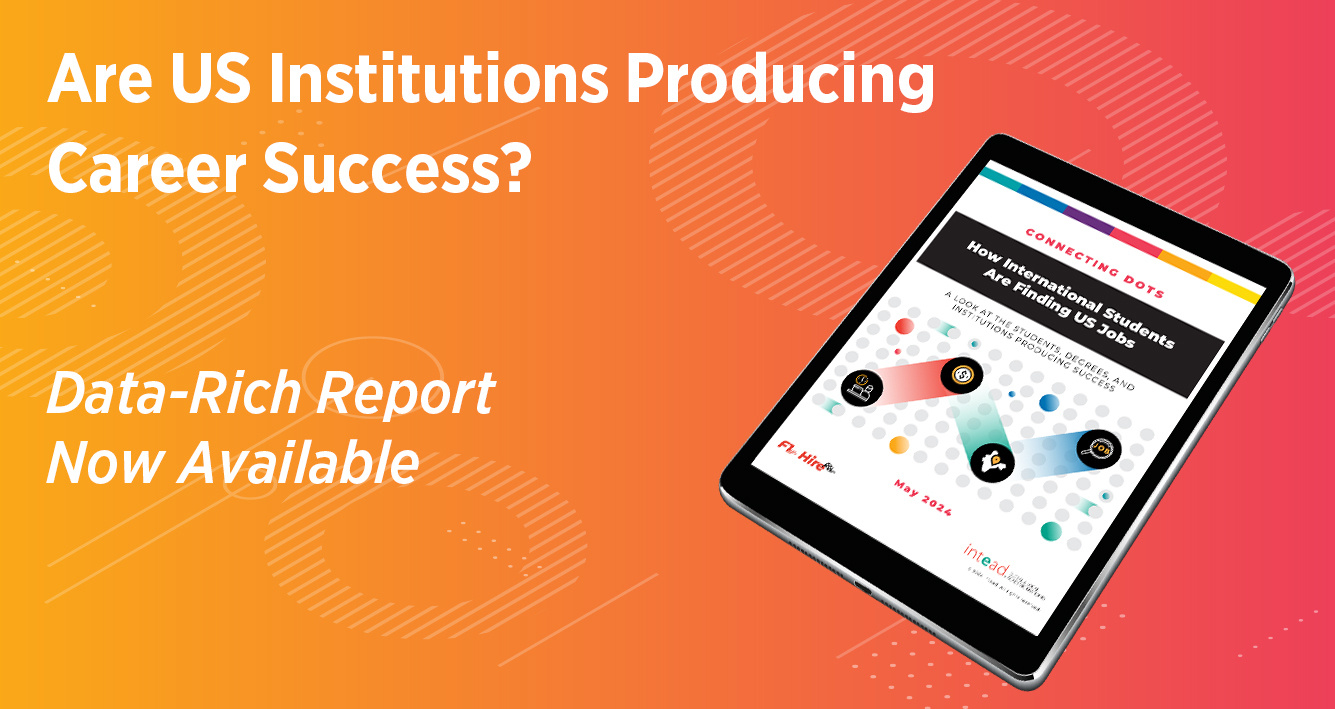
Enter Intead’s analytics team and our colleagues at F1 Hire! On offer to you for download: our first Connecting Dots study, How International Students are Finding US Jobs: A Look at the Students, Degrees, and Institutions Producing Success


Our next opportunities to meet! 

GMAC Annual Conference, New Orleans, June 19 – 21, 2024. Ben will be presenting on how global elections are influencing student mobility. More than just the US presidential election has the power to upend what students will choose to do next.  

EducationUSA, Washington, D.C., July 30-August 1. Ben and Viginia Commonwealth University SIO Jill Blondin will share insights on Navigating Budget Challenges in International Recruitment: Practical Strategies for Every Phase.  

Be in touch! We’ll buy the coffee. 


Our newest dataset focuses on practical next steps for international graduates. The ROI insight they’re really after. And for institutions, our approach to analyzing US Department of Labor data can help your marketing recruitment team stand out at any student fair anywhere in the world. Wanna see how? Read on to download our report... 

Read More