
Recruiting Intelligence

Innovative Case Studies in Higher Ed: Learn From Your Peers

Can you hear the clamor? That's enrollment professionals across the US trying to figure out how to fix their graduate enrollment numbers. Oh, and their undergrad numbers too. You've probably already been thinking about where the emerging markets are for higher education as the enrollment trends shift.

The tools we use to segment and engage global student markets are equally applicable to domestic markets here in the US as well. We have a number of international higher ed clients seeking to build awareness in and enrollment from the US market.

The US domestic market is a complicated one, to be sure. As the current international enrollment numbers decline, we are helping both foreign and domestic institutions identify and capture new markets. It's a time of great dynamism. 

Want To Know What Your Peer Institutions Are Doing?

This is why we are talking more and more about "non-traditional" students. Did you know that non-traditional student enrollment is projected to grow 21.7% from 2016-2022? 

A desire to attract these domestic segments (the range of non-traditional students) is transforming the way that many institutions think about their programs, campus life and overarching communications strategy. 

You may have read our guest blog post from a few weeks ago by Dr. David Di Maria, covering the many similarities between the underlying motivations of international and non-traditional students. If not, we highly suggest you check it out here

This week, we want to share with you some personal stories from the people behind institutional brands doing very big things in the field of non-traditional student recruitment. We're willing to bet there are a few people in your own institution (just a few clicks away) who could use these insights.

As always, we encourage you to share this content. And we encourage you to reach out to us and let us know what challenges you are facing. Maybe you can prompt our next research project.

Are you ready? All of these excerpts are taken directly from full-length interviews you can read in our latest e-book, Quality. Cost. Convenience. How Academic Leaders are Competing for Today's Non-Traditional Students. If you enjoy what you read here (or know someone else who might) we invite you to download the full e-book

Let's see what some of your most innovative peers have to say... 

Read More

Intead's 10 Most Popular Blog Posts of 2017!

What did we do that really caught your attention most in 2017?

We thought you might want to know which blog topics drew the most clicks from you and your colleagues. That way, you can catch up on any important posts you may have missed.

And, if you want to dive into any of these topics in a really substantive way, this is the last week to take advantage of our early bird discount for the International Student Recruitment Bootcamp in San Diego, February 11–13. 

Want a sneak peek at our most popular publishing? Well, let's see... In 2017, we...

  • Released groundbreaking research showing the potential impact of a Trump presidency on international student recruitment – and looked at ways to navigate the dramatic changes in today’s political and economic climate;
  • Discussed why and how you should segment your target student population;
  • Addressed ethical concerns in the use of education agents;
  • Showed you how to make the most of your limited resources;
  • We even gave you tips on optimizing your landing page to maximize conversion rates!

*deep breath*

What can we say? We love this stuff. 

Read on for links to our 10 most popular posts…and see what topic intruiged your peers enough to earn the title of post #1.

Read More

Quick Tips for Building Effective Landing Pages

Maximizing Your Student Lead Conversion

According to Hubspot, 55% of visitors spend less than 15 seconds on your website. That isn’t much time, so you will have to make the most of it—that’s where we come in.

This week we focus on some basic digital marketing tips. We are bringing you a selection of landing page design and content approaches to increase conversion rates—the essential tools for effectively recruiting prospective students online. Landing pages can help you effectively drive visitors to fill out information capture forms or guide them to the most relevant section of your website. Well-designed landing pages can increase your chances of turning visitors into leads, and converting those leads into enrolled students.

Hit your target audiences with key, search optimized information and relevant offers; make the search easier for them, and the chance of conversion is higher for you.

This digital marketing lingo may be a bit intense for some of our academic readers. Chances are there is someone on your staff charged with making your website and your digital marketing work really well together. That person would really appreciate it if you sent them this post. It might simply confirm that they have their act together, or it might spark a few new ideas. And if that person is you, read on to get our take on how a strong landing page will increase your lead conversion rates.

Read More

International Student Recruiting in a Turbulent World

What a summer it has been! No one could have imagined the dramatic and troubling international events that are now having an impact on our international student recruiting plans.

  • Turkey: A coup attempt and university closings
  • UK: Brexit (need we say more?)
  • Vietnam: Regulatory changes to how agencies operate
  • Canada & US: Regulatory changes to conditional admissions requirements
  • Brazil: Significant currency fluctuations

And that's not all! Our point: International students' motivations and plans to study in one location or another are certainly changing. Domestically, fewer US students will be choosing the for profit college option (ITT we're looking at you).

Bottom line: We have a whole host of international student recruiting trends to write about this fall and beyond.  

Our goal now, and always, is to keep you informed and competitive as you make some tough decisions about where the most valuable student recruiting sources are. You have a limited recruitment budget, let's help you spend it wisely. [read on...]

Read More

Using #Instagram for International Student Recruitment

For your top 2016 international student prospects, using Instagram is second nature. These teens and young adults #instadaily like total pros. But, Instagram isn’t just an entertainment or social networking application. Not really. Not any more.

In September 2015, Instagram opened its doors to advertising for all businesses, big and small. That same month, Instagram hit another milestone when it beat out Twitter in active monthly users. Instagram’s website reports 400 million active monthly users. This is big.

So naturally there are big questions that arise with advertising opening up on Instagram. What is Instagram marketing? Should your university be doing it? Short answer: Yes.

Why? This is where your prospects are spending their time. Your digital marketing needs to adjust to the changing social media landscape. Hard to keep up? Hard to staff it? Of course. Want to beat out your competition? Right, of course, again.

Oh, and this from Higher Education Marketing: 48% of U.S. high school seniors were researching universities via Instagram in 2015. BAM!

No whining about how you can't find a way to do it. Let's get down to how to do it.

This week and next, Emily will share our thoughts and tips on why and how.

Read More

International Student Recruiting in Africa Part III: Kenya


Over the past two weeks we have shared data and tips on how to stay relevant in the international student recruiting market in Africa. Starting with a broad overview of this market, our first blog post of this series Africa's Competitive Edge (Part I) showed the positive trends and opportunities for recruiting in African countries. Nigeria (Part II) took a closer look at one specific market, and the trends of students studying abroad and how to market to them in this country. In this Part III post, we will explore the international student recruiting landscape and prospects in Kenya.

Touted as the Silicon Valley of Africa, Kenya is one country that has been a focus in recruiting since it graced IIE’s list of top 20 places of origin in the early 2000s. However, steadily since 2003, there has been a decline in the number of Kenyan students studying abroad. Between the 2013/14 and the 2014/15 school years, the number of students coming to the U.S. from Kenya has dropped 4%. Restrictions for students have become tighter and competition from within Africa is becoming fiercer. Still Kenya is the number two sending country of students to the U.S. (3,072) behind Nigeria (9,494).

Kenya is hoping to hold on to the slight economic boost they received at the end of 2015 from their growing agriculture sector. Hopefully, this kind of growth will empower more Kenyans to study abroad. Though the U.S. still beats the UK and Australia in the number of Kenyan students they are able to recruit, universities in the U.S. may still struggle to provide affordable options for Kenyan students, especially as the number of advanced study options in other African countries continues to grow.

Bottom Line: Schools outside of the African continent will need to use local connections and targeted digital marketing to attract Kenyan students to specific academic programs. Emily has some tips on how to do that and which programs might be most attractive in this valuable market. And she'll tell you why that beautful picture above represents great job opportunities for the right graduates...

Read More

International Student Recruiting in Africa Part II: Nigeria

In last week’s introductory post Africa's Competitive Edge on international student recruitment in Africa, we set the scene. Though the economies in many countries have seen hard times recently, the momentum of students in both North and Sub-Saharan Africa seeking to study in the U.S. and other places around the world is increasing. Documenting the trend: increasing numbers of competitive SAT scores being sent from Nigerian students to U.S. universities.

Today, we will share our thoughts on the trends and opportunities of student recruiting specifically in Nigeria—the largest sending country in Africa in 2015. Almost 9,500 students from Nigeria are studying in the U.S. today. Let's look at a few ideas about how to market to this particular group of students. There is a lot to learn about this country to be successful in your recruiting efforts. We want to get you started.

Read More

Intead AIRC and ICEF 2015 Slides Now Available!

Read More

Puzzling Together Recruitment in Colombia: Part II

In Part 1 of this series, we discussed the potential of recruiting students in Colombia and statistics reported in the Institute of International Education’s (IIE) Open Doors report (find IIE’s report here). Although the country’s current economic state is unfavorable due to the peso hitting record lows against the dollar, Colombia’s government has placed more focus on education and as a result, more students have gained access to financial aid and scholarships.

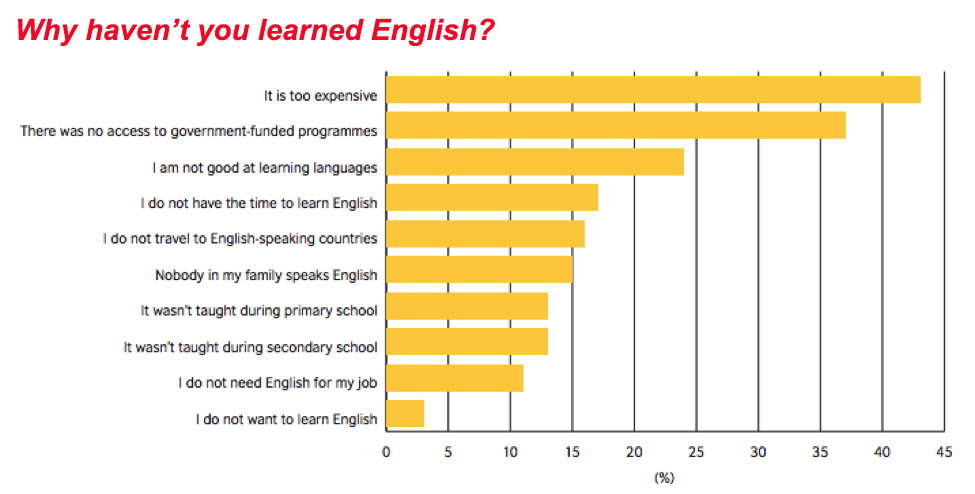
However, even as we warm up to Colombia’s attractive demographics and international interests, there is another common issue Colombian students face when looking to study abroad. The English language remains a problem for the majority of Colombian students. But, like many other Latin American countries Colombia is working hard to help more young people become bilingual which is where marketing your English language program can help you stand out to this group of prospective students.

Bottom Line: Young Colombians seem to have a drive to learn the language that will help them improve their futures. Employers here are eager to find English speaking staff to help them do business around the world. Academic recruiters seeking Colombian students will do well to focus on pathway programs and the career opportunities a degree will foster. Finally, since university rankings are less important than affordability here, lesser-known institutions that can prove their value can do well.

Emily is ready to wrap up this two-part series with additional perspective to help you with your international student recruitment plan.

Read More

Puzzling Together Recruitment in Colombia: Part I

As we puzzle together a picture of Latin America, we are fitting Colombia into the mix. In part I of this two-part series, we will take a look at the economy and recent student mobility statistics for Colombian international students. Next week, Part II will focus on English as a second language among other critical recruiting data points.

Now, if you’ve found yourself confused by shifts in recruiting students from Colombia, you aren’t the only one. Large swings in the number of students recruited from Colombia have been common over the last 20 years.

The CIA World Factbook lists the population at about 47 million with more than 17% of the population between the ages of 15 and 24. The growth rate of the middle class is also something to consider. A report from The World Bank in 2012 shows that the middle class had grown by 50% in a decade. These same reports believed that this expansion would be sustainable. With more Colombians able to afford higher education, Colombia became the third largest Latin American source of international students. 

However, economic clouds are beginning to form. In August of this year, Colombia Reports showed the peso hitting record lows against the dollar. The peso is closely tied to oil prices and with oil losing almost a third of its value the Colombian economy has suffered.

Bottom Line: While the number of Colombian international students had been growing because of newfound economic security, they may be harder to rope in now due to the current economic climate. Lack of funds, as well as recent lack of resources to learn English in Colombia, are hampering student mobility. Still, language programs in the country are increasing (more on that next week). With the right academic offerings, there is recruiting potential in this large South American country. Scholarships and messages about overall affordability will go a long way as a recruiting draw. Career opportunities will also be powerful messages.

Our intrepid international blogger, Emily, will now wake us up and help us smell the coffee.

Read More