Recruiting Intelligence

Bring Your Student Leads Into Focus

Chaos is costly. Clarity is half off.

This truth brought to you by The Economist’s latest flash sale. Sometimes an ad sums up a vibe so neatly. Maybe the ad just caught us at the right moment. (Um, thanks Meta?)

Whether it was the morning coffee or the marketing kitsch, The Economist's attempt to get us to subscribe (we already do) served as a good reminder of the cost of chaos.

Pick your tumult: visa whack-a-mole, Duration of Status policy threats, internal budget cuts, NSF decimation, demographic cliff, you name it. The disruptions of the past 18+ months have cost our industry its equilibrium, individuals their sanity, and certainly some enrollment.

The numbers speak loudly: 97,000 fewer student US visas were awarded last summer, driven largely by a near-monthlong freeze on visa interviews. (Canada, UK, and Australia have similar downbeats). Now, DHS may adjust the “Duration of Status” for F-1 and J-1 visa holders, replacing it with a fixed admission period of up to four years and dimming the luster on some students’ dreams of a US degree. And, if history tells us anything, it won’t be the last disruption our international student hopefuls and enrollment leaders will endure.


Meet Intead!

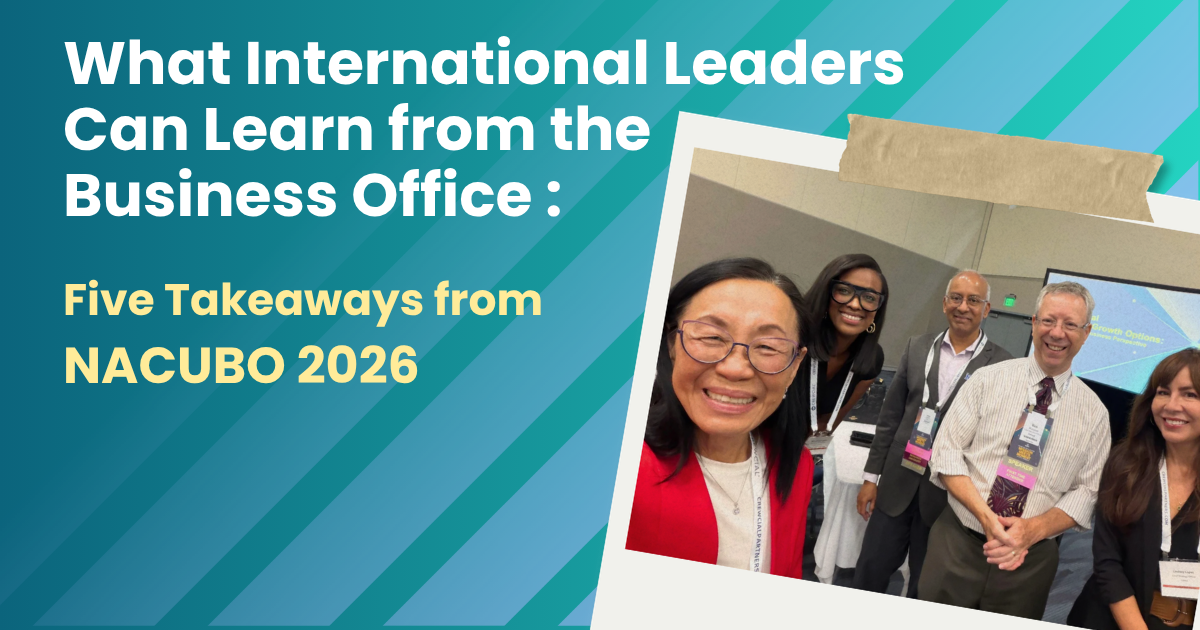
  • We're presenting at NACUBO in July along side College of the Canyons, University of Memphis and UC San Diego.  Be in touch to share a cup of coffee in person.

Fight for your Internationalization Program Funding with Data


Despite the continued chaos, we have actual work to do. Handwringing be damned! Students still want to enroll at your institution. Time to busy your team securing the fall cohort by shoring up those leads. This is ground you know well.

Read on for insights from our team, including our latest addition to Intead, Lindsey Lopez, on what to prioritize now to bring your 2026/27 leads into focus and produce your target yield.

Read on…

Read More

Do What Needs Doing: 2 Focus Areas, 2 Valuable Resources

How is your LinkedIn feed treating you lately? The algorithm has so finely curated mine at this point that I have a seemingly endless stream of academic news from a wide variety of “mostly” insightful posts. All good food for thought.

Mostly, I scroll and learn. Other times, I marvel at the patterns of folks trying (perhaps too hard) to get noticed. Sometimes I’m frustrated by the all-too-common story arc: take something well known and accepted as truth and call it into question. These posts often prompt reader engagement but act as just a surface-level contrarian view with little insight to truly add to the conversation. And that description is likely generous.


Join Us Today at NAFSA 2026!

  • If you get this in time, RSVP to meet us at 7:30 am today for coffee, bagels, and an informal discussion about the groundbreaking research study we are conducting with AIEA. Learn about how participating in this national study can help position you and your institution for long-term success. If you miss the bagel chat, still be in touch and we'll explore the research ideas with you (info@intead.com). 

There are many of us in the field seeking insights to help us navigate these troubled times. Academia, the headlines seem to tell us, is under tremendous strain. True enough, and yet, a lot of those headlines end up being a whole lot of noise.

History shows us that troubled times come and go. Some institutions will fail to ride out the storm. Those that do make it to the other side sometimes prevail by what seems to be dumb luck. Others plan and adapt, giving their institution the best shot at future success. With so much noise in the system and so many distractions, planning and adapting require focus – a focus that helps you see the important signals separate from the noise. No easy task.

Two recent trips to DC for conferences (AIEA and WIEC) offered the desirable opportunity to meet with our community, maintain connections, share experiences, and noodle about what really is noise and what the truly important signals are. Really helpful, as so many in our field seem to spend a lot of time wringing their hands and falling into the rut of complaining. It’s easy to do when times are legitimately tough.

But that isn’t leadership.

And that is not planning and adapting.

Below we offer two valuable focus areas where we believe academic leaders can move the needle despite the turbulence AND two helpful resources in times like these.

Read on…

Read More

Recruiting Intel Digest: The Most Important Stuff from Q4 2025

Nothing forces the drive for clarity like experiencing chaos.  

Good news in years like these, we suppose. The policy swings and shifts in student demand have tested every institution’s agility and fortitude. But for leaders paying attention, the volatility is forcing a refining of strategy and development of a sharper view of what truly drives enrollment growth. 


Meet Intead! 

  • Find us at AIEA in DC in February, and ASU+GSV in San Diego in AprilBe in touch to share a cup of coffee in person.

eBook Reboot:  88 Ways to Recruit International Students 2025 update. Your tactical toolkit for the year ahead. Covering all the bases in 10 quick-read chapters. Fosters great ideation discussions with your team.

NOTE: This week, our Recruiting Intelligence Blog will take its regular end-of-year break. We will see you again on Jan. 7, 2026, with our usual actionable future focus.


The institutions emboldened to act by realities of enrollment drops and general wariness around US travel are playing the long game. It’s the right move. Those who take a wait-and-see approach are already losing ground on future enrollment. But you already know this. And if you’ve been reading our blog, you also know:

  • Why now is the right time to take international on a campus roadshow  
  • That your Career Services office is an underutilized gem 
  • Our NACAC takeaways on students, staffing, and new H-1B implications 
  • What enrollment teams need in times of ambiguity 

Didn’t catch those topics? Read on… 

Read More

From Stasis to Strategy: Enrollment Teams, It’s Time to Act

Churn happens in every setting. Promotions, departures, budget realignment, team and department consolidation.

Disruptive, yes, but hardly unprecedented – a common cycle typically prompted by fiscal changes and then the disruptions ripple out from there. 

And yet, change rarely feels routine. Especially at the scale we are experiencing right now.

Still, your programs need promotion, your Deans have their own priorities, and everyone knows that your important leadership chair is about to turn over (you know the one, right?).

What is an enrollment team to do? Do you launch a new marketing campaign now, or wait? What if today’s A, B, and C priorities become tomorrow’s D, E, and F because the new leader coming in 4 or 5 months will have their own ideas.

And what happens in the meantime as you try to sort it all out? Stasis.  

So often, teams sit on their hard-won budgets, waiting for stability and clarity. An approach, for sure, but not a good one. Doing nothing isn’t leadership (too blunt?) – and doing nothing will do nothing to advance your yield or deliver your next class.

We all know there are legitimate excuses for not hitting your numbers. Yet we see this stasis mode all the time. And yet...

What your enrollment team needs in times of ambiguity: smart bets and clarity. 


Going to AIRC in Atlanta? Let’s connect! 

Join us Dec. 3, 2025, 1 – 4 p.m., for our workshop, Exploring Third-Party Business Models for International Student Recruitment, or any one of our other conference sessions. You are registered, right? 🙂

Or, meet us at:AIEA in DC in February and ASU+GSV in San Diego in April.


How you get to clarity and forward motion: concrete data to identify the opportunities and cut through uncertainty. And importantly, you need stong presentations to build internal support for your plans. 

In this time of seemingly never-ending uncertainty, institutions need leaders who act. Read on for our views on what proactive enrollment leadership looks like… 

Read More

Recruiting Intel Digest: The Most Interesting Stuff from Q3 2025

The never-ending quest for content that helps you move the needle. This year that means a serious focus on ideas and tools your enrollment team can use to adapt to the opportunities out there and reach enrollment goals. The pressure our clients and so many others are under right now feels daunting, to say the least. Our goal: help keep them (and you) focused on effective recruitment and retention.  

In troubled times, we do not sit on our hands. There are always actions we can take despite the challenges that throw us off our original game plan. 


Meet Intead! 

  • Find us at NAFSA Reg XI in Springfield in November, and AIRC in Atlanta in December. Be in touch to share a cup of coffee in person.

eBook Reboot:  88 Ways to Recruit International Students 2025 update. Your tactical toolkit for the year ahead. Covering all the bases in 10 quick-read chapters. Fosters great ideation discussions with your team.


So, while you’ve been navigating stalled visas, funding uncertainties, increased competition, and, we hope, maybe a bit of summer vacation this past quarter, we’ve published actionable ideas on: 

  • Predicting student yield 
  • Finding right-fit education agents 
  • Keeping your education agent partnerships strong 
  • Creating “Reel” connections, based on our work with a UK higher ed NGO 
  • Staying the course in international student recruitment despite headwinds 

Plus, access to popular worksheets on: 

  • Agent evaluation
  • Building strategic international enrollment plan

Read on… 

Read More

Everything Has Changed! But Has It?...

During a recent staff meeting, it occurred to us: over the past 15 years the Intead team has given more than 100 conference presentations. That’s a lot of higher edu conferences! And if there’s one theme that runs through them all, it’s change. 

(We like to think another theme running through them all is innovative use of data leading to valuable enrollment insights, but those of you who have been in the sessions can be the judge of that).

Five years ago, Covid “changed everything.” Mask mandates and travel restrictions arrived so suddenly, they still feel within uncomfortable reach. While those disruptions have mostly passed –  some effects stuck. Think: hybrid work, remote classes.  

And yet, at a NAFSA session on enrollment marketing earlier this year, when a fellow attendee remarked with dismay, “My school is doing all the same things we did before Covid. But everything has changed…” We couldn’t help but wonder, has it? 


Meet Intead! 

  • Find us at NACUBO in Phili and NACAC in Columbus in September, NAFSA Reg XI in Springfield in November and AIRC in Atlanta in December. Be in touch to share a cup of coffee in person.

Bookmark this: Intead’s Resource Center 
Access 800+ articles, slides decks, reports with relevant content on any topic important to enrollment management and student recruiting.  Check it out.


From everything we’ve seen, heard, and researched, students still want what they’ve always wanted: a good education, a career on the other side of graduation, meaningful friendships, and some international adventure.

These aspirations persist – despite anti-immigration rhetoric, despite visa complications, despite global uncertainty. Student goals have persisted through 9/11, the 2009 global financial crisis, Brexit, and skyrocketing US tuition. They’ve persisted within Gen X, Millennials, Gen Z, and are showing up in Gen Alpha. 

So yes, some things change (see below). But the fundamentals of what pursuit of education is all about, not so much.

Below we offer a useful one-pager breaking down the steps to building a strategic international enrollment plan. Your colleagues have scooped these up from us during our conference presentations and downloaded them from our website. Helpful perspective as you consider your options and your processes in place (and those desired).

Read on… 

Read More

Predicting Student Yield: The Demonstrated Intent Challenge

Unlike most of his peers, my son (it’s Carrie talking here) applied to just two higher ed institutions. He got into both. Accepted both. Put down a deposit on both. Will attend just one. And so, he’s part of the admissions problem.  

Our colleague (and contributor to today’s post) Jon Boeckenstedt, retiring vice provost of enrollment management at Oregon State University, explains it like this: A lot of people think yield is like planting saplings in greenhouses, where your success is highly dependent on things you control, like spacing, soil quality, temperature, water, etc. In fact, yield is more like scattering seeds, where you are hopeful, and you have some ideas of success based on prior years, but in reality, you're at the mercy of factors you have zero control over.  

As an example: Last year, UCLA received 146,276 applications. About 13,114 students or 9% were admitted. For comparison, just 4 years earlier, in 2020, the university had an acceptance rate of 18%. And a decade+ ago in 2010, it was 23%. Go back further to 2000, it was 29%. And wait for it, in 1990, it was just above 40%. A lot has changed in a 30+ years. 

Year 

UCLA Acceptance Rate 

1990 40+%
2000 29%
2010 23%
2020 18%
2024 9%


UCLA is not unique in this way.  


Meet Intead! 

  • Find us at NACUBO in DC in July, and NACAC in Columbus in September. Be in touch to share a cup of coffee in person.

Bookmark this: Intead’s Resource Center 
Access 800+ articles, slides decks, reports with relevant content on any topic important to enrollment management and student recruiting.  Check it out.


Applications have skyrocketed for most institutions. For top-tier universities, this surge makes them even more selective (or rejective) — great for prestige and ranking supposedly, tough for admissions teams and applicants alike. For the majority of institutions, however, the steep rise in applications is just that, a steep rise in applications. Yield is on a different trajectory, and it’s driven by a simple concept: Algebra.  

The rise in applications has dramatically outpaced the increase in college-bound students, and of course, a student can only enroll in one institution, whether they are admitted to two or twenty. This then leads to a big increase in the volume of ibuprofen intake by admissions teams, as predicting the behavior of students is getting harder all the time. While institution leaders continue to demand enrollment results.

Thank goodness for the consistent ibuprofen supply.

We can point to the Common App as the bane of the admissions process. But that’s not really fair. Its advent brought more students into the system, increasing access overall. So, there’s the good. And not every university seeing the surge uses the Common App, and the University of California system is among those that do not.  

The real drivers of the application tsunami: access, competition, and coaching from influencers like school counselors and advisors. There are pros and cons to this situation. Ironically, the unpredictable nature of admissions decisions causes stress, which causes students to hedge their bets and apply to more colleges, which makes the admissions process less predictable. 

For context: 

  • In 2000, the typical applicant applied to three to five institutions.  
  • Today, the average student applies to eight to 12+, simply because they can.  
  • In 1998, when Common App went digital, ~250,000 applications were submitted through it.  
  • In 2024, that number hit 7.3 million – a 2,820% increase. (Yes, they have many more institutions as clients today, but still!)
The problem, of course, isn’t just the mountain of applications (besides, new AI tools are now helping with that to some degree). The problem is predicting yield to land just the right number of students who can bring just the right amount of revenue (and did we mention housing capacity?).   

Read on… 

Read More

Finding and Alleviating Admissions Pain Points


Shout out to Q4 for giving us all something to think about. Cue the Chinese expression: "Better to be a dog in times of tranquility than a human in times of chaos." (宁享平安犬生,莫为乱世中人). Yup, got it! Right now, we are those humans, perhaps wishing we were dogs. 

Between the US presidential election and IIE Open Doors data, many of us are recalibrating our approach to 2025. Fortunately, we’ve worked through anti-immigration policies and lackluster international student enrollment numbers before. We’ll weather this. But there is work ahead for all of us.  

So, if you’ve missed a few of our Recruiting Intelligence articles, we understand. This post will catch you right up. 


Opportunities to Meet the Intead Team 

  • AIEAin March, ASU+GSV in April, and NAFSAin May. We'll be presenting our latest findings with colleagues from Chronicle of Higher Ed, IIE, AIEA, University of Tulsa, University of Memphis, Northeastern, and others. Let us know  if you want to connect at of those two events. 

Bookmark this: Intead’s Resource Center 
Access 800+ articles, slides decks, reports with relevant content on any topic important to enrollment management and student recruiting.  Check it out.


Relying on our experience working with a wide range of institutions, public and private, over the past 15 years (and the guidance from David’s book), we have helped admissions leaders identify the admissions pain points that drive students away rather than drawing them closer in. Importantly, this fascinating day-long exercise uncovers opportunities to fix the problems and the improvement measures to track results. Ah yes, some good news. 

Process mapping is a simple idea on the face of it. Like any problem-solving session addressing a complex, multi-layered process, the key to success is getting the right people in the right room to wrestle the right questions. We’re sure you know just what we mean. Practical to downright critical cross-departmental conversations are too few and far between.   

IT, Marketing, Enrollment, Admissions, and faculty (at the graduate level) all play a role. Credential evaluation always comes up as a pain point (more on that in just a bit). Yet, when institutions bring all stakeholders together for one full day to critically examine how their roles interconnect, the clarity is remarkable. We’ve seen even the most efficient teams benefit. And by the end, everyone has a new appreciation for sticky notes and our whiteboard is filled with sound ideas, big and small. 

The litmus test for us is always this: at the end of the day, does everyone see a clear, achievable path forward? From the clear immediate wins to the more time-intensive improvements, a shared vision for a more efficient process will result. That’s the point of process mapping. Read on…  

Read More

Need Better Results? Consider These 12 Options


We’re going to state the obvious and break it down. Because it seems some of your colleagues may need to hear this. Better coming from us than you.  Helpful perspective: historical data tell us that 30% to 40% of all US institutions see declining international enrollment in any given year. So, for your consideration...

First: If you are not seeing the enrollment results you want, something must change to produce new outcomes. (Someone wise has said: insanity is repeatedly doing the same thing and expecting different results. Apparently, it wasn’t Albert Einstein. Nevertheless, it holds up).   

Second: If you want to increase university enrollment fast, you’re going to have to put real money into the process. You’re likely going to continue doing what you already do because even though you are seeing diminishing returns, you can’t afford to lose them. So, new funds must be added to the existing budget.   

All obvious, right? Well, it seems folks need to hear it. But we have more to share here to help you get the numbers ... 


Opportunities to Meet the Intead Team 

  • AIRC, Seattle-Bellevue, Washington, Dec. 4-7, 2024. Our team is here now with 3 powerful sessions on budgeting, pathways, and streamlining admissions processes. Come find us. 
  • AIEA, Houston, Texas, March 02-05, 2025
  • NAFSA Annual, San Diego, CA,  May 27-30, 2025

Bookmark this: Intead’s Resource Center 
Access 800+ articles, slides decks, reports with relevant content on any topic important to enrollment management and student recruiting.  Check it out.


Third: If you cannot access additional funds, you will have to cut something you are currently doing and reallocate those funds. If your leadership is of the innovative risk-taker mindset, you can stop doing some of your current, less effective things and put that money into the new thing. Your stronger results will be slow to materialize, and your leadership needs to stay the course (not pull the funding) when fabulous new results do not magically appear in year one. To maintain internal support, you must track your activity and report on the results along the way.

What you want with all the tracking is your ability to provide your leadership with the confidence that there is learning and progress going on that will lead to stronger results in the next couple of years. Know that your leadership is facing down a whole lot of criticism including daggers from across campus trying to remove your funding. The dagger throwers are expecting your plans to fail.  

Fourth (getting into the details): You have options when you think about innovating to produce new, stronger results. We review 12 primary recruiting options when we run our conference workshops on student recruiting. Today we take a quick look at each tactic with a careful eye on cost and flexibility.

Read on for our 12 recruitment option tips and perspective… 

Read More

Why Personas Get a Bad Rap


Imagine a mid-size, private university, call it Opportunity University, gearing up for a recruitment push in Vietnam – a new target market for the institution. Excited by the potential and the green light from the provost, the nimble international recruitment team of two assembles a marketing campaign targeting what they assume to be their typical international prospects: high school students motivated to get a liberal arts education at a US institution that will lead to future career success.  

The standard international student profile, right? (Wrong, but we’ll get to that.) Running on a tight budget and timeline, they repurposed a campaign strategy that had previously proven successful with the Indian market (a dominant source of students for their computer science graduate programs). The response, however, was not what they had hoped.

The errors of this somewhat exaggerated story highlight a critical marketing misstep: relying on shallow persona development. Not thinking this stuff through can lead to serious marketing misses. Anyone who takes a simple bullet list of traits and runs with it (high school student, career-minded, uses WhatsApp, seeking international education) is not taking their role as marketer seriously.  

Personas often get a bad rap from jaded marketers who have seen the process based on simplistic stereotypes and then relied on as a holy grail. We hear you! We are not seeking Hollywood stereotypes here.

But well considered personas do align your broader marketing team so that your communications speak with a consistent integrity to each potential student segment. Well-crafted personas are all about internal team alignment around a common voice and marketing approach.


Opportunities to Meet the Intead Team 
- NAFSA Region XI, Hartford, Connecticut, Oct. 27-29, 2024
PIE Live North America, Boston, MA, Nov. 19-20, 2024
- AIRC, Seattle-Bellevue, Washington, Dec. 4-7 -- including our pre-conference global marketing workshop. A full day of Intead global intel (lunch included ; -). Details here. 

Bookmark this: Intead’s Resource Center 
Access 800+ articles, slides decks, reports with relevant content on any topic important to enrollment management and student recruiting.  Check it out.


Unlike the fictitious Opportunity University, institutions that think critically and dive deep into student persona analysis understand that the development of multidimensional profiles is foundational to successful student recruitment strategies. They get that personas, when thoughtfully crafted, can anchor the entire marketing team around a coherent, effective, audience-centered strategy. It’s a north star for guiding marketing tactic selection, content development, design, student interactions, and marketing execution which includes selecting recruitment channels. 

The process of creating marketing personas itself helps dissect the complex student decision-making process by considering the target audience’s lifestyle, challenges, media consumption habits, and underlying motivations. It is so much more than a surface demographic dig. What you uncover during the process can lead to really compelling marketing that will resonate with your prospects because you will have firm insights into their mindset, influencers, and ultimately, their choices.  

On more than one occasion we’ve seen the persona discovery process actually lead to market retreat because the more intimate understanding made it clear the audience and programs on offer weren’t a good fit after all. Better to find out in the early stages than committing to a no-win grind. A sort of check and balance of your strategy. 

Complex persona development is the kind of thing large consumer packaging companies are so good at. During one of our internal innovation sessions the Intead team got into a discussion about how understanding your audience plays out. One quick case study was P&G’s “Thank You, Mom” campaign from the 2012 Olympics (London). If you don’t recall what we’re talking about, see the link below. Let us know your reaction. Tip: grab tissues first.  

So much emotion, and yet, all they were selling was laundry detergent and other basic goods. They knew exactly who their target audience was and why they used their products. And no, it wasn’t to simply keep clothes clean. The tagline lays it out, "It takes someone strong to make someone strong. Thank you, Mom." Suddenly, I have this urge to buy Tide. But I digress… 

The lesson here is the student journey to your institution is so much more complex and life altering. Just imagine what a thoughtful, well-understood persona could do for your student recruitment. Read on for our tips (pass them on to your team) … 

Read More