Recruiting Intelligence

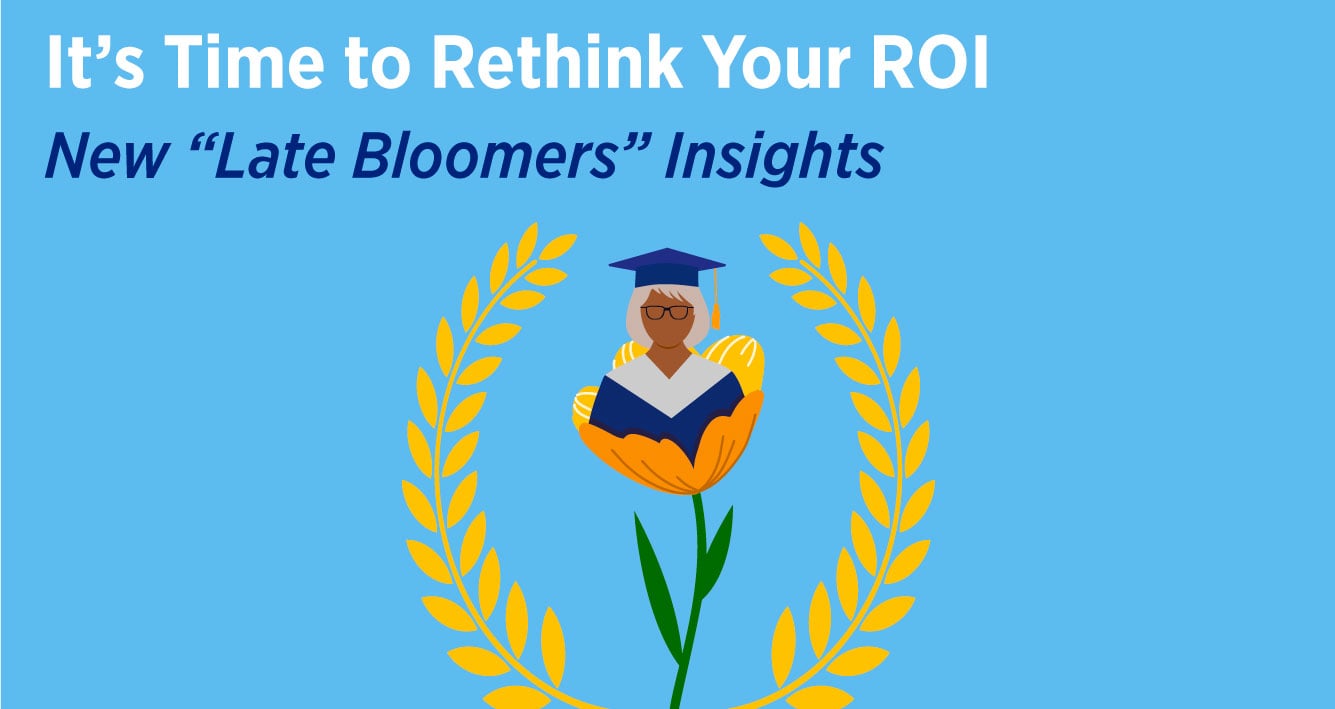
It’s Time to Rethink Your ROI - New ‘Late Bloomers’ Insight


Have we been selling ourselves short? A recent working paper by the National Bureau of Economic Research has got us thinking, "Yeah, maybe." 

The not so fine print in “Late Bloomers: The Aggregate Implications of Getting Education Later in Life” is this: the age at which you get your degree matters. The economists found that the younger you are when you get degreed, the stronger your financial return on the investment from that degree. As a result, it may be time to take a closer look at how you present your institution’s ROI.  


Events you won’t want to miss:

Let’s talk international student enrollment at the upcoming AIRC Spring Symposium on April 30 . In-person learning will cover developing, managing, assessing, and sustaining international enrollment focused partnerships. Intead will be presenting on student recruitment marketing budgets – we've got some great new insights to share. Register  today!

And look for us at these other industry events coming around the bend:

  • ICEF North America in Niagara, Canada, May 1-3, 2024
  • NAFSA 2024 Annual Conference and Expo in New Orleans, May 28-31, 2024
  • GMAC 2024 Annual Conference in New Orleans, June 19-21, 2024

The Late Bloomers paper (link below), which looks at university grads beginning with the US 1930 birth cohort onward, also reveals that around 20% of students obtain their 4-year degree after age 30, hence the late bloomer label. A not so insignificant figure, with more than a few not so insignificant implications.  

Sure, the popular notion that university grads are early 20-somethings remains true enough, but the 1-in-5-student stat reveals this belief is not the whole truth – and never was. Turns out the non-traditional student market is significant (you’ve read our series on the non-traditional student advantage, yes?).  

Significant and new with this paper: the understanding that late bloomers’ ROI may not be as strong as once thought. On the flip side, the new data analysis means the ROI for younger grads is even stronger than we believed. Interesting, and worth promoting.  

Other notable findings from the paper: Late bloomers have helped narrow the gender and racial gaps in university enrollment, even despite a widening racial gap among the early university grad set. And, late bloomers account for more than half of the growth in the share of university-educated adults from 1960 to 2019.  

There’s a lot to unpack here, including why we think you may be selling yourself short based on these fresh insights. Read on…we’ll keep it actionable. 

Read More

Get Your Students Career Ready. Here's How - Part 1 of 2

Let’s talk about the messaging your institution uses to convince students and families that what you offer has value. Pretty simple stuff, right? Maybe not. You’ll appreciate the helpful checklist that follows in part 2 of this series. Think marketing differentiators in a competitive marketplace. You won’t want to miss it. 


Opportunities to connect in person and hear our latest market intel:

  • Join us in Paris Nov 8-10 at CIEE's 76th Annual Conference.
  • Join us in Boston Nov 13-15 at PIE News Live.

Let us know if you'll be joining us (info@intead.com).


But first a story. 

Ok, so you are up in front of your board of directors presenting your business growth and marketing plan. You and your team have been figuring this out for a while and last night was a late one as you worked together to put the finishing touches on your slides. There were still disagreements among your team, but you settled the issues and felt nervously ready. 

Everyone has a speaking role but some on your team are stronger than others. Some don’t have appropriate clothes to wear for the presentation so they borrow something professional looking from friends. Some sway nervously back and forth and read their slides rather than engage with the very important board members. You realize early on in the presentation that the data presented on slide 7 is wrong. It doesn’t support your final recommendation. Maybe no one will notice. 

It is your Marketing Business class final presentation to a mock board of directors and as first year undergrads, your team is anything but seasoned. Your final grade is riding on how your team performs. 

Every semester for years now, I have had the honor of judging the final marketing analysis presentations of undergraduate students in a marketing business class at Suffolk University. A good friend of mine there teaches the class and gathers a set of judges from the biz to help the students get some real world feedback. Each judging session is as different as the teams presenting. It’s a blast for us, the judges. Nerve racking for the students. 

Recently, the department asked a few of the real-world judges for additional input and it truly impressed me. They wanted to hear from us as employers to understand what we look for in candidates as we hire. What tools should their students know how to use? What business concepts and approaches are critical to us as employers so their graduates will crush the interview?  

That line of questioning is SO important for business programs that often focus so much on esoteric business theory and simplistic case studies while purporting to be all about the real world. As our Intead Advisory Board Member Hillary Dostal, global marketing advisor at Pegasystems, says: There is best practice and then there is actual practice.  

This goes for your team, too. Read on…

Read More

Release Your Global Entrepreneur Spirit

Those of us with an entrepreneurial spirit and a global network typically see things others don’t. In the enrollment management field, the entrepreneur mindset is an asset, and yet…and yet, if only those in control of the purse understood what we understand about global markets and student motivations. 

The opportunities are there. The need is growing increasingly intense as revenue sources are threatened or declining. The Intead team shares your entrepreneurial enthusiasm and we are here to offer the insights that help you succeed. It’s one reason we connect so well with our university colleagues.   

Now, if only there were an easy way to satisfy your global entrepreneurial instinct while demonstrating recruitment success in such a way as to unequivocally justify your funding requests and get the programs you envision started and growing.  

Ben and Iliana will be at the NACAC conference presenting alongside our colleagues from AIRC on Sept 22 in Baltimore. Can we schedule a time to chat? Coffee's on us!

The simple truth: the root of successful international student recruitment lies in understanding your target markets, connecting with them, and effectively managing them over time. It has to do with simply doing the work as opposed to finding some magical online tool that suddenly produces all the enrollments you ever wanted. (Note the word magical in that last sentence).

To DO the work, you’ll need to take a deep dive into the macro- and micro-economics of what drives student mobility. Sounds more complicated than it is.  

If you’ve been following our blog, then you know we’ve been helping institutions like yours recruit international students for a very long time. Our multi-cultural marketing team, our bandwidth, and the tech systems in place bring focus and produce macro and micro level insights. Oh, and results. See case studies in our resource center here. 

Our work takes a load off our university counterparts who, like you, are being asked to over deliver while being chronically underfunded (and understaffed). We’ve seen what works and what doesn’t, including three common mistakes that will derail any international student recruitment program. Avoid these at all costs. Read on…

Read More

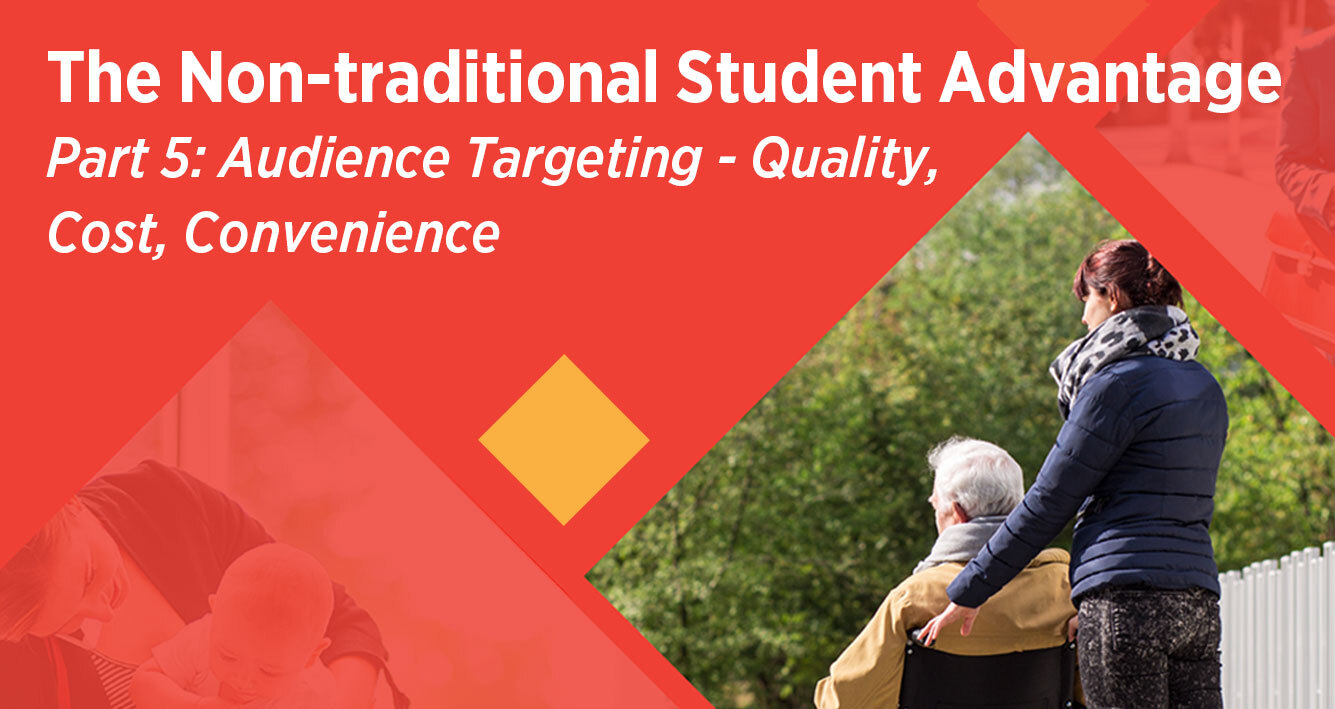
The Non-traditional Student Advantage Part 5: Audience Targeting

The non-traditional student can be anyone. To have one definition of a non-traditional learner would limit what we’re trying to achieve. And trying to reach all of them is essentially like trying to boil the ocean. – Hillary Dostal, former director of global marketing, recruitment, and enrollment initiatives at Northeastern University  

A 26-year-old who has just been laid off and seeks to complete a credential program and a 45-year-old stay-at-home mom thinking about a return to the workforce will respond to different messages communicated in different ways. These two prospects will be intrigued by selling points that speak to their own interests. They will prefer messaging written in different tones. They get their information through different channels. At their core, they have different wants, needs, concerns, and aspirations.  

Still, both are terrific prospects for your institution.  

This is part 5 in our 5-part blog series on reaching and enrolling non-traditional students. Find part 1, part 2, part 3, and part 4. 

So, what to do? Get to know your individual audiences. Speak directly to them on their terms. This is how you convey truly compelling messaging. It doesn’t require separate marketing initiatives per se, but it does require audience segmentation and very specific targeted messaging and execution. 

Importantly, before you dive into the engagement piece, you’ll want to be sure that what you have on offer will help these prospective students succeed. 


This is a very insightful ebook. It underscores the importance of differentiating non-traditional students from traditional students throughout the pipeline–from marketing to student success and engagement. The section on conducting an effective marketing audit is a good conversation starter for strategic development conversations. The real-world insights make the book a unique and valuable resource.  ~ Santhana Naidu, Vice President for Marketing and Communications at Rose-Hulman Institute of Technology  


Done well, market segmentation enables you to create better-targeted content and helps ensure that you are spending your resources on initiatives that are the best fit for your institution. This marketing work is simply the organization of your potential students into groups by demographic, psychological, and behavioral characteristics. Segmentation allows you to decide which group represents the biggest opportunity for your institution. And by opportunity, we mean they will find success and their investment of time and money will pay off for them. 

Make that group your target audience and create an offer that will appeal to them specifically. 

Ready to learn how? Read on. 

Read More

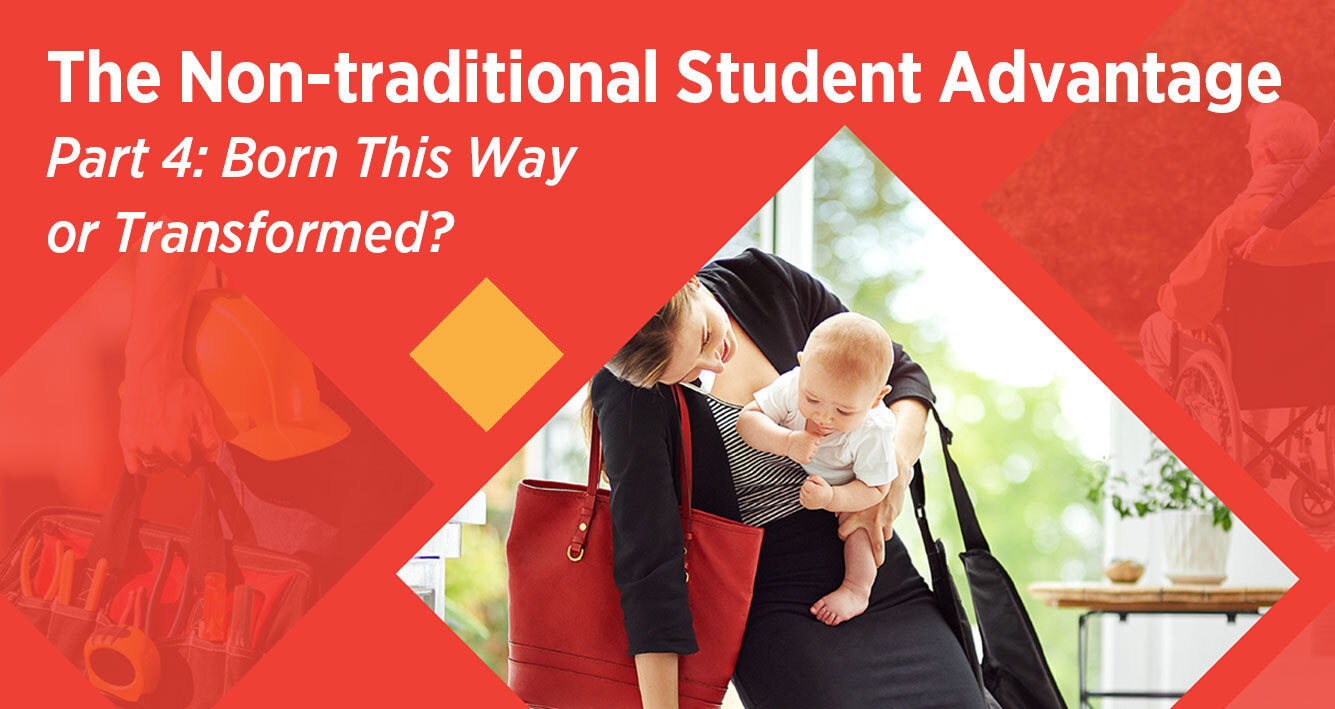
The Non-traditional Student Advantage Part 4: Born This Way or Transformed?

Growth-minded institutions are taking a long, hard look at their approach to non-traditional students. 

This is part 4 in our 5-part blog series on reaching and enrolling non-traditional students. Here are links to part 1, part 2, and part 3.

Truth is, courting and supporting non-traditional students has been part of the mix for decades. Most institutions of higher learning have embraced this broad swath of students. For some, the non-traditional market segment was part of their original focus. We think of them as “born this way.” For others, they are demonstrating market adaptability. We call these institutions “transformed.”  

 Which type is your institution? 

 Both have strengths to embrace and challenges to overcome. 


This ebook provides a very comprehensive look at non-traditional students. Many adult learners think that they are too late, too old, and will not fit in. In reality, there are more non-traditional students than traditional pursuing their education. Marketing to this audience is challenging as they are often working full-time and may lack the confidence to go back to school. This book offers real strategies that we should all consider.  ~ Dr. Richard Carter, Associate Vice President for Global Engagement at University in South Alabama 


Read on to take a closer look at these two roads to an institutional identity that embraces non-traditional students. We will consider the strengths and weaknesses associated with each route, while also offering food for thought about your own path. 

Read More

The Non-traditional Student Advantage Part 3: Know Your Competition

If you’ve been following this series on non-traditional students, or paying attention to the shifting student landscape at all, then one thing’s clear: non-traditional students are a valuable growth market. And your competition knows it.

This is part 3 in our 5-part blog series on reaching and enrolling non-traditional students. Links to part 1 and part 2.

Yes, non-traditional students demand more than traditional students. They need flexible schedules, targeted certificates, different student service support, and a strong return on their investment. And institutions are (finally) responding. Is yours?

Five years ago, when we published “Quality. Cost. Convenience. How academic leaders are competing for today’s non-traditional students.” – an e-book available for free to Intead Plus members – there was a lot of speculation about MOOCs (massive open online courses). Would they eat into the non-traditional piece of the pie?

While it’s true that student interest in MOOCs soared during Covid, the actual threat they pose to degree programs is, well, not much.


I love the blend of data, environmental scans, case studies, and basic recommendations that are interwoven in each section. This ebook is excellent for institutions that seek to fine-tune their non-traditional services or begin the process of addressing their needs. It covers the many daunting challenges that universities face when focusing on this student segment. ~ Mary Marquez Bell, retired Vice President for Enrollment Services, SUNY Old Westbury


From what we’ve seen, MOOC students are mostly filling leisure time with these types of programs (rather than pausing other academic pursuits). Typically, MOOC students only engage in the coursework a few hours a week. They really aren’t reaping any financial gains from having taken these courses, either. And, in the end, most are pleasantly surprised they actually learned something. So that’s good – for the student and you!

The more urgent conversation has shifted to involve certificates and credentials, for-profit online colleges and universities, and extension programs. Read on for what you need to know.

Read More

The Non-traditional Student Advantage Part 1: It’s Becoming Even More Common

Meet Darlene. Her journey as a non-traditional student is one you need to know. Not because it’s unique. But because it no longer is.

Darlene’s dad was a full-time tractor trailer mechanic who stopped his education after high school to take over his father’s business. Her mom was a stay-at-home parent who did not pursue college. It was Darlene’s older sister who became the first in the family to obtain a postsecondary degree.

In high school Darlene was a good student. She even received a trustee scholarship to attend the same university her sister did, but she had her eye on another school. Still, mostly because her parents were footing the bill, she gave that college a try. It lasted a year. Despite her 3.5 GPA, she never did feel at home there. So, she paused her education and went to work. 

You may see where this is going and why it is important to you as an enrollment professional. The demographic cliff has arrived and non-traditional students are one option for your institution’s continued success. Take a few minutes and we will help you clarify the path forward.

Darlene started as a part-time teaching assistant before spending three years working at Walmart. Then Darlene found her way to an office associate position at Columbus State Community College where she thrived. It was there, while successfully holding down a full-time job, she finally returned to her academic pursuits and enrolled in a digital design and graphics program.

She worked full-time while fitting in courses at night, on weekends, and online. When she needed to take classes during weekdays, her department chair was willing to adjust her schedule. And it worked. She earned her associate degree and even got her tuition covered thanks to her school’s tuition reimbursement program.

But that’s not the end of Darlene’s student journey. In fact, a few years and one state later, a friend encouraged her to return to school, but Darlene wasn’t sure if it was the right time. After all, along with her associate degree, she now had a husband, a child, and a full-time job.


This must-read primer will help anyone looking to better position their institution within today’s complex and competitive recruitment landscape. Read this publication, share it with your colleagues and then apply its insights to your marketing strategy. Non-traditional is quickly becoming the new traditional. This is your guide to adapting to the new competitive environment. ~ David Di Maria, Associate Vice Provost for International Education at University of Maryland, Baltimore County


It took her all of one week to decide. She had heard from a friend who had heard from a friend that Western Governors University was a good program. So, she applied.

 “I was surprised more people haven’t heard of the university. It’s fully accredited and has a really good success rate as far as graduation and employment rates,” she said.

Beyond the word-of-mouth approval, Darlene chose WGU because the price was right and the program was highly flexible. It was online and offered a “competency unit” curriculum that allowed her to go at her own pace and take as many classes as she wanted for a flat rate. WGU also provided her with a supportive student mentor who connected with her weekly and served as an involved mentor. In a few years’ time, she earned her B.S. in Business—Human Resources Management.

It's a success story for sure, but is Darlene’s degree the end of her student journey? Time will tell, though she does offer a hint at her mindset: “I want to make sure that I can continue to grow professionally, both in terms of responsibility and salary.”

Are you taking notes?

Darlene’s story is one of perseverance and it’s one of practicality. It takes a whole lot of both to make postsecondary education a possibility for non-traditional students.

Understanding that matters a lot, especially as you seek to fill the void being left in your enrollment from the decline in traditional students. Read on for our take on what you should be doing now to engage with this key audience now…

Read More

Thinking Big Opportunities: NAFSA 2023 Slides

Let’s start with this: our NAFSA 2023 slides are perhaps the most concise and clear educational tool we have produced to-date. When you have 3 strong speakers and just 50 minutes, you really need to focus if you want to get your point across.

Each slide represents far more content and conversations we would love to have with you. During one of our future conference sessions, webinars, or anytime, really, just reach out and let us know you want to chat.

Today we share our biggest takeaways from NAFSA 2023. These are thinking big opportunities.

We were honored to share the dais with Paulo Zagalo-Melo, SIO and Associate Provost at Western Michigan University and Karin Fischer, Senior Writer at Chronicle of Higher Education. Our focus: what kind of data and other information can truly inform our international student decision-making? And we considered the flip side: what information is TBU (True But Useless)?

A bit of foreshadowing: A focus for the Intead team going forward is going to be on international student employment and all we need to do as a community to make that process work better. You’ll see much more on that topic from us over the next year+. We have some amazing partners to help us get you the data and tools you need to improve your institutional approach. Watch this space.

You want answers about valuable vs. TBU data? Check out our NAFSA 2023 slide deck (download link at the bottom of this post.) Yes, we are making you work for it ; -)

Read More

Stacked Credentials and Employment

Your enrollment team is furtively evaluating fast-track routes students can take to achieve career growth. How can we promote a new product that clearly has growing demand when its consumer adoption will reduce demand for our primary revenue source?

With rising tuition (a 30-year drumbeat on that one), and fewer traditional aged students in the pipeline, the pressure to produce new revenue is intense. Repackaging what you already produce in new, bite-size chunks makes so much sense to everyone, right?

Credentials in new formats is not new to the scene, but student adoption is growing in large part because employers have woken up to their value. The Intead team did research on graduate level certificates six years ago for one of our top 50 US institution clients and found global employers were still evaluating whether a certificate was as valuable as a full MBA. Employers were not familiar with the new credential and what it would deliver. In 2023, employers in a highly turbulent job market and in need of talent, have decided. Certificates and stackable credentials work just fine. Let’s GO!

And you are in a position to do something about it.

Data from a relatively recent RAND Corporation report Stackable Credential Pipelines, Evidence on Programs and Earnings Outcomes gives us concrete evidence of value and the direction things are going.

In brief, RAND Corporation partnered with the Ohio Department of Higher Education to build a better understanding of how stackable credential pipelines have played a role in the education and training of individuals in Ohio, a state that has taken a leadership role in developing these types of initiatives. The report itself focuses on three fields: health care, manufacturing and engineering technology (MET), and information technology (IT). There’s a lot of good stuff to glean from the report. We were particularly keen on the ROI data (aka job growth). That is, after all, the name of the game for the vast majority of prospective students these days.

Your traditional revenue stream is taking a hit already. Demand for short-term credentials will continue to grow. If your institution does not develop strength in this educational opportunity, your competitors will (or already have).           

It’s time to align your internal team around this and convince those holding you back. Time is running out. Read on for 4 key takeaways on what the RAND Corporation report has to say about student ROI tied to shorter-term stackable credentials. (You’ll especially appreciate takeaway number 3!!!)    

Read More

You’re In the Right Place: Predicting the Future of Student Recruiting

The enrollment cliff has everyone a little on edge. People are burned out and frustrated. Leadership is looking for bigger gains in shorter time frames. And traditional students just aren’t showing up in ways they traditionally have.

It’s so clear that higher ed is at an inflection point. Thank the pandemic. Thank technology. The economy and unpredictable job market. The changing student landscape. What you need now more than anything is support. Ideally in the form of a soothsayer to tell you where and how to invest your time, energy, and resources. If only.

Our advice: take a deep breath and read this post.

While soothsayer we may not be, we do have some perspective on what lies ahead. And our record for predicting changes in the market has proven accurate for more than a decade. Long before the recommendations below became standard practice in enrollment management (they all sound so obvious now, right?), we advised colleagues to:

  • Make better use of your CRM (or get one if you don’t have one), and embrace the add on features and API connections that improve tracking and results.
  • Identify staff with the skills you need for each function of the enrollment process. Your creatives are not your meet and greeters and they are not your data analysts. You need all of these skills.
  • Develop your international alumni as global ambassadors. (Most of you are still not doing this).
  • Find reputable commission-based recruiting agents in your target countries and invest time in managing them very carefully.
  • Train your domestic recruitment team in the nuances and needs of international students already studying in the US so they know how to address the important topics (visas, parental concerns, economic realities, etc.)

We know, it’s all old hat now. But a decade ago, very new to international enrollment management teams.

Today we are facing some pretty significant headwinds. Post-pandemic changes to how students evaluate universities. Growing financial pressures facing families. Increasing importance of careers and the ROI of your degrees. Heightened interest in certificates and shorter paths to career growth. Political divisiveness harkening back to the US civil unrest of the 1960s (or 1860s?). Are you factoring social justice including climate activism into your marketing plans?

These factors are all part of the student and parent mindset as they evaluate investments in university level education. The pool of nontraditional students is much larger and more diverse than the shrinking traditional student pool. And yet, the international student pool is one that is growing and projected to grow dramatically in the coming years.

If you’re ignoring any of these market segments, we strongly advise you don’t. Our analysis of and predictions about what influences student decision making, the tools and processes you need in place to be both efficient and effective, this counsel has been spot on for a very long time (our blog records act as our receipts).

You’re in the right place. Read on to be sure you are able to anticipate what is next and what to do about it.

Read More