Recruiting Intelligence

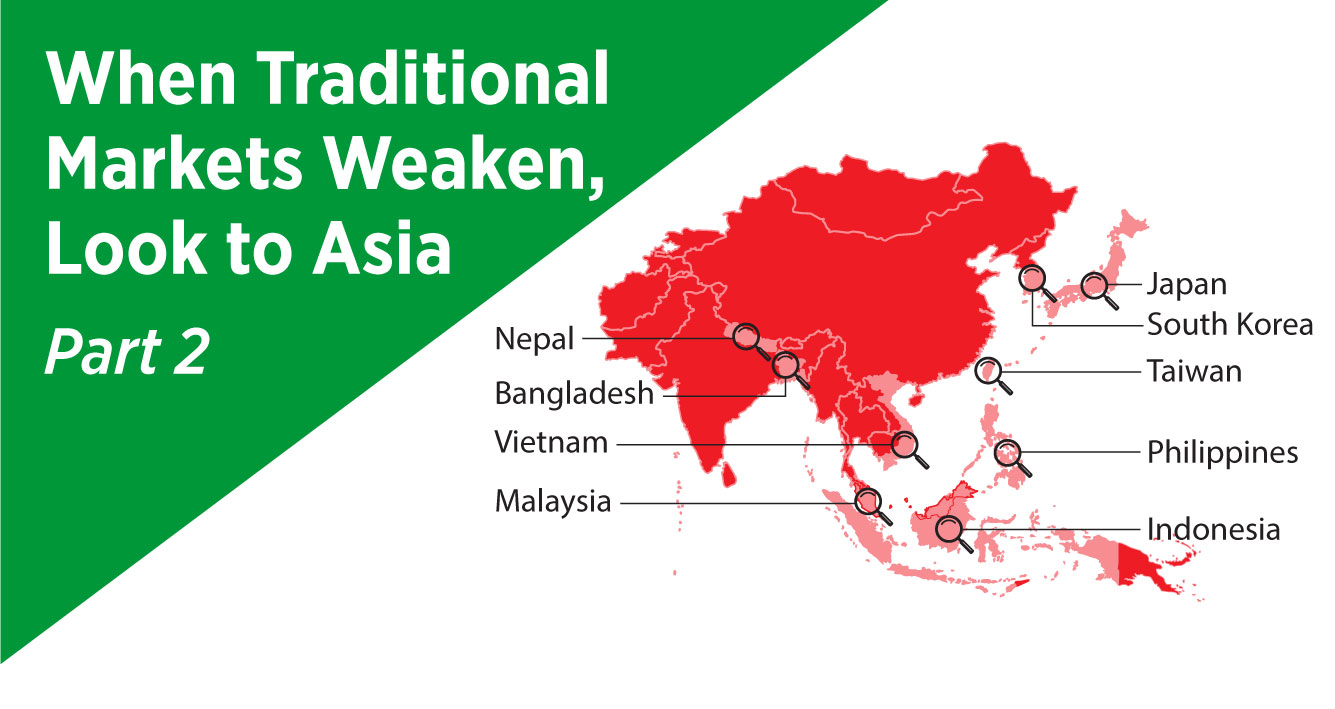
When Traditional Markets Weaken, Look to Asia Part 2

Emerging markets are the talk of the town in the world of international student recruitment. Diversifying enrollment takes many forms. Looking beyond the traditional global student sources has become a valuable exercise.

Last week we took a look at South Korea, Vietnam, Taiwan, and Japan (part 1). This week we turn to Nepal, Bangladesh, Indonesia, Malaysia, and the Philippines.

We are looking at the 3 key indicators that act as a first level screening to see if they point toward student sources worth deeper evaluation: a rising youth population, rising incomes, and employment opportunities for returning students.


Heading To NAFSA 2023: Our presentation with SIO Paulo Zagalo-Melo (Western Michigan University) and Reporter Karin Fischer (Chronicle of Higher Ed) will be on Wed. May 31 at 9:30am. A reality check with the data that informs our student recruitment decisions. Hope you'll join us. Be in touch to meet with us during Nafsa: info@intead.com.


While the countries we are reviewing below will never match the overall outbound student volume of China or India, most institutions are not seeking thousands or even hundreds from a single source. Most universities would do well to gain 10, 20, 50 new students a year from a single new source country. With the right recruitment initiatives, each of these countries could produce these kinds of enrollment results. It requires a multi-year commitment, but you knew that.

The benefits of these diversification efforts:

  • You aren’t relying on the top one or two markets.
  • You are building a vibrant, diverse student experience at your institution.
  • You are recruiting from countries that can most benefit from the programs and experience your institution offers.

And, as you also may know, the markets we cover in this post do come with a bit of risk. Their economies are strong enough, but the cost of international education can be out of reach for many of their families. We know international students are highly motivated to find steady work – so career connections are going to be as important as your academic chops. With any new market entry (Intead advice on that here), there are important analyses that must be done to confirm the opportunities outweigh the risks.

We’d welcome a larger conversation about how these Asian countries may or may not fit into your overall international student recruitment strategy.

Read on for a helpful overview and our usual helpful  insights about these markets to support your deeper evaluation.

Read More
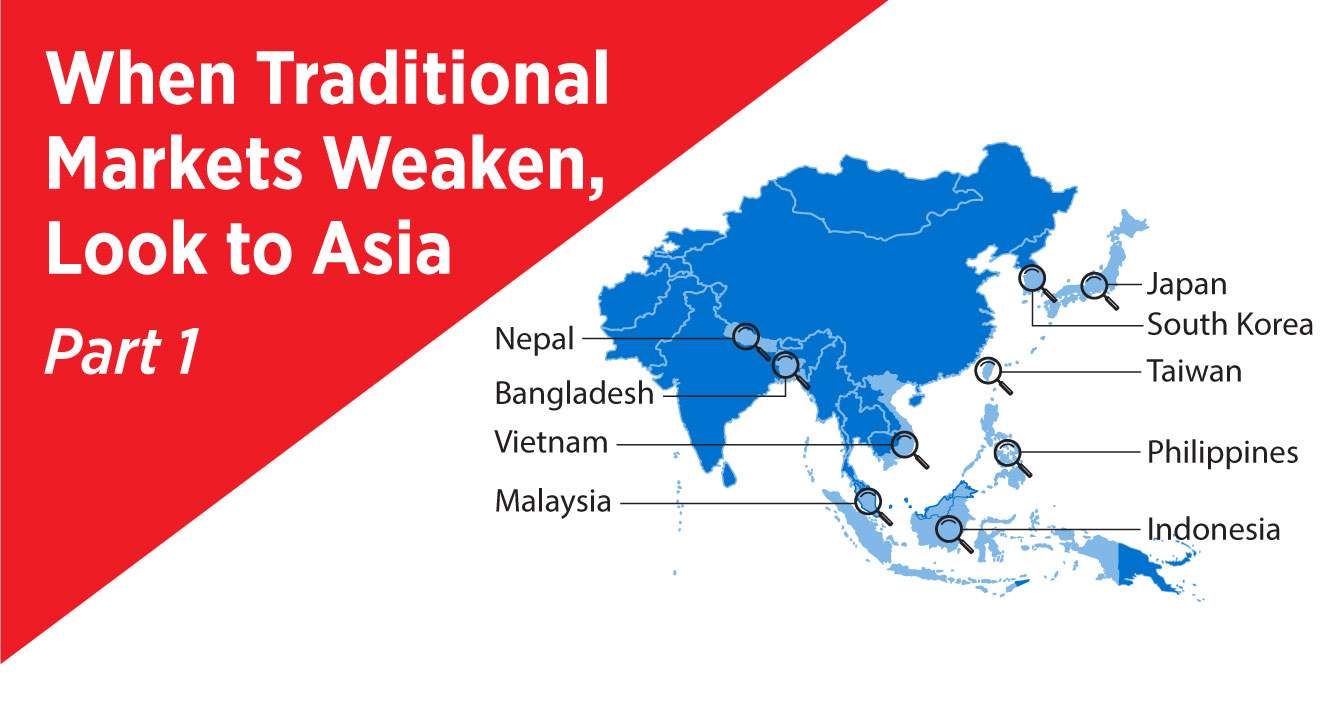

When Traditional Markets Weaken, Look to Asia Part 1

It’s good news / hurry-up-and-move news for Chinese students.

The good news: pandemic-era travel bans are lifted.

The hurry-up-and-move news: China announced it is returning to its previous position of NOT recognizing online credentials obtained from a foreign institution.

More than a few Chinese students spent spring semester scrambling to ensure their hard-earned credits will count. We trust they will, but there nevertheless was a swift rush to secure logistics.

We know what you’re thinking. A coveted market that’s been declining is now being encouraged, no, required, to travel if they want a foreign degree. Fantastic! While that’s all true, indications remind us to keep our expectations in check. And yes, we’re talking about politics, TikTok, and the increasing appeal of the UK’s brand of higher ed and career opportunities. 

So, while it makes sense to keep courting the Chinese market that continues to be the top exporter of students, it also makes sense to proceed with efforts to diversify student sources.

Important to note: It always has been wise to diversify, though only a small percentage of US institutions have historically invested in this level of internationalization. The volume is in China and India and that is where the recruiting investment has been focused for more than a decade.

Also important to note: China remains a highly valuable source country and we absolutely do not advise turning your institutional back on these students. There are still more Chinese students eager for a US education than any other nationality. India is the only other country that comes close.

In the midst of the more recent waning of Chinese students coming to the US (the decline first stared in 2016), we’ve provided insights on promising markets that may help boost your student yield. In recent blog posts, we’ve offered insights into evaluating Africa (part 1, part 2), Latin America (part 1, part 2), and the Middle East.

Today we turn to Asia, evaluating whether specific countries exhibit the important metrics that demonstrate a market ripe for student recruitment:

  • Rising youth population
  • Rising incomes
  • Employment opportunities for returning students

In this week’s post, get ready to take notes on student market opportunities in South Korea, Vietnam, Taiwan, and Japan. Next week we will look at Nepal, Bangladesh, Indonesia, Malaysia, and the Philippines. These countries are likely already on your radar. Are you keeping tabs on the potential for each one? We think it is in your best interest.

Read on to find out why…

Read More

Not Rocket Science

Global student recruitment, finding student segments domestically and abroad, is simply not rocket science.

We know the processes and don't need another generic report about what students are thinking and how important parents are to the process. If new student mobility trend data of significance emerges (thank you IIE and National Clearinghouse), you can count on us to evaluate it and report on it. But, most of the reports we are seeing right now from marketing agencies (like us) are rehashing everything we already know.

And annoyingly, they are somehow pointing to their nothing new findings as revelatory. Wut?

So, let’s get to work plotting out the work and bringing the successful results we all want.

The Formula: custom research on your differentiators, your strongest recruitment options (countries/regions), and messaging that engages your target audience on the channels they use.

That’s really about it. That’s what we need. Oh, and to do it successfully, that actually requires investment, technology, and expertise.

So...yes, trend analysis because decision making actually did change since 2019 - safety, cost, the value of education overall, visa issues - all much more significant. These factors existed before the pandemic, before the Trump administration’s anti-immigrant rhetoric, and the ever-horrific state of gun violence in the US. Not new info. All of these factors have been on students’ and parents’ minds for a while. Yours too, right?

And yet, international students continue to find value in a US education and the experience of living and studying in the US. And as they make their decisions, all the things we see in the latest reports and infographics about student mobility trends say essentially the same things we’ve seen for more than a decade.

Reputation matters. Rank matters (more in some regions than others). Career connections matter, parent opinions matter, etc., etc., etc. Tedious findings touted as new, ground-breaking, must-have trend analysis.

Read on for a few student influencers that are actually rising to the top of students' decision-making criteria, and more importantly, what all of this means for your institution's recruitment planning. 

Read More

Quick Hit Regional Insights for Student Recruitment

You won’t reach students in China using the same tactics you use to reach students in Brazil. Or Nigeria. Seems obvious to those recruiting students internationally, but you’d be surprised by what some marketers out there are pushing. It takes more than a tweak in ad copy to woo prospects from different countries. It requires a good deal of nuanced cultural insight.

Yes, you have Google Analytics and enrollment data to tell you which sending countries show interest in your institution (you’re using those, right?). But it’s deeper than this, as you well know. That’s why we’ve updated one of our most popular tools: the Country Comparison Cheat Sheet.

This easy-to-read spreadsheet breaks down key stats on the top 16 countries sending students to US institutions. We sourced the latest data from IIE, IBISWorld, InterNations, WorldAtlas, XE, and more to offer insights into each country.

The numbers we share represent data you could gather on your own, but we did the work for you. And we are connecting dots that don’t often get connected - though they should be.

Read on to download this free tool for you and your team.

Read More

Competitor Analysis: Quick Insights Available

Every enrollment VP is fighting for students who will add value to their institution. Domestic is heading for the 2025 cliff while international is beginning to rebound from the pandemic travel restrictions. 

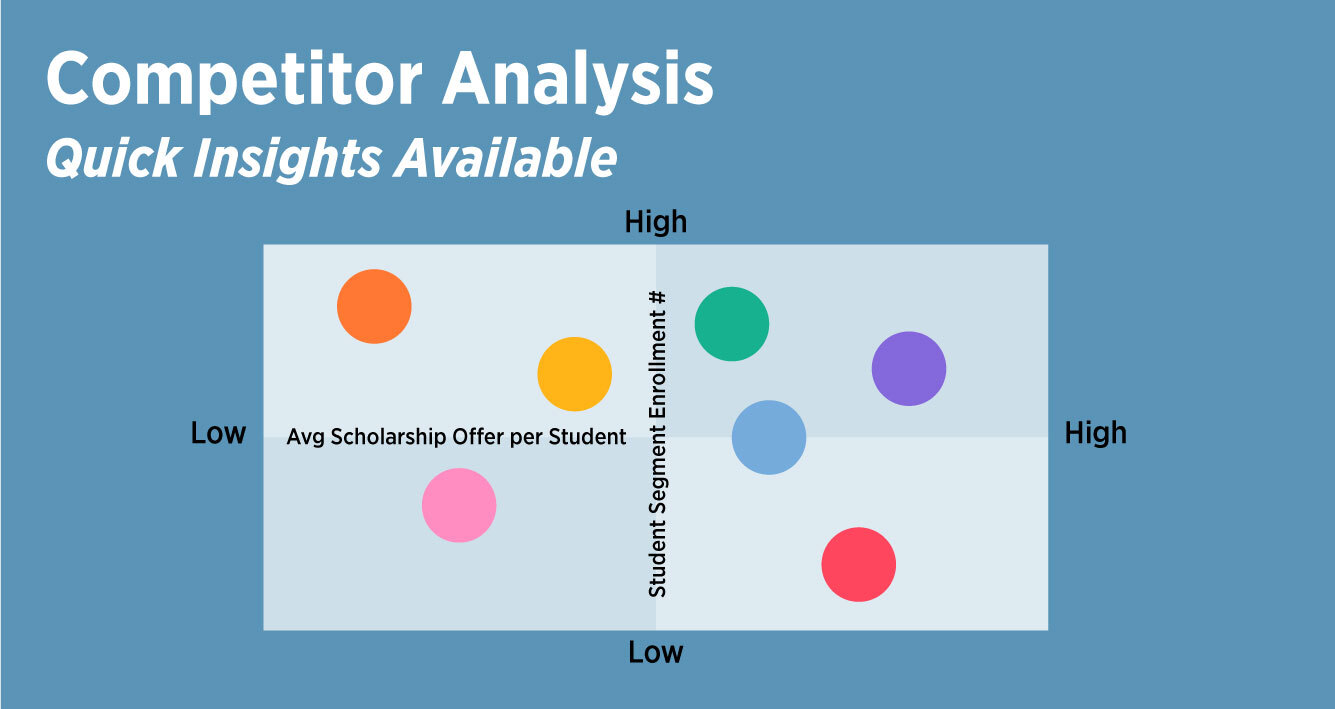
What better way to win market share than to tell the story that differentiates your institution? This week, for those of you not already familiar, we introduce you to Jon Boeckenstedt and a tool he’s created that can help you see quickly how your institution stacks up to your competition. Jon’s work consistently brings data insights and knowledge of the field to help institutions make better enrollment management decisions.

On the international side of things, be sure to register for the AIRC conference coming up in December where we will be presenting two valuable learning opportunities alongside colleagues from Northeastern University, Fordham Law School, and San Diego State University. Early bird rates are still on the table! See link below. And see you in Miami!

Read on to dive into the amazingly fast competitor insights you can gather and how you might use them to put the best version of your institution’s story out there. 

Read More

Meet Your Strategic Enrollment Advisors

As an education professional, you know deeply the power of a knowledgeable guide to expand your mind, challenge your beliefs, and push you to new heights.

Whether this guide takes the form of a favorite professor, dean, mentor, colleague (or a favorite blog), even the most experienced leaders among us can benefit from a little outside perspective and wisdom from time to time (read: always).

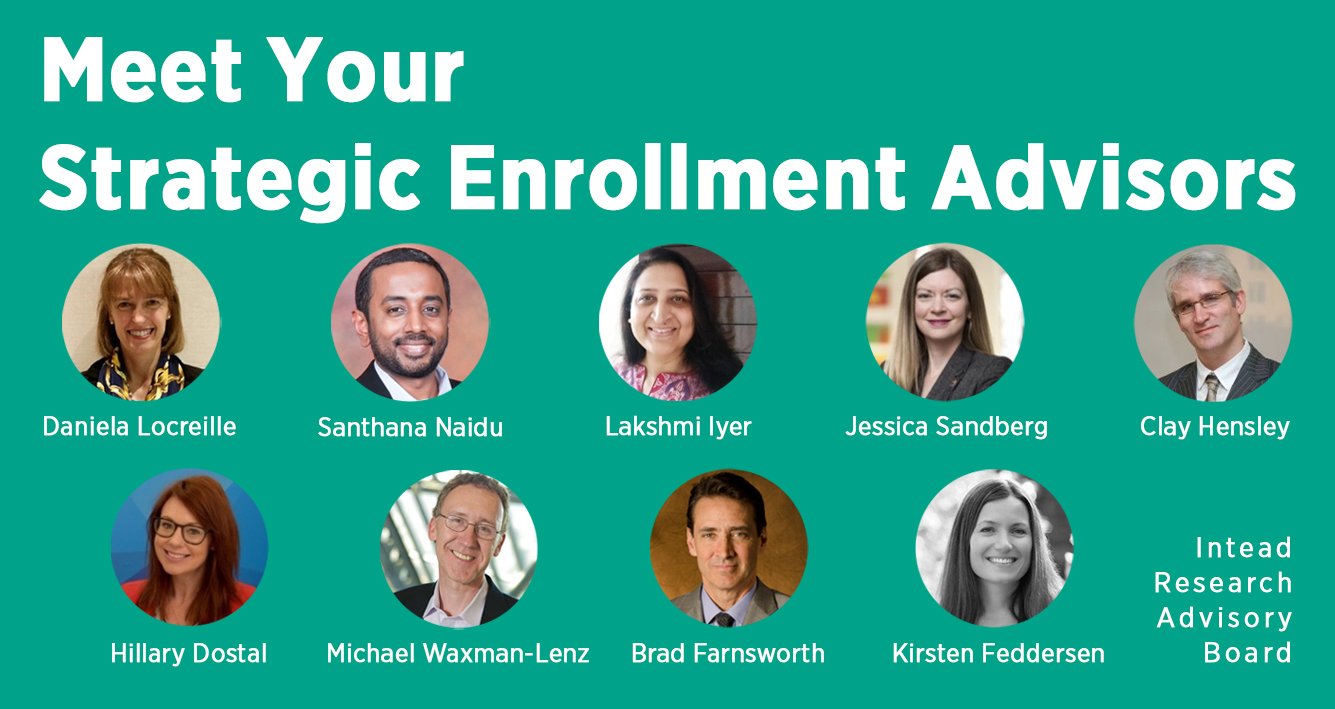
For Intead, that source of wisdom is our recently expanded Intead Research Advisory Board, a veritable who’s who of education industry leaders who guide our student recruitment and enrollment research on both domestic and international approaches.  

Don’t worry, we’re not just here today to sing their praises (although we could do that all day) or talk about how they help us look smart (although they do). ;)

The truth is, the Intead Research Advisory Board isn’t really for Intead. They’re here to serve you. With their expertise, we are able to provide you with fresh and deeply knowledgeable perspectives and new research and insights on topics that drive our industry and your institution forward. We’re ever grateful for their valuable work.

Read on to learn more about this powerful line-up, how their wealth of experience can help to power your institution, and the market intelligence we are working on and presenting soon.

Read More

Recruiting Intel Digest: The Most Useful Stuff from Q1 2021

Pro tip: If you read only one of our blog posts every few months, make it this one.

Between application reviews and a little thing called budget season, we know you may not have kept up with the weekly posts and resources that we’ve shared here on the Recruiting Intelligence blog over the past few months. And we can’t blame you!

From hosting webinar events in partnership with The Chronicle of Higher Education, and CIEE to publishing a market research report on the new Chinese mindset on US schools, we’ve been pretty busy ourselves.

So, we’ve created the Recruiting Intel Digest, a quarterly roundup post of the resources, downloads, and top insights we’ve published in the last three months which you can view, share, and download all in the span of your next coffee break.

All this with our signature focus on helping you produce stronger enrollment results based on trend data and marketing industry insights. You are so very welcome.

Read on for the latest Intead resources available to you — all in one place. Plus, a preview of what’s coming next…

Read More

Chinese Students, We Are Listening

Your Asian student communities are hurting right now.

Nearly 3,800 hate incidents against AAPI individuals were reported from March 19th, 2020 through February 28th, 2021 according to the Stop AAPI Hate reporting center. Nearly a third of Asian Americans report having experienced racial slurs or racist jokes since the beginning of the pandemic, this from a recent Pew Research Center survey. Then the killings in Atlanta last week.

As global leaders responsible for the safety, growth, and development of diverse student populations, what institutions say and do at this moment matters. And hashtags and statements of solidarity are not enough (they never are).

We, as a higher education community, do what we do because we believe in the power of cross-cultural communication and diverse student populations to move the world forward.

As the Intead team, that often means making space for those student populations (and their parents) to speak and be heard. We know how crucial understanding and listening to those thoughts, fears, and needs are to fostering a student-first ethos on your campus. It is this work that allows you to more effectively support all of your student populations, especially those most vulnerable to systems of racism and xenophobia, as well as the disturbing hate and violence that occurs as a result.

In early 2021, with this terrifying climate of rising anti-Asian sentiment in the US and views of the US among global allies reaching its lowest point in nearly two decades of Pew Research polling, we set out to understand how Chinese parents specifically are feeling now about sending their students to American institutions.

In partnership with WholeRen Education, an AIRC-certified agency and a trusted advisor for tens of thousands of Chinese students and families since 2010, we surveyed over 20,000 Chinese parents, the vast majority of whom currently have undergraduate and graduate students enrolled in US institutions, as well as parents of current high school students considering higher education. With a better than 5% response rate, we had more than 1,000 responses to analyze. We then followed up with a focus group to dive a bit deeper into our questions. We conducted all of this work in Chinese.

Some of the findings will likely surprise you. As academic leaders we see the news, we talk to our students, and we hold an entirely justifiable anxiety for our current Chinese students as well as the recruitment path to bring new Chinese students to our campuses.

The information we’ve gathered is incredibly important to your work. But more importantly, it points the way forward for your institution in how to help parents and students feel confident and safe in their decision to study in the US.

Read on to download your free copy of our new market research report, Is There a New Chinese Mindset on US Schools?

Read More

Your Students. Your Programs. In China — Register Today

The course of Chinese student recruitment never did run smooth.  

And in the last year, your institution’s road to recruiting, enrolling, and retaining students from one of the most complex international markets was bumpier than ever. Can we get our visa offices back, please?

Miraculously, despite the setbacks of the pandemic year, Chinese demand for a US education remains. Our upcoming market research with WholeRen Education (surveying 20,000+ Chinese parents) will shed some light on how the US brand identity is enduring and where your institution needs to focus to succeed in today’s Chinese enrollment market. 

Perhaps allow yourself a brief sigh of relief—but it’s not time to rest. (It rarely is).

There’s still work to be done to keep your institution strong in this new, more flexible, post-pandemic reality. And later this month, you’ll hear from those leading the charge (and learn from their successes) at our webinar event: Your Students. Your Programs. In China: Creating US-Style Classrooms for Your Chinese Students. 

Register Now

Your event pre-registration will also pre-register you for a copy of our upcoming Chinese Market research. 

At the event (date coming soon), we'll be interviewing several amazing resources for you about strategy, market insights, and powerful new program options to help your institution shore up both near-term and long-term enrollment in the Chinese market. We'll be talking about how 10 different universities managed their fall 2020 Chinese student enrollment and what they are doing to continue their success in 2021 and beyond.

 Speakers will include:

  • Brad Farnsworth, former Vice President for Global Engagement at the American Council on Education (and a member of the Intead Research Advisory Board)
  • Seamus Harreys, CIEE Vice President for Global Engagement 

More than 2,100 Chinese students studied in US-style classrooms in China during fall 2020 and spring 2021. The CIEE team helped each of them make it happen. Now, many institutions are working toward a longer term vision building a bridge between China and their US campuses. You can learn from their experience.

Read on for a preview of the valuable perspectives to be shared in the webinar.

Read More

Chinese Students Want to Hear from You

You and your team have been navigating the China recruitment challenges for years with some notable successes. Taking those long-haul flights and testing out the student fair operators. Building a reliable agent network despite the risks (thanks, AIRC). Learning WeChat and leveraging an entirely new digital marketing landscape. Developing meaningful global partnerships.

And then the visas and flights stopped.

As if China were not already the most complex marketing challenge for international student recruitment, along came COVID-19.

At this writing, the first F-1 visa appointments at US consulates in China are tentatively available as of August 12, notes WholeRen Education Chief Learning Officer Andrew Chen. Right now, it is unclear why any US institution might believe their Chinese students currently in China will be coming to their US campus this fall. Logistically, it seems entirely unlikely if not impossible.

Fortunately, and somewhat surprisingly, despite all the setbacks, Chinese demand for a US education is strong.

How do we know? Two proof points:

  • Market research we performed with WholeRen Education surveying 20,000+ Chinese parents just last month.
  • 2,000+ Chinese students voting with their feet and attending classes run by Syracuse, Rutgers, Clark, Babson, Penn State, Tulane, and others in US-style classrooms in China run by CIEE.

At the link below, you can pre-register for the release of our latest research for student enrollment professionals interested in succeeding in China based on current conditions and what will follow.

Pre-register Now

Your pre-registration for the latest research will also grant you access to our upcoming webinar interviewing three experts on the Chinese student experience. You’ll hear from one university on how they managed fall 2020 Chinese student enrollment and what the institution is doing to continue their success.

Read on for insights and practical tips to reach the Chinese market in the current climate and beyond.

Read More