Recruiting Intelligence

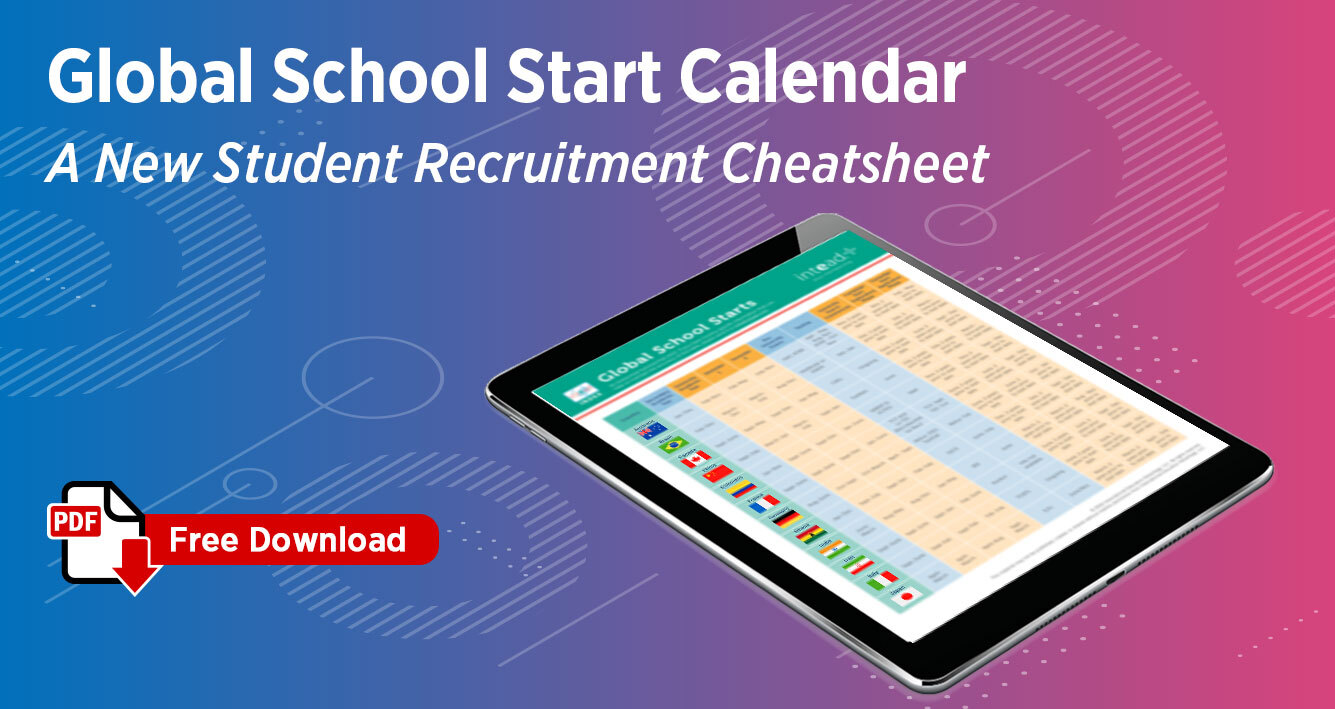
Global School Start Calendar — Free Download

In what month do students in Brazil graduate high school? How about China? Are they the same? Germany and France must be on the same schedule though, right?

Out of the top 29 countries sending international students out into the world, 11 of them have academic years starting in September and ending in June. Eighteen others don’t. And, no, German and French school calendars are not aligned.

Knowing when to reach prospective students is as important as knowing where to reach them. And when your audience is spread across the globe, school admissions and matriculation timing is anything but consistent.

This is important information to your student recruitment team if they are going to reach those students with the right information at the right time. Handy to have a cheatsheet with that information at your fingertips, right?

That’s why we’ve created the Global School Start Calendar featuring 29 top-sending countries. Knowing what drives your international students' planning plays into your recruitment and admissions messaging and timing.

This cheat sheet gives you at-a-glance dates and other relevant reference points for:

  • Secondary academic calendars
  • University academic calendars
  • Major academic exam dates
  • Perspective on student recruitment campaign launch dates

An important side note: Because dates change all the time, as do undergrad exam requirements, we will be updating this resource as appropriate. And, since you are part of the global student recruitment community, we more than welcome your input and updates to this reference tool.

If you see any information that has recently changed or want additional details added, please let us know. We want this tool to be really useful and can use our crowdsourced community’s help to keep it current.

This cheat sheet will be available for free to blog subscribers for a limited time. Or, join Intead Plus and your team can access this and all our other Intead Index student recruitment essentials any time the need arises.

Ready to download your free copy of our Global School Start cheat sheet? Read on

Read More

Recruiting Intel Digest: The Most Useful Stuff from Q4 2022

Coming in hot off a truly inspiring in-person workshop with peers and industry leaders yesterday. So many wanted to come but for the timing (or internal approvals). Not to worry. We’ll catch you up in the new year. But the word is our industry is feeling optimistic. Even the new Open Doors data supports our enthusiasm.

Should this energy and associated momentum have kept you from diving into all our posts of late, we totally get it. No hard feelings. That’s why we’re putting all the top news from this fast-moving quarter together for you in one easy-access spot.

But first, if you’ll be at ICEF this week,be in touch. We’d love to connect.

Please note: Our Recruiting Intelligence Blog will be on holiday hiatus for the next 2 weeks. See you in 2023 with some great slide decks for you to download and a surprise announcement to help you achieve more.

Now, read on for best stuff (student lead platforms, 5-year data trends, LATAM stats, and more) from Q4…

Read More

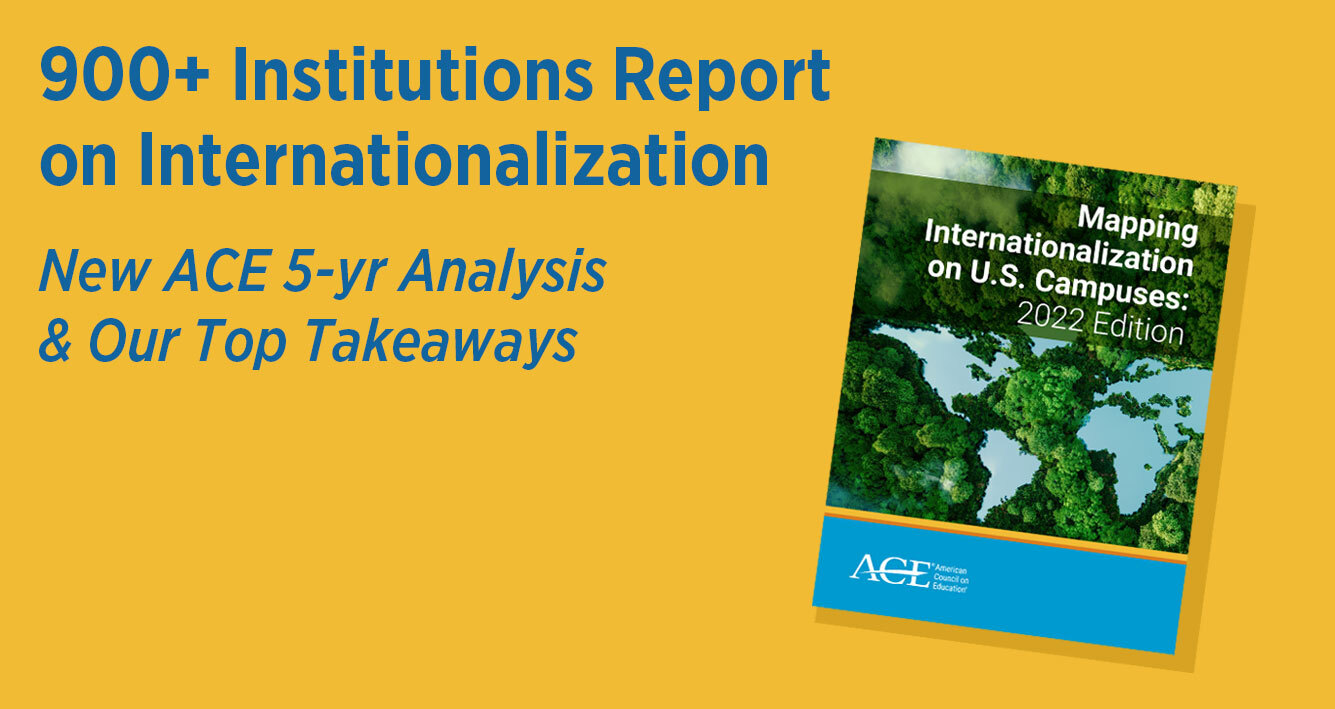
900+ Institutions Report on Internationalization

This month the American Council on Education (ACE) released the 5th edition of its signature “Mapping Internationalization on U.S. Campuses” report. Some say it’s the most dynamic edition yet as it lays bare both pre-pandemic and COVID-era trends to reveal our collective internationalization priorities during a particularly precarious time.

But let’s be honest, it has been a precarious time here in the US and globally since 2016 at this point. According to one data point, COVID crashed internationalization (our words, not ACE’s).

Consider this: In 2011, the percentage of respondents who said their institutional internationalization was “very high,” “high,” or “moderate” was 56%, rising to 66% in 2016, 64% during 2016-2020, and 40% in 2020-21.

Clearly travel limitations, from the basic human fear to actual travel cut offs, that COVID brought had a clear and significant impact on student mobility (obvious) and institutional responses. Yet, the international community turmoil brought on by the US and other nations’ broad and deep political upheaval since 2016 has changed the landscape in terms of regional student mobility and study option perspectives as well.

Overall, a very steep decline. But not the full story. And the latest IIE data release helps tell that story. But, one report analysis at a time. There are only so many words we can all digest in one sitting. And our 5 key findings below will set you up for some great conversations with your internal colleagues.


50% off ($400 savings) on Intead Plus Complete membership for all registrants attending our Global Marketing Workshop in San Diego. Deadline for this offer is Friday, Nov 18, 2022.

If you are attending the AIRC or ICEF Conferences - here is a huge plus opportunity. 

The Intead/San Diego State University One-Day Workshop on December 13th will be a hands-on opportunity to learn from an awe-inspiring international student recruitment faculty.

  • A full day of international student recruitment strategy and execution discussion
  • Two luminary keynotes
    • Luncheon on Social Justice with Dr. Jewell Winn and Dr. Adrienne Fusek
    • Dinner on Chinese Student Influencers with Dr. Yingyi Ma and Brad Farnsworth
  • At $350 for the day (inclusive of all meals), this learning opportunity is a steal - basically free when you factor in the 1-year Intead Plus membership.

Come with Questions. Leave with a Plan.


As Dr. Maria Claudia Soler, ACE’s senior research analyst, learning and engagement division (research), and lead author of the report, told University World News in a November 8, 2022, article, “While the pandemic impacted internationalization across the board and many internationalization activities were disrupted, we also observed serendipitous outcomes. For instance, institutions used technology to expand virtual international internships, international student recruitment and course-level collaborations in ways that used to be unthinkable some years ago.”

Nodding? You should be. Even without the data, we know this to be true. It was a wild ride and pretty much every surviving institution learned how to adapt, and quickly. Most are better for it. But that’s a different post.

One question we want to see added to the survey and report next time around: the role of the CFO in all of this. How connected to (and aware of) the internationalization priorities are they? Budget approval is key to internationalization efforts. Presidents, Provosts and SIO are all reliant on a CFO’s leadership and insight.

Today we share 5 key findings from the report that really popped for us. And we offer our take. Read on

Read More

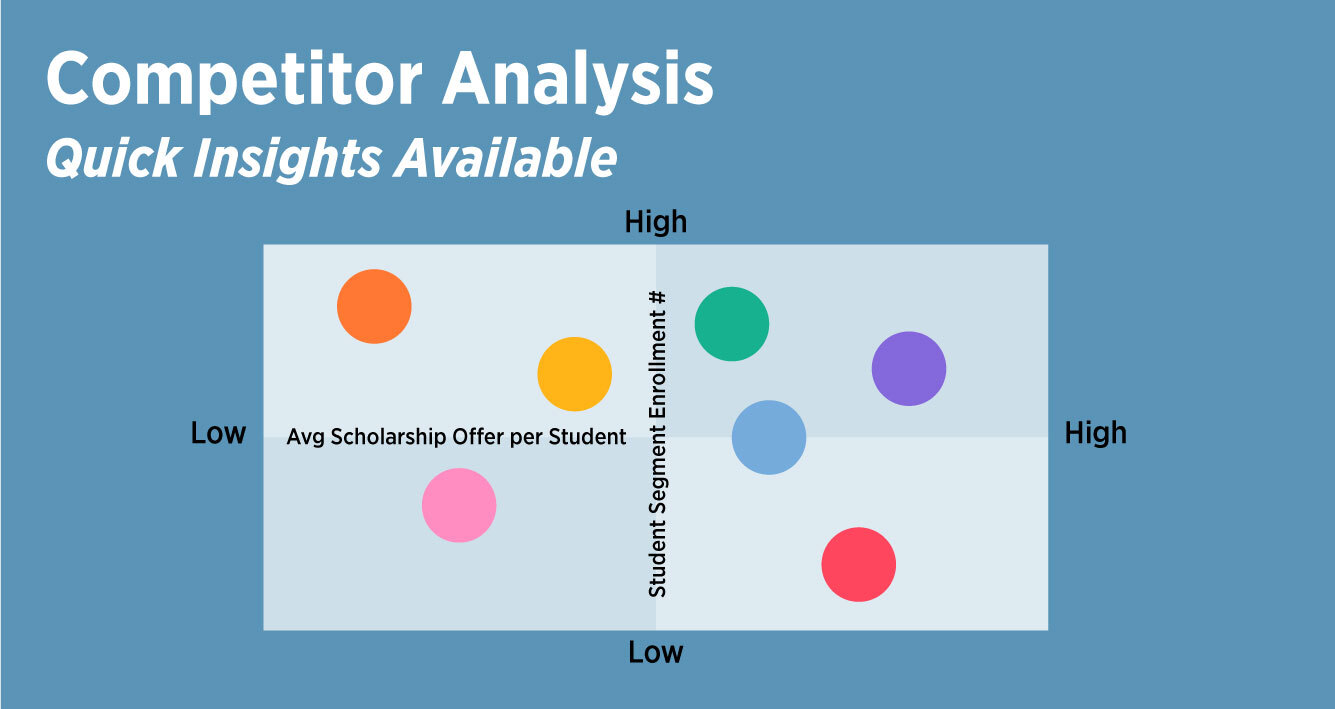
Competitor Analysis: Quick Insights Available

Every enrollment VP is fighting for students who will add value to their institution. Domestic is heading for the 2025 cliff while international is beginning to rebound from the pandemic travel restrictions. 

What better way to win market share than to tell the story that differentiates your institution? This week, for those of you not already familiar, we introduce you to Jon Boeckenstedt and a tool he’s created that can help you see quickly how your institution stacks up to your competition. Jon’s work consistently brings data insights and knowledge of the field to help institutions make better enrollment management decisions.

On the international side of things, be sure to register for the AIRC conference coming up in December where we will be presenting two valuable learning opportunities alongside colleagues from Northeastern University, Fordham Law School, and San Diego State University. Early bird rates are still on the table! See link below. And see you in Miami!

Read on to dive into the amazingly fast competitor insights you can gather and how you might use them to put the best version of your institution’s story out there. 

Read More

LATAM Recruiting Series: Insights on Mexico

Our 2021 Latin America international student recruiting series has offered insight into the opportunities in Brazil, Colombia, and Ecuador. Now: Mexico.

Mexican student enrollment in US institutions grew significantly over the last 4 decades. A rising middle class has driven this desire and ability to afford education abroad. In 2020 the number studying in the US stood at roughly 14,350. That figure represents about 50% of all Mexican outbound student mobility.

Not so long ago, during the 2016 US presidential election (remember that?), our market research found that a whopping 80% of Mexican students in our survey told us they would be less inclined to study in the US if Trump won the presidency. A stunning number by all counts. However, we noted at the time that we believed this was an expression of distaste, and that 80% of students would not actually act on these feelings. 

Our science and art of market research proved accurate. A drop in US student enrollment from Mexico did follow the Trump presidency but nothing as dramatic as 80%. Still, it hurt many institutions and stifled opportunity for many students. We suggested that the real drop would likely be closer to 10% during the Trump presidency and in fact, the number of Mexican students enrolling in US institutions dropped by 8% in 2017 and then another 3% in 2018. These drops occurred despite an education initiative in Mexico during that time that set a goal of encouraging 100,000 Mexican students to seek a foreign education.

During this period there were notable increases in Mexican student mobility to Canada and Germany. However, the numbers were still relatively small in these countries. Read on for deeper marketing insights as you consider your international student recruitment strategy for Mexico. 

Read More

LATAM Recruiting Series: Insights on Ecuador

If you haven’t had an opportunity to read our recent LATAM recruiting series posts, check out Brazil and Colombia. Today in our series, a look at Ecuador. Not the typical place for universities to invest in international student recruiting, but a valuable consideration as you think about diversifying your source countries.

The US and Ecuador maintain consistent and strong economic ties. On July 1, 2021, Ecuador received 1 million COVID-19 vaccines from the US, with another shipment due to arrive three weeks later. With a population of almost 18 million people, Ecuador’s vaccination rate is close to 25% for the first of two COVID-19 doses. 

According to the most recent SEVIS data from March 2021, the US had 3,025 active students from Ecuador. Of these students, 41% are seeking an undergraduate degree. Currently, student visa processing for requests to study in the US are experiencing the same frustrating backlogs and delays as other parts of the world. Getting recruiting processes back to pre-COVID smooth is going to take quite a bit of time.

With that as an introduction, let’s take a look at Ecuador and the top five student influencers for studying in the US.

Read on for our recruiting insights and a handy (and cool) COVID-19 vaccination rate tracking tool from Reuters — you’ll want to check this as you plan your global recruitment travel as funding and travel restrictions permit. 

Read More

LATAM Recruiting Series: Insights on Colombia

Welcome to another installment in our LATAM recruiting series. In part one we shared insights and predictions about Brazilian student mobility. This week, our focus is on Colombia. As you diversify your student sources, Colombia makes for a valuable addition if you are not already active there. COVID creates obstacles for all of our source countries in 2021, but that doesn’t stop us from maintaining important international connections and pursuing the opportunities that endure. 

Let’s get down to business and explore some numbers. According to the SEVIS March 2021 report, Colombia has nearly 10,000 active students in the US, with IIE reporting Colombia 23rd in ranking for sending students to US universities. This same report shows the interest in graduate degrees being the preferred choice with a 34% enrollment rate compared to 25% for a bachelor’s degree and 11% for an associate’s degree.

No surprise, pandemic-fueled personal instability with contributing social and economic turbulence has Colombian students and parents concerned. Taking that into consideration, as well as Colombia having significant income inequality second only to Brazil in Latin America, some Colombian students face seemingly insurmountable challenges when considering tertiary study opportunities.

Overcoming obstacles in this field has so much to do with developing and nurturing the international relationships that turn into pipelines. Consider the conversations your institution already has with prospective students and the channels being used. Faculty connections, alumni connections, agent connections all have value for the intelligence they bring to your planning and the potential for growth. These all play into the digital marketing approach you will deploy to capture greater student awareness and action.

Online Connections Matter

In the latest bulletin (2018) from the Colombian Ministry of Telecommunications, 60% of the Colombian population has Internet access, with more than half of users connecting with mobile phones. Important as you consider your website and landing pages.

Although there is a digital divide leaving countryside dwellers less connected, the larger cities are taking advantage of their 4G services and free wifi hotspots. Facebook and WhatsApp are the most commonly used with We Are Social reporting an increase in social media users in Colombia by 34 million, an 11% increase from April 2019 to January 2020.

Read on for our assessment of opportunities to recruit Colombian students...

Read More

LATAM Recruiting Series: Insights on Brazil

Back in March/April 2020, we talked about the big picture factors that would reduce student enrollment in 2020/2021: job/income loss, restrictive student visa and travel regulations, COVID-19 rates of infection, and limitations on the availability of internships and jobs. Now we need to add to those considerations: vaccination rates. 

Following our publication of enrollment marketing insights about the two largest senders of students to the US (Report Links Available Here: China and India), we find ourselves wanting to know more about LATAM countries and whether there are insights to share with our enrollment colleagues.  

According to SEVIS data, there are more than 23,000 Brazilians studying in the US today. Our friends at WENR predict Brazil will become one of the top five countries worldwide for outbound students seeking degree programs by 2035. A lot can happen between now and then. Nevertheless, we know Brazil will remain an important source of students to academic programs around the world.

Setting the Context

Being proactive in our enrollment marketing initiatives requires data which informs strategy. A few grounding points about overall international student mobility from the past year to put our discussion of Brazil’s opportunities in context:

  • IIE’s widely reported analysis showed a 43% drop in international student enrollment in the US for Fall of 2020. 
  • Not all institutions had the same experience. In general, those that typically do well with enrollment continued to do well.
  • With testing requirements dropped by many institutions, application rates are soaring, though enrollment numbers are struggling. Intention does not equal follow through. 

A Little Motivation

We can emerge from this turbulent and unstable environment with knowledge, insight, and better planning that incorporates recent experience and current data. 

Those who win embrace change! Those who embrace change are incorporating the latest tools to segment audiences and target those prospective students most likely to want what their institution offers.

With that, let’s take a look at Brazil’s opportunities. Read on...

Read More

Student Recruitment Insights from AIRC 2020 Conf - Slides Available

We’ve been presenting at the AIRC conference for eleven years now, and while the gathering looks very different this year, the value of connection and the wealth of ideas shared was a comforting constant from years past in Miami. Although we did miss the poolside networking on a warm December evening.

This year, members of the Intead team were honored to present two sessions together with our amazing colleagues from universities and other experts in the field focused on the AIRC 2020 Vision of “Charting the Waters.”

At Intead, charting the waters of this year has meant gathering and analyzing data, developing targeted, clear (and comforting) communications during this difficult time, and strategizing around new markets and tools to help institutions move their enrollment goals forward.

This absolutely gut-wrenching year, we started addressing the radical changes to student enrollment and student success on February 19 with a blog about adjusting the approach to recruiting international students from China. Days later, we convened enrollment management and study abroad experts for two powerful webinars addressing global ramifications (here and here). This year, our team has published, non-stop, with enrollment management guidance in toolkits, case studies, and eBooks (in addition to this weekly blog).

Read on for a collection of our highest value tips and to download our AIRC presentation slides. You'll find that oh-so-happy link at the bottom of today's post. (Making you work for it ; -)

Read More

When the Cutting is Done, the Smart Investing

As we engage with our colleagues at the AIRC virtual conference this week and next, the discussions have us thinking, planning, and doing.

The financial challenges are quite real and the losses in the world of academia will continue to pile up in the near term. Survival and growth are possible, and your team knows that. Your leadership is engaged in some exceedingly difficult decision making right now.

Here are the financial realities: While deep and troubling, many institutions have been here before and frankly, this kind of pain is not all that new. Pandemic or no, institutions were heading for a financial crisis. Current circumstances have sped up the process. Those that have survived these challenges in the past stop cutting at some point and invest in growth.

We all want those investments in growth to be the right ones, but how do we know? Let’s look to our industry experts from our fellow AIRC members working in the trenches, to Moody’s Global Services, and the Chronicle of Higher Ed and make some sense of this. Concrete advice follows. Read on. 

Read More