
Recruiting Intelligence

New Revenue Sources: Your Success Depends on It

How does a university facing reduced enrollment find new sources of revenue? Let's get specific. 

There are a number of answers to this question. And they hinge a bit on how much time your institution has. Is this need for diversified sources urgent, as in, “Let’s get a new program out there this summer to increase fall enrollment”? Or do you have funds (endowment or reserves) to draw upon for the next year to weather the storm, allowing new revenue sources to be developed more slowly?

Either way, the response will require speed -- not a strong suit for academic institutions in general. And it requires a level of nimble creativity and well-coordinated collaboration. These are hard combinations to pull together. But mostly, it is the compressed length of time to bring a new idea to market that will likely be your biggest challenge.

With this post we are offering a range of ideas for new academic programs that you can offer to students across the country and around the world. For the most part, these are all programs that you can create from what you have on hand already. There’s a bit of repackaging and rebranding required. And an innovative delivery system. But it can all be done in the time you have available.

What’s the catch? Why haven’t you done this before? Well…

To succeed at this, you must have support from the those at the top and the ability to innovate. Easier said than done. But now your success depends on just that — getting it done. 

Want to find a way to fill the looming holes in your revenue streams? Our recommendations and tips follow.

This is not for the feint of heart. Buckle up and read on.

Read More

How Students Pay You Is Changing - Part 3

This week we wrap up our three-part series on #FinTech, where we’re exploring how money for college can be found and moved faster, safer, and smarter, alleviating some of the headache for students, their families, and this time around, for university administrators. This is part of our focus on #EdTech and all the changes our industry is experiencing.

In our first piece, we talked about new student loan options, especially for students from underserved demographics, those looking for social equality, those who want unique repayment terms, and international students. Then last week, we jumped to alternative funding sources, such as micro funding, income share agreements, and new developments in scholarship FinTech.

Those areas of FinTech were all helpful to the students seeking ways to finance their educations and helpful for university administrators to understand as the financing tools and options you students can access change.

Today we are looking at what is new in the world of financial data and payment processing. Let's consider how your job might get a little easier.

And speaking of making your job a bit easier, we have 3 new Intead student recruiting research reports headed your way. Now is a great time to consider an Intead Plus Bookshelf subscription. Don’t miss these valuable reports to help you improve your institution’s recruitment game:

  • Student Interactions on Peer-to-Peer Recruiting Platforms
  • Student Interactions with Chatbots and other Artificial Intelligence Tools
  • Student Recruiting in Emerging Markets: Africa and Latin America

Or you can learn from us with a personal meeting: we will be discussing our latest research and presenting our student recruitment insights at the upcoming TABS, ICEF and AIRC conferences. Email us to set up a meeting.

Read on for important insights into a set of really valuable questions you need to ask before embracing the latest FinTech tools…

Read More

How Students Pay You Is Changing - Part 2

This week we continue our three-part series on #FinTech, where we’re exploring how money for college can be found and moved faster, safer, and smarter, alleviating some of the headache for students, their families, and even for administrators. This is part of our focus on all things #EdTech.

Last week, we dove into new student loan options, especially for students from underserved demographics, those looking for socially conscious financing, those who want unique repayment terms, and international students seeking financing. If you didn’t get a chance to read it, you can check it out here.

A quick shoutout to NAFSA's latest issue of International Educator. It was in our mailbox this week and it should be available online soon. Great articles on priority topics: student services, and student employment opportunities.

With 3 new Intead student recruiting research reports headed your way, now is a great time to consider an Intead Plus Bookshelf subscription. Don’t miss these valuable reports to help you improve your institution’s recruitment game:

  • Student Interactions on Peer-to-Peer Recruiting Platforms
  • Student Interactions with Chatbots and other Artificial Intelligence Tools
  • Student Recruiting in Emerging Markets: Africa and Latin America

Or you can learn from us with a personal meeting: we will be discussing our latest research and presenting our student recruitment insights at the upcoming TABS, ICEF and AIRC conferences. Email us to set up a meeting.

Now a look at alternative funding sources. Read on to find out what exists outside of student loans.

Read More

Moving the Needle on Your International Student Recruitment

So your international enrollment numbers are ok, but not what you need them to be.

Or worse, like many of our colleagues, your numbers took a real dive over the past 12 to 18 months.

What steps can you take that will move the needle north? And north of what? How much growth can you expect? Oh, and how much investment will that require?

Let’s just take a breath and point out that, you ask some really hard questions!

Let’s try to answer them…with DATA!

Read on for some concrete next steps...

Read More

Developing a Plan for International Student Recruitment

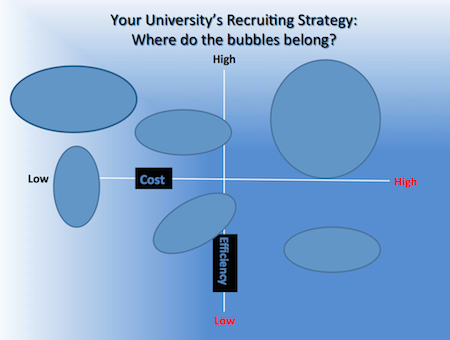
What factors need to be considered in developing a strategic plan for international student recruitment? Which stakeholders need to be involved in that process? Though there isn't a one-size-fits-all solution for all institutions to these questions, we'd like to use this post to give you some factors to consider as you develop or augment your strategic plan.

Read More

Grad student mobility in 2024 is easy to predict. Really?

“It's tough to make predictions, especially about the future.” as Yogi Berra is famously quoted as saying.

In general, it seems much more fun to make long-term predictions, since nobody will check back whether we are right or wrong. And yet, with this blog coinciding with Election Day, there are plenty of pundits making all kinds of near term predicitions as we write this blog. At least half of them are going to be wrong. Will any of us go back and take them to task?

So why all this talk about predictions? The British Council published their 2024 forecast for postgraduate mobility trendsICEF was kind enough to post the full report. 

Elevator summary: 
  • Continued strong growth in post-graduate mobility 
  • The U.S. is projected to grow 4% per year and host 407,000 graduate students (Good news since the graduate school deans were worried about their enrollment figures.)
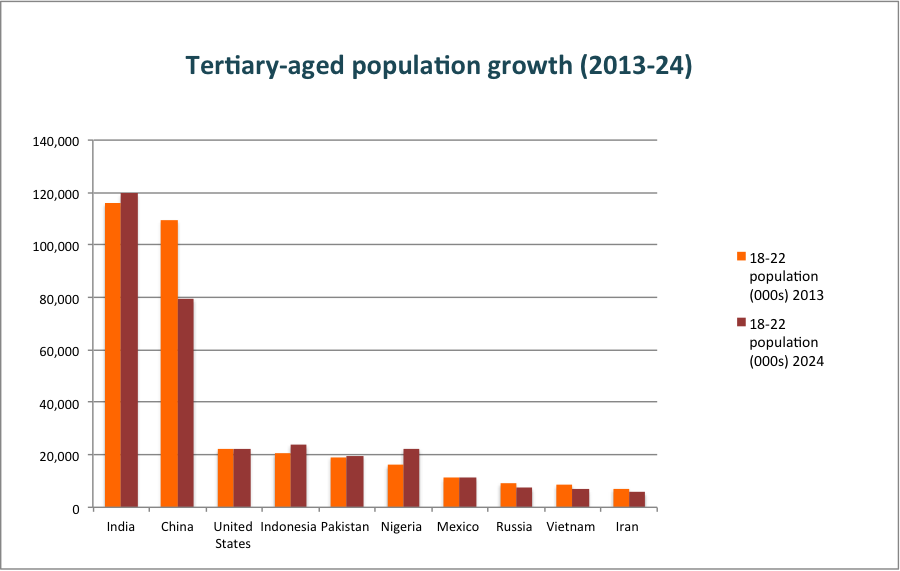
  • India will be a driving force and Chinese graduate students are expected to increase despite a decline of 30 million students in China
  • Useful summary of demographic trends for higher education 
  • The status quo is projected forward without any impact from technological, policy or attitudinal changes

The authors state clearly that they rely on trends, "for which there is data available, and do not take into account other variables that may affect international student mobility in the future."

We'll be honest with you, we are really struggling with this last line. Making predictions about the future without considering other variables for which you have no data? Hmmmm.

Read More

Can Millennials Change Marketing Forever? Uh, yes (eyeroll).

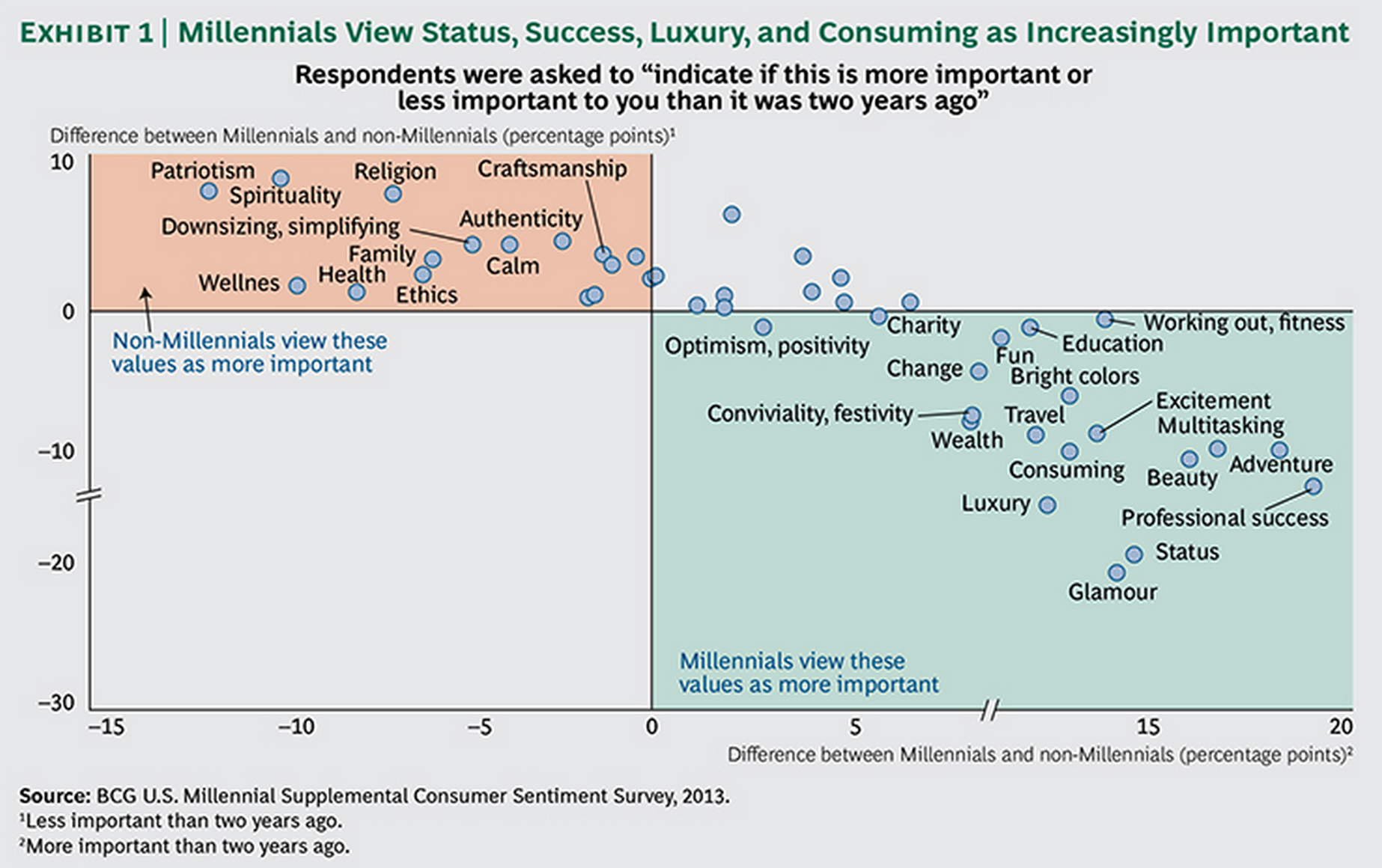
"How Millennials Are Changing the Face of Marketing Forever -- The Reciprocity Principle" is a research piece published by BCG (Boston Consulting Group), a management consulting firm. While the report reviews how millennials interact with a range of consumer brands and products, there are valuable lessons for those of us in academia. After all, this age group is pretty heavily represented in our classrooms, hallways, and registrars. Let's see what we can learn from BCG.

Read More

International Student Enrollment Data - Nearly Real Time from SEVIS

In honor of the U.S. Federal Tax Filing Deadline this week, we dedicate this Intead Insight to another federal agency with filing requirements – the US Immigration and Customs Service and the SEVIS system that many of you know all too well (and wish you didn't).

We all know that the visa process plays a significant role in the university enrollment process. We highly recommend you listen to our podcast with former State Department Officer Tony Edson for valuable insights into the State Department's Visa Services.

Read More

Justifying College Costs: Here's The Help You Need

How do you successfully market education? Is today's youth so disaffected by bleak job prospects that they just don't care? Are parents turned off by inflated and growing tuition costs?

Higher ed is increasingly challenged to demonstrate that education matters. More than ever before, higher ed must demonstrate that there is a positive return on the investment of time and money. What's a university to do?

Objective research to the rescue: the Pew Research Center recently provided a useful study, called “The Rising Cost of NOT Going to College.”

Chart 1 (below) shows the growing divergence of earnings between groups with different levels of education.  As you can see the gap has risen from generation to generation. Today’s millennials, with at least a Bachelor degree, earn significantly more than less educated full-time worker in the same age bracket of 25-32. 

Read More

Micro-Student Recruitment Markets in China

China is the second market in our series on niche or micro-markets in student recruiting. Last week, we covered the Indian market as presented by Lakshmi Iyer, today we are sharing with you the insights from Kim Morrison from GrokGlobal on the Chinese market. Kim gave a great presentation at the annual AIEA conference in Washington, D.C., in February 2014.

We recommend that you download the presentation which contains many more fascinating slides than we can present here (registration required - Please note that the actual presentation starts on slide 5).  

Read More