Recruiting Intelligence

Getting Started with Email A/B Testing Part 1

Email marketing isn’t a matter of simply hitting ‘send’ and hoping for the best. The best email campaigns develop from multiple rounds of A/B testing. Not news to you, right?

While this is basic (and easy) stuff for some digital marketers, there are still many institutions struggling to actually putting it into practice. Staffing challenges anyone?


Come with Questions. Leave with a Plan.

How confident are you with your selection of international student recruitment markets right now? 

The Intead/San Diego State University One-Day Workshop on December 13th will be a hands-on opportunity to learn from an awe-inspiring international student recruitment faculty.

  • A full day of international student recruitment strategy and execution discussion
  • Two luminary keynotes
    • Luncheon on Social Justice with Dr. Jewell Winn and Dr. Adrienne Fusek
    • Dinner on Chinese Student Influencers with Dr. Yingyi Ma and Brad Farnsworth
  • At $200 for the day (inclusive of all meals), this learning opportunity is a steal. (Pricing goes up to $350 on October 24, 2022).

And for those of you going to NAFSA Region XI, be in touch so we can chat. 3 super Intead presentations coming your way during that event.

Getting back to the discussion of email marketing, the fact is, most enrollment marketing teams have limited time to review their data and modify their approach and content based on what they see. Those taking these steps are ahead of the curve.

The creative art of email marketing has everything to do with knowing your audience and tapping into your recipient’s curiosity. Your recipient has to think there is something of value to them because of the sender or the content.

This week, we take a closer look at email A/B testing, also known as split testing – the process of sending two slightly varied versions (version A and version B) of an email to two different sample groups of your email list. The email version that receives the most opens and importantly, valuable clicks (conversions), is deemed “winner” and gets sent out to the remainder of your list.

This approach is the best (and simplest) way to optimize your email marketing campaigns and quickly pinpoint what’s working and what’s not. Often it is the subject line that has the most power. But also you can test whether your prospective students click more on buttons or link text? What color button works best? Do parents respond to subject lines with emojis, or should you leave that to your student segments?

And given that you have so many important student segments to consider (domestic regional, domestic distant, international by country, non-traditional, first-year, undergraduate, graduate, transfer, program of interest, financial capacity, ethnicity), the testing you can be engaged in can become a bit complicated. So, it’s important to have this done with a bit of rigor and careful tracking.

Yes, of course, we are here to help when you are ready to truly adjust your content to maximize engagement and conversion. The results will justify the effort.

Read on for some of our best practice tips just to validate that your team is on the right track. And, be sure to share this post with the copywriters on your staff. It's a great primer for the newer marketers on your team. 

Read More

Recruiting Intel Digest: The Most Useful Stuff from Q3 2022

The relief of entering a more “normal-ish” academic year is met with both new and familiar recruitment and admissions challenges: student housing shortages, diminishing interest in postsecondary education here in the US, eroding confidence in our academic institutions, and increasing competition for students from abroad. Oh, and the looming demographic cliff in the US.

One step forward. Two steps back. (Or was that four? Maybe let’s not count right now.) This from the marketing agency always pushing analytics ; -)

Truth is, we’re not that cynical. But if you are reading the edu literature, the headlines would push anyone in that direction.

Nevertheless, if you follow what IIE has to say, then in-person learning has rebounded, as has in-person study abroad and international applications. We are waiting on concrete industry enrollment numbers to confirm growth, but still, we know what is happening out there. There is progress on many fronts.

There are always cycles. And those who analyze and plan are far more likely to succeed. Too busy to do it well is not an option. Too cynical to fight for success really doesn’t work either. Optimism tied to well-researched targets motivates the team. Motivated, proactive partners can truly move the needle.


COME LEARN WITH US!

Among our colleagues in this field, we see a tremendous thirst for gathering and evaluating our options, with time to really talk it through. The Intead/San Diego State University One-Day Workshop will be a hands-on opportunity to learn from an awe-inspiring international student recruitment faculty.

  • Full-day, hands-on workshop on strategy and execution: Come with questions, leave with a plan.
  • Two luminary keynotes
    • Social Justice Luncheon with Dr. Jewell Winn and Adrienne Fusek
    • Chinese Student Influencers Dinner with Dr. Yingyi Ma and Brad Farnsworth
  • At $200 for the day (inclusive of all meals), this learning opportunity is a steal. (Pricing goes up to $350 on October 24, 2022).

As you take a moment to weigh the opportunities in higher ed today, we offer a recap of the most valuable news from Q3 2022, including insights on China and Africa as well as some practical how-to tips on marketing to the Gen Z digital natives. Read on

Read More

Prospective Students Seek a Career Network (Part 2)

If career outcomes truly drive prospective student decision-making (they do), then a critical question arises for most institutions: Are you effectively utilizing your alumni to recruit new and retain current students? (We know what your answer will be).

Last week’s blog post laid out the benefits of building a strong global network of alumni and three cost-effective ways to get it off the ground:

  • Modernize data management
  • Start small and build out
  • Key into senior class leadership

Now, let’s talk about getting that network to engage, recruit, and help retain students.


But first, come learn with us. Your key international student markets are not what they used to be. Among our colleagues in this field, we see a tremendous thirst for gathering and evaluating recruitment options. Now is the time to pause and think this through. Join us at the Intead/San Diego State University One-Day Workshop, it’s a hands-on opportunity to learn from awe-inspiring international student recruitment faculty. You won’t want to miss it.

  • A full-day hands on workshop on strategy & execution. Come with questions, leave with a plan.
  • Two luminary keynotes
    • Luncheon on Social Justice with Dr. Jewell Winn and Adrienne Fusek
    • Dinner on Chinese Student Influencers with Dr. Yingyi Ma and Brad Farnsworth
  • At $200 for the day (inclusive of all meals), this full-day learning opportunity is a steal. (Pricing goes up to $350 on October 24, 2022).

Ok, back to the power of your alumni!

The Michigan State University Alumni Association has had a strong program with clear goals for its Alumni Student Recruitment program:

  • Increase the number of highly competitive and qualified students considering Michigan State at the undergraduate level and increase the percentage of admitted students who enroll
  • Provide a local information source for inquiring students, applicants, admitted and enrolled students, and their families
  • Provide regional assistance to the Michigan State admissions staff

Back in 2018, we were fortunate enough to co-present with Daniel Spadafore when he built and led this program at Michigan State in his role with the International Advancement Office. Also part of the presentation, Dr. Gretchen Dobson who has provided strong, consistent advocacy for the importance of alumni engagement that universities typically overlook.

Michigan State's goals can be adapted to other institutions based on their leadership, resources, and of course, the alumni network they have tracked to date. The process of implementing such a program is not as complicated as you may think.

Read on to learn more about how to develop an action plan for your alumni network that can yield positive returns on your investment.

Read More

Prospective Students Seek a Career Network (Part 1)

Going to university remains a search for direction and a process of maturation. And yet, there is a culture shift that has been growing over the past few decades. That culture shift is around the value of degrees vs. short-term certificates. It is around the value of a traditional 4-year university education vs. acquiring the skills to quickly land a valuable job. Cybersecurity and data analytics anyone?

Before we dive in, how confident are you with your selection of international student recruitment markets right now? You, our blog subscribers, have first shot at this limited seating workshop.


Among our colleagues in this field, we see a tremendous thirst for gathering and evaluating our options, with time to really talk it through. The Intead/San Diego State University One-Day Workshop will be a hands-on opportunity to learn from an awe-inspiring international student recruitment faculty.

  • Come with questions, leave with a plan.
  • Two luminary keynotes
    • Luncheon on Social Justice with Dr. Jewell Winn and Adrienne Fusek
    • Dinner on Chinese Student Influencers with Dr. Yingyi Ma and Brad Farnsworth
    • A full day of international student recruitment strategy and execution discussion
  • At $200 for the day (inclusive of all meals), this learning opportunity is a steal. (Pricing goes up to $350 on October 24, 2022).

For most undergraduates, studying at a university is now the first opportunity to interact with and cultivate the network connections that are so vital to getting a job and building a successful career in the 21st-century global economy.

In their recently published book, The Real World of College: What Higher Education is and What It Can Be, authors Wendy Fischman and Howard Gardner note the shift in attitude and expectations among students from ‘we’ to ‘I’.

“The prevalence of ‘I’ over ‘we’ gives insight into what we believe is a troubling problem for the sector of higher education—students’ preoccupation with ‘self,’” Fischman notes.

Now we can debate if this shift is troublesome. Maybe. Maybe not. But we can’t deny the shift in attitudes toward it and how this new mindset should influence your recruitment strategies.

Read on to learn how a shift in strategy can help you secure stronger enrollment among the so-called ‘I’ generation…

Read More

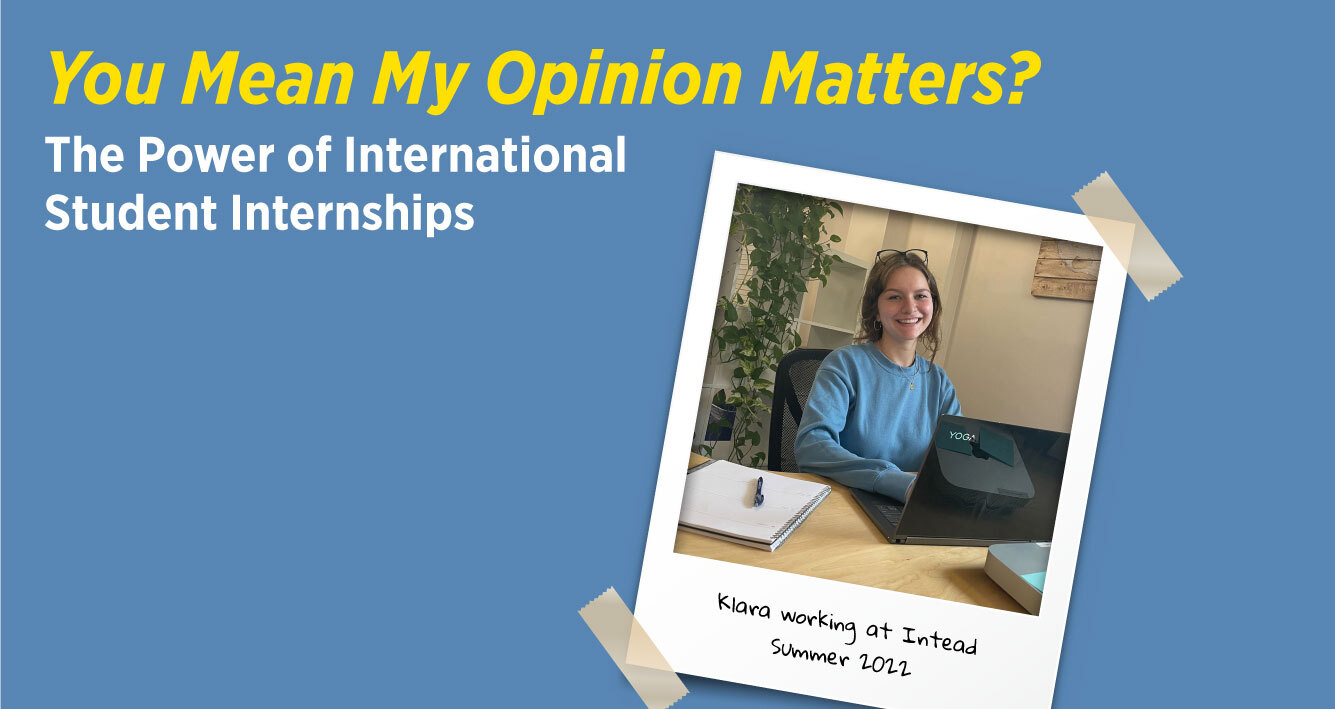
You Mean My Opinion Matters? The Power of International Student Internships

Does your institution work hard to develop employer connections?

Due to the pandemic, Intead paused its international student internship program. We are so glad to have it back as we return to the office.

As a rising Junior from Germany studying at UMass Amherst, Klara Lehmann thinks a lot about her future. She jumped at the chance to intern at Intead over the summer break. We were lucky to have her thoughtful and thorough approach to our work.

The level of effort most institutions put into developing career-shaping opportunities for their students typically underwhelms. Students, like Klara, who push for opportunities are far more likely to succeed than those who do not. So many students require additional motivation and support from their institutions to develop skills through internships.

Yet, skills development may not be the most valuable aspect of internships. From what we have seen, the real value is in how students develop an understanding, outside the classroom, of what they would like to develop into, what they would like their future to be. It is all about learning in a different environment. The networking and resume content doesn't hurt, though.

Learn with us:

  • Recruiting from Bangladesh: The Intead team will be presenting an AIRC Webinar on Wednesday, October 12, 2022. The process and results of our recent digital campaign recruiting international students for Truman State University will be on full display. Register HERE.
  • Global Marketing Strategy & Campaign Analytics: Ben and Iliana will be presenting on a range of marketing strategy and analytics sessions with colleagues from Northeastern University, Clark University, Central Connecticut State University, and University of New Hampshire at the NAFSA Region XI Conference in Manchester, NH, Nov 18-20, 2022. Click HERE to schedule a time to meet us.

Read on for a firsthand look at Klara’s reflections on her internship experience. Consider who, on your team, from career services on up, needs to hear this message. Internship experiences and the student stories you can share with your prospective students will go a long way toward differentiating your institution in a competitive market. Klara’s story makes the case for your institutional investment very clear.

Read More

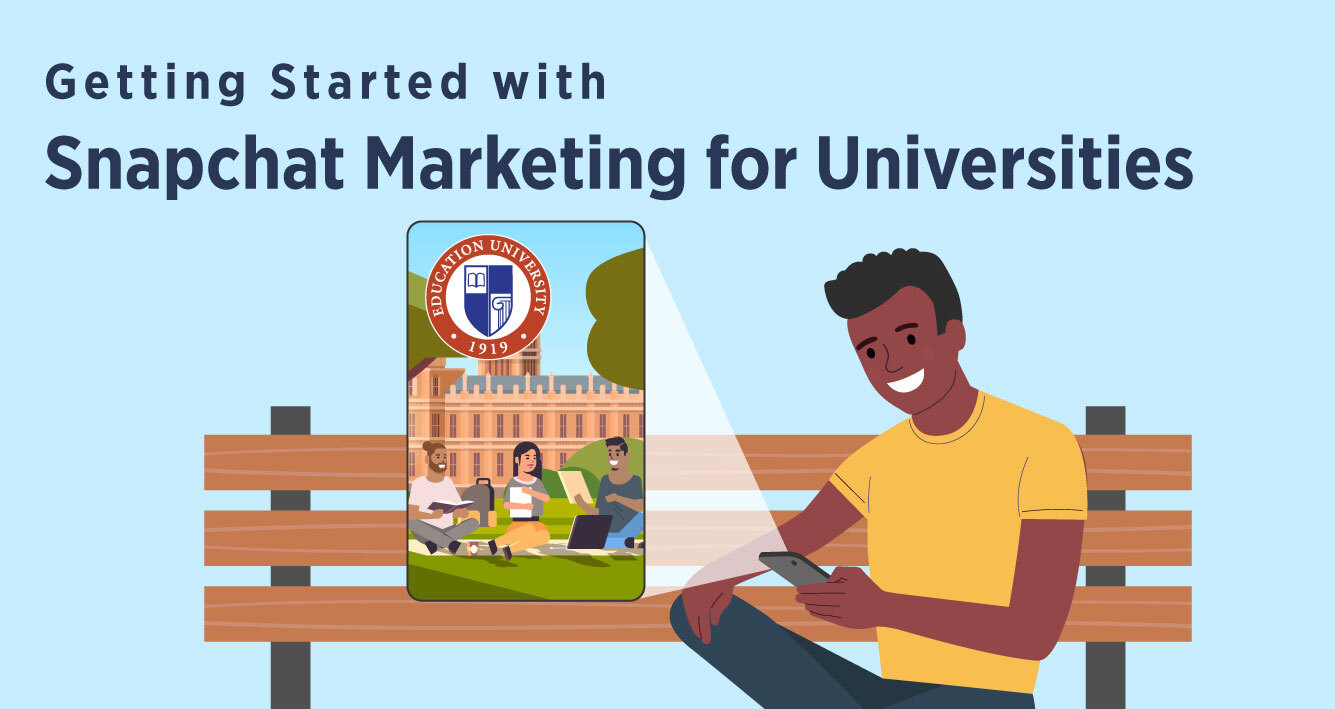
Getting Started with Snapchat Marketing for Universities

In an era where most social media platforms focus on curating an aesthetic feed, Snapchat stands out. It launched in 2012 as an app where messages “self-destruct” within seconds and has since added a variety of formats and filters. The platform quickly attracted young teens.

We published tips for academic institutions to make the most of this social tool back in 2016 (we waited to see if their ad platform was going to stick around). Since then, a lot has changed. You've noticed that too, we bet ; -)

Important to note, this social channel has a history of trend setting. SnapChat developed one of the original AR (augmented reality) filters and they continue to lead in many aspects. This is their lane and universities and private high schools using the platform should keep in mind that SnapChat tends to set the trend periodically in this area. Good to watch and learn here.

Overall, Snapchat's impermanent nature nurtures casual, free-flowing conversation, making it an enticing way to connect with students. Done well, it’s your ticket to getting in on prospective students’ conversations. And that’s precisely where you want to be.

Snapchat is where you show off your culture -- the feel of your campus as opposed to the specific features (programs).

Why your institution should be on Snapchat:

  • It’s young. 59% of Americans between the ages of 13 and 24 use Snapchat.
  • It’s global. 58% of Snapchat daily active users are based outside of North America, with India, France, and the UK leading the pack.
  • It’s growing. In Q2 of 2022, Snapchat had 347 million daily active users worldwide, a 22% growth year-over-year. Almost of all of that growth has been in international users while US users have remained fairly steady.
  • It’s unique. Not many high schools or universities are using Snapchat (yet), making it a way to stand out to prospective students.
  • It’s authentic. Snapchat offers a personalized way to share content and interact with students.

Ready to snap it? If so, read on to learn how you can incorporate this popular platform into your recruitment game plan and differentiate your institution. Be where your audience is.

Read More

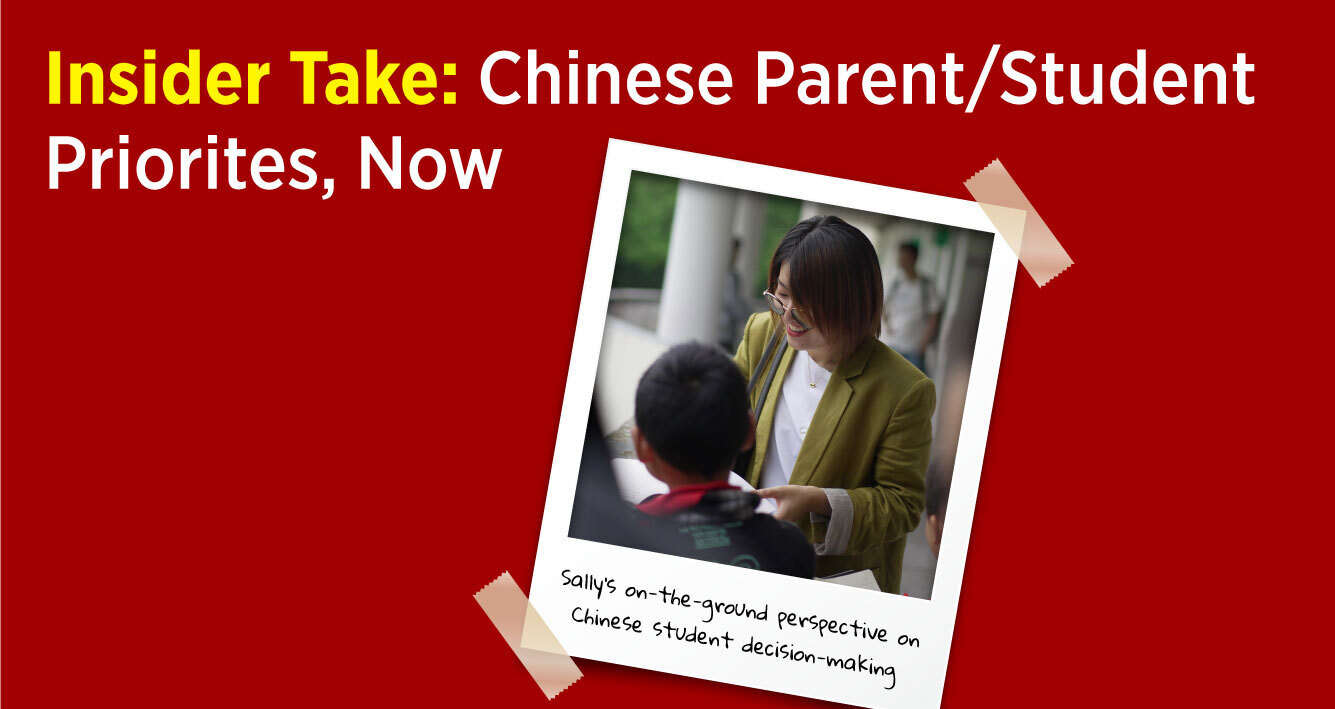
Insider Take: Chinese Parent/Student Priorities, Now

With Chinese student numbers in serious flux in the US, we thought we’d check in with our colleague Sally Zhu who is currently working with international students in Ningbo, China. Our goal: find out what’s working in recruitment for institutions across the Pacific.

Sally, a contributing Intead Marketing Data Analyst and US PhD aspirant, grew up in China and acquired her post-secondary degrees in the US, returning to her home country in 2020 where she landed a job with a sino-foreign university. Today she’s working as an international student support advisor there. She has a front-row seat to what is on Chinese students’ minds. 

We know this topic will be part of the hallway and session chatter throughout the NAFSA regional conferences coming up this fall. Intead will be discussing a range of student recruitment and marketing topics at Nafsa Region XI in Manchester, NH in October. If you will be there, be in touch to set up a coffee date with Ben or Iliana. We can also meet folks in California in December when AIRC and ICEF fire up. Look for some big news very soon about the learning opportunities coming up.

A couple of weeks ago, Sally sat down (virtually) with the Intead team to give her boots-on-the-ground account of how Chinese students and parents are evaluating their options today. Read on for some valuable perspective on the student recruitment market everyone is fretting about.

Read More

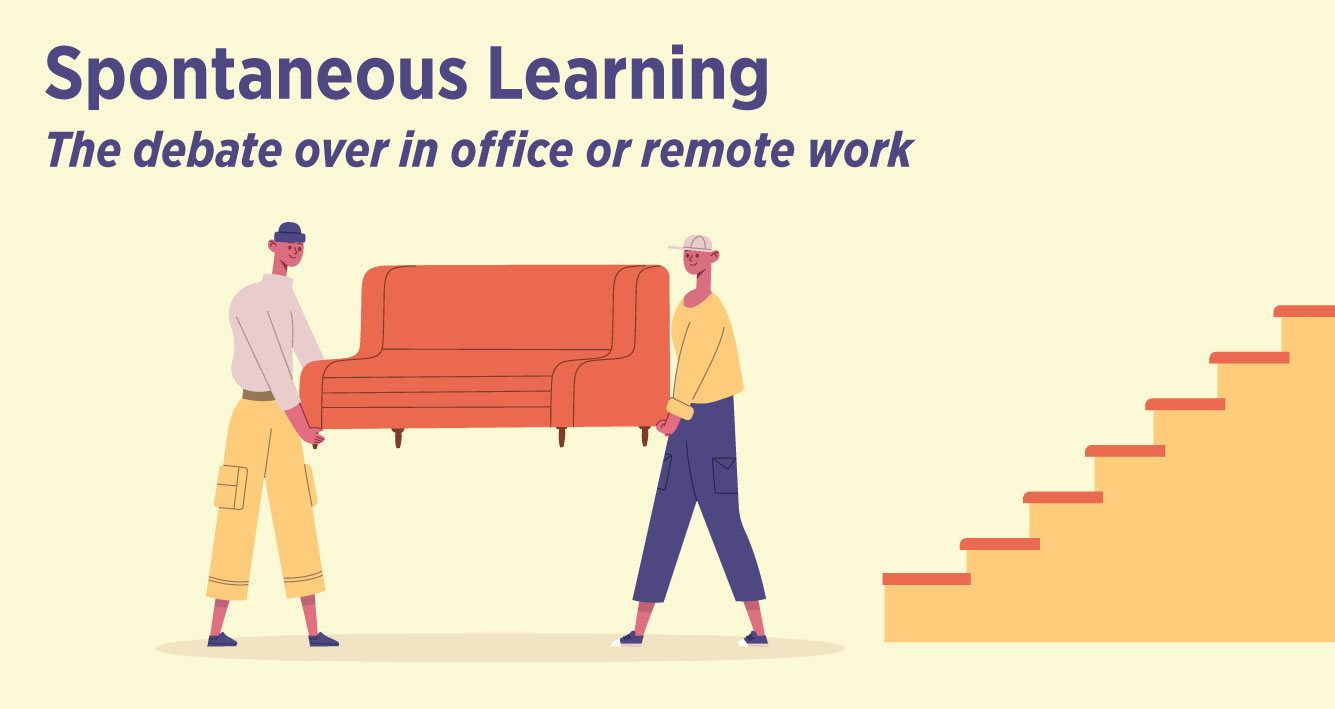
Spontaneous Learning

I need this couch moved to our second floor sitting area. Clearly this is going to take both of us working in tandem.

“You want to go up first?” You ask.

“Sure,” I say.

I reach for the bottom and the side. You find your handholds as well. We lift in unison.

I need to adjust my grip as I navigate the first stair. You feel the couch shift and adjust accordingly. We make eye contact over the bulky thing and nod to each other. We are innovating as we climb and adapt to the shift in weight and the angle of the couch with each step.

Innovating together in real time. Communicating with words and body language. Collaborating on our way to achieving our goal.

I have to give credit to my friend and colleague Dr. Michael Mascolo, Professor of Psychology at Merrimack College for this metaphor I’m employing. During a recent conversation with Mike, I was making observations about the debate over remote vs. in-office collaboration. We’ve all seen it: the loss of innovation and spontaneous learning when the whole team is working remotely.

As much as we want to leave the commute behind, put a quick load of laundry in after the 9:30am Zoom call is done, even bake a banana bread mid-day, because, why not? Look, I’ve been running virtual teams since 1993 (mmm hmmm, that’s when I started consulting, dinosaur that I am). The power and efficiency of remote work is undeniable.

And yet, and yet…also undeniable is the loss of opportunity for us to learn from each other (even at my dinosauric age, I am learning from the team here). What we all need is much, much more face-to-face interaction – from the fresh graduates entering the workforce to those with decades of experience. We grow and learn together in different ways. We innovate in real time.

Over the past few years, we’ve been growing significantly here at Intead. More universities, high schools, rising edtechs, and established academic providers have been tapping our expertise. So, we’ve been hiring more talent. The talent market has shifted and there are a lot of folks looking for greener pastures right now.

Read on for a bit of perspective that I am surprised far too few current job applicants seem to grasp...

Read More

Get Started with Instagram Marketing Strategies to Boost Enrollment

The last time we wrote about Instagram marketing was in 2016. A lot has changed since then. But not everything. It resolutely remains a visual communication tool. But is it still relevant? (It is.) Aren’t kids these days on TikTok? (Yes, that’s true, too.)

Here are the facts: 57% of Americans aged 12 to 17 use Instagram each week, and 63% use TikTok according to Forrester. Just as important are the 48% of 30-49 year-olds and 29% of 50-64 year-olds – many of whom are your prospective parents – who use the platform. Anyone still wondering if it’s relevant for student recruitment and enrollment? Didn’t think so.

If your institution is only doing organic posts to Instagram, or your Instagram paid campaigns haven’t reaped the return you’d hoped, read on for a look at how your team can use this platform to boost enrollment. This post will be beneficial for those ideating and managing your campaigns. That means, pass it on to others on your team responsible for this stuff if that's not you.

As with any social platform, there are two ways to work it: the free way or the pay-to-play way. We’ll take a look at both.

Read More

Not Rocket Science

Global student recruitment, finding student segments domestically and abroad, is simply not rocket science.

We know the processes and don't need another generic report about what students are thinking and how important parents are to the process. If new student mobility trend data of significance emerges (thank you IIE and National Clearinghouse), you can count on us to evaluate it and report on it. But, most of the reports we are seeing right now from marketing agencies (like us) are rehashing everything we already know.

And annoyingly, they are somehow pointing to their nothing new findings as revelatory. Wut?

So, let’s get to work plotting out the work and bringing the successful results we all want.

The Formula: custom research on your differentiators, your strongest recruitment options (countries/regions), and messaging that engages your target audience on the channels they use.

That’s really about it. That’s what we need. Oh, and to do it successfully, that actually requires investment, technology, and expertise.

So...yes, trend analysis because decision making actually did change since 2019 - safety, cost, the value of education overall, visa issues - all much more significant. These factors existed before the pandemic, before the Trump administration’s anti-immigrant rhetoric, and the ever-horrific state of gun violence in the US. Not new info. All of these factors have been on students’ and parents’ minds for a while. Yours too, right?

And yet, international students continue to find value in a US education and the experience of living and studying in the US. And as they make their decisions, all the things we see in the latest reports and infographics about student mobility trends say essentially the same things we’ve seen for more than a decade.

Reputation matters. Rank matters (more in some regions than others). Career connections matter, parent opinions matter, etc., etc., etc. Tedious findings touted as new, ground-breaking, must-have trend analysis.

Read on for a few student influencers that are actually rising to the top of students' decision-making criteria, and more importantly, what all of this means for your institution's recruitment planning. 

Read More