Recruiting Intelligence

AI Built for Admissions?


Think instant granular analysis of transcripts. Think about your ability to identify the specific classes and grades indicating future student success. Think about automatically excluding that A in Phys Ed from the overall GPA calculation.  

For the sake of speed and efficiency, institutions rely on the overall GPA, an SAT score (if submitted), or the presence of AP classes on a transcript. All helpful shortcuts as indicators of future success, to a point. And we’re not going to get into the SAT debate right now, though we have some strong opinions on that one. 

But now, along comes AI and admissions teams are apt to place some hope in the promise of what it can do to streamline unwieldy processes that tend to get in the way of enrollment yield. But there’s so much more edtech can now do. 


Opportunities to Meet the Intead Team 

  • AIEAin March, ASU+GSV in April, and NAFSAin May. We'll be presenting our latest findings with colleagues from Chronicle of Higher Ed, IIE, AIEA, University of Tulsa, University of Memphis, Northeastern, and others. Let us know  if you want to connect at any of these events. 

Bookmark this: Intead’s Resource Center 
Access 800+ articles, slides decks, reports with relevant content on any topic important to enrollment management and student recruiting.  Check it out.


In our last postwe highlighted an edtech venture worth watching – especially if you’re among the AI curious. MyDocs is the brainchild of entrepreneur John Reese, whose name you may recognize from Parchment, the company that moved our industry from paper to digital transcripts (PDFs). That little startup originally founded by John grew up and just sold a year ago for more than $800M (all cash). Now, John is taking admissions capabilities a step further – moving institutions beyond digital transcripts into admissions data processing. And last year, he reached out to the Intead team for product launch support. 

MyDocs uses advanced OCR (optical character reader) and machine learning to evolve the tedious tasks of transcript analysis and processing. With application volumes rising thanks in part to the student efficiency tool Common App (don’t get us started), this new edtech helps smooth a specific task – and frequent bottleneck – in the admissions process. MyDocs' AI-powered platform scans and analyzes digital transcripts (PDFs, JPEGs, photos) to make them both human and machine-readable. 

That means the school of origin and every class, every grade, all become actionable data, instantly. Are you starting to see the possibilities? Oh, and if the transcript happens to be in another language, the tool translates to English. 

You can see why we were excited when John approached us and asked for our help with his entrepreneurial approach to transcript evaluation. The data analysis possibilities got the whole team here buzzing.  

For institutions, this kind of AI assist is more than welcome. One forward-thinking private New England institution we work with recently used this edtech tool to evaluate and process 11,000 applications in a single day. That’s just one anecdote, but the expediency is something to behold for anyone who’s ever managed admissions processes and credential evaluation. 24 hours vs. 1,500 hours (when done by humans). Something to think about. 

On the surface, technology like MyDocs seems like a game-change. Still, a challenge remains: institutions may find they are swimming in data without a clear strategy for leveraging it beyond this singular task of admissions efficiency: accept or reject?  

But, we have ideas. So many ideas. Read on… 

Read More


Get Your Students Career Ready. Here's How - Part 2 of 2


Bringing the real world into the classroom is so important to the future of your students. And last week we shared one way Suffolk University is taking action. A sort of ​Career Readiness 101. This week, Career Readiness 201 as we talk about you and offer a helpful career-prep checklist, complete with on-campus practices and recruiter tips, too.  


Opportunities to connect in person and hear our latest market intel:

  • Join us in Paris Nov 8-10 at CIEE's 76th Annual Conference.
  • Join us in Boston Nov 13-15 at PIE News Live.

Let us know if you'll be joining us (info@intead.com).


Like you, the vast majority of students we talk to are playing the long game. Well before they even have a high school diploma, they’re thinking beyond university. They’re smart consumers and they need to know what their hard-earned degree, whatever the field, will mean for them in the market. Never mind that many of them are not sold on a major yet. They’ve been hearing for years about the rising costs of higher education. They understand ROI more than previous generations ever did. And their parents are all about that approach. 

According to the National Center for Education, in 1980, the annual cost of attending university (including tuition, fees, room, and board) was just over $10,000, adjusted for inflation. Fast forward to the 2019-20 academic year, and that that bottom line had ballooned 180 percent to nearly $29,000. This is the story your prospective students have grown up hearing. For decades, everyone, university administrators and families, have been wringing their hands about the rising costs and yet, not a thing has been done about it. 

For families, the reality is they’re looking at an average debt for a four-year Bachelor’s degree of $34,700 per the Education Data Initiative. And while the standard repayment term for federal loans is 10 years, it can take up to 30 or more years for more than a few students to pay off these loans. You can see their concern. 

Some of us optimistically thought the rise of online education would bring costs down and become a reliable source of revenue for universities and a powerful educational avenue for students. The reality: yes, a growing source of revenue, but the cost to produce truly effective online education that carries students forward with all the tools and supports, is fairly pricey to produce. And the low quality stuff really does not achieve the educational outcomes, so students pay for an ineffective degree - a credential that does not meet real-world employer needs. (See our blog post here about the perceived value of online degrees) 

Of course, these are tuition numbers you’ve thought about many times. And they’re all over the news right now as student loan repayments will soon be back on after a long pandemic pause. Smart students want to know the kind of return they’re going to get on their investment, and they’re looking to you to provide an attractive answer. 

So, what is your answer?

Read on for a checklist of essential ways to help ensure your campus helps prep students for the careers they’re hoping higher ed will lead them to. And yes, we’ve included pro-tips for you recruiters. Read on...

Read More

Get Your Students Career Ready. Here's How - Part 1 of 2

Let’s talk about the messaging your institution uses to convince students and families that what you offer has value. Pretty simple stuff, right? Maybe not. You’ll appreciate the helpful checklist that follows in part 2 of this series. Think marketing differentiators in a competitive marketplace. You won’t want to miss it. 


Opportunities to connect in person and hear our latest market intel:

  • Join us in Paris Nov 8-10 at CIEE's 76th Annual Conference.
  • Join us in Boston Nov 13-15 at PIE News Live.

Let us know if you'll be joining us (info@intead.com).


But first a story. 

Ok, so you are up in front of your board of directors presenting your business growth and marketing plan. You and your team have been figuring this out for a while and last night was a late one as you worked together to put the finishing touches on your slides. There were still disagreements among your team, but you settled the issues and felt nervously ready. 

Everyone has a speaking role but some on your team are stronger than others. Some don’t have appropriate clothes to wear for the presentation so they borrow something professional looking from friends. Some sway nervously back and forth and read their slides rather than engage with the very important board members. You realize early on in the presentation that the data presented on slide 7 is wrong. It doesn’t support your final recommendation. Maybe no one will notice. 

It is your Marketing Business class final presentation to a mock board of directors and as first year undergrads, your team is anything but seasoned. Your final grade is riding on how your team performs. 

Every semester for years now, I have had the honor of judging the final marketing analysis presentations of undergraduate students in a marketing business class at Suffolk University. A good friend of mine there teaches the class and gathers a set of judges from the biz to help the students get some real world feedback. Each judging session is as different as the teams presenting. It’s a blast for us, the judges. Nerve racking for the students. 

Recently, the department asked a few of the real-world judges for additional input and it truly impressed me. They wanted to hear from us as employers to understand what we look for in candidates as we hire. What tools should their students know how to use? What business concepts and approaches are critical to us as employers so their graduates will crush the interview?  

That line of questioning is SO important for business programs that often focus so much on esoteric business theory and simplistic case studies while purporting to be all about the real world. As our Intead Advisory Board Member Hillary Dostal, global marketing advisor at Pegasystems, says: There is best practice and then there is actual practice.  

This goes for your team, too. Read on…

Read More

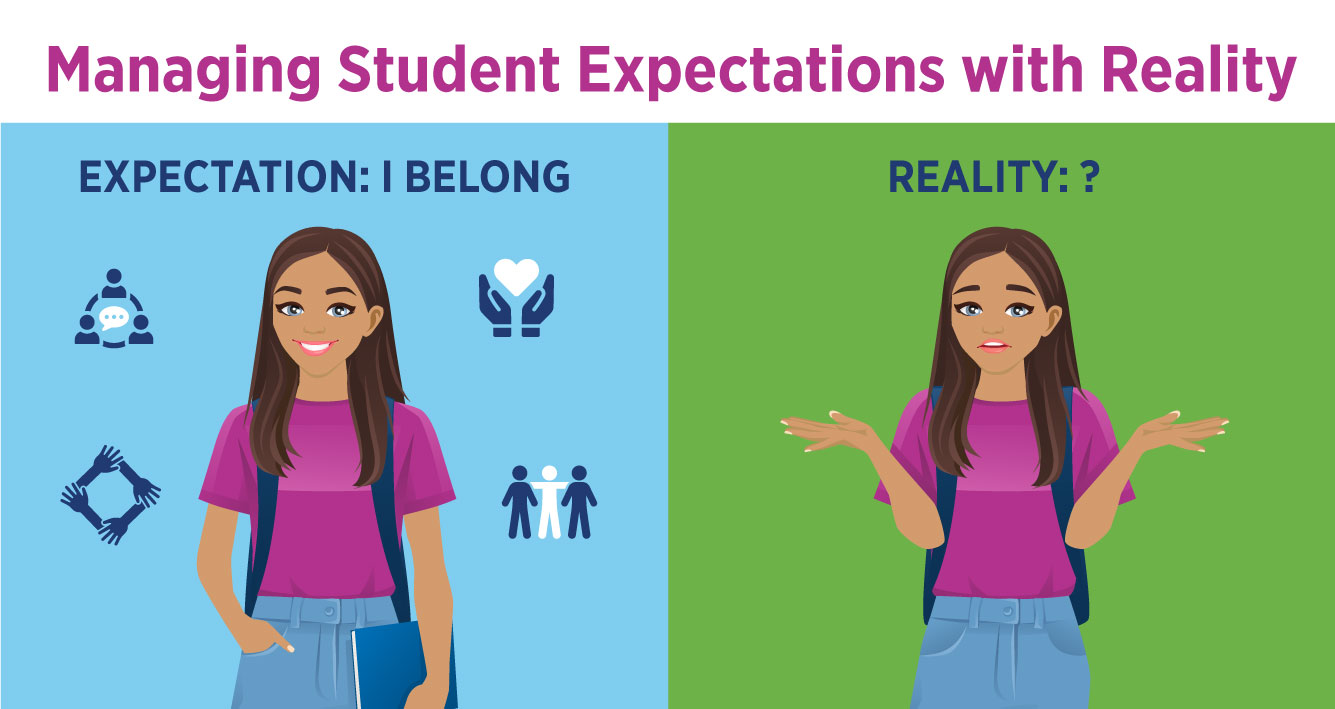
Mind the Gaps: Managing Student Expectations with Reality

Let’s talk about the gaps between your international students’ expectations of studying in the U.S. and their actual experience. You know, the sort of expectations on which retention is built.

Sure, some of the ideas international students have of what it’s like to study in the U.S. are based on factors beyond your control. But a lot of their anticipation is based on promises – literal and otherwise – made by your institution. It’s now up to you to deliver.


We Are Here at NAFSA 2023: Our presentation with SIO Paulo Zagalo-Melo (Western Michigan University) and Reporter Karin Fischer (Chronicle of Higher Ed) is at 9:30am today (Wed. May 31). A reality check with the data that informs our student recruitment decisions. Hope you'll join us. Be in touch to meet with us during the conference. We'd love to share a cup of coffee and talk all things student: info@intead.com.


To help you deliver on student expectations, we’ve gathered a few key tips worth evaluating and potentially implementing when recruiting and supporting the international students interested in your campus. Hint: it’s all about meeting international students where they’re at. For more perspective on the importance of maintaining a student-first approach see our recent post.

In the meantime, read on for 5 quick ideas on how your institution can narrow the gap between expectations and the reality your international students experience. Recommendation number 5 is likely the most important if you’ve not already done it.

Read More

The Rise of Student Retention as Key to Recruitment

From your steeped-in-student-recruitment vantage point, you see quite clearly the symbiotic relationship retention has with your recruitment efforts and resulting yield. It has everything to do with your student services, student success, and all the small-batch interactions you do to ensure your students experience both.

As David Hautanen, Vice President for Enrollment Management at St. Mary’s College of Maryland said so well in a recent Recruiting Intelligence post: "Retention is both a moral and economic imperative." We wholeheartedly agree. And it is as true for students as it is for institutions. 

We can dive into all of this with you at #Nafsa2022 in Denver. Let us know if you’ll be there and want to share a cup of coffee.

As campuses across the globe emerge from their pandemic safety bubbles and return to recruitment as usual (more or less), now is a really good time to rethink your institution’s retention efforts—and the student-first mentality it requires.

The bottom line: it’s your team’s soft skills that matter most and their availability to use them. Read on for our take…

Read More

Spotlight on Your Institution’s Student-First Approach

We recently talked with students past and present from Vietnam to Bangladesh and heard encouraging stories.

  • A professor hand-delivered a recommendation during the early phase of the pandemic.
  • A class specifically designed around a student’s pursuits.
  • A helpful phone call to a trusted member of the international student services team when tragedy struck.

Stories that embody the kind of student-first experience we all imagine we provide to our students. It’s the kind of experience we certainly all tell the world of prospective students (and parents) that we will deliver.

The reality, unfortunately, is often quite different. Blame branding or the bottom line (lack of resources), but the undeniable truth is that competing priorities often win out over the well-founded ideal of student-first. 

Today’s post is not a how-to on making your website user-friendly. Today we put a spotlight on the policies and actions that put students first. We’re looking at what is undermining your institutional integrity and how you can address it. And trust us, students are well aware of how well your institution delivers on the promise of student-first. And they tell stories. So, yes, this post is enrollment marketing-focused.

When you delight, they gush with positive word-of-mouth support. And when you fail, they tell that story too.

To offer deep perspective on this topic, in addition to our own experience, we tapped a few colleagues who know more than a thing or two about fostering the student-first mindset:

  • David Hautanen, Vice President for Enrollment Management at St. Mary's College of Maryland
  • Jessica Sandberg, Dean of International Enrollment Management at Duke Kunshan University
  • Jewell Green Winn, Senior International Officer of International Affairs at Tennessee State University (and newly appointed chair of AIEA)
  • Brad Farnsworth, Principal of Fox Hollow Advisory and former Vice President at the American Council for Education (ACE)

They each had great perspective on the subject. We are so appreciative of their time and the insights shared. You, our readers, are the beneficiaries of their wisdom.  

Read on to learn concrete actions you can take now to help ensure your enrollment program is student-first. Is this post a good one to share with your leadership? Uhm, yes.

Read More

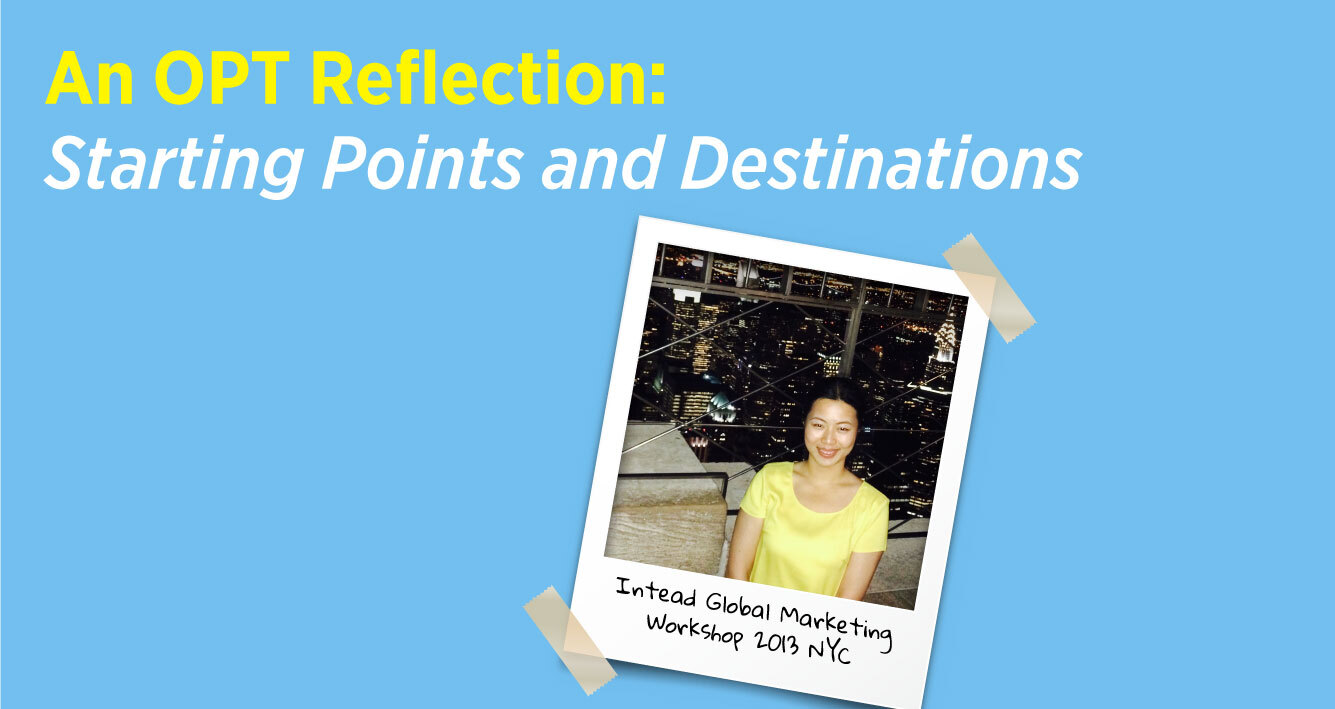
An OPT Reflection: Starting Points and Destinations

The student journey from one place to another has common elements. It starts with an intense desire to learn and explore. Why else would someone spend so much time, energy, money?

OPT is an essential tool that benefits us all. There is no question. Occasionally, we need to be reminded.

  • As a follow on to the 2021 AIRC conference just completed which is all about creating great learning experiences for students around the world,
  • As our final post for the year (we will take a break and return on January 5, 2022),

Please drink in this optimistic view of how everyone in our field contributes to making the world more connected, stronger, and safer.

Xi Chen held a very important role at Intead almost a decade ago as the company was in the early stages of making a name for itself. She helped us set our course with a fierce dedication and rare level of talent that set a bar for our future international student interns. We asked her to reflect on what her OPT experience at Intead meant to her. We know how much it meant to us!

In writing about her OPT experience, Xi sent us this quote: "Arriving at one goal is the starting point to another."  ~ John Dewey

Read on to get a first-hand look beautifully shared by Xi Chen. This is all about what you are setting your students up to achieve, personally, and for the world all around us.

Read More

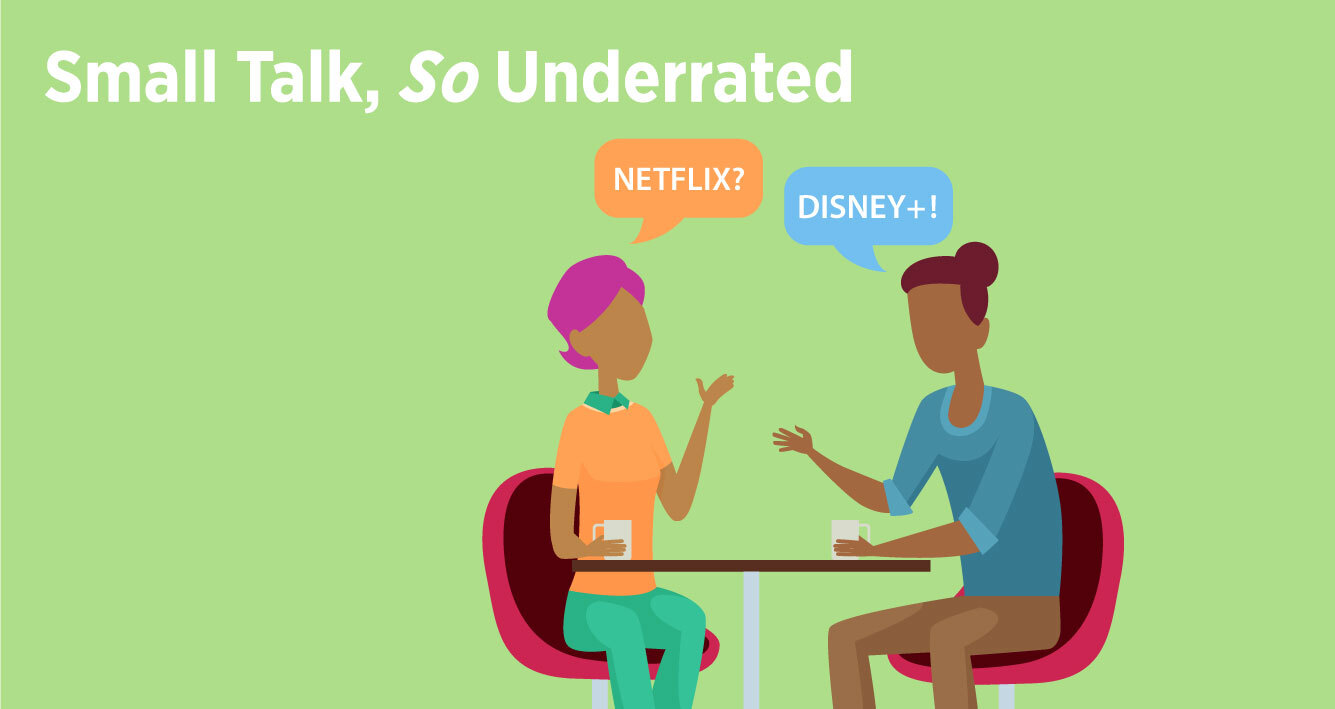
Small Talk, So Underrated

You are welcome here.

DEI efforts to address inclusion.

These are big concepts that deserve big discussions on campuses everywhere. Discussions with senior leaders setting policies and developing programs to make everyone on campus feel involved and connected.

And to make all that happen, that feeling of being welcome and included, will rely on some of the small things that often are met with eye rolls. Yet, these small things are really important to this whole inclusion effort.

You know that inside joke and the trendy celebrity stuff you are not on top of? The conversation that just kind of left you like roadkill as it blew right by? Maybe silly. Perhaps kind of uncomfortable. Happens to all of us. And it happens to your new students frequently. Domestic, yes. International, all the time.

If you think small talk is meaningless, think again.

In our work for a large, highly ranked Midwestern institution, we were talking with Pham (not his real name). He traveled from Vietnam for his US studies. A natural networker, smart, interested in business, he chose to major in Business Management Information Systems and Finance. With that degree, it is no wonder he was snapped up by Deloitte where he currently works as a Senior Consultant in Tax Management.

To hear Pham tell it, connecting to the US community with small talk was critical to his success. He came to understand this during his studies as he tried to connect with the other international students and with his American peers. He found he was struggling to make friends.

Read on for Pham's perspective and our tips for getting these really important conversations started. It is all about personal and student success. 

Read More

Your Students. Your Programs. In China — Event Tomorrow

Struggling to define strategies that will bring back your enrollment from China? You’re not alone.

But there’s good news: Clark University met the needs of their Chinese students this past year with an innovative and quickly installed remote campus in Shanghai. Their story is full of instructive lessons. And our webinar tomorrow will enlighten (see link below). 

And there is even more good news: Chinese parents are still eager to provide a US-style education for their child, with 97% of parent respondents in our latest market research citing the US as their first-choice destination for their child’s education.

The short of it: opportunity for your institution is still out there. Chinese parents and students are ready and waiting for your message despite current travel restrictions, if only you could reach them…

As you plan your strategy for next year, consider this: CIEE has created a powerful option that has proven successful at helping US institutions meet their Chinese students where they are. And it is not just about enrollment. It is so much more, thankfully. 

We’re talking long-term partnership building in one of your key markets and a new pipeline that will foster both student success and help you reach your enrollment goals. We’re talking International Campus Opportunities with your programs and your students — in China. Clark University was one of ten US institutions that acted fast and benefited from this innovative approach last year. Now, they will be sharing their story with you. 

Join us tomorrow, Thursday, April 15th at 11am Eastern for a webinar event with CIEE and Clark to discuss the state of the Chinese market, the international campus experience, and the steps necessary to make this opportunity work for fall 2021 at your institution

Register Now

This event is for academic institutions only (.edu email addresses and other academic institutions).

Moderated by Ben Waxman, Intead CEO, the expert panel of your colleagues with a wealth of experience in higher ed and China will include:

  • John LaBrie, Dean of the School of Professional Studies and Associate Provost for Professional Education, Clark University
  • Jill Zhang, China-based Admissions Counselor, Graduate Admissions, Clark University 
  • Seamus Harreys, Vice President Global Enrollment, CIEE
  • Brad Farnsworth, Principal, Fox Hollow Advisory, Former Vice President for Global Engagement at American Council on Education

Read on for a preview of the valuable topics to be discussed and how to continue leveraging your presence and academic programs in this challenging time. 

Read More

Is Flexible Incrementalism the Answer to Student Enrollment Growth?

According to Moody’s reports on the financial pain 4-year institutions are facing, higher ed administrators are managing a host of escalating challenges.

What we know: cutting your way to success has never worked for any institution.

What we want: strategic, incremental investments that pay off.

But which ones will lead to predictable enrollment growth and revenue? Oh, and student success?

There is a guiding light, a process to achieving this kind of success.

With technology playing an increasingly critical role in every aspect of our lives, especially now, academic institutions have recognized the need to accelerate the adoption and development of digitally oriented enrollment processes and education delivery. These moves can reverse enrollment declines and support the quality of education that students and families expect. What we look toward: a smart, agile, and modular approach.

Framed as a modern and flexible model, incremental investments in technology for marketing and student success can align university leadership, administrators and importantly, faculty. CFOs take note, this is a plan for predictable enrollment and revenue streams.

The team delivering on this approach brings deep skills in marketing, enrollment management, and technology to support academic institutions through transformative initiatives carried out incrementally.

The goal is to produce an enrollment management transformation and a re-imagined approach to student success. Affordable marketing and AI-powered technology investments, each with clear transactional wins (think ROI) that justify the process, move the institution through a series of system improvements and enhancements toward the envisioned state. 

We’ve been here before, and we know that transformation is tough at large institutions. Bold and expensive strokes often fail to build the necessary stakeholder buy-in. The result: limited successes, far less than envisioned. 

Incrementalism recognizes that there are common modules every institution will want to address (recruitment, enrollment management, alumni relations, student and career services, etc.). Each institution is different in how and when each valued area blends into the transformation effort.

Read on to view our latest webinar in which I am joined by a panel of excellent guest speakers from Dartmouth, Babson, Northeastern, and Google to discuss how this new approach can pave the way to predictable, affordable, and transformative enrollment results. 

Read More