Recruiting Intelligence

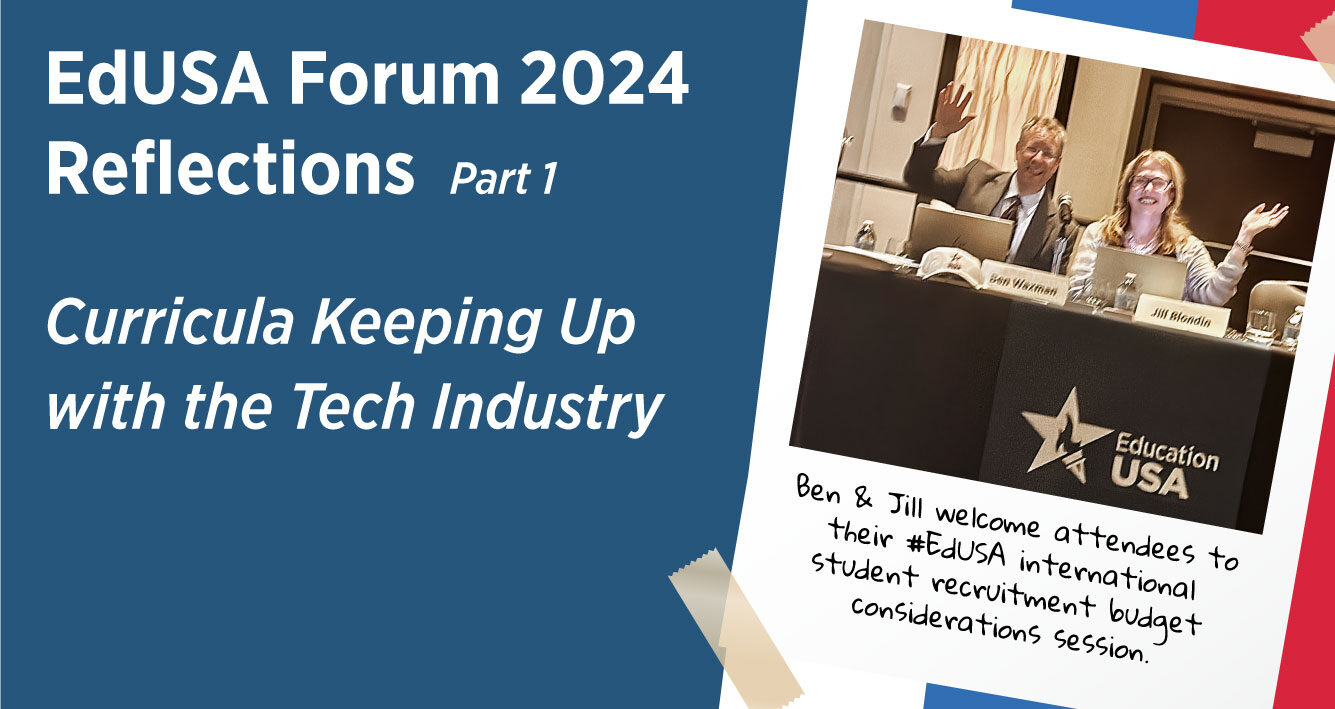
EdUSA Forum 2024 Reflections – Stale Tech Curricula


The tech industry moves fast. Can’t help it. The rate of change, the development of new stuff from quarter to quarter never stops.  

As they move forward with their development roadmap, Microsoft has between 6,000 to 9,000 open positions around the world on any given day. So says Bruce Thompson, Head of Americas, Microsoft Education. He spoke at the EducationUSA Forum earlier this month.  

At the Forum, people working on the global front lines of student recruitment gathered in DC for three days. These knowledgeable folks shared their views on current realities in every region around the world – economic realities, education system realities, visa approval realities.  

The US State Department has been supporting US institutions for 25 years and this year’s EducationUSA Forum delivered on many levels. The intel shared is so important as we evaluate where to invest our recruitment budgets globally. Where should we travel? Where should we develop new partnerships? Where should we invest in digital campaigns? Where will the student demand and family financial capacity levels provide the strongest returns on those investments?  

I had the privilege of presenting on student recruitment budgeting alongside SIO extraordinaire Jill Blondin from Virginia Commonwealth University to a standing room only room at the Forum. (The slides are available to Intead Plus members.) 

Beyond the valuable on-the-ground perspectives shared at the Forum this year, the high-level stuff that struck me were deep and valuable discussions about: 

  • The challenges inherent to the student visa approval process and
  • Consistently stale STEM academic offerings found at institutions   

Our next opportunity to meet! 
NAFSA Region XI, Hartford, CT, Oct 27-29. The Intead team will be there presenting on Admission Process Analysis, Marketing Data Analytics, and Marketing Study Abroad Programs with university partners from our New England region friends from Quinnipiac, Johnson and Wales, Clark, and Emerson. Practical strategies and creative tactics to hit your enrollment targets.  Hope to see you there! 

Bookmark this: Intead’s Resource Center 
Take your challenge of the day and plop it into our search bar. With 800+ publications and our 15 years of weekly blogging, you will find relevant content on any topic important to enrollment management and student recruiting. Check it out.


In this 2-part blog series we take a closer look at the process of obtaining student visas on the way in and preparing those students for the jobs they want on the way out.  

We’ll start with the jobs thing. If you’ve not already downloaded our Connecting Dots Report, highly recommend. You’ll appreciate how the Intead analytics team dove into mountains of US Department of Labor data to help your marketing recruitment team stand out at any student fair anywhere in the world. How do you do that? Read the report.

A few tech industry speakers at the Forum caught my attention and provided industry perspectives I found truly insightful. Next week, we’ll review the slightly tense luncheon that caught everyone’s attention as academic institution leaders poked at State  Department leaders regarding Visa approval rates.  

Our goal here is getting our curriculum in line with industry needs and getting our students out into highly relevant, industry approved internships, co-ops, and jobs faster. Think big. Think innovation. That means take well-researched risks and follow untrodden, or lightly trodden paths. 

Read on… 

Read More

Did you say something?...I’ve already scrolled on


With the amount of time prospective students spend online, you’d think connecting with them would be easier.  

The average US teen spends 7 hours 22 minutes each day looking at a screen, or 43% of their waking hours, per Exploding Topics. And that’s being conservative – Common Sense stats show teens on screens 8 ½ hours per day outside of school-related screen time. Need confirmation? Just look around your campus at all the students not looking at you, but rather their screens. (Reality check: the rest of us aren’t off the hook as the average person clocks 6 hours 58 minutes of screen time per day, just so you know. So yes, that is where all the time goes!) 

Do you know the average number of phone notifications a US teenager receives each day? We answer that below. Make sure you are sitting down when you read it.

Yet, despite all their screen time, or perhaps because of it, your prospective students are discerning consumers of marketing. If they’ve seen one university ad, they’ve seen a thousand. We’re certain you can relate. We all can. But some messages clearly do get through, and it almost always comes down to creativity, cultural nuance, and an appetite for taking a little risk.

Fun fact for the risk takers: Humor is a tough marketing message to achieve with a broad and diverse audience, but when you get it, it REALLY works. 


The Intead team is gearing up for some amazing presentations and we hope you can join us. 

  • ICEF North America in Niagara, Canada, April 30 - May 3, 2024
  • NAFSA 2024 Annual Conference and Expo in New Orleans, May 28-31, 2024
  • GMAC 2024 Annual Conference in New Orleans, June 19-21, 2024

Let us know if you’ll share a cup of coffee and a conversation about all things global and digital (info@intead.com) 


Take fintech, an increasingly rising "it" program in the eyes of so many STEM-degree seekers, especially those with a bent toward accounting and money-making in general. And rightly so as financial services operations around the world increasingly rely on new technologies to do business. (Shout out to Worcester Polytechnic Institute on its recent fintech doctoral program launch giving students a full-stack (BA>MS>PhD) option in this coveted field. Talk about reading the market!!!)  

Fintech is a huge, booming industry and one that universities with fintech programs are leveraging to draw the attention of prospects. The same can be said for Data Analytics, Cybersecurity, AI, and other “sexy” programs that now drive global and local economies. 

Important note: the counsel that follows here applies to how you message your programs even if you computer sciences are oversubscribed and you are trying to attract students to other options.

We want to promote programs that will draw eyes and pique interest. Highlighting them in your recruitment efforts makes sense. Of course, you know this. And yet somehow marketing that ultimately makes it onto the screen in front of your prospective students’ gaze is so often watered down, generalized speak about “great programs in computer science” or “practical business degrees” or the now far overused, “advance your career.” Ugh. Your prospect just scrolled on.

We know you know exactly what we’re talking about. So often there is a fear of getting too specific. Why mention one computer science program and ignore the others when students need to know there are many amazing degrees from which they can choose?  

Here’s why: you need their attention, and the coveted, interesting, or unusual programs will get it. Not the generalized track that simply prompts the finger flick and scroll right by. 

It’s not just your message you need to consider, it’s also the medium.

95% of US teens now own or have access to a phone per Pew Research. Worldwide, the stats vary (China has the most active smartphone users, followed by India, the US, Indonesia, and Brazil), but it’s safe to say many of your prospective students living outside of the US are on their phones, too. In Sub-Saharan Africa, affordability and access is improving such that there will be 692 million unique mobile users by 2030, 88% of whom will be using smartphones according to lobby group GSMA.

Many of your prospective students will not only be accessing information about your institution via smartphone, but will be completing the entire application process on it as well. Something your international team knows but your domestic team might not be thinking about. 

Marketers and message makers read on for our tips on phone screen engagement tips. Like all good listicles, we’ve got 5 steps to push your team to create effectively... 

Read More

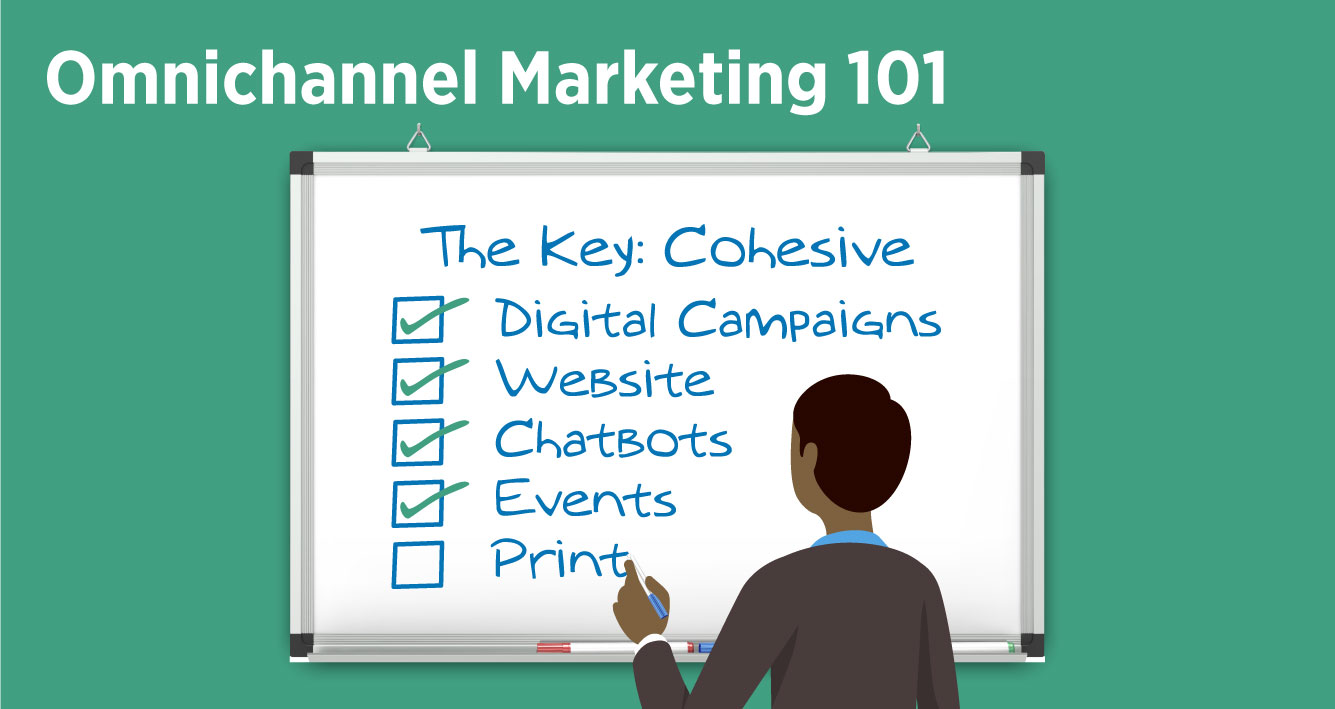
Omnichannel Marketing 101


If something isn’t online, does it even exist? We jest, and yet, without a strong online brand presence, many prospective students and their families really won’t know you exist. Because let's face it, prospective students today are basically born with smartphones in hand and earbuds on. If something isn’t online, it’s next to invisible in their world. 

That’s why institutions across the board have spent the past decade+ ramping up digital marketing budgets, perfecting their Insta image, and all the rest. A recent Washington Post article claims some well-funded universities are spending upwards of $1-2 million per month on digital ad campaigns alone. (Emphasis there on "well-funded!")

While that number is not industry average, most institutions do not have a Barbie budget, that figure is still a clear indication that digital is mission critical to higher ed marketing. No surprise to you or your finance team.  

But here’s the thing. The newest crop of students and their tag-along Gen Alpha siblings are at once more immersed and less smitten with social media. It's certainly no longer novel. Social media is life as they know it and they are adept at downloading ad blockers and avoiding sales pitches. So take note. Authenticity rules, while overproduced and slick messages are generally ignored.  

Our recommendation is to keep honing your digital marketing game, with this caveat in mind: your digital approach works best in tandem with other channels. We are talking out-of-home, print, in-person, and the like. In other words, the best-bet strategy is omnichannel.


We’ll be at AIEA in DC in about 5 weeks and participating in 3 great presentations: 

  • AI for enrollment management  
  • Entrepreneurial leadership in bureaucratic environments 
  • A data analyst's view of the international student recruitment opportunities
  • A discussion around International Student Points of Entry and a new publication to be released later in 2024 

And of course, we will be presenting at NAFSA in New Orleans in late May. If you’d like to schedule time to chat over coffee instead of over Zoom, please be in touch (info@intead.com). 


Read on to better understand the importance of omnichannel marketing and how you can use it to engage your target audience and grow your enrollment numbers.  

Read More

Intead’s Top 10 Blog Posts of 2023: Chosen by Readers


2023 ushered in some much-needed numbers. Enrollment rose among undergraduate (+2.1%) and graduate (+0.7%) students. And while freshmen enrollment trended downward (-3.6%), interest in shorter-term credentials was on the rise (+9.9%). All this per National Student Clearinghouse figures. 

Likewise, IIE Open Doors data showed a 12% increase of incoming international students in 2022-23. And the more up-to-date SEVIS data indicated 2023 fall enrollment maintained this welcomed momentum. All good news in aggregate. As we parse all these data sets, there are interesting findings and nuanced opportunities to be sure. 

Yet, all news was not good. The chaos of the world at large continued to make its way onto campuses across the nation. Safety continues to be a growing concern, and your prospective students and their families are unsure what to make of it. More admissions inquiries shift from campus life to safety and mental health support services. Also important to note: social justice activities influence an increasing number of applicants. 

In the midst of it all, we do our best to use this blog to weigh in on topics that matter to enrollment teams like yours. So, it’s always interesting for us to look back and see which posts were your faves for most valuable content from the year. There are always a few surprises. 

In 2023, there was a ton of interest in all things internationalization – especially around how student activity in India and China is changing. But that’s not all.

We were told our posts on student career prep, social media trends, and budgeting framework were also really helpful. So, with that, we share our top 10 posts from 2023, as chosen by you, our readers. Plus our staff pick for the most valuable post of 2023. If you missed any of these top pieces, you’ll want to read on…  

Read More

The Most Useful Stuff from Q4 2023


From the annual CIEE conference in Paris to Pie Live in Boston then AIRC in Phoenix and a super quick turnaround to ICEF in Miami, Q4 literally flew by. You, too? We wouldn’t change a thing, of course. It’s hard to replace the simple act of togetherness. It’s how ideas come to life. Cliché? Fine. But it’s so true. 

Sharing our research and student recruitment campaign results with our community always feels great. We’re here to make you more effective (and have interesting insights to share at your team meetings).  

A few key Q4 takeaways we will absolutely be bringing into the new year: 

  • The global competition for international students is stronger by the day, and institutions need to be increasingly smarter in their approach to international education, including recruitment. Can you be? (hint: it has to do with the skill sets you access to do the work) 
  • China and India are hot topics as always, especially India’s dramatic rising numbers of incoming graduate (and undergraduate) students.  
  • Enrollment departments are eager to leverage AI. The question is: how? And, is it ready for us? 
  • More must be done to support student mental health. So much more. 
  • And how about the new IIE Open Doors report?! Lagging data that points toward the future. 

Just a few notes we’re thinking about. Clearly there’s no lack of issues for our industry to address. So, if in the midst of this really busy few months you didn’t have time to read all of our posts, we understand. That’s why we’ve compiled this quarterly at-a-glance post. It covers all our news from how to navigate TikTok’s ad platform to what’s going on with higher ed in India and so much in between that you and your team won’t want to miss.Read on… 

Read More

Should Threads Be in Your Edu Marketing Strategy?


Students and digital media, right? TikTok rules! Oh, and Instagram. But, email is dead. Search is dead. Facebook is dead. (Pro tip: these all still have value to you). 

Now entering the social media platform arena: Threads. 

So, the questions on your team’s mind: Is now the right time to add Threads as a tactical element to our student recruiting strategy? How hard could it be? Is there any value here? Is our audience here? 


Opportunities to meet in person:

The Intead team is gearing up for some amazing presentations and we hope you can join us. 

  • CIEE 76th Annual Conference in Paris, Nov 8-10, 2023 
  • PIE News Live in Boston, Nov 13-15, 2023 
  • AIRC Annual Conference – we’ll be offering our full day digital marketing workshop here in Phoenix, Dec 6-9, 2023 
  • ICEF North America Workshop in Miami, Dec 10-13, 2023 

Let us know if you’ll come share a cup of coffee and a conversation about all things global and digital (info@intead.com


The short answer to the Threads question: As of now, fall 2023, the Intead team leans toward the more measured wait-and-see approach. It’s early yet.  

There’s plenty of time to integrate this new platform should it fully take off. And there are more than a few social media users who really hope it does, especially in the midst of the chaos of Twitter, err, we mean X.  

What we know about Threads so far: 

  • It aims to take X head-on, and with the full weight of Meta behind it, we give it a fighting chance. 
  • More than 100 million users joined Threads within the first 5 days of its launch, making it the fastest-growing app in history. Proof that people were waiting for it. And further proof that Meta is a powerful force. 
  • Yet, some wonder if that was a false start. Its user base promptly plummeted by over 80% in less than a month post-launch. And this is something we can’t ignore. 

Still, we know some social media mavens on your team are debating if now is the right time to integrate Threads into your social media arsenal. Is this one of those first-mover advantage things? After all, effective lead generation and brand strategy require you to stay up-to-date and constantly try new approaches. We get it and encourage you to read on to better understand if Threads is something your student marketing strategy needs right now. 

Read More

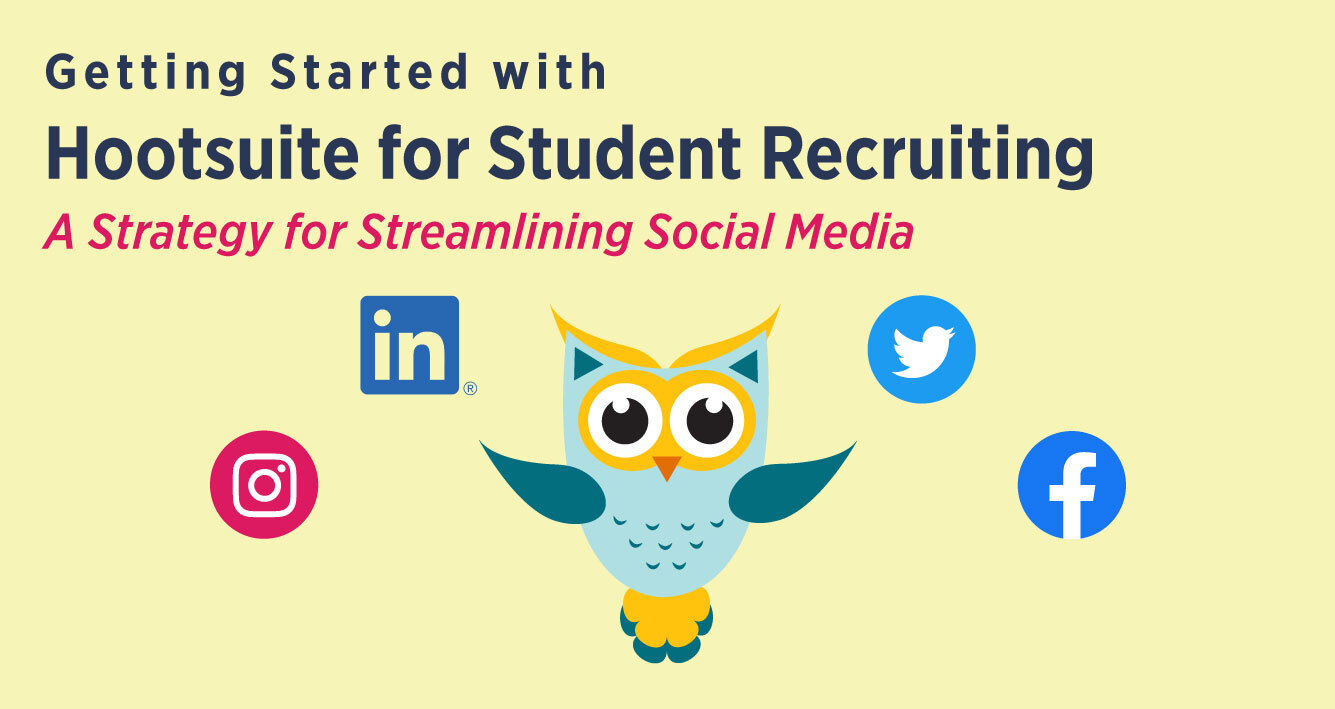
Getting Started with Hootsuite for Student Recruiting

Your prospective students spend nearly 6 hours a day on social media. Doubt their usage will dwindle anytime soon. The good news is you know where you can find your audience. It’s just that wrangling their preferred platforms can feel like a lot.

That’s why we look to social media management tools to help organize our many, many social campaigns. The OG being Hootsuite. A global platform for all platforms, helping you and your team manage accounts from a single dashboard. It’s a really great shepherd for your flock of content. What Hootsuite brings for large institutions ranges from:

  1. Monitoring all social accounts
  2. Scheduling posts in advance
  3. Team Collaboration
  4. Analyzing social media performance  
  5. Targeted Ads
  6. Campaigns 

This Hootsuite primer is a great read for the members of your team tasked with managing all the details. Be sure to pass it along. And do take a minute to check it out for yourself. It’s a quick, practical read. 

This is one of our "Getting Started With..." series to help your team make the most of the student enrollment tech tools out there. Share our glossary of these popular posts with your digital team. And... 

Read on.

Read More

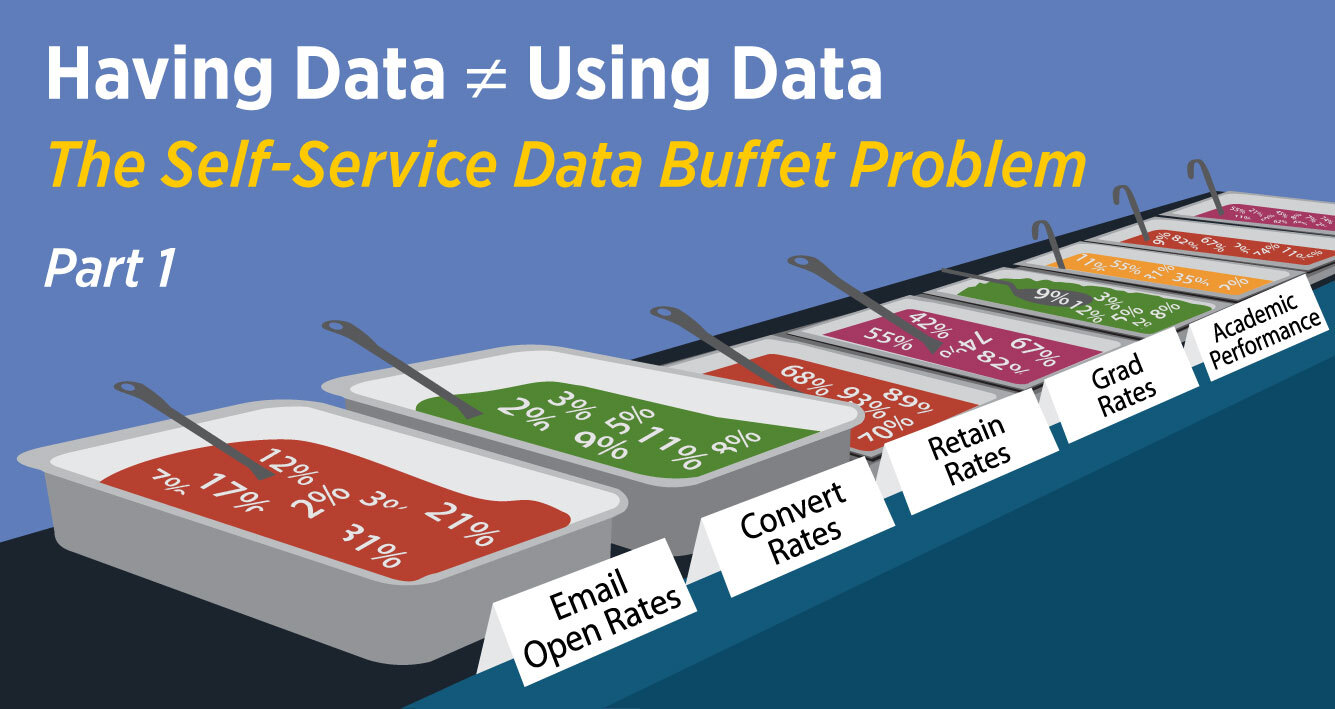
Having Data ≠ Using Data Part 1

You only thought you were using data to make smart decisions.

Understanding how to use data to support institutional planning and growth requires talents and skills that are learned and practiced and honed over time. All these tech companies selling tools and platforms into our systems want leadership to believe that all is simple, clear, and that their dashboards will transform your operational planning and decision making. Wondrous growth is just a click or two ahead. If only.

You’ve tried to create a self-serve data buffet for your leadership team so that they can dive in on their own and make informed decisions.

But…what if they’re not?

We mean, you gave your full team access to the tools with loads of features and data reporting. In the realm of marketing, your CRM captures and reports on email open rates, click through rates, conversion rates, and so much more. Your marketing dashboard tools pull data from Facebook’s Business Manager and Google Analytics (with updates to GA4 that your team is scrambling to implement and fine tune as you read this).

We all want to eke every last drop of data from the platforms available to us now.

Truth is, in the battle of data informed decisions vs human nature, human nature usually wins. Reality: creating, viewing, and understanding reports is not as simple as the tech vendors tell you it is.

Many of your leadership team are simply not data people. They may grab some of the data that supports their ideas, but ignore relevant data that would add more insight, nuance, or might even negate their suppositions.

What we have seen over the last decade is that many organizations are assuming their team’s new access to data dashboards and tools will naturally result in effective use of those tools. Often leaders simply don’t prioritize learning the necessary bells and whistles in the midst of other important deadlines. Still others can’t wrap their heads around it. They have other skills that your institution values and data analysis/interpretation is simply not one of them.

Simple test: Your marketing dashboard provides you with your email open rate monthly average. Among your other standard emails last month, on the 10th your team sent a mass email to a newly purchased, cold email list. What is worth reporting on to your leadership team? How can the data available inform your decisions and actions?

Read on to learn more about what self-service data is, why it can be useful, and how to actually make it work for you. (Oh, and we answer the question about the email open rates).

Read More

ICYMI: Getting Started with [New Tech Marketing] Series

It’s a sad day when a good idea dies on the cutting room floor simply because the team didn’t quite know how to pull it off or have the time to implement it. Because who has time to bother learning something new? (Runner-up award for worst higher ed institution tagline!)

Truth is, getting started is more than half the battle, which is why over the past 12+ months we ran the popular “Getting Started With” series. Taken together, these posts become your team’s Social Media Marketing 101 for student recruiting tools.

Today, we offer you a compilation of this newbie knowledge all in one place. Read on to learn how to get started with TikTok, Snapchat, Instagram, text message marketing, and more. This is one post you’ll definitely want to share with the members of your team who actually get your stuff done.


As AIEA 2023 wraps up this week, we are looking ahead at our next chance to chat about internationalization with .Edu trustees and presidents in San Diego at the AGB conference in April. Honored to be presenting alongside Brad Farnsworth from Fox Hollow Advisory (former ACE VP) and Dr. Gretchen Bataille from GMB Consulting (former president of the U of North Texas among other amazing higher ed roles). We will be talking all about insights university leaders need to guide internationalization efforts.Reach out if you or others from your team will be there.


Read on for links to our full "Getting Started With..." series — highly sharable with the internal team you rely on to move all the recruitment levers just so. Go forth and produce great marketing things!!!

Read More

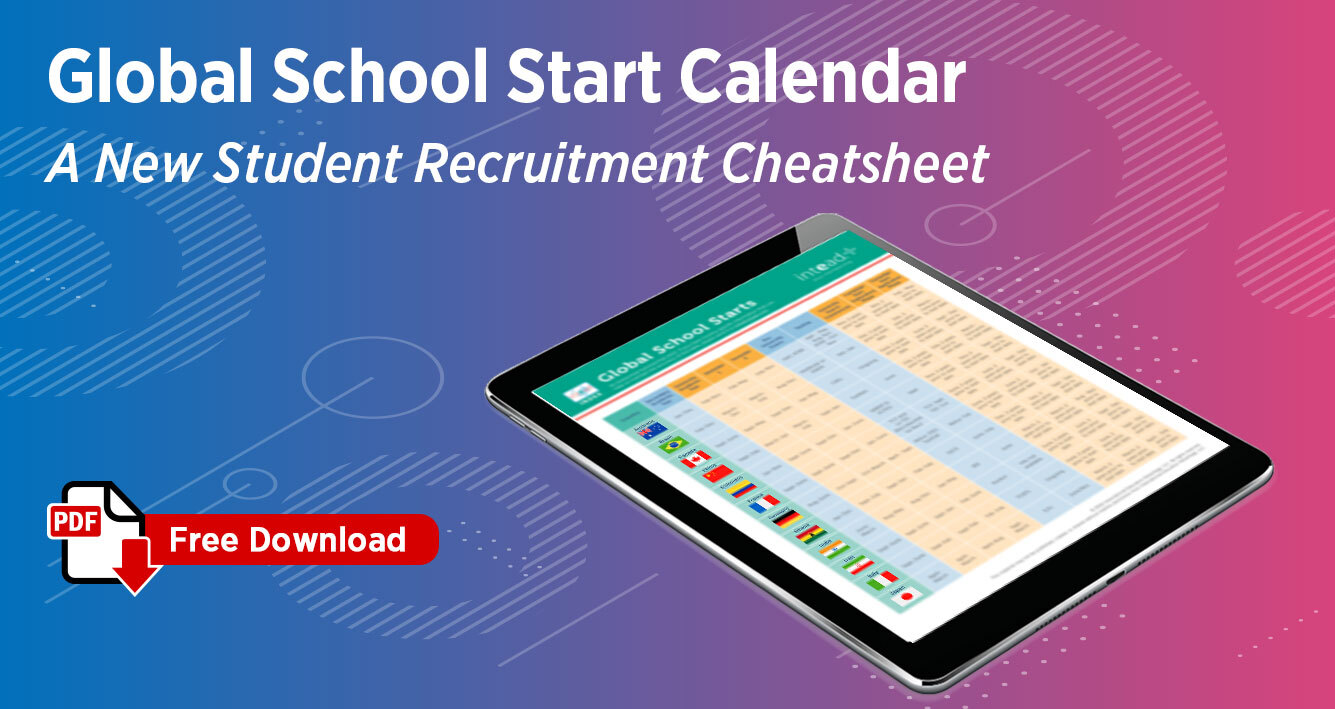
Global School Start Calendar — Free Download

In what month do students in Brazil graduate high school? How about China? Are they the same? Germany and France must be on the same schedule though, right?

Out of the top 29 countries sending international students out into the world, 11 of them have academic years starting in September and ending in June. Eighteen others don’t. And, no, German and French school calendars are not aligned.

Knowing when to reach prospective students is as important as knowing where to reach them. And when your audience is spread across the globe, school admissions and matriculation timing is anything but consistent.

This is important information to your student recruitment team if they are going to reach those students with the right information at the right time. Handy to have a cheatsheet with that information at your fingertips, right?

That’s why we’ve created the Global School Start Calendar featuring 29 top-sending countries. Knowing what drives your international students' planning plays into your recruitment and admissions messaging and timing.

This cheat sheet gives you at-a-glance dates and other relevant reference points for:

  • Secondary academic calendars
  • University academic calendars
  • Major academic exam dates
  • Perspective on student recruitment campaign launch dates

An important side note: Because dates change all the time, as do undergrad exam requirements, we will be updating this resource as appropriate. And, since you are part of the global student recruitment community, we more than welcome your input and updates to this reference tool.

If you see any information that has recently changed or want additional details added, please let us know. We want this tool to be really useful and can use our crowdsourced community’s help to keep it current.

This cheat sheet will be available for free to blog subscribers for a limited time. Or, join Intead Plus and your team can access this and all our other Intead Index student recruitment essentials any time the need arises.

Ready to download your free copy of our Global School Start cheat sheet? Read on

Read More