Recruiting Intelligence

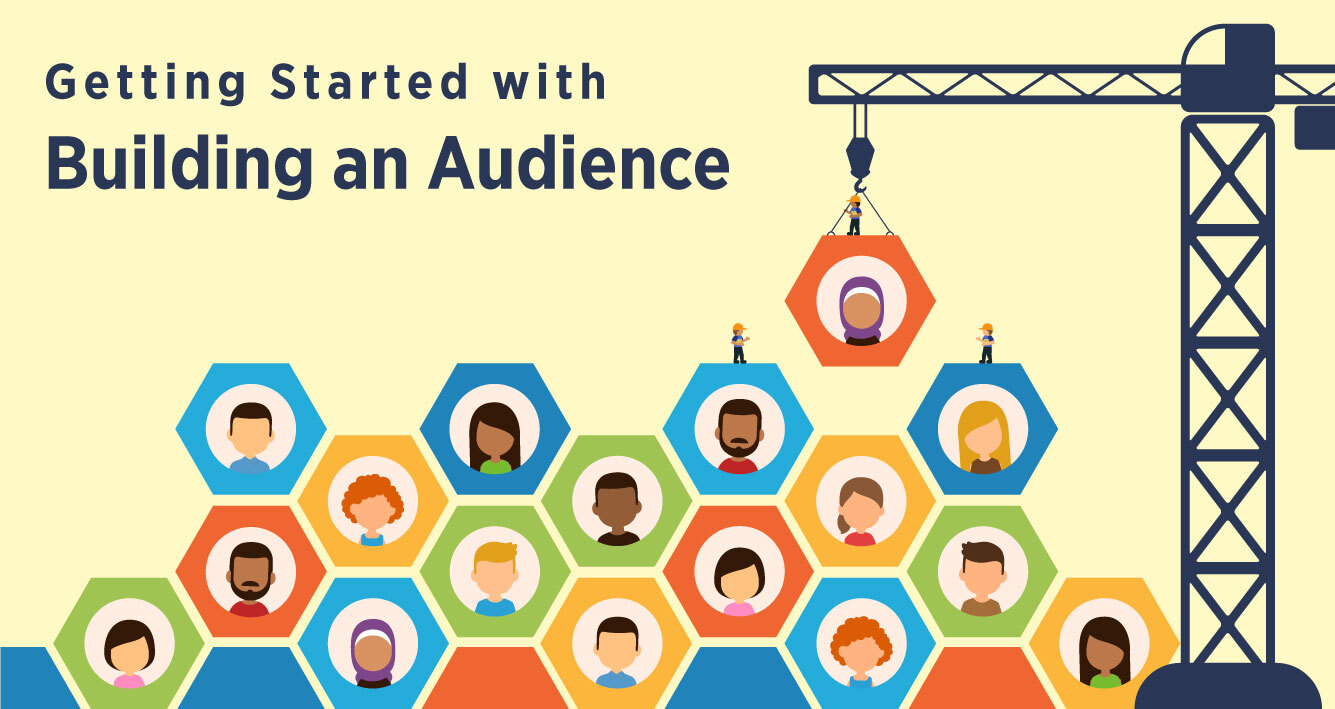
Getting Started With Building an Audience

In the higher education space, your institution is competing with so many options that prospective students have. We know that most students attend a university within 50 miles of their home while large state institutions and the elite options have a stronger draw from coast to coast and beyond.

With these realities in mind, today we consider a foundational marketing goal: building a receptive audience so you can nurture prospective students from the point of awareness and inquiry to enrollment, no matter where they reside.

To state the obvious: virtual tours and informational webinars have taken on a bigger role (fewer campus visits), so a robust and engaging digital presence has never been more important to your recruitment process. Has your team evaluated and adjusted your approach to the student journey? Meeting them where they are in each step of their decision-making process?

We’ve offered a number of educational posts on student journey mapping processes you may want to read (for reference: our recent series Tracing the Student Journey Part 1 and Part 2).

We'll be talking about these enrollment management and student recruiting approaches and so much more at #NAFSA22 in just a few weeks. Let us know if you'd like to schedule a coffee with one of our team. We are leading 4 NAFSA sessions this year and one of them received the honor of being selected for live broadcast. Watch this space for details and we hope you can join us.

For now, read on for our top recommendations on how to build an audience online.

Read More

How to Say 'No' to Ideas That Aren't Good Enough (Reboot)

Leaders of the student enrollment revolution, we’re here for you.

With so much planning going on for an enrollment cycle so very in flux, and past trend data not quite so predictive as it used to be, we thought now would be a good time to reboot one of our most popular posts, “How to Say ‘No’ to Ideas That Aren’t Good Enough.”

It should be a helpful tool at a time when focus is essential in the midst of so many #EdTech solutions and platforms for recruitment and enrollment continually seek your attention.

Read on for the 5 questions every leader must ask and every department must answer when presented with new plans – those that seem great, not so great, or maybe just crazy enough to work.

Join us at #Nafsa2022 in Denver where we will be offering up four presentations with a range of partners on everything from innovative influencer marketing to new ways to maximize the talent of your global recruiting agent network. We'll be focusing on the need for flexibility throughout your student recruitment and enrollment efforts. Schedule a meeting with a simple email.

We’re here to help you focus on the initiatives that will produce results and justify that budget.

Read More

What’s the Story Behind Your Data? Part 2

Last week we shared stories of clients’ unexpected results from our analysis derived from data they had on hand. Insights that helped them improve their enrollment management and enhance recruitment channels they didn’t even know they had.

Success comes from translating your data into insights that point to actionable tasks to improve your operation, and your results. 

This is work that Patricia Tozzi, our Chief Strategy Officer, engages in every day with our team. In Part 2 of this blog series, she discusses more actionable steps around data translation. Those of you who have worked with her have seen the results. This week we focus on where to start.

Side note: if you’ll be attending the 2022 AIEA conference in New Orleans (Feb 20-23), be in touch and we’ll find time for a coffee and an exchange of ideas.

Read on for Patricia’s take on finding meaningful data and putting it to work…

Read More

What’s the Story Behind Your Data? Part 1

There’s so much richness behind data analysis. However, it’s not very often that institutions fully explore the data already available at their fingertips.

Today’s post comes from Patricia Tozzi, our Chief Strategy Officer. Taking a quick break from her directing Intead’s client campaigns, we asked her to give us perspective on how she approaches the inquiry into all the data that surrounds us. How she deploys her innate curiosity to develop campaigns that succeed for our clients.

We hear the desire to improve marketing efforts, innovate, and influence decisions that will result in real enrollments. Yet, it’s hard to get new ideas to take off due to limited resources and institutions’ slow-moving pace. This we all know from our years of experience working with academic institutions.

Our take is there are valuable, free resources you may be underutilizing (or not using at all) that can help you gain insights and, hopefully, lower some barriers to innovation. 

Thomas F. O'Toole, associate dean for executive education and clinical professor of marketing at the Kellogg School of Management of Northwestern University, expresses our experience so well, “I hear people say ‘We need data scientists.’ Well, yes, very selectively—but what you need more broadly are people in different types of functions who are able to translate business needs and problems into data analytics, manage the data required, perform the analytics, and then apply the analytic output in the execution of marketing initiatives and activities.”

Patricia is such a translator.

What we often see are academic leaders who smile, nod, and make a joke about their math skills not being what they should be. Is this you?

No shame in recognizing your skills and skills gaps. But what are you doing about it? Because leaving all that data untapped is not an option.

Read on to learn how to tap into what your existing data is trying to tell you. We think this two-part series is one you’ll want to share more broadly within your institution.

And, if you’ll be attending the 2022 AIEA conference in New Orleans (Feb 20-23), be in touch and we’ll find time for a coffee and an exchange of ideas.

Read More

Intead’s Top 10 Blog Posts of 2021

Enrollment professionals around the world tapped and clicked throughout 2021 looking for insight. They found it here on the Intead blog and now you can see what resonated most. Presenting, our Top 10 Blog Posts of 2021.

It was a tough year with far too much ambiguity. Intead’s global network kept readers abreast of what students and parents are thinking and how marketing messages can reach them.

Would you like a cup of coffee in New Orleans with us at AIEA? We’ll be there and look forward to a busy schedule. Be in touch if you’d like to connect. We have a few amazing restaurant recommendations we can share, assuming that kind of gathering is safe and comfortable by the time the event rolls around.

Read on for our Top Posts of 2021 (links included). Great for sharing with your team to help them think creatively about their respective roles and assignments.

Read More

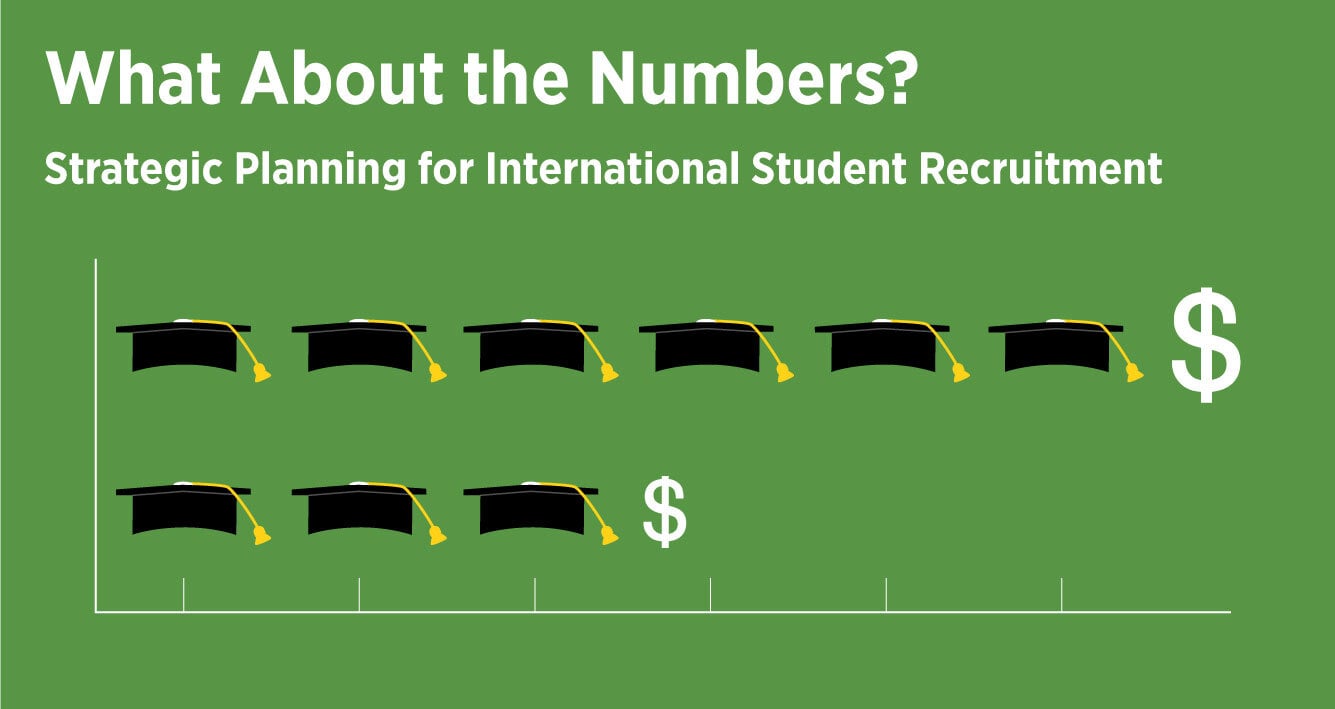
What About the Numbers?

Astute readers of last week’s blog post about creating an international student recruitment strategic plan would have noticed the lack of results data. With this post, we take a look at the numbers for the three institutions discussed: SUNY, SNHU, and Full Sail University. To round out today’s analysis, we added to the mix: Green River College, Kent State University, and University of Cincinnati.

A results analysis cannot look at numbers alone. So many factors play a role in the success of any marketing effort over time. And when that marketing effort is global, well, being attentive and nimble is critical.

Having on the ground intel is so important. Having people to rely on who “get it” is so important. Having a sound marketing strategy is only as valuable as your ability to execute (see our recent post about Marketing Culture for valuable insights).


Upcoming opportunities to learn:

  • October 5, NAFSA All-Region Summit: UMBC and Intead present “0-60 Internationalization” NAFSA Registration Link
  • October 12, AIRC hosted Webinar: Technion Israel Institute of Technology and Intead present “Shifting Student Perspectives: Digital Marketing Now” AIRC Registration Link

Today, we will focus on some VERY interesting numbers – international student enrollment and the economic impact (thank you IIE and NAFSA). We will also consider:

  • The people: few teams stand the test of time (cue Carole King’s “So Far Away” #ShowingMyAge)
  • The environment: the pandemic wreaks havoc for everyone (well, almost everyone)

We really think you will want to read on.

Read More

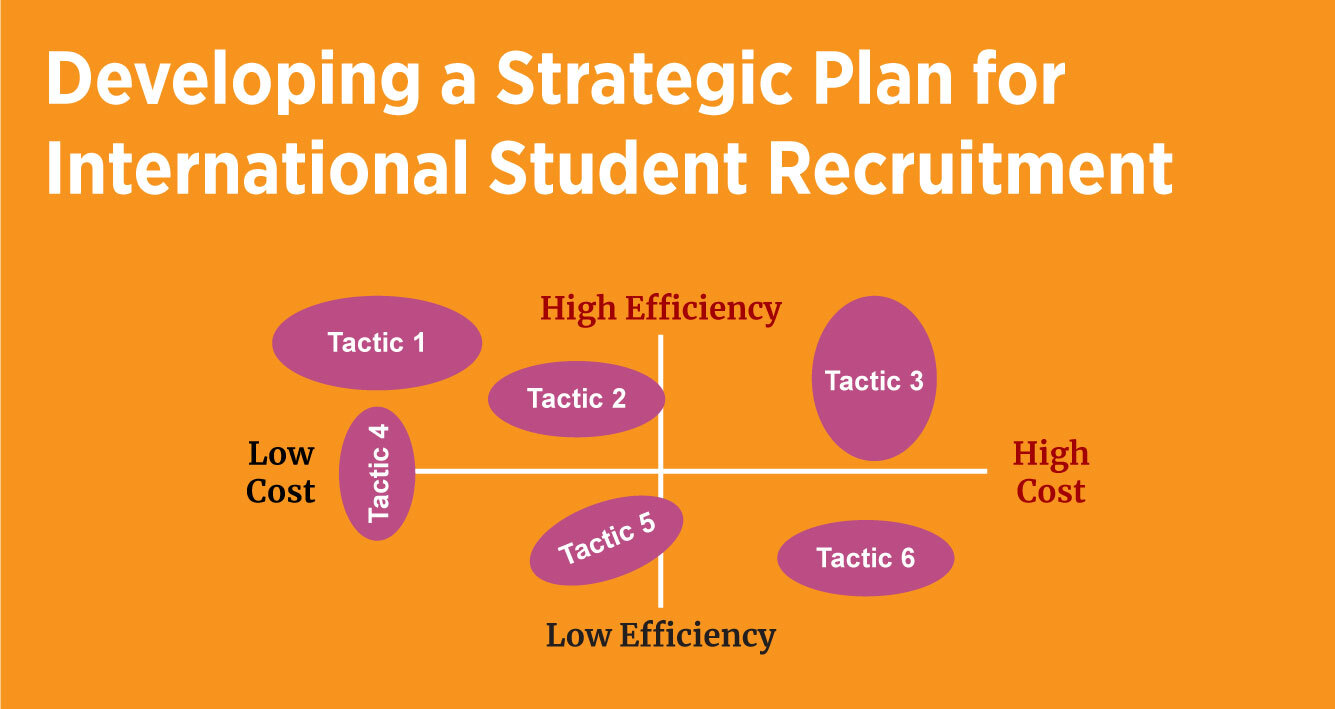
Developing a Strategic Plan for International Student Recruitment

Before we dive into today's post, a quick note on some exciting upcoming opportunities to learn and connect.

In October 2021, Intead will be taking a closer look at international student recruitment with two very different and powerful universities in two webinar events. We hope you can join us – we’ll leave time for Q&A!

  • October 5, 2021, NAFSA All-Region Summit: UMBC and Intead present “0-60 Internationalization” — Register HERE.
  • October 12, 2021 AIRC hosted Webinar: Technion Israel Institute of Technology and Intead present “Shifting Student Perspectives: Digital Marketing Now” — Free to AIRC members and $45 for non-members. Register HERE. (If your institution is not an AIRC member, hit us up for a code and we'll see about getting you past the velvet ropes.)

----

Now, about strategic planning for international student enrollment: the more things change, the more they stay the same, right? Not so with our adjustment to the pandemic? Or, maybe the old adage continues to hold true.

Digital is more important than ever to attract your future students. Yet personal touch and support through the application process (think recruiting agents) is critical to get prospective students from awareness to enrolled. All that was old is new again.

Standing the Test of Time

Back in 2015, our colleague Lisa Cynamon Mayers (some of you long-time Intead evangelists will remember the wisdom she shared with all of us) wrote a great post about developing a strategic plan for international student recruitment. She spoke with colleagues at SUNY, Southern New Hampshire University, and Full Sail University to specifically compare/contrast what they were finding cost-effective at the time. A few valuable charts emerged as part of the 2014 AIRC conference presentation enrollment leaders shared at that time.

Much of the strategic perspective is timeless in its value to our work in enrollment management. We can see from this look back what remains true despite the changing political winds, health factors, and visa/travel regulations. We’ve made a few 2021 observations alongside the insightful points in Lisa’s 2015 post below.

How does your strategic enrollment plan look when analyzed along these lines? Read on for our valuable compare/contrast perspective. 

Read More

Marketing Culture. What’s Yours?

We’ve all heard about how company culture eats company strategy for lunch, yeah?

Last week, we wrote about how folks often confuse strategy and tactics. And we gave a little side eye to those colleagues among us who use the word “strategy” to appear smart and make others feel less than.

The cheat sheet on that one: replace the word “strategy” or “strategic” with “different” or “differentiation” and you’ll be able to get to the nub of the discussion topic quickly. Strategy has everything to do with position in the marketplace, which means how you stand out and leverage your differences against the competition. Tactics are all about the marketing tools and channels you use to make your institution’s valuable differences shine, be heard, and understood.

But in academic marketing (and virtually every other operation we can think of), how we achieve our strategic differentiation, how we meet our institutional goals, has everything to do with the team we have to do the work (the team that creates and delivers the product).

An interesting observation here: academic institutions really are all the same, right? Sure, there is R1 and R2, public and private, not-for-profit and for-profit, 4-year and 2-year, but these categorizations, when you get down to it, are not that significant, at least at the undergraduate level, right? They are all producing the same thing and in the eyes of the consumer, what is really different? They all have the same administrative and academic departments. And the rankings are a sham anyway, right?

Read on for how to counter that sad and ineffective point of view.

Read More

So That’s Your Strategy?

People look smart when they reference strategy. It elevates any discussion to greater importance as soon as the word strategy enters. Often, it gets others in the room thinking, “Right, maybe I’m not thinking about this strategically.” Followed by the thought, “What exactly would a strategic version of this discussion look like?”

The idea of strategy is often misunderstood. I fully admit, it really can be difficult. I can’t tell you how many discussions I’ve been in where people describe their tactical execution plan as the strategy. 

A simple example of why folks get confused, and I’ll use what we know best, the world of marketing: Your marketing strategy to enroll more students requires great marketing content. Content is a tactic you will employ to achieve your strategic goal. Yet, you will need a content strategy to be successful. So, content is not a tactic. It is a strategy, right? No, it is a tactic in this scenario. A tactic that needs its own strategy.

Oy vey.

Our team, of course, lives in the world of marketing strategy, planning, and execution. Today's post shares some insights into how to simplify the discussion and confirm when you are employing a strategy vs. discussing the tactical execution of any given initiative.

Read on and maybe we can shed some light on how to actually be smart in the discussion, not just look smart.

Read More

Hey Academic Marketers: Did Apple just bite into your audience?

You’ve got to hand it to Apple – everyone’s paying attention to their iOS 14.5 update. At least, those of us in marketing.

This typically benign move (yawn…another update) has Facebook screaming, “Alert: The sky is falling!” In our experience, most marketers have had their Chicken Little moments over the years. Some more than others. Remember when the movie industry thought VCRs were going to decimate their revenue stream? Or how about Y2K?

But what exactly is it that’s got everyone crying foul (er, fowl)? In short, data. Or, lack thereof.

The new update aims to add transparency to user data tracking. All App Store apps are now required to ask users for permission to access the Identifier for Advertisers (IDFA), a unique tracking code for mobile devices. So, each time an iPhone user downloads an app from the Apple Store, they must actively opt-in to be tracked. If they don’t, the policy prohibits certain data collection and sharing. Apple is positioning the move as protecting the consumer.

Early word from Flurry has it that 94% are opting out. That number is a big deal to businesses who’ve come to rely on this data to optimize, target, and report on tracking pixels, the bits of code that detail user behavior. It’s certainly a big deal to Facebook and Google and to those of us who rely on their insights.

Truthfully, prior to this iOS change, iPhone users already had the ability to opt-out of IDFA, but this move by Apple prompts and forces a user decision and almost everyone is opting out.

While the change only affects Apple’s mobile audience (leaving desktop and Android users alone), that’s still 1 billion active iPhones worldwide, one-fifth of which are in the US. (iOS has notable but significantly less presence in key international student recruiting markets with 44% market share in Saudi Arabia, 36% in Vietnam, 27% in South Korea, 22% in China, 13% in Brazil, 8% in Nigeria, and just 3% in India, per Statcounter GlobalStats.)

As this policy takes hold, academic marketers will have much less insight into the iOS users who are clicking on apps. That inhibits the ability to micro-target, which is a problem.

To know for sure the significance of the iOS update on your campaigns, institutions should compare the percent of traffic that engages through mobile, then the percentage of those who use iOS. This is all readily available through your Google Analytics. The higher the number, the greater the impact the iOS update will have on you. Your lead generation efforts will be affected, but we imagine less so than say e-commerce businesses (think Amazon, Etsy, Target, Best Buy, etc.).

Of course, this isn’t just about privacy. It’s also about money. The big tech players are competing with one another for your ad spend. Remember, Google makes over 80% of its money on advertising, as does Facebook. They want to maintain control. Can we blame them? (Yes, of course we can, and do. Nevertheless…).

And that’s the bigger picture. Marketers who feel like the sky is falling feel that way because they are losing some control over the crux of their campaigns: their audience and their ability to define and target them. The risk the Apple update poses to your institution is your diminishing ability to reach desired audiences accurately and affordably through paid digital channels – primarily in the US. 

So, while the sky may not be falling, do read on to learn how your academic marketing team should respond…

Read More