
Recruiting Intelligence

So you think you have a campus community?


Spoiler alert: It is simply not ok to tell prospective students you have a vibrant campus community. You gotta show them.  

Our goal: marketing messaging that resonates based on very real consumer connection. 

Human beings rally around things. We rally around our families (biologic or chosen), our sports teams (Celtics, Manchester United), our celebrities (TSwift, Beyonce), our professions (cybersecurity engineer, IP attorney), events (Rio Carnival, Chinese New Year), crises (Gaza, Ukraine), political issues (don’t get us started). 

It has a lot to do with shared experience over time. The connections we make with others who engage in a project, achieving a goal, together. As humans, we want to protect and bolster the things we love.

So, no wonder, people rally around their campus community. Having shared a period of time together and having a degree conferred by the same administrative body – these activities and achievements form bonds. 

We eat in the same cafeterias, walk the same halls and pathways, endure the same exam schedules, and wear the same cap and gown as we walk the same stages to receive our parchment pressed with our school seal. 

With the rise of online degrees, a new sense of shared experience develops.


Opportunities to Meet the Intead Team 
- NAFSA Region XI, Hartford, Connecticut, Oct. 27-29, 2024
PIE Live North America, Boston, MA, Nov. 19-20, 2024
- AIRC, Seattle-Bellevue, Washington, Dec. 4-7, 2024

Bookmark this: Intead’s Resource Center 
Access 800+ articles, slides, reports with relevant content on any topic important to enrollment management and student recruiting.  Check it out.


There is far less connective tissue to draw students together with the online experience. Yet, there remains a common set of activities and the earned degree creates that same sense of pride in achievement born of concerted effort toward a shared goal. 

When we think about student recruitment from the prospective student point of view, as the university selection list gets shorter, the heart plays a larger and larger role in determining where they will enroll. In focus groups, the most common phrase is some form of, “After all the thinking, I felt this was the right choice for me.” (emphasis added) 

Here’s the thing: it’s hard to build student evangelists within your community when they see their education and their community as entirely transactional.  

Not rocket science. However, it takes the investment of dedicated time. This is more than a simple 90-minute brainstorming session with your team's marketing talent. There's trend data to evaluate, focus groups to convene, influencer affinity groups to build and manage. 

Sounds like a fair amount of work, right?

And when you think about those institutions out there who just seem to be crushing it, what do they seem to have going for them? Sure, they have the product mix and the measured price point. But what hits you right in the face is the vibe. That is the thing that gets you thinking, "Oh, I wish we had that connection to our audience."

That audience connection doesn't just happen. It is cultivated by talented, thoughtful, invested people who believe in the opportunity.

Below we share a few pointers. Please be in touch if you'd like to dive into a deeper analysis of the specific opportunities for your institution (info@intead.com). This is about the consumer insights the Intead team is so very good at identifying and leveraging. Read on… 

Read More


Did you say something?...I’ve already scrolled on


With the amount of time prospective students spend online, you’d think connecting with them would be easier.  

The average US teen spends 7 hours 22 minutes each day looking at a screen, or 43% of their waking hours, per Exploding Topics. And that’s being conservative – Common Sense stats show teens on screens 8 ½ hours per day outside of school-related screen time. Need confirmation? Just look around your campus at all the students not looking at you, but rather their screens. (Reality check: the rest of us aren’t off the hook as the average person clocks 6 hours 58 minutes of screen time per day, just so you know. So yes, that is where all the time goes!) 

Do you know the average number of phone notifications a US teenager receives each day? We answer that below. Make sure you are sitting down when you read it.

Yet, despite all their screen time, or perhaps because of it, your prospective students are discerning consumers of marketing. If they’ve seen one university ad, they’ve seen a thousand. We’re certain you can relate. We all can. But some messages clearly do get through, and it almost always comes down to creativity, cultural nuance, and an appetite for taking a little risk.

Fun fact for the risk takers: Humor is a tough marketing message to achieve with a broad and diverse audience, but when you get it, it REALLY works. 


The Intead team is gearing up for some amazing presentations and we hope you can join us. 

  • ICEF North America in Niagara, Canada, April 30 - May 3, 2024
  • NAFSA 2024 Annual Conference and Expo in New Orleans, May 28-31, 2024
  • GMAC 2024 Annual Conference in New Orleans, June 19-21, 2024

Let us know if you’ll share a cup of coffee and a conversation about all things global and digital (info@intead.com) 


Take fintech, an increasingly rising "it" program in the eyes of so many STEM-degree seekers, especially those with a bent toward accounting and money-making in general. And rightly so as financial services operations around the world increasingly rely on new technologies to do business. (Shout out to Worcester Polytechnic Institute on its recent fintech doctoral program launch giving students a full-stack (BA>MS>PhD) option in this coveted field. Talk about reading the market!!!)  

Fintech is a huge, booming industry and one that universities with fintech programs are leveraging to draw the attention of prospects. The same can be said for Data Analytics, Cybersecurity, AI, and other “sexy” programs that now drive global and local economies. 

Important note: the counsel that follows here applies to how you message your programs even if you computer sciences are oversubscribed and you are trying to attract students to other options.

We want to promote programs that will draw eyes and pique interest. Highlighting them in your recruitment efforts makes sense. Of course, you know this. And yet somehow marketing that ultimately makes it onto the screen in front of your prospective students’ gaze is so often watered down, generalized speak about “great programs in computer science” or “practical business degrees” or the now far overused, “advance your career.” Ugh. Your prospect just scrolled on.

We know you know exactly what we’re talking about. So often there is a fear of getting too specific. Why mention one computer science program and ignore the others when students need to know there are many amazing degrees from which they can choose?  

Here’s why: you need their attention, and the coveted, interesting, or unusual programs will get it. Not the generalized track that simply prompts the finger flick and scroll right by. 

It’s not just your message you need to consider, it’s also the medium.

95% of US teens now own or have access to a phone per Pew Research. Worldwide, the stats vary (China has the most active smartphone users, followed by India, the US, Indonesia, and Brazil), but it’s safe to say many of your prospective students living outside of the US are on their phones, too. In Sub-Saharan Africa, affordability and access is improving such that there will be 692 million unique mobile users by 2030, 88% of whom will be using smartphones according to lobby group GSMA.

Many of your prospective students will not only be accessing information about your institution via smartphone, but will be completing the entire application process on it as well. Something your international team knows but your domestic team might not be thinking about. 

Marketers and message makers read on for our tips on phone screen engagement tips. Like all good listicles, we’ve got 5 steps to push your team to create effectively... 

Read More

Stacked Credentials and Employment

Your enrollment team is furtively evaluating fast-track routes students can take to achieve career growth. How can we promote a new product that clearly has growing demand when its consumer adoption will reduce demand for our primary revenue source?

With rising tuition (a 30-year drumbeat on that one), and fewer traditional aged students in the pipeline, the pressure to produce new revenue is intense. Repackaging what you already produce in new, bite-size chunks makes so much sense to everyone, right?

Credentials in new formats is not new to the scene, but student adoption is growing in large part because employers have woken up to their value. The Intead team did research on graduate level certificates six years ago for one of our top 50 US institution clients and found global employers were still evaluating whether a certificate was as valuable as a full MBA. Employers were not familiar with the new credential and what it would deliver. In 2023, employers in a highly turbulent job market and in need of talent, have decided. Certificates and stackable credentials work just fine. Let’s GO!

And you are in a position to do something about it.

Data from a relatively recent RAND Corporation report Stackable Credential Pipelines, Evidence on Programs and Earnings Outcomes gives us concrete evidence of value and the direction things are going.

In brief, RAND Corporation partnered with the Ohio Department of Higher Education to build a better understanding of how stackable credential pipelines have played a role in the education and training of individuals in Ohio, a state that has taken a leadership role in developing these types of initiatives. The report itself focuses on three fields: health care, manufacturing and engineering technology (MET), and information technology (IT). There’s a lot of good stuff to glean from the report. We were particularly keen on the ROI data (aka job growth). That is, after all, the name of the game for the vast majority of prospective students these days.

Your traditional revenue stream is taking a hit already. Demand for short-term credentials will continue to grow. If your institution does not develop strength in this educational opportunity, your competitors will (or already have).           

It’s time to align your internal team around this and convince those holding you back. Time is running out. Read on for 4 key takeaways on what the RAND Corporation report has to say about student ROI tied to shorter-term stackable credentials. (You’ll especially appreciate takeaway number 3!!!)    

Read More

Where the Viable Students Are

Reading Jon Boeckenstedt’s piece “I’ve Worked in Admissions for 40 Years. It’s More Stressful Than Ever,” published last month in The Chronicle of Higher Education felt like a familiar conversation. It will help remind you that your admissions stressors are not yours alone; you’re in good company. (Jon is vice provost for enrollment management at Oregon State University).

That article was a particularly apt read coming on the heels of the Association of Governing Boards (AGB) annual conference where university trustees and leadership gathered to discuss big industry issues (read Intead’s key takeaways from that event here). These individuals were representing the other side of Boeckenstedt’s coin.

On the one side is “The Number.” Those enrollment targets or revenue figures that are at best daunting, at worst utterly unreasonable to actually meet. And these numbers seem to grow higher each year. On the other side of the coin are leadership’s own goals – namely having to do with the very viability of the institution you’re serving.

Truth is, there really is no toss-up. The coin lands leadership side up every time.


Heading To NAFSA 2023: Our presentation with SIO Paulo Zagalo-Melo (Western Michigan University) and Reporter Karin Fischer (Chronicle of Higher Ed) will be on Wed. May 31 at 9:30am. A reality check with the data that informs our student recruitment decisions. Hope you'll join us. Be in touch to meet with us during Nafsa: info@intead.com.


So, the churn continues. Your target numbers rise. You must be able to think quickly, act nimbly, and produce the enrollment results. This is where a good partner comes in (yes, shameless plug, but it’s so true).

The way we see it, there are three pools of students that represent growth opportunities right now:

  1. International students
  2. Adult learners
  3. Underprepared students

Read on for our quick perspective on these 3 pools and the unique approach needed for each to first, choose your campus, and second, to succeed there.

Read More

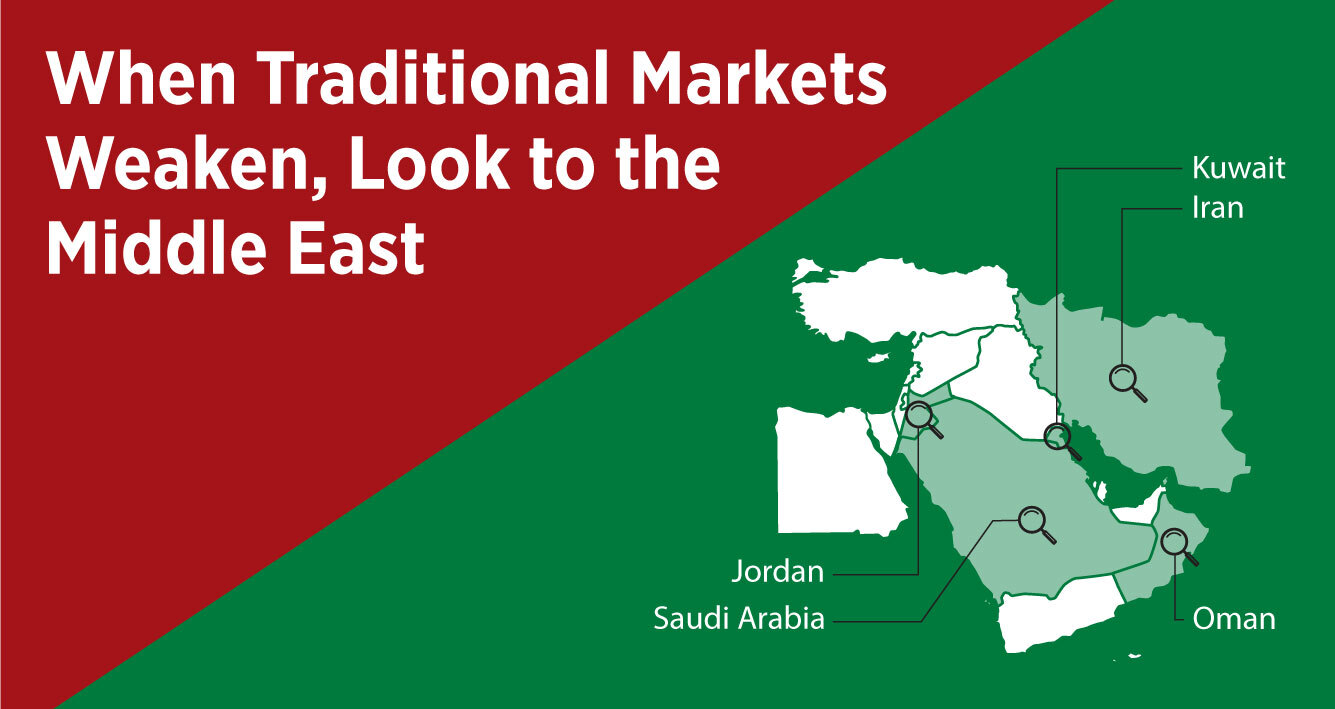
When Traditional Markets Weaken, Look to the Middle East

What we know: On a macro level, stalwart student recruitment sources are in flux with China declining a lot and India rising a lot. Other source countries are similarly difficult to predict as the repercussions of the pandemic and other global factors continue to play out.

Statistically speaking, US institutions hosted 8.4% fewer international students this past fall compared to fall 2020 (and that year wasn’t so hot either). Public 4-year institutions saw the largest decline (17.2.%). This is all per the National Student Clearinghouse Research Center.

While macro stats offer perspective, they are not what drive recruitment strategy. Your goals and differentiators drive strategic enrollment decisions.


On the topic of high-level institutional internationalization: We will be in San Diego presenting at the AGB conference in April. Honored to join Brad Farnsworth from Fox Hollow Advisory (former ACE VP) and Dr. Gretchen Bataille from GMB Consulting (former president of the U of North Texas among other amazing higher ed roles). We will be talking all about insights university presidents and trustees need to guide internationalization efforts. Reach outif you'll be there.

And in less than 2 weeks we will be in DC for the AIEA Conference presenting alongside Karin Fischer from Chronicle of Higher Ed and Dr. Ahmad Ezzeddine from Wayne State University. If you will be in DC for the event, we are talking about how trend data informs international student recruitment planning on Monday, Feb. 20. Hope to see you there. (Email us if you'd like to find coffee together).


Recruitment strategy derives from the number of students you need to meet enrollment targets tied to what your institution excels at (your market differentiators) - that, along with an evaluation of where in the world (domestically and internationally) market opportunities exist. Our blog post on new market entrycontinues to be a popular one.

Most institutions across the country still believe that international markets work to their advantage. The latest “Mapping Internationalization on US Campuses” report by the American Council on Education (ACE) concurs. 66% of its survey’s 900+ responding institutions anticipate their overall level of internationalization will increase in the coming years. (Our recent blog post on the ACE report provides more perspective).

With traditional source countries in flux (China, India, Vietnam, South Korea, Brazil), we have been pointing to opportunities in developing markets (Africa part 1, part 2) and Latin America (part 1, part 2). Today we offer insights on the Middle East.

The value of reaching a broader swath of prospects gets to the very heart of why most institutions say they are for internationalization in the first place:

  • To improve student preparedness for a global era
  • To diversity students, faculty, and staff
  • To become more attractive to prospective students
  • To generate revenue

In evaluating new markets, we look to countries with rising incomes, a growing youth population, and real employment opportunities for returning graduates. The Middle East is a region with a rising youth population, plentiful job opportunities, and only a handful of competitive higher education institutions.

Many students in this region are looking to study abroad due to changes in political climate or the fact that many of their local universities are newer or understaffed. Though let’s not discount the entire system. Two Saudi universities are ranked in the top 200 of global 2023 QS World University Rankings: #106 King Abdulaziz University In Jeddah and #160 King Fahd University of Petroleum & Minerals in Dhahran.

In this week’s post we offer you insights on student market opportunities in Saudi Arabia, Iran, Kuwait, Oman, and Jordan.

Read on.

Read More

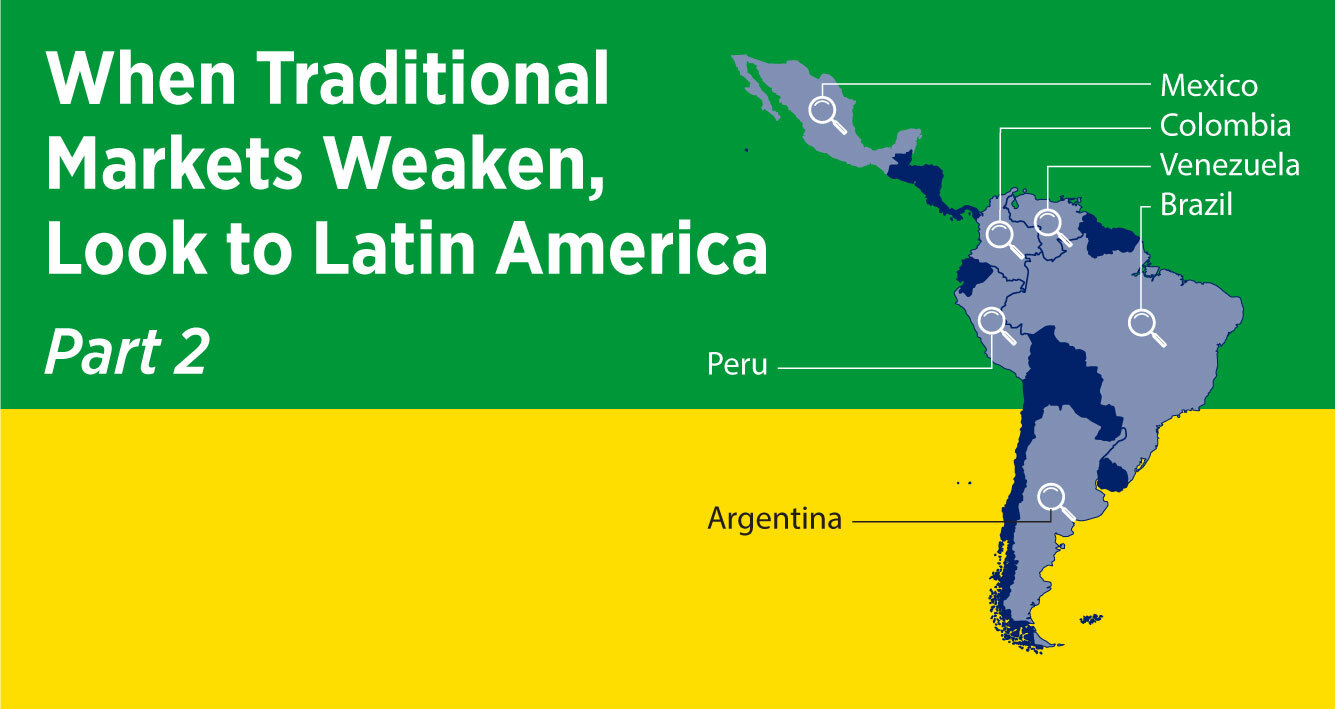
When Traditional Student Markets Weaken, Look to Latin America: Part 2

As our industry reckons with the decline in Chinese student enrollment, we offer insights on regions that may fill the void. But, it’s so much more than that. Broadening our international recruitment reach will serve our bottom line, yes, but it also enriches and enlivens our campuses and deepens the student experience. You know all this already. It’s why so many of us do what we do. Cultural understanding matters.


REGISTRATION CLOSES TOMORROW (Dec. 8, 2022). So, before we dive into part 2 of our review of LATAM recruitment opportunities, how confident are you with your selection of international student recruitment markets right now? And do you want to tap some of the brightest, experienced minds in our industry?

The Intead/San Diego State University One-Day Workshop will be a hands-on opportunity to learn from an awe-inspiring international student recruitment faculty. Colleagues from Syracuse University, Tennessee State University, Cal State Northridge, San Diego State, English USA, and edX, Rutgers Prep and Idlywild (for our high school colleagues), simply SO much talent in one room.

  • Come with questions, leave with a plan.
  • Two luminary keynotes
    • Luncheon on Social Justice with Dr. Jewell Winn and Dr. Adrienne Fusek
    • Dinner on Chinese Student Influencers with Dr. Yingyi Ma and Brad Farnsworth
  • At $350 for the day (inclusive of all meals), this learning opportunity is a steal.

Last week we looked at Brazil, Colombia, and Mexico. (And before that Africa, see part 1 and part 2.) This week our eyes are on Venezuela, Peru, and Argentina. These top sending countries from Latin America are worth your team’s consideration.

And if you need a partner to help you refine your recruitment focus, be in touch. We’ll help you find new recruitment opportunities that make sense for your specific, culturally relevant programs and campus.

Read on for our regional insights.

Read More

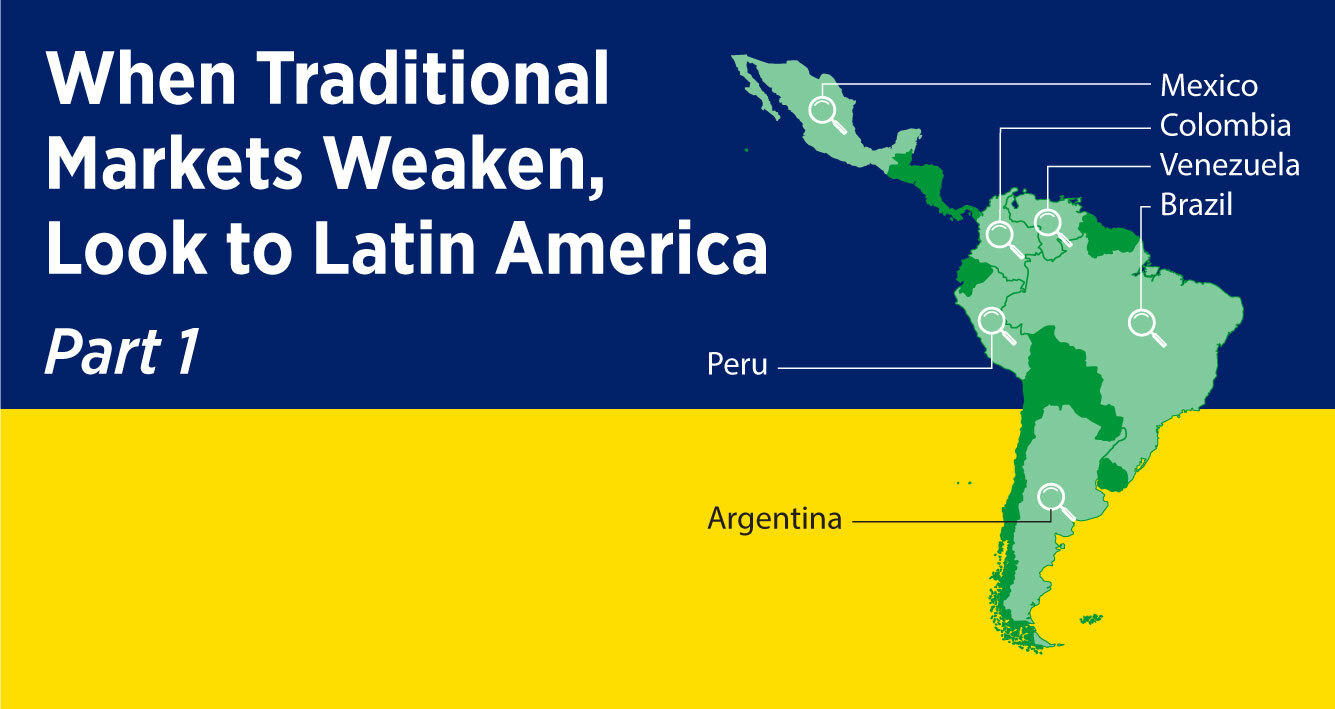
When Traditional Student Markets Weaken, Look to Latin America: Part 1

The decline in enrollment continues in two really important student segments for so many US universities: domestic US and Chinese students.

So, what are you doing about it? Plenty, we are sure. 

As campus pressures continue to mount, institutions are diversifying enrollment targets and considering options that were only peripherally on their radars in the past. Today's discussion: Part 1 in a 2-part series on LATAM.

A word to the wise: while China as an enrollment target has shifted for many institutions, the Chinese student audience is not one any of us should ignore. The volume of students from China to the US, UK, Australia, and Canada, among other nations, continues to be significant as compared to the flow from other countries. Strategies, messaging, and expectations should adjust.

As far as domestic recruiting in the US, we don’t see US institutions bailing on domestic student recruitment any time soon ; -) Again, strategies, messaging, and expectations.


Registration is about to close. Join us in San Diego on Dec. 13 to evaluate how your institution can adapt to the new international student recruitment landscape. The Intead/San Diego State University One-Day Workshop will be a hands-on opportunity to learn from an awe-inspiring international student recruitment faculty.

  • Come with questions, leave with a plan.
  • Two luminary keynotes
    • Luncheon on Social Justice with Dr. Jewell Winn and Dr. Adrienne Fusek
    • Dinner on Chinese Student Influencers with Dr. Yingyi Ma and Brad Farnsworth
  • A full day of international student recruitment strategy and execution discussion. 
  • At $350 for the day (inclusive of all meals), this learning opportunity is a steal.

What we are seeing: more institutions are (finally!) taking global diversification seriously and are reconsidering how and where to spend student recruitment marketing dollars. Recruiting beyond China is the right move, right now. And no, this doesn’t mean going all in on India either.

It’s time to add a few new eggs to your basket (or make your current basket of eggs larger). Look for markets ripe for recruitment -- those with a growing youth population, rising incomes, and real employment opportunities for returning grads. Oh, and some institution-specific data that supports your institution’s connection to that source country.

It’s a drum we’ve beat before (see our recent two-part series on recruiting students from Africa: part 1, part 2). Today, Latin America is a region with a rising youth population, a range of strengthening economies, and only a handful of in-country competitive higher ed institutions.

In fact, this year only one Latin American university made it into the top 100 global 2023 QS World University Rankings. Two more made it into the top 200. (#67 Universidad de Buenos Aires, #104 Universidad Autonoma de Mexico, #115 Universidad de Sao Paulo). In other words, enterprising youth have very few top-tier research-intensive universities from which to choose within their region. 

Thankfully, we know, it is not all about rankings. And yes, just like you, we have all the same misgivings and cranky commentary about the ranking systems and what they perpetuate. There are many reasons, beyond rankings, that students from Latin America seek study opportunities abroad. Our market research (pre-COVID) continues to provide valuable insights into the motivations of students from emerging markets. Download that report HERE.

All this to say, Latin American students represent an opportunity worth exploring right now (have been for a while).

So, we’re giving you our latest analysis to get you going in the right direction. In this week’s post we offer a review of Brazil, Mexico, and Colombia. Next week, Venezuela, Peru, and Argentina. We think you’ll find our insights useful as a starting point for the work you’re doing this recruitment cycle as well as the next. Read on.

Read More

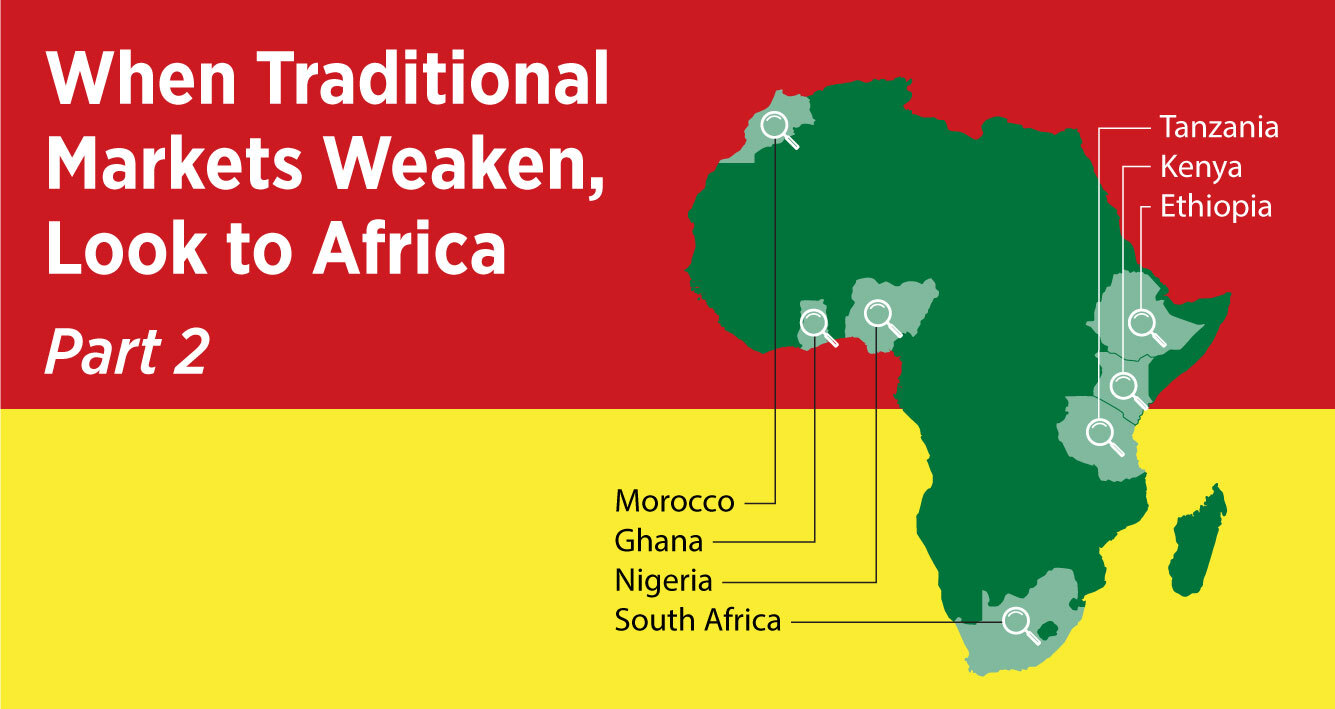
When Traditional Student Markets Weaken, Look to Africa: Part 2

All eyes on China is not a winning international student recruitment strategy today. Not that it ever was. The stronger approach: diversifying the pool of countries your institution pulls from. We’ve been saying this for more than a decade. Institutional budget allocations have not always heeded the advice.

We get it. Student volume and confidence in achieving enrollment targets have driven academic CFOs and others who manage risk to take the more conservative path. Over the past decade+, our clients are typically those interested in pushing beyond the conservative global recruitment path. They are the institutions that recognize the value of building a broad range of relationships to feed their student enrollment.

This diversification, both domestic and international, provides for more long-term stability. That strategy is becoming far more attractive to many more institutions today. And that strategy takes time and investment to execute well, to build a reliable and diverse supply chain as it were.

Last week we wrote about the three key things to look for in markets ripe for international student recruitment: a growing youth population, rising incomes, and employment opportunities for returning graduates. And a growing list of countries in Africa is meeting the short(er) list for institutions seeking international students. It may be time you take a closer look at this region.

Here’s the link to Part 1 in this 2-part series (in case you missed it). Today we offer student recruitment insights for Ethiopia, South Africa, Morocco, and Tanzania.

And for more African student recruitment insights from our pre-Covid research (still highly relevant as you develop your recruitment plans), check out:

With a nod to last week’s post (with many useful links for the careful planner that we know you are), important to note that there is competition for these students from attractive and less expensive institutions in Russia (before the Ukrainian crisis), France, Germany, China, and some Middle Eastern countries.

In our discussion of 7 African nations, we cite a variety of useful sources to demonstrate how varied information sources will add to your country and cultural perspectives. Hopefully through this post and the next, you will find some new research sites to support your planning. (We love participating in that broader teaching mission as well).

Read on for tips on recruiting students from Ethiopia, South Africa, Morocco, and Tanzania

Read More

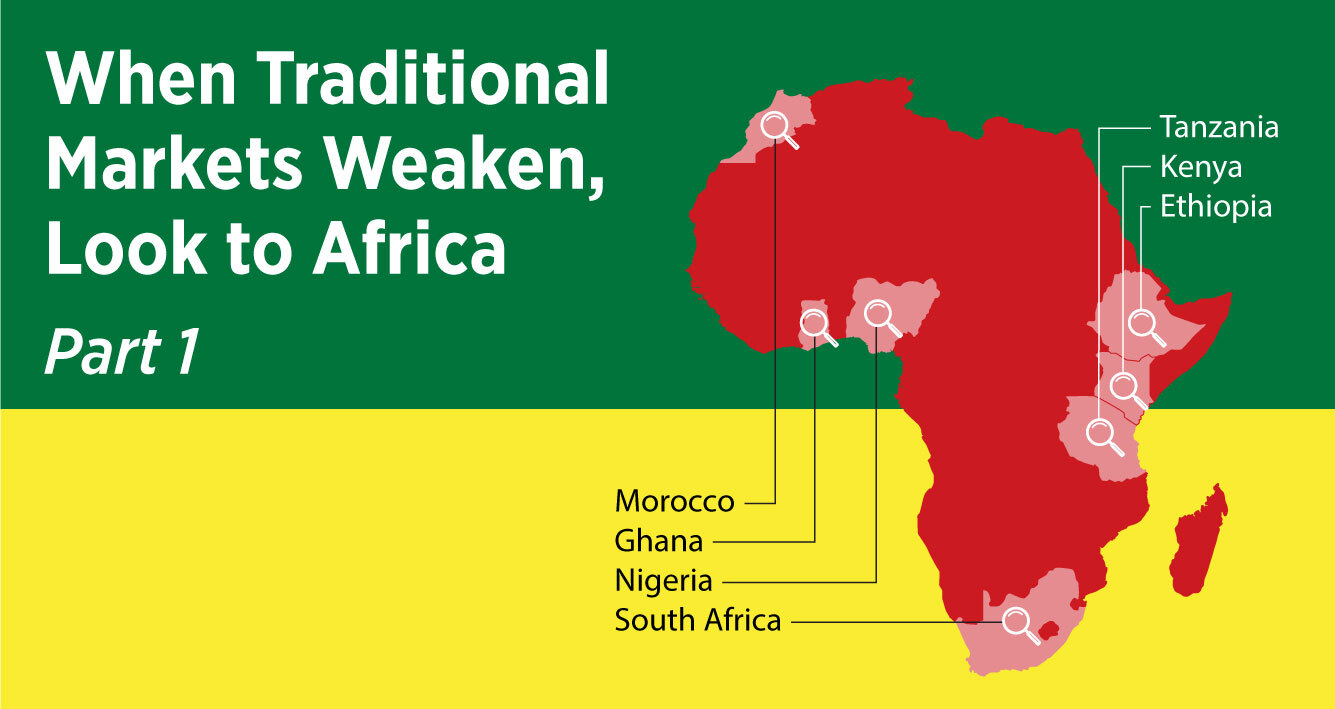
When Traditional Markets Weaken, Look to Africa: Part 1

The best markets for international student recruitment have three key things going for them:

  • a growing youth population, 
  • rising incomes, and
  • employment opportunities for returning graduates.

The African continent has a number of under-utilized recruitment hubs that boast all three.

The three bullet points above are useful generic perspective applicable to pretty much any institution – higher ed and private high schools. But what about your specific institution?

How do you make headway in the new(ish) student recruitment markets that African countries represent? Will your differentiators resonate there? Which channels will reach your ideal student segments?

Perhaps start with some of our analysis with helpful, still valid insights compiled prior to Covid. You’ll appreciate the discussion of recruiting agents, creative partnerships, and other valuable recruiting channels:

To be clear, African countries, as sources of international students will not replace the flow of students coming out of China. So, if your enrollment goals are all about achieving target numbers and not about diversifying your campus, you may hesitate to invest here.

And yet, the thing about hitting your enrollment goals is that you win by building strong relationships and pipelines. Clearly, China and India have the volume and the larger accessible market size, but your institution needs student recruitment opportunities where you can be truly competitive. And diversifying your campus has rewards that speak directly to your institution’s broader teaching mission. Seeking less common sources of international students is one way you do all that.

An increasing number of institutions are approaching the Intead team to explore further afield. A welcome and important mindset. While regular readers of our blog know we continue to share perspectives on, and implement recruitment strategies for, traditional student sources (China, India, Vietnam, Brazil, S. Korea). With more institutions seeking new markets, it is a good time to revisit the approach to Africa as a valuable source.

Obviously, the pandemic slowed the inflow of international students from all parts of the globe, and Africa is no exception. But now, as pandemic restrictions ebb and economies recover, smart institutions are bringing Africa back into their awareness as a prime source of engaged, qualified students.

In fact, more than a few African countries have achieved the World Bank’s “middle economy” status and are expanding their leadership in sectors such as agriculture, oil and gas, and tech. These industries offer promising careers but tend to demand higher education degrees. Foreign degrees draw attention to job candidate resumes. Many US institutions offer long-established degrees and certifications that African higher education institutions are still developing.

Important to note that there is competition for these students. While the US has a strong draw (the US brand and all that), Russia (before the Ukrainian crisis), France, Germany, China, and some Middle Eastern countries have been courting students from African countries for a while with less expensive degrees than are typically found in the US.

Also interesting to note that over the past 5 years, both the US and China have each invested in the African continent at around $40B annually. Much of the investment has gone toward construction (roads/transportation) and mining.

According to The Brookings Institute, “China’s influence goes beyond the trade relationship: It is also the top investor in infrastructure, and now is the first destination of English-speaking African students, outperforming the U.S. and the U.K.” (source cited below).

In our 2-part blog post about 7 African nations, we cite a variety of useful sources to demonstrate how varied information sources will add to your country and cultural perspectives. Hopefully, through this post and the next, you will find some new research sites to support your planning. (We love participating in that broader teaching mission as well).

Read on to evaluate some of the strategies that we have found effective for recruiting students from the African continent.

Read More

For Chinese Students, Authenticity Counts

Let’s talk about specific tactics for mid- to lower-funnel marketing communications. And specifically, what do Chinese students really want? And how are they making their decisions? For those in our line of work, it’s on everyone’s minds right now. A lot.

On average, international students are receiving 3-5 admissions letters. What they do next to select their top institution has everything to do with the information they have available to them. This is no time for institutions to let go of the recruitment communications.

With all of the turmoil and enrollment fluctuation with Chinese students in the US, when we publish on this topic we see a significant uptick in our blog and site traffic. What to do about Chinese student enrollment is a popular topic. See our latest relevant insights here:

While recent declines in Chinese enrollment in the US have a range of reasons (slow visa processing, political tensions, Covid response disparities, US violence, economic turmoil), the past decade has also brought increasing global competition for Chinese students. The intensity has only grown in the past few years.

Look, beyond all the headlines about this decline in Chinese student changes of heart, we are willing and able to predict the future. Similar to Warren Buffet’s prognostications about the stock market (it will go up, but we don’t know exactly when it will go up), we are extremely confident that China as a source of international students will not struggle forever. Over time, it will return in strength. In the meantime, it continues to be a dominant source among all international sources.

The institutions ready to take advantage of global recruiting opportunities will be the winners. That’s why when we ran across a handful of new student handbooks written by current US-based Chinese students for prospective Chinese students, we wanted to learn more.

Sure, the handbook idea is nothing new. What really intrigued us was the fact that so many institutions don’t actually have this tool in play. Seriously? We all know how meaningful personalized, authentic, and tailored communication is to international students. Going the extra mile takes your recruitment and retention efforts so much further.

Truly, it’s the small authentic gestures that count.

So we did a small thing. We took a minute to review the handbooks (they are written in Chinese for incoming Chinese students). It’s always interesting to see what current international students think is important for the newbies. And it’s important you know, too.

Read on to learn what these handbooks have to say and how they are being used.

Read More