Recruiting Intelligence

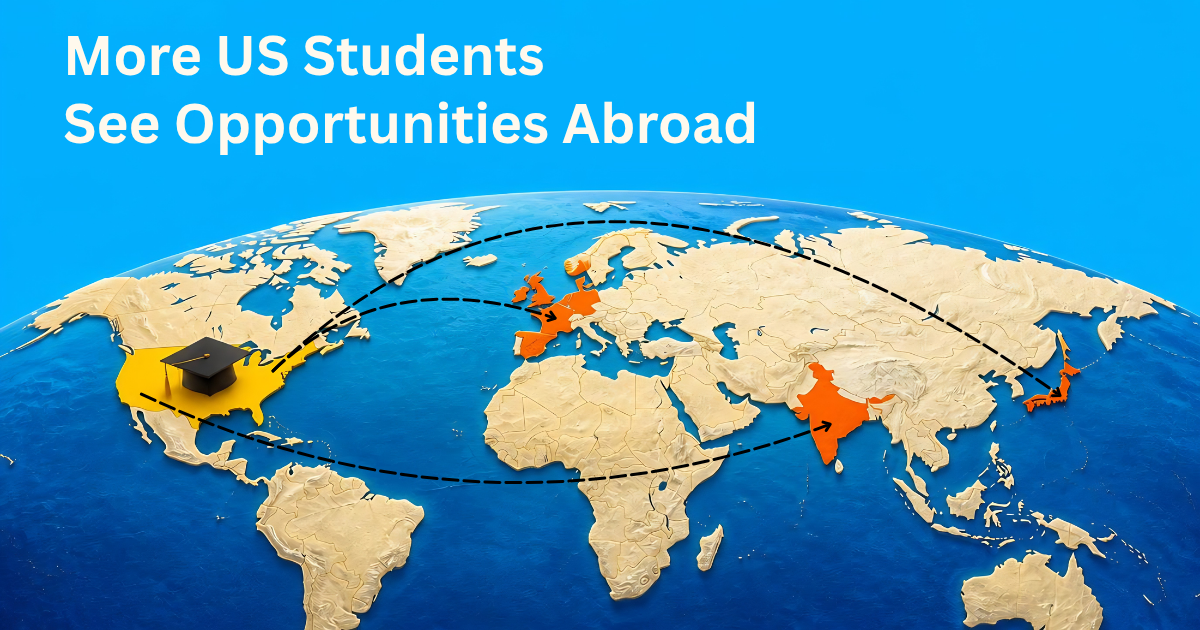
More US Students See Opportunities Abroad

Next week the British are coming, albeit to the opposite US  coast. 

As part of a broader effort celebrating collaboration between the US and the UK, the British Council’s Study UK team is hosting a large pop-up experience in Los Angeles designed to give area students, families, and educators an up-close look at what UK higher education is and can be. Sixteen UK universities, along with an array of niche experts and exhibits, are crossing the pond to put their best foot forward for students contemplating their academic futures. 

Full disclosure, the Intead team is proudly part of the effort to develop the cross-border collaboration.  

Though the event has been in the works for quite some time, as May 22 draws near, the timing seems particularly relevant as increasing numbers of US students are evaluating and taking advantage of study abroad opportunities. 

The UK, of course, is already a top study abroad destination for American students. 


Meet Intead!

  • Find us at at NAFSA in Orlando in May. We're presenting at NACUBO in July.  Be in touch to share a cup of coffee in person.

Fight for your Internationalization Program Funding with Data


Outbound with room to grow

In 2023-24, nearly 300,000 Americans studied abroad for academic credit, a 6% increase from the year prior, according to the latest data from IIE, marking a strong rebound toward pre-pandemic levels (~347,000 in 2018-19).

That said, only about 9% of US undergraduates study abroad for credit in any given year, and most for a short stint.

So, while the trend line is moving upward, participation remains modest relative to the opportunities available.

Most (64%) US study-abroad students go to Europe, with Italy, Spain, the UK, and France hosting nearly half of all participants. Japan became the fifth-largest destination for the first time in 2023-24, with 16% growth.

More interesting than the short-term numbers is what’s happening at the full-degree level.

IIE’s Project Atlas reports that more than 95,000 Americans are enrolled in full-degree programs at institutions abroad. Fifteen years ago, that number was much lower at 41,000 (with some caveats due to expanded reporting countries). Still, IIE confirms the trend is clear: more US students are opting to earn their full credentials abroad.

An increasing number of countries are taking note. 18 countries, including the UK, now have institutions accepting the Common App, meeting US students in a system they already know and trust. Our recent discussions with the Chinese Consulate in DC also point to increased efforts to attract international students to degree programs in China.

Those of us committed to the ideal of international education and the global ties these programs create have always understood the appeal. And while the number of American students doing so remains modest, the outbound trend is real, the drivers are tangible, and the institutions paying attention now will be better positioned for what’s coming.

Read on for our tips on how institutions can leverage this trend to enhance their connection to their current students and attract new applicants.

Read More

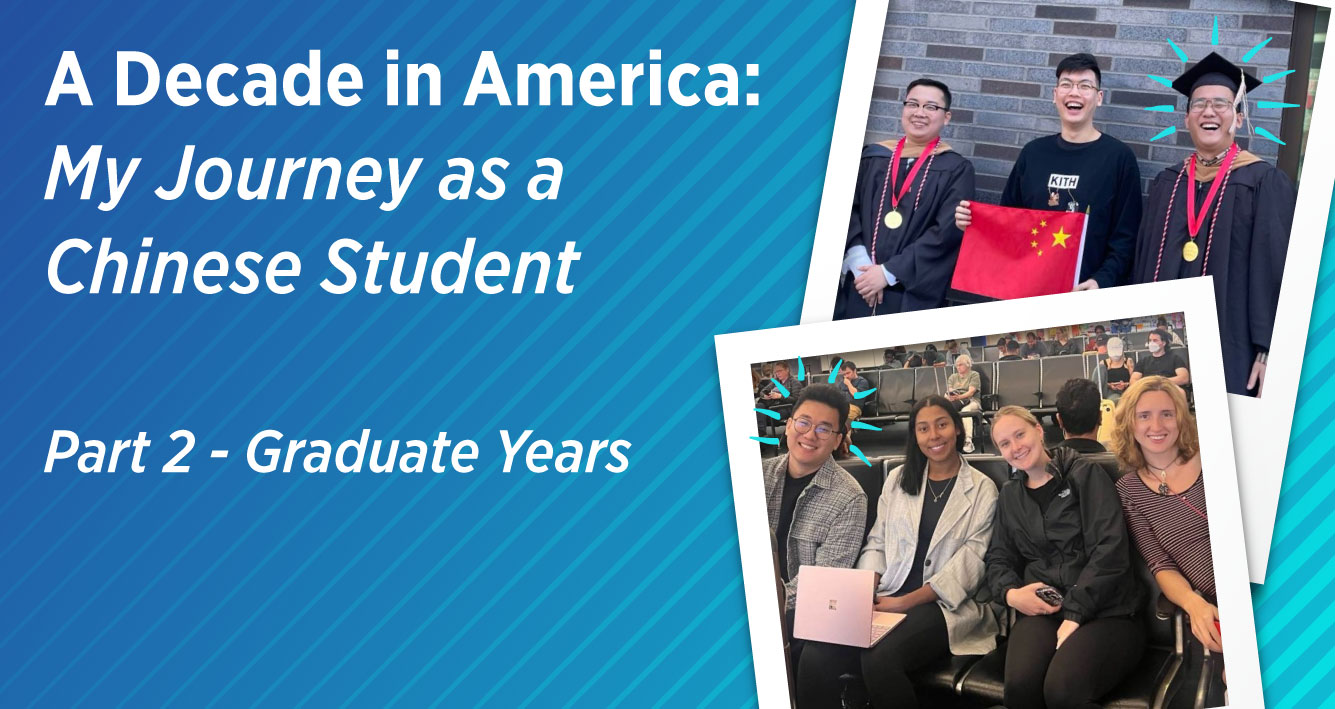
A Decade in America: My Journey as a Chinese Student, Graduate Years

As much as Tianyu Shen’s undergraduate years as a Chinese student in the US were about belonging, his postgraduate experience in Boston revealed the other side of the international student journey: employability, professional development, and deeper cultural immersion.


Meet Intead!

  • Find us at WEIC in DC in March, ASU+GSV in San Diego in April and NAFSA in Orlando in May . Be in touch to share a cup of coffee in person.

eBook Reboot: 88 Ways to Recruit International Studentsupdated for our times. Your tactical toolkit for the year ahead. Covering all the bases in 10 quick-read chapters. Fosters great ideation discussions with your team.


If you missed our last post, Tianyu shared the influencing factors that prompted his decision to study in the US and how he selected his institutions from language program to undergraduate university. Today, he shares what came next. And for those of us in enrollment, we know that all eyes are on what happens next.

Caution: If you have not experienced the job search process as an international student, you might be surprised at what Tianyu has to say.

My Journey as a Chinese Student, Graduate Years

I want to share my story not only as a reflection of what I gained but also as a plea to policymakers: behind every F-1 visa and OPT application is a human being who comes to the US with hope, ambition, and a willingness to contribute. Policies that close doors hurt not just students but also the communities, universities, and employers making up the vast economic and societal ecosystem that is America.

I feel so fortunate for the time spent in the US, though it wasn’t always easy.

Read on…

Read More

Why International Student Numbers Will Grow

Five years from now what will you be glad you did right now, this year? 

IIE here in the US and other prognosticators across the pond who track student mobility have predicted the number of international students in the US and around the world could double by 2030. Some projections suggest upwards of 10M or more globally. We’re not placing any bets on that figure. However… 

We’re optimistic about international student numbers and the opportunities ahead in higher education. We’re not banking on 10M+ in the next few years. That’s a bit of a stretch by our measure. But continued growth will come and the question is whether your institution is psychologically capable of weathering the storms and building for the future, or bureaucratically paralyzed and unable to capitalize on the opportunities ahead.  

Said simply: Resilient individuals and businesses adapt, leverage their strengths, and pursue opportunities to grow. 

Pro Tip: Your academic leadership will value reading this post. (Share button below)

What you do in the coming year will set the stage for the benefits you reap five years from now. Sit on your hands due to fear of the ambiguity that surrounds us, and all those who are acting now will be miles in front of you in 2030. Miles.   

Below we offer three specific areas where we think smart institutions and academic leaders will focus their attention in the years ahead to capitalize on future growth opportunities. How many of the three do you think you can help your institution address? 

Some context: Back in the day, our industry’s powerhouse forecasters were looking at the global growth of students seeking a foreign education from 2010 through 2016 and said with absolute confidence that there would be 8M+ international students globally by 2020. Maybe you were sitting with me in those conference presentations? Had trends continued on pace, that would have been true. Emphasis on “had trends continued on pace.” 

Instead, global factors combined with the US Muslim ban (Trump 1.0) were followed by a global pandemic (COVID 19). Those student numbers (8M+) have yet to pan out. But significant growth has happened - just 20% shy of the projection by 2020. (UNESCO reports 6.4M students globally studying in a country other than their own that year and we are at about 7M today.) Trend predictions are complicated by so many factors. Some might say predictions are truly unpredictable ; -)


Opportunities to Meet the Intead Team 

  • Look for us at ASU+GSV next week, and NAFSA in May. Let us know  if you want to connect at these events.

Bookmark this: Intead’s Resource Center 
Access 800+ articles, slides decks, reports with relevant content on any topic important to enrollment management and student recruiting.  Check it out.


Here's the thing: there are some human behaviors and economic factors that we feel very confident about. And that helps us understand the world and get a strong sense of what is likely coming our way in the years ahead.  

Reality: The US is now grappling with Trump 2.0, which is full of bluster and chaos-inducing pronouncements equivalent to watching an over-the-top World Wrestling Federation pre-fight drama. It’s all designed to draw attention and ramp up excitement for a spectacle. Often, there’s no substance to the bluster, though it consistently delivers pain. 

This drama coming from the US White House makes predictions all the more challenging. You need to push past all the obfuscating dry ice smoke machine billows to get at baseline reality. 

So yes, despite the chaos surrounding US policies and politics and how that will play out around the world, we have reason to believe international student numbers will rise over time similar to our confidence that the stock market will rise over time. We can’t tell you if the market will be up or down tomorrow or next year, but longitudinally, stocks have gone up since the market’s founding, and international student mobility has gone up as international travel has become more accessible. 

Consider this: In 1970, there were 310M airline passengers globally according to the World Bank. In 2024 the figure was 5.2B according to the International Air Transport Association. That’s an indicator of accessibility. Important to note, those figures include domestic and international flyers. 

Our belief in future growth of international student mobility primarily comes down to basic consumer (student) behavior trends, like increased usage of international flights (accessibility).  

Making the Accessible Visible 

Hailing from Hyderabad, Satya Nadella, current CEO and Chairman of Microsoft, earned his engineering master's degree at the University of Wisconsin-Milwaukee in 1990 and his MBA from the University of Chicago’s Booth School of Business in 1997. On the minds of nearly every Indian engineering student today: “If he could do it, so can I.” A lure as strong as it is old.  

With the rise of social media since 2010, success stories have proliferated in ways the world has never seen before. Basic human behavior: communicating success builds desire among others (word of mouth referrals drive sales).  

Among all those who have not risen to the top of Microsoft, there are millions of former international students who have carved out careers and influential positions, inspiring and encouraging future generations to follow in their footsteps. And hear us when we tell you that your prospective international students are looking for the proven path forward. Without overpromising, your institution needs to tell that story and build confidence in that future. 

A graduate student from India attending a private New England university recently told our staff how searching for (and making real connections with) alumni and current students on LinkedIn is what landed her on campus in the US. In her words, she appreciated but generally bypassed the university’s marketing and contacted other international students who had been there, done that. Their stories convinced her to enroll in the institution. Case in point: basic human behavior tied to the advent of internet communication. 

What we know: A student who graduated just a few years ago and is now a manager at a major company is immediately relatable to prospective applicants (much more tangible to them than their aspirations to run Microsoft someday). These conversations make the journey feel more attainable.

So, when international alumni share their experiences—whether through personal networks, mentorship, or social media—they reinforce the appeal of studying in the US (or any other country that contributed to their success).  

Considering how well your institution leverages its international alumni? Find customized perspective here. 

While we believe word-of-mouth marketing will play a role in future international student enrollment growth, there are other factors working in our industry’s favor – namely how institutions are poised to react to the changing market and the pace at which these changes are implemented on your campus. You may be surprised to learn our take on the opportunities ahead. Read on…

Read More

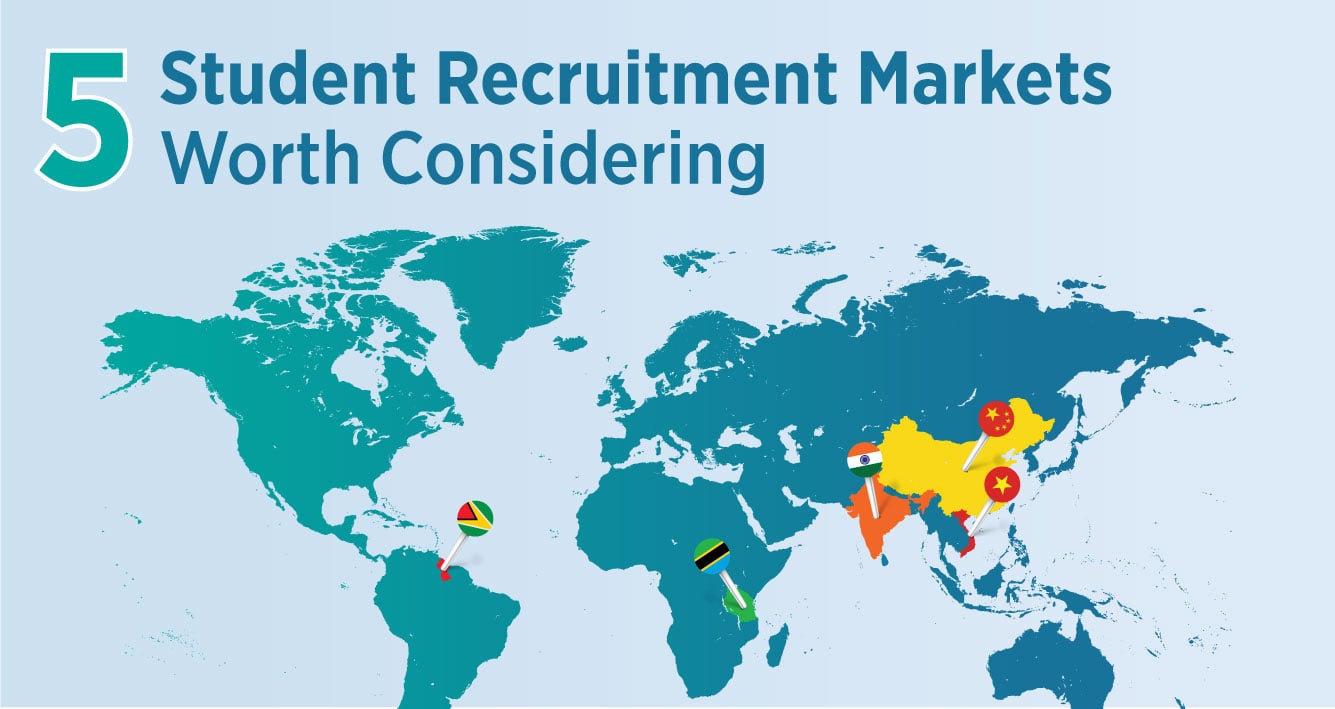
5 Student Recruitment Markets Worth Considering


The US continues to be a top destination for international students. As other anglophile countries find new reasons to limit their student intake (we’re looking at you Canada, Australia, and UK), there is still competition for student attention. Now is no time for US institutions to rest on their laurels.  

The macro numbers around student mobility are always interesting. But the fact is that each institution has tremendous potential in any given market if it plays its unique cards well.  

It starts with market intelligence, understanding your consumer, their motivations, influencers, and how the unique attributes of your institution relate to those consumer insights. There are questions you and your recruitment team are asking: 

  • Are you reaching the right prospective international students?  
  • Are your markets diversified enough? Targeted enough?  
  • How do you know if you are doing all of this well? 

Opportunities to Meet the Intead Team 
- NAFSA Region XI, Hartford, Connecticut, Oct. 27-29, 2024
PIE Live North America, Boston, MA, Nov. 19-20, 2024
- AIRC, Seattle-Bellevue, Washington, Dec. 04-07, 2024 -- including our pre-conference global marketing workshop. A full day of Intead global intel (lunch included ; -). Details here. 

Bookmark this: Intead’s Resource Center 
Access 800+ articles, slides, reports with relevant content on any topic important to enrollment management and student recruiting.  Check it out.


Over the past year we’ve offered insights into regions we think are well worth watching on 3 continents – China, India, Vietnam, Tanzania, Guyana. Each of these countries offers something interesting for international student recruiters to think about. All won’t be right for every institution, but each are right for some.  

Read on to understand how we’re thinking about these markets and to link to our more in-depth articles each one.  

Read More

Are You Ready for an International Alumni Strategy?


Cue the confetti. A new guide for international education practitioners just hit the bookshelves.

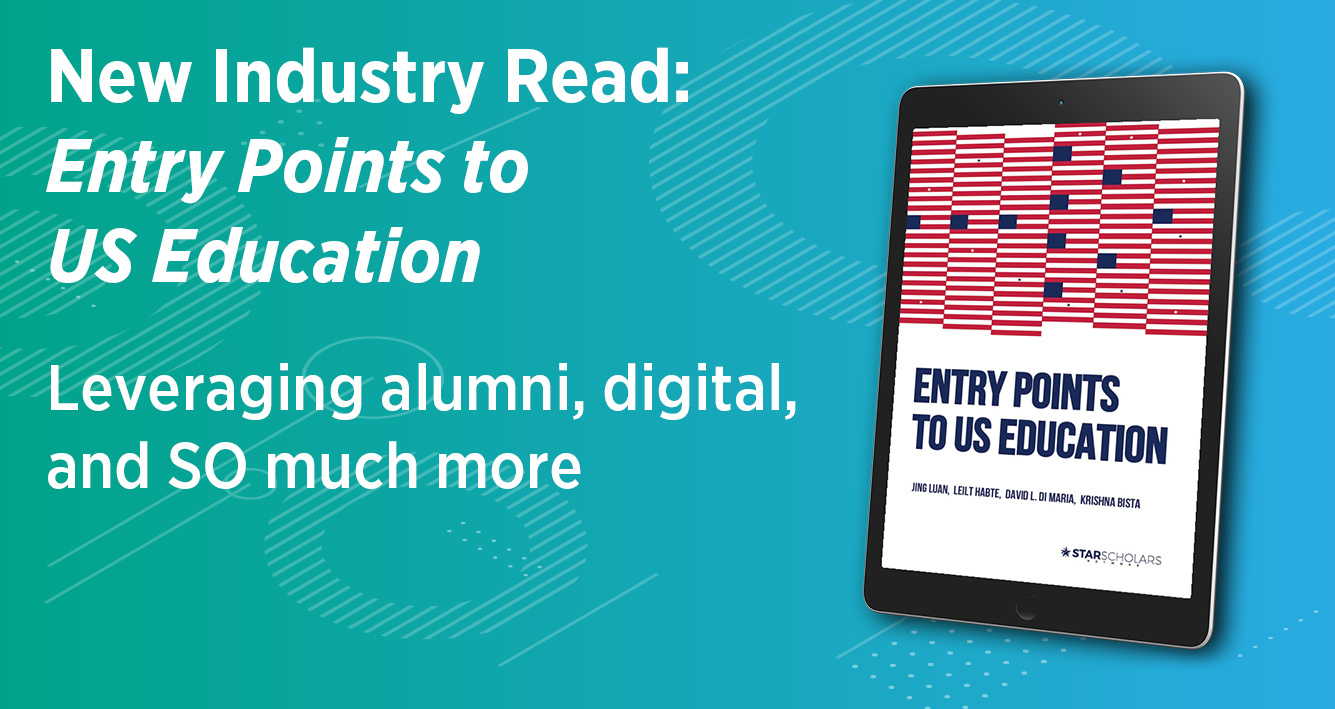
Produced by Star Scholars and filled with analysis and counsel from luminaries in our field, you'll want to grab a copy (link to purchase below). With thanks to editors Dr. Jing Luan, Leilt Habte, J.D., Dr. David Di Maria, and Dr. Krishna Bista, and too many amazing chapter contributors to list here, this book packs a punch.

We were honored to participate by contributing a chapter on how to Leverage International Student Alumni in your student recruitment efforts and another chapter on Using Digital Marketing for International Student Recruitment. Below, we will be talking about your international alumni and serving up a really nice interactive tool offering guidance based on where you are at with your alumni program.

We could not have provided the clear and actionable content without the leadership of our friend and colleague, Dr. Gretchen Dobson with the depth of her work in this area.

The value of your international alumni cannot be understated. Few ready-made resources can connect as quickly and honestly with prospective international students, making them feel understood and welcome. This is about helping them connect with what is real and tangible based on a degree from your institution. Yet, for many institutions, tapping into this network remains on the to-do list. It’s one of those great ideas that remains underutilized. Blame resources, blame poorly maintained databases, blame, well, you know exactly what we are talking about.  

Of course, your institution has strong institutional support for building and maintaining a robust domestic alumni network. All the while, the relative importance and financial value of international students are often overlooked. In some cases, 7% of the total student population being international represents as much as 30% of total tuition revenue. A good idea to do that math for your institution if you have not already. Yet our institutional infrastructure remains lopsided, heavy on domestic alumni, light (or non-existent) on international alumni despite what they can contribute.


Our next opportunities to meet! 

EducationUSA Forum, Washington, D.C., July 30-August 1. Ben and Virginia Commonwealth University SIO Jill Blondin will share insights on Navigating Budget Challenges in International Recruitment: Practical Strategies for Every Phase.  

Be in touch! We’ll buy the coffee. 


In Entry Points to US Education: Accessing the Next Wave of Growth, our chapter on international student alumni management is a great read for any enrollment leader looking to justify the costs associated with building a stronger connection to international alumni. It delves into the motives behind such an effort, including: 

  • Brand awareness 
  • Reputation management 
  • Recruitment 
  • Employability 
  • Global connections 
  • Public diplomacy 
  • Financial resource  

At the end of the chapter, we offer the link to an interactive questionnaire designed to assist international student recruitment teams in evaluating their ability to deploy alumni ambassadors. This simple 8-question form provides customized recommendations based on your responses.Today this tool is available to Recruiting Intelligence blog readers (even if you don’t purchase the book. But really, purchase the book!) Read on to check out the evaluation form… 

Read More

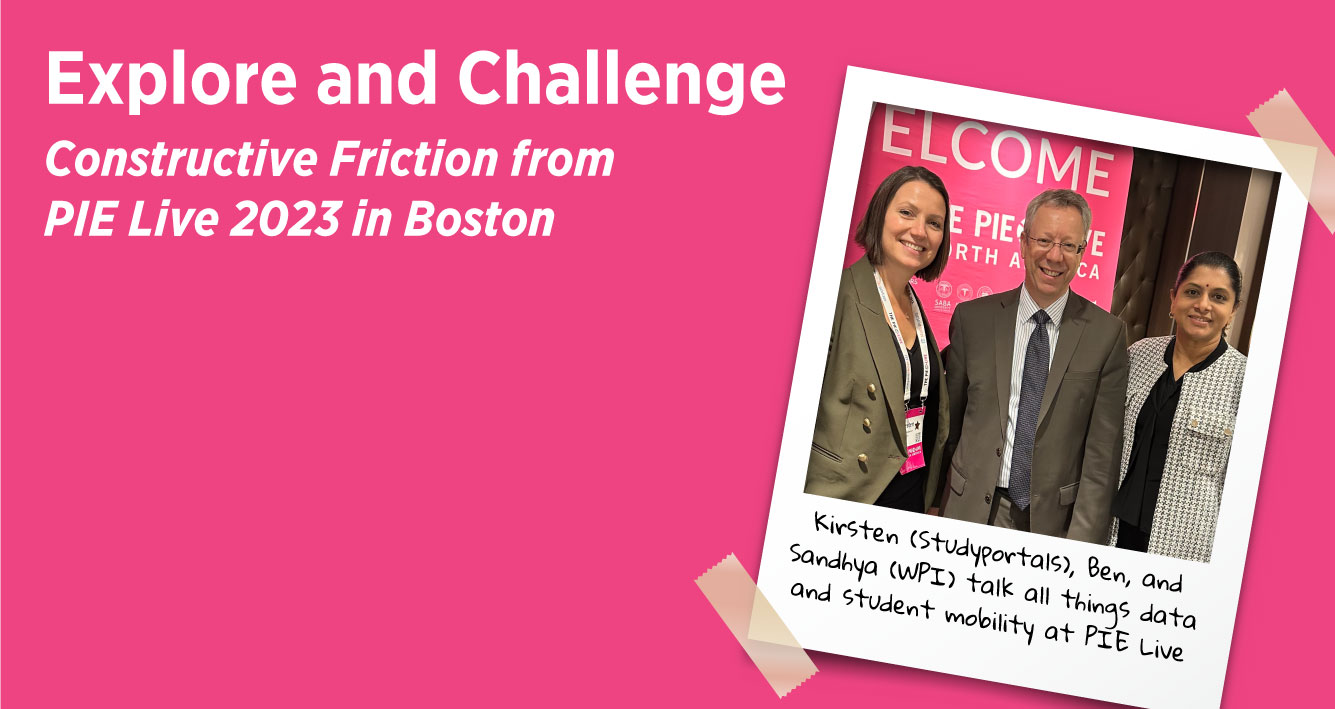
Explore and Challenge: Constructive Friction from PIE Live in Boston


The PIE Live North America event in Boston did exactly what it was supposed to do. We gathered, we laughed, we explored, and in some cases, we clashed. Not dramatically, just a bit. But there were definitely some presentations and ideas shared that prompted collegial discussions with some friction. And that is exactly what a news publication should foster.  

Intead was honored to be selected to present on the topic of student mobility data. Sharing the stage with Sandhya Balasubramanian, Assistant Dean of Business Programs for Worcester Polytechnic Institute, and Kirsten L. Feddersen, Senior VP of Analytics & Consulting for North America at Studyportals, we dove into the market research data that drives recruitment and enrollment decisions. We focused on putting that data into action. The fast-paced presentation and our Intead workshop handouts hit the mark for the many who attended. If you’d like those action-oriented handouts, consider joining Intead Plus with access to our full library of training materials and so much more. 

Unlike the unwritten rules that often constrict the way we interact at conferences run by associations with broad memberships, media outlets thrive when there is disagreement. Controversy draws more eyeballs and sells more newspapers (please forgive the throwback concept of selling newspapers).  

You want a for instance, right? Well…coinciding with IIE’s latest Open Doors data release, we learned of a new coalition of international education leaders called U.S. for Success seeking a national effort to increase the number of international students coming to the U.S. From their website: “U.S. for Success seeks to position the United States to effectively compete and cooperate on a global stage by attracting top talent and ensuring the success of all international students.” 

Lofty goals that align with what NAFSA, IIE, AIEA, AIRC, and many other associations already proactively seek to promote in concert with ACE. We are left with many questions about what exactly this new initiative will do and how it will get it done. See this PIE News story on the topic and see if it doesn’t leave you scratching your head a bit. 

We have our own ideas on the topic, of course. More will come to light in the year ahead, we are sure. We hope for the best and want to see our colleagues at these industry-leading associations find effective partners for their important work. 

For more notes from Pie Live, read on… 

Read More

You’re In the Right Place: Predicting the Future of Student Recruiting

The enrollment cliff has everyone a little on edge. People are burned out and frustrated. Leadership is looking for bigger gains in shorter time frames. And traditional students just aren’t showing up in ways they traditionally have.

It’s so clear that higher ed is at an inflection point. Thank the pandemic. Thank technology. The economy and unpredictable job market. The changing student landscape. What you need now more than anything is support. Ideally in the form of a soothsayer to tell you where and how to invest your time, energy, and resources. If only.

Our advice: take a deep breath and read this post.

While soothsayer we may not be, we do have some perspective on what lies ahead. And our record for predicting changes in the market has proven accurate for more than a decade. Long before the recommendations below became standard practice in enrollment management (they all sound so obvious now, right?), we advised colleagues to:

  • Make better use of your CRM (or get one if you don’t have one), and embrace the add on features and API connections that improve tracking and results.
  • Identify staff with the skills you need for each function of the enrollment process. Your creatives are not your meet and greeters and they are not your data analysts. You need all of these skills.
  • Develop your international alumni as global ambassadors. (Most of you are still not doing this).
  • Find reputable commission-based recruiting agents in your target countries and invest time in managing them very carefully.
  • Train your domestic recruitment team in the nuances and needs of international students already studying in the US so they know how to address the important topics (visas, parental concerns, economic realities, etc.)

We know, it’s all old hat now. But a decade ago, very new to international enrollment management teams.

Today we are facing some pretty significant headwinds. Post-pandemic changes to how students evaluate universities. Growing financial pressures facing families. Increasing importance of careers and the ROI of your degrees. Heightened interest in certificates and shorter paths to career growth. Political divisiveness harkening back to the US civil unrest of the 1960s (or 1860s?). Are you factoring social justice including climate activism into your marketing plans?

These factors are all part of the student and parent mindset as they evaluate investments in university level education. The pool of nontraditional students is much larger and more diverse than the shrinking traditional student pool. And yet, the international student pool is one that is growing and projected to grow dramatically in the coming years.

If you’re ignoring any of these market segments, we strongly advise you don’t. Our analysis of and predictions about what influences student decision making, the tools and processes you need in place to be both efficient and effective, this counsel has been spot on for a very long time (our blog records act as our receipts).

You’re in the right place. Read on to be sure you are able to anticipate what is next and what to do about it.

Read More

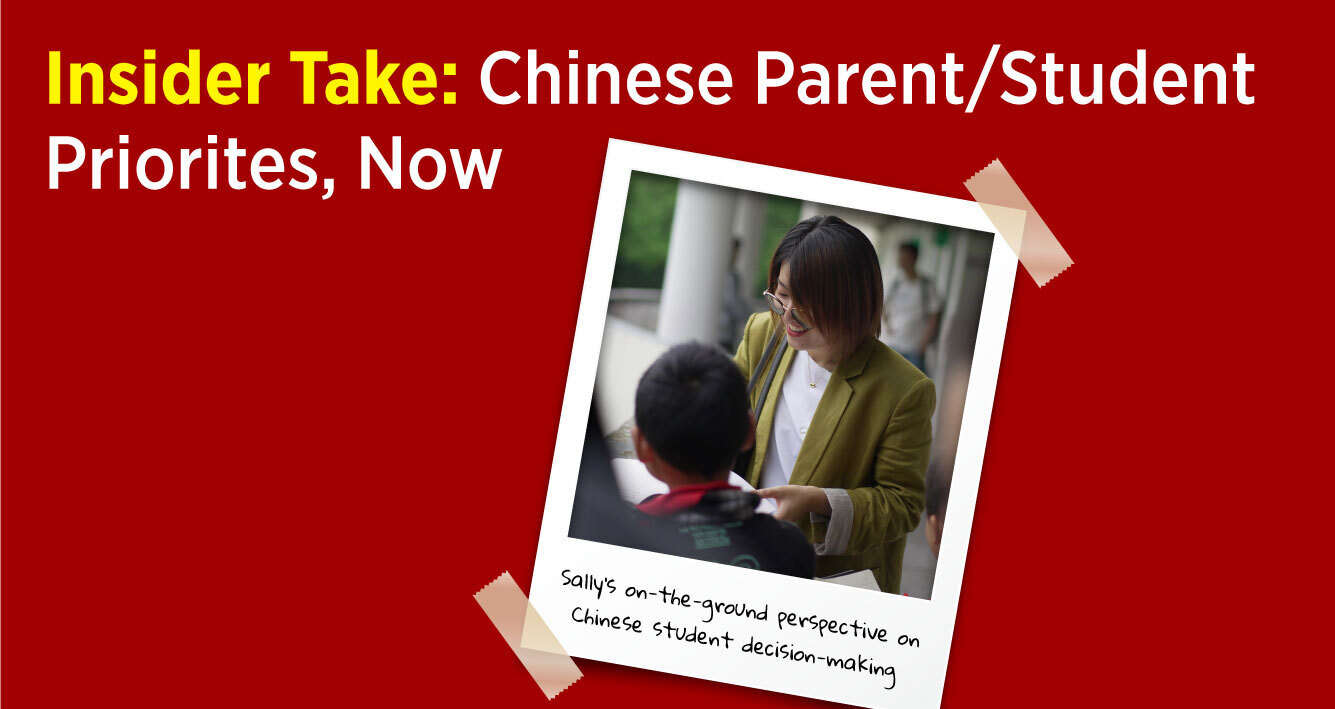
Insider Take: Chinese Parent/Student Priorities, Now

With Chinese student numbers in serious flux in the US, we thought we’d check in with our colleague Sally Zhu who is currently working with international students in Ningbo, China. Our goal: find out what’s working in recruitment for institutions across the Pacific.

Sally, a contributing Intead Marketing Data Analyst and US PhD aspirant, grew up in China and acquired her post-secondary degrees in the US, returning to her home country in 2020 where she landed a job with a sino-foreign university. Today she’s working as an international student support advisor there. She has a front-row seat to what is on Chinese students’ minds. 

We know this topic will be part of the hallway and session chatter throughout the NAFSA regional conferences coming up this fall. Intead will be discussing a range of student recruitment and marketing topics at Nafsa Region XI in Manchester, NH in October. If you will be there, be in touch to set up a coffee date with Ben or Iliana. We can also meet folks in California in December when AIRC and ICEF fire up. Look for some big news very soon about the learning opportunities coming up.

A couple of weeks ago, Sally sat down (virtually) with the Intead team to give her boots-on-the-ground account of how Chinese students and parents are evaluating their options today. Read on for some valuable perspective on the student recruitment market everyone is fretting about.

Read More

Not Rocket Science

Global student recruitment, finding student segments domestically and abroad, is simply not rocket science.

We know the processes and don't need another generic report about what students are thinking and how important parents are to the process. If new student mobility trend data of significance emerges (thank you IIE and National Clearinghouse), you can count on us to evaluate it and report on it. But, most of the reports we are seeing right now from marketing agencies (like us) are rehashing everything we already know.

And annoyingly, they are somehow pointing to their nothing new findings as revelatory. Wut?

So, let’s get to work plotting out the work and bringing the successful results we all want.

The Formula: custom research on your differentiators, your strongest recruitment options (countries/regions), and messaging that engages your target audience on the channels they use.

That’s really about it. That’s what we need. Oh, and to do it successfully, that actually requires investment, technology, and expertise.

So...yes, trend analysis because decision making actually did change since 2019 - safety, cost, the value of education overall, visa issues - all much more significant. These factors existed before the pandemic, before the Trump administration’s anti-immigrant rhetoric, and the ever-horrific state of gun violence in the US. Not new info. All of these factors have been on students’ and parents’ minds for a while. Yours too, right?

And yet, international students continue to find value in a US education and the experience of living and studying in the US. And as they make their decisions, all the things we see in the latest reports and infographics about student mobility trends say essentially the same things we’ve seen for more than a decade.

Reputation matters. Rank matters (more in some regions than others). Career connections matter, parent opinions matter, etc., etc., etc. Tedious findings touted as new, ground-breaking, must-have trend analysis.

Read on for a few student influencers that are actually rising to the top of students' decision-making criteria, and more importantly, what all of this means for your institution's recruitment planning. 

Read More

Offering Up Inspiration for DEI

When Vice President Harris said, “Your nation is SO proud of you,” to a group of 20 Frederick Douglass Global Fellows, you could not have found more inspired university students anywhere. Absolutely anywhere. Their eyes said it all.

International education speaks deeply to all of us. And yet it remains inaccessible to so many. What we know is that roughly 6% of US students participating in study abroad are Black. How to make this privilege and opportunity available to many, many more?

Intead’s international team has been deeply honored to work alongside our colleagues at CIEE on an inspired and inspiring project – a concerted effort to bring the opportunity of international education, experiential education, to more BIPOC students. In just a few months, we’ve watched this effort draw pledges from dozens of university presidents who have matched CIEE’s scholarship funding to allow more students to experience the power of international education.

As the Frederick Douglass Global Fellowship barrels forward with applications for 2022 now open, we bring you this bottle of inspiration — a 5 minute film featuring the perspectives and experiences of the 2021 cohort. This will lift your spirits and get you thinking.

To hear Dr. Roslyn Clark Artis, president of Benedict College tell it, this program offers a lot and demands just as much back from the students who participate. Frederick Douglass Global Fellows and Scholars have a responsibility to share what they’ve learned as they become leaders in their chosen fields. To be, as one Frederick Douglass Global Fellow put it, “the first of many.”

We are gratified to see university presidents not just encouraging, but taking real action — signing up to catalyze their DEI initiatives in a valuable and visible way through this program. Will your institution be next? 

Read on to watch the film and hear from these future change-makers. 

Read More